
New York City Told Its Museums to Diversify Or Lose Funding. Here’s How They Plan to Address the Problem
When New York City Mayor Bill de Blasio laid out
his CreateNYC cultural agenda,
which launched two years ago and was updated this week, he explained that it would
ask cultural institutions that occupy city property to “submit a
diversity plan with measurable goals for how they’re going to
continue to make progress.” Then, the ways in which they
demonstrated their commitment to diversity, equity, and
inclusion would influence future funding decisions made by the
city’s department of cultural affairs.
“It’s important to ensure, if
we’re investing public money, that these organizations represent
everyone and include everyone,” de Blasio said at the
time.
All of the 33 arts spaces
that make up the city’s Cultural Institutions Group, including the
Bronx County Historical Society, the Lincoln Center for the
Performing Arts, and the Metropolitan Museum of Art, met the April
deadline to turn in their plans and will therefore receive their
2019 subsidies. Going forward, they will be subject to an annual
review to determine eligibility, a process
that raises questions
about how the city plans to ensure the targets are implemented and
how best to- cut funding for institutions that fall
short.
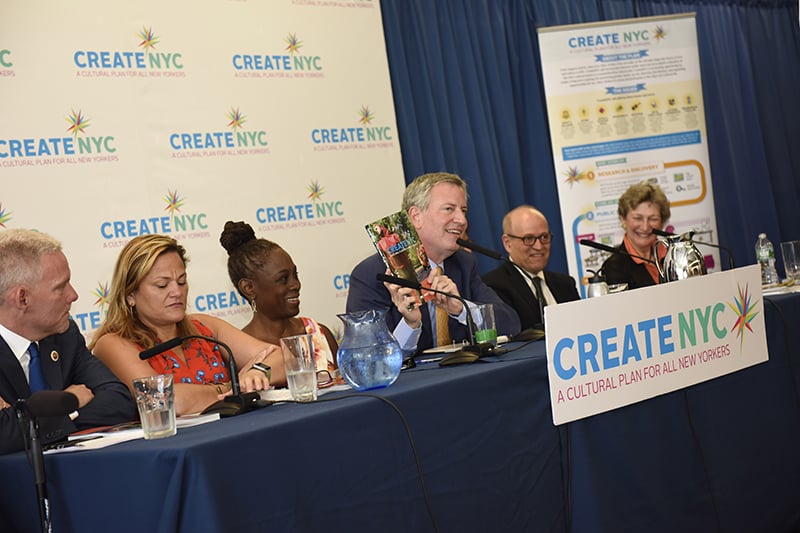
Mayor Bill de Blasio unveils the
CreateNYC plan. Photo courtesy City of New York.
A Challenge From the City
The mayor’s push for diversity
stems from a 2016 demographic
study that revealed that
the staff of New York City’s cultural institutions were nearly
two-thirds white, whereas the city’s population overall is only
about one-third white. Higher-status jobs, like curators, were
especially dominated by whites, while maintenance and security jobs
were populated mostly by people of color.
Tom Finkelpearl, the city’s
cultural affairs commissioner and former director of the Queens
Museum, called the
launch of CreateNY the “defining day” of his five years as
commissioner. Today he oversees the plan and its efforts to
diversify staff at cultural institutions, make them more
affordable, more welcoming for immigrants, and more accessible to
disabled and elderly New Yorkers.
Directions on how institutions
should incorporate these objectives were left intentionally vague.
Rather than issuing blanket checklists, the city wanted individual
institutions to formulate plans that made sense for their
respective audiences and agendas.
“The city had a pretty light
touch,” says Brooklyn Museum director Anne Pasternak, who called
the plan “long overdue.”
“I think they did the right
thing in allowing each museum to discover for itself what their
approaches should be because every institution is unique. For
example, how the Jewish Museum is going to respond to what
diversity and equity and inclusion looks like is very different
than how the Brooklyn Museum might approach it,” she told artnet
News.
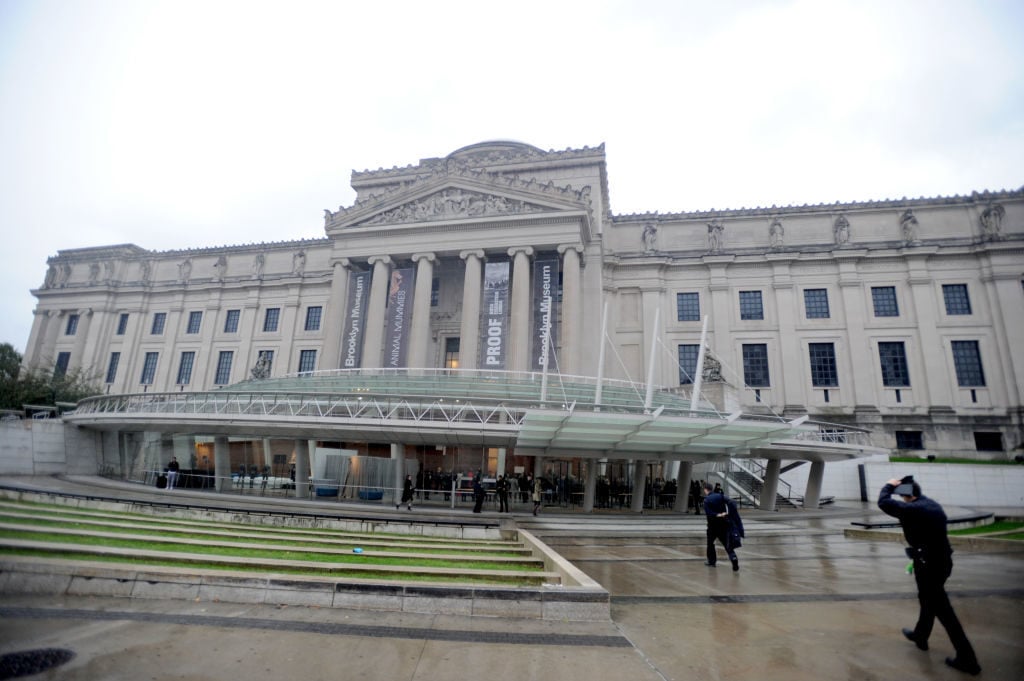
The Brooklyn Museum. Photo: Brad
Barket/Getty Images.
What’s in the Plans
For her museum’s part, Pasternak
says she brought together volunteers, interns, staff, and board
members in order to discuss how they could dismantle traditional
hierarchies. “We realized in these forums that we weren’t being
inclusive enough in terms of how people define themselves today
compared to three or five years ago,” she says.
The museum, which receives
approximately $9 million in city funds each year, has committed to
full-time paid summer internships, greater wage transparency, and
more equitable hiring practices. “The more diverse the staff is, in terms of
disability, gender, socioeconomic status, political beliefs, and
religions, the better we can do our jobs in terms of telling
thoughtful stories,” Pasternak says.
It also pledged to ensure that
its exhibitions allow diverse audiences to see their stories told,
including through shows such as “We Wanted a Revolution: Black
Radical Women, 1965-85,” “The Legacy of Lynching: Confronting
Racial Terror in America,” and “Nobody Promised You Tomorrow: Art
50 Years After Stonewall.”
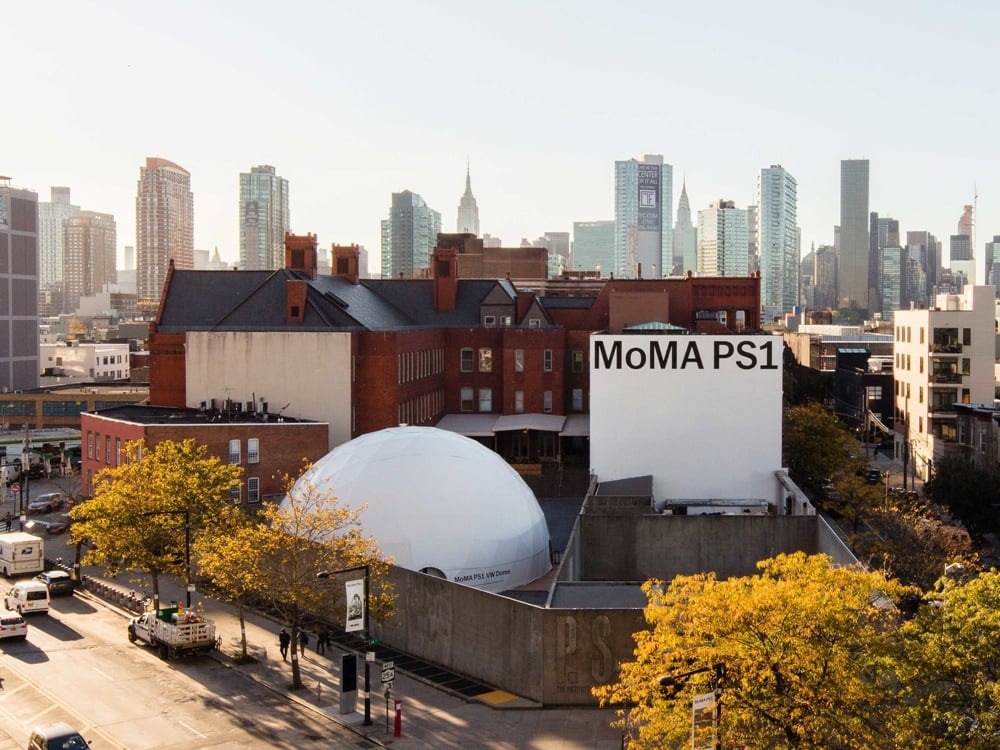
MoMA PS1. Photo courtesy of MoMA
PS1.
MoMA PS1, which receives
about eight percent of its operating budget from the city. has also
committed to paying all of its interns in hopes of creating an
employment pipeline that includes job seekers who can’t afford to
work volunteer internships.
The museum also participates in
the City University of New York’s Cultural Corps program, which
places its students into paid positions at museums includingEl
Museo del Barrio, the Museum of Jewish Heritage, and the Frick.
MoMA PS1 also partners with LaGuardia Community College to provide
part-time jobs in its visitor engagement department to students
living in Queens. Similar programs with other colleges are in the
works, according to the museum’s chief operating officer, Jose
Ortiz.

The Brooklyn Children’s Museum. Courtesy
of Wikimedia Commons.
Meanwhile, the Brooklyn
Children’s Museum, which put its plan into effect on July 1,
established specific goals to improve diversity among its board of
trustees, staff, vendors, and audience over the next six
years. The museum, which receives about half of its
budget from public funding,
says its staff is already quite diverse. “If you were to take our
statistics at the Brooklyn Children’s Museum and line them up
against all the other cultural institutions in the city of New York
or in the country, we would look good,” says Stephanie
Wilchfort, the museum’s chief executive. “But we have a higher
obligation because we operate in central Brooklyn, in a community
of color.”
For the Queens Museum, situated
in the city’s most multicultural borough, “diversity is natural,”
says Sally Tallant, the museum’s director. In
Queens, 165 languages
and dialects are spoken and nearly half of the residents are
foreign born. Likewise, the staff speaks a dozen languages and
the museum makes a point of offering multilingual visitor
assistants and offers programs in eight languages.
Despite these achievements, the
Queens Museum found during its research for the city, that no one
on its staff or board identifies as differently abled. The
institution aims to make better use of resources like the Mayor’s
Office for People with Disabilities to fill that gap. (The Queens
Museum receives about half of its $6 million budget from the
city.)
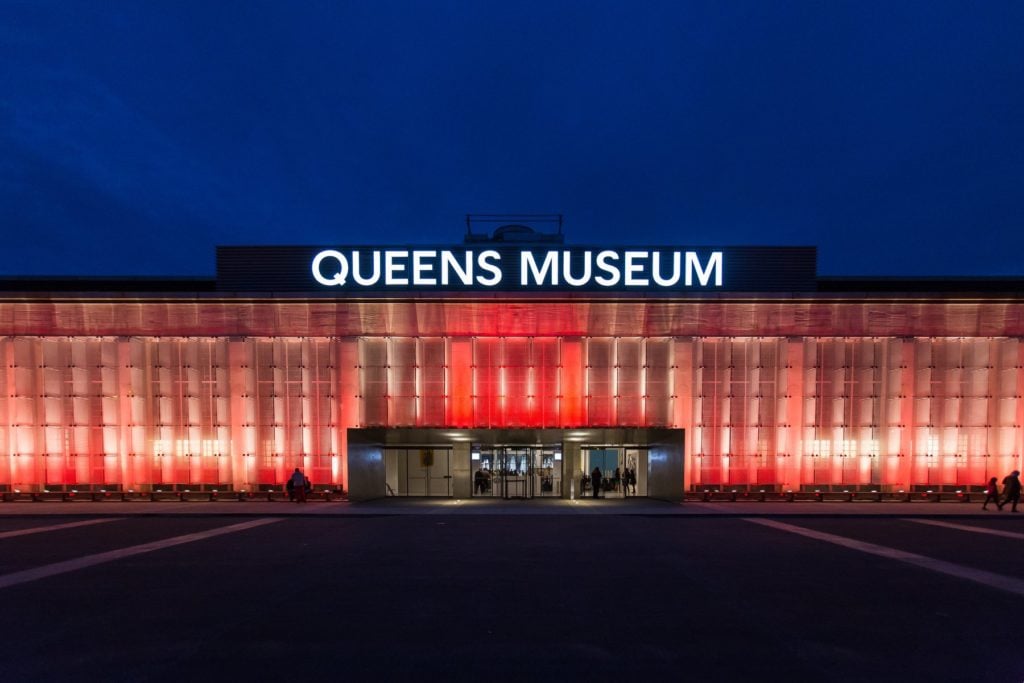
The Queens Museum. Courtesy of the
Queens Museum.
A Greater Need for Change
Last week, the department of
cultural affairs released a new study on the makeup of New York’s
cultural institutions based on nearly 7,000 responses from
employees or board members at 65 organizations. While it’s too soon
to measure how the various institutions’ plans have taken effect,
progress remains mixed.
For one thing, the numbers on
race and ethnicity have not budged since the 2016 study, with
survey respondents still identifying as two-thirds white (while
representing just one-third of the city’s population). Only about
10 percent of respondents were black and Latino (while representing
about one-fifth and one-third of the population,
respectively). Board
members, curators, conservators, and editors, among other
specialized roles, remain more than three-quarters
white.
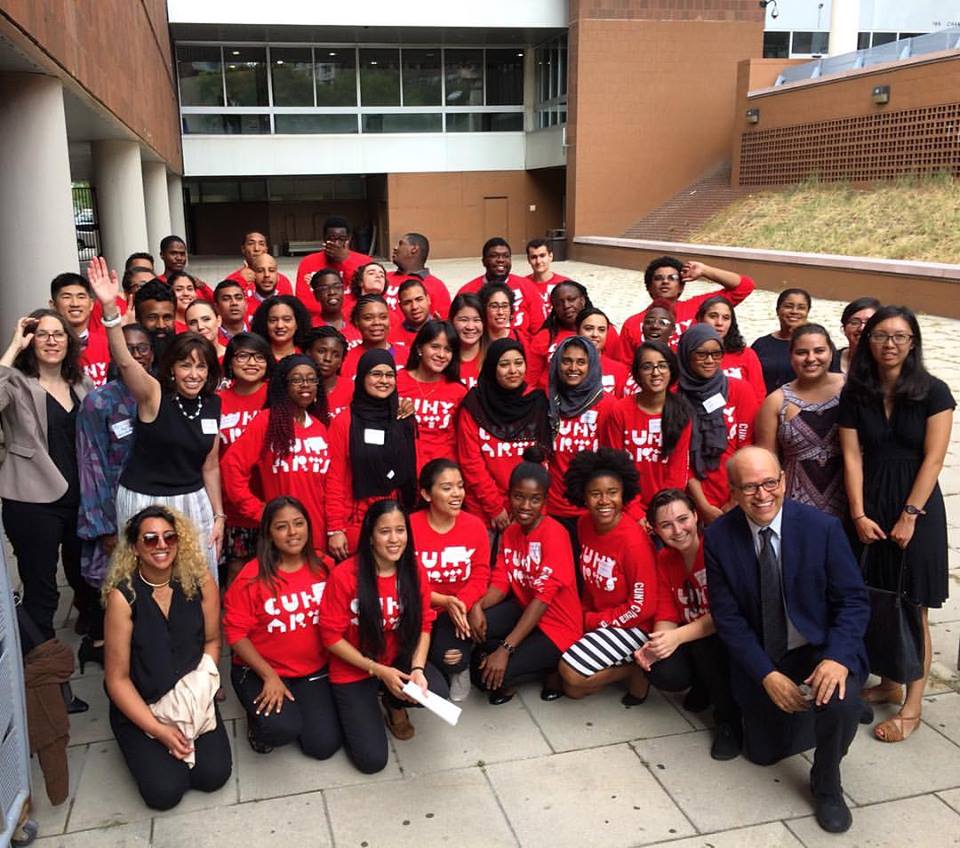
Tom Finkelpearl with the first class of
Cultural Corps students. Photo courtesy of the New York City
Department of Cultural Affairs.
But the department pointed out
that there have been concrete efforts made to improve some of the
numbers. For example, the CUNY Cultural Corps placed 340 students
in paid internships, while the CreateNYC Disability Forward Fund
distributed $640,000 to 22 organizations to support programs that
increased access for those with disabilities. The CreateNYC
Leadership Accelerator, meanwhile, is providing professional
development for mid-career cultural workers of color to prepare
them for higher-ranking positions in the field.
In the area of gender, the study
found that men continue to dominate at senior levels. About
two-thirds of respondents were female, but half of executive
leadership and board membership is male, leaving women to dominate
in support and education positions, as well as in fundraising jobs.
Only about .2 percent of those surveyed identified as transgender
or gender non-conforming.
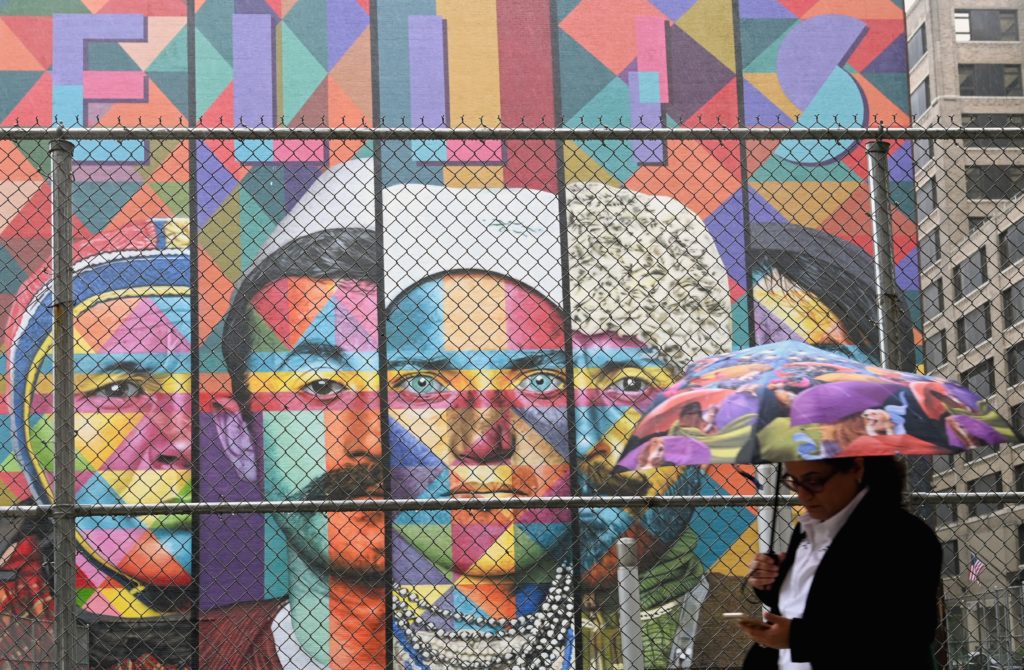
A woman with an umbrella walks past a
mural named “Ellis Island” by artist Eduardo Kobra in New York
City. Photo: Angela Weiss/AFP/Getty Images.
On the other hand, New York’s
arts organizations, even at the highest levels, appear particularly
welcoming to LGBTQ people, according to the study. Whereas a Gallup
poll found that about four percent of respondents in New York are
LGBTQ, about 15 percent of the arts workers surveyed identify as
such. Notably, about one-quarter of the respondents in executive
leadership identify as LGBTQ, though only nine percent of board
members so identify.
As for disability, the research
found that eight percent of culture workers indicated that they
have a disability, compared to 11 percent citywide.
In 2020, the department of cultural affairs plans to expand the
survey to 1,000 organizations. But while these studies enable us to quantify
the discrepancy between museums and the city they serve, the
question of whether change will take place—and how far the mayor
will got o enforce it—remains open.
The post New York City Told Its Museums to Diversify Or Lose
Funding. Here’s How They Plan to Address the Problem appeared
first on artnet News.
Read more https://news.artnet.com/art-world/new-york-museum-diversity-plans-1615537
Further reading


Leave a comment