
‘The Seattle Art Fair Is Still Kicking’: How the Event Is Recalibrating After the Death of Founder Paul Allen and High-Profile Gallery Defections
In Seattle’s art world and beyond, the subject of whether or not
the Seattle Art Fair could withstand losing its
founder, the billionaire philanthropist Paul Allen, has been the
subject of a great deal of public chatter. Gagosian, Zwirner, and
other blue-chip powerhouses all elected to withdraw after the
passing of the Microsoft co-founder. The high-profile defections
deepened speculation that the event was a “single-collector fair”
and that Allen’s ambitious brainchild might well be marching to an
early end.
This was the backdrop for the opening of the fair at Century
Link Field on Thursday afternoon, making this fifth outing—and
perhaps the Seattle Art Fair’s most closely scrutinized since
its inaugural edition in 2015. With 106 exhibitors, the size of the
fair remained largely unchanged, top-notch dealers notwithstanding.
According to organizers, attendance this year also matched the
previous edition’s turnout.
The Seattle Art Fair remains under the management of Allen’s
private corporation, Vulcan Inc., which is also responsible for
overseeing the Seattle Seahawks, the Seattle Cinerama, and myriad
other initiatives either founded or adopted by Allen’s estate.
According to a statement given to artnet News by Greg Bell,
Vulcan’s chief curator, the fair will continue next year. Sponsor
AIG had already announced that it was extending its support
as the fair’s presenting partner through 2021.
So, what were the weekend’s festivities like, on the ground?
Impressions varied. Critics such as Juliet Helmke of the
Observer maintain that the fair endures as “a site for discovery.”
But is the thrill of discovery enough to keep it going? Some in
attendance told artnet News that the absence of key players
directly compromised the fair’s viability as a destination on the
global art circuit. Overall, this was a year when the fair felt
like it was finding a new equilibrium, reframing its pitch to the
art world, locally, nationally, and internationally.
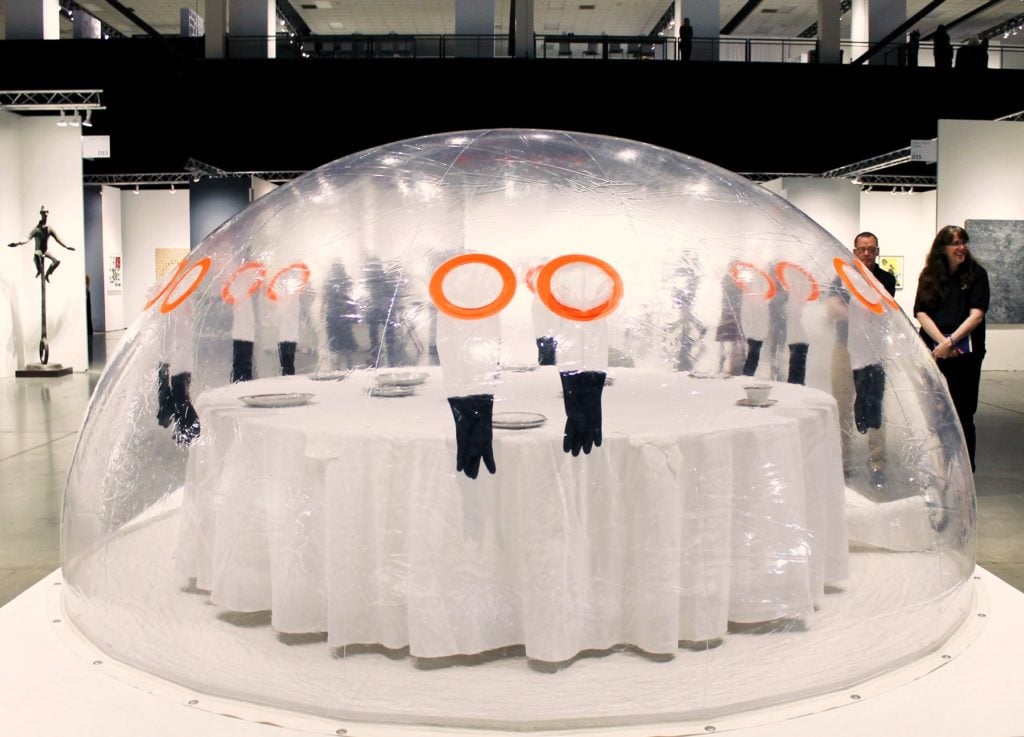
Bigert & Bergström, Incubator for
Earthquakes (1992). Image: Rain Embuscado.
Mutants, Inc.
Last year’s edition was highlighted by a program of special
projects that included blockbuster battle-bots
and perverse visions of present-day dystopias. The fair’s artistic
director, Nato Thompson, opted to conjure a markedly more
understated tone for his second year at the helm.
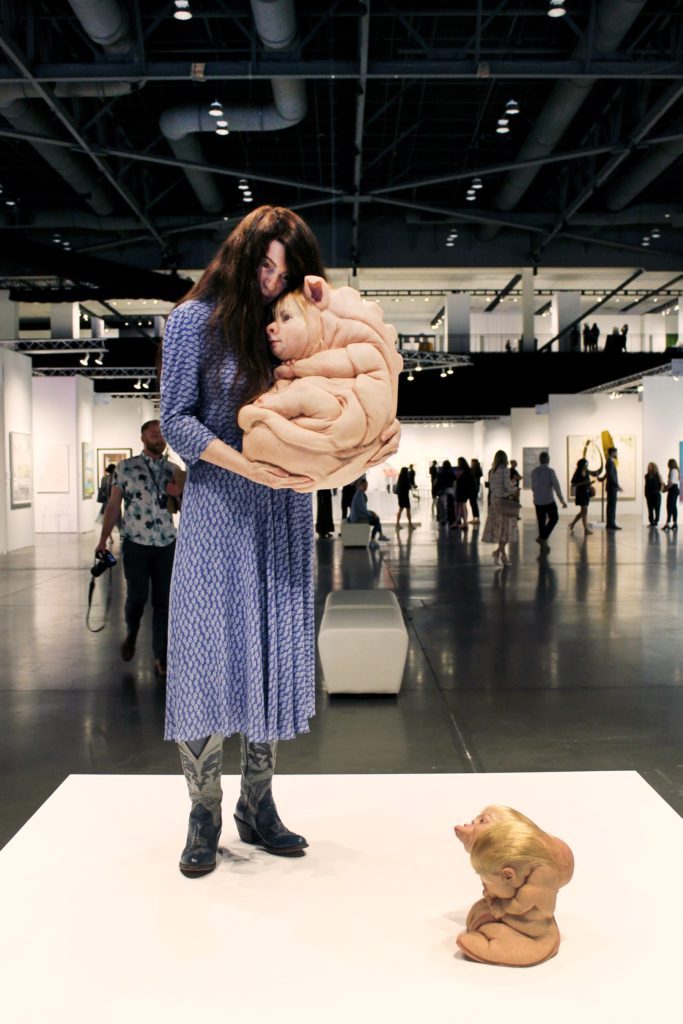
Patricia Piccinini, The Bond
(2018) and The Loafers (2018). Image Rain Embuscado.
“I was interested in the ‘post-human’ as a trajectory, so we
have more mutants than computers,” Thompson said in an interview
with artnet News, citing the wunderkammer, or “cabinets of
curiosities,” as the thematic thread tying the fair’s special
projects together.
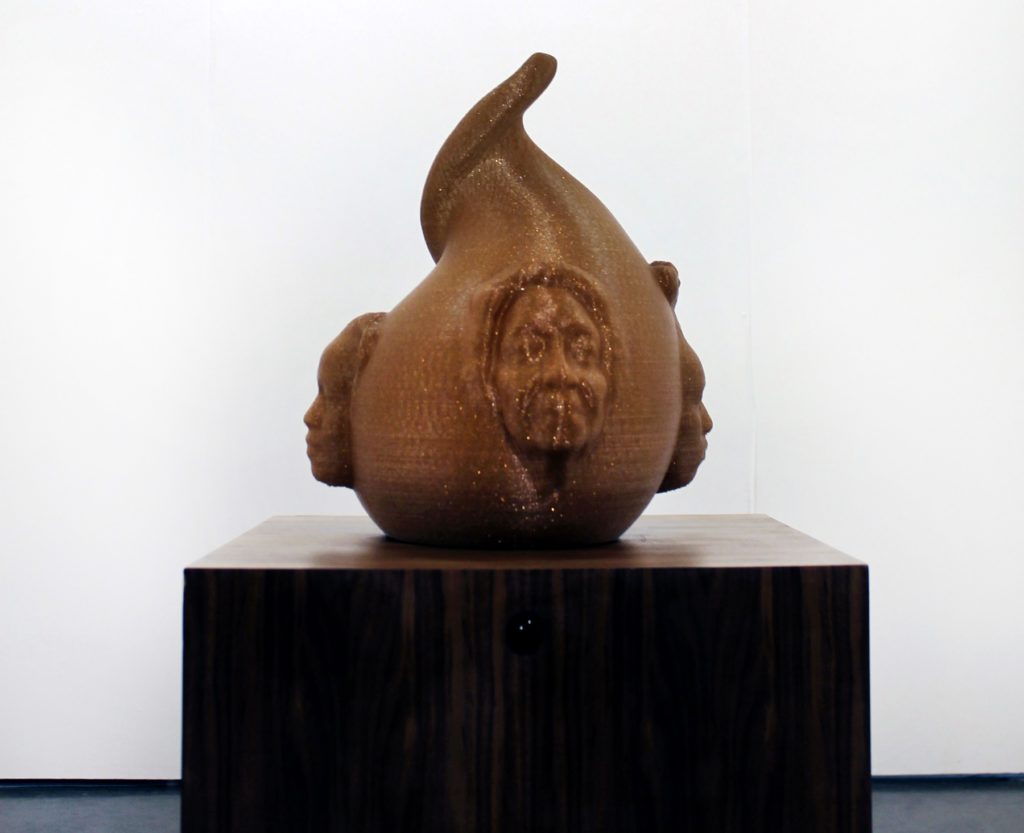
Installation view of Stephanie Dinkins’s
Not the Only One (2018). Image: Rain Embuscado.
Notable highlights among this year’s programming included
Patricia Piccinini’s sculptures, The Bond (2018) and
The Loafers (2018), which greeted attendees at the venue’s
entrance; Stephanie Dinkins’s AI-powered project, Not The Only
One (N’TOO), and the performer known as Bread Face’s
“Self-Facing” performance series—all of which (sited in their own,
semi-defined corners of the floor) captivated, mesmerized, and
confounded swathes of spectators throughout the weekend.
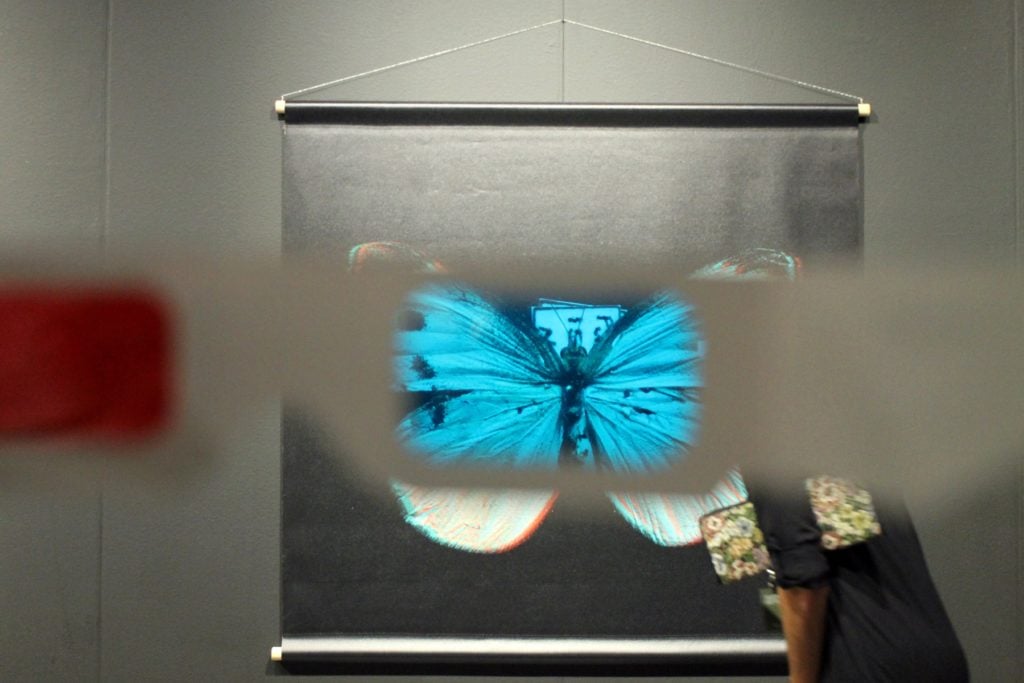
View of Spectres of the Postnatural:
Gynandromorph Butterfly (2019) by Richard Pell. Image: Rain
Embuscado.
Richard Pell’s “Spectres of the Postnatural” series, which
featured images of organisms irreversibly altered by human
intervention (and augmented by 3-D glasses), also stood out among
the flock.
That Thompson infused this year’s edition with interactive
displays is, invariably, a nod to his curatorial roots in socially
engaged art. In this new, post-Paul Allen Seattle Art Fair, his
decision—whether by design or accident—could be registered as a
reminder that art can function beyond its monetary dimensions, and
engage the audience with important issues.
Full Steam Ahead
Spirits were high among the galleries interviewed by artnet News
on opening night, including Muriel Guépin Gallery (New York), Simyo
Gallery (Seoul), and Projects Plus Gallery (St. Louis). In an
early, promising development, Greg Kucera—a leading figure in the
Pacific Northwest’s art circuit—revealed that he had already
sold five paintings
within the first 45 minutes of the collector’s preview.
But by Sunday morning, confidence had dimmed for a number of
hopeful dealers. Hannes Kuckei, owner of the Berlin-based gallery
Kuckei + Kuckei, concluded that this year’s edition was the weakest
he’d seen, attributing the fair’s decline to the absence of
household names like Gagosian and Zwirner. Charles Davidson of New
York’s Davidson Gallery, who has been an exhibitor since the fair’s
debut year, also said he sensed a dip in traction.
Other galleries suggested that there were, in fact, gains to be
had.
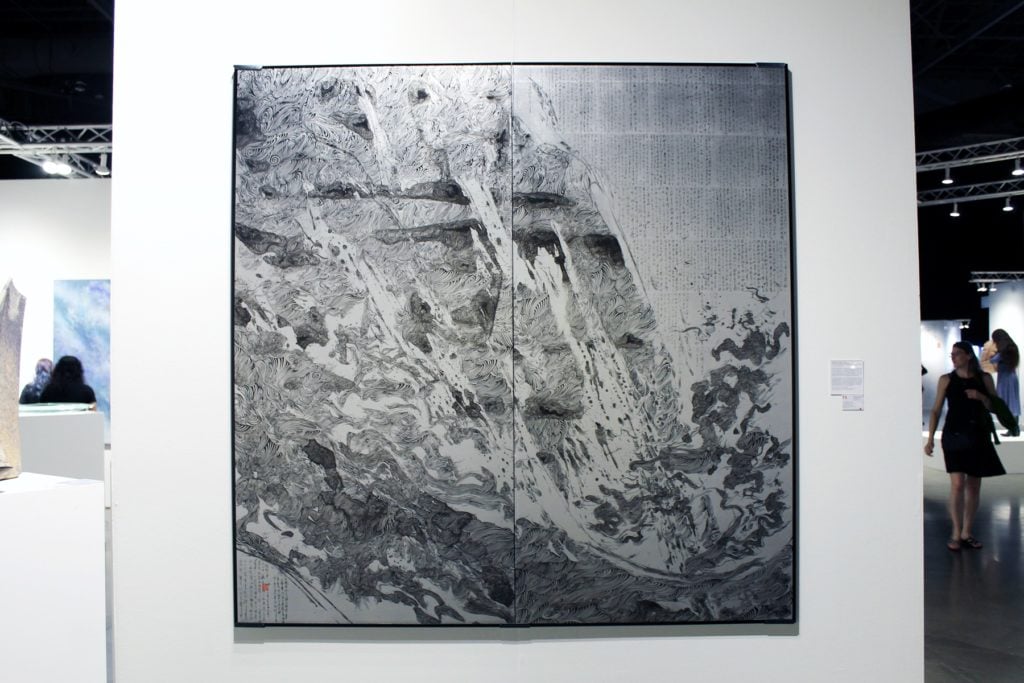
Installation view of Takafumi Asakura’s
Japanese Ink Painting at Yufuku Gallery’s booth. Image:
Rain Embuscado.
Wahei Aoyama, owner of the Tokyo-based Yufuku Gallery, told
artnet News Sunday morning that 11 works had sold since the
preview, exceeding both the gallery’s expectations and sales from
fairs past. “I think people underestimate the Seattle art market,”
Aoyama said. “Some of our clients only come to Seattle. If you want
to reach these clients, you have to come to them.”
Yufuku Gallery’s story isn’t isolated. Karyn Behnke,
director of Joshua Liner Gallery in New York, told artnet News that
its solo presentation of Heather Day’s paintings, which ranged from
$4,500 to just over $10,000, had nearly cleared out well before
closing day. Jessica Shea and Megan Des Jardins of Seattle’s
Winston Wächter Gallery also lauded this edition as their “best
year yet,” with works by Ethan Murrow, Claire Partington, and Peter
Gronquist fetching up to $28,000 apiece.
Elsewhere on the floor, Anthony James’s crowd-pleasing,
geometric sculptures at Melissa Morgan Fine Art’s booth reportedly
attracted the interest of prominent museums and tech firms in the
area. Gallery director Alec Longmuir said that the light-based
works, which command anywhere from $85,000 to $235,000, depending
on size, are slated for larger, public venues across the city of
Seattle.
“We did great,” Longmuir said. “You’ve got young, up-and-coming
money here—young collectors. And that’s a good thing.”
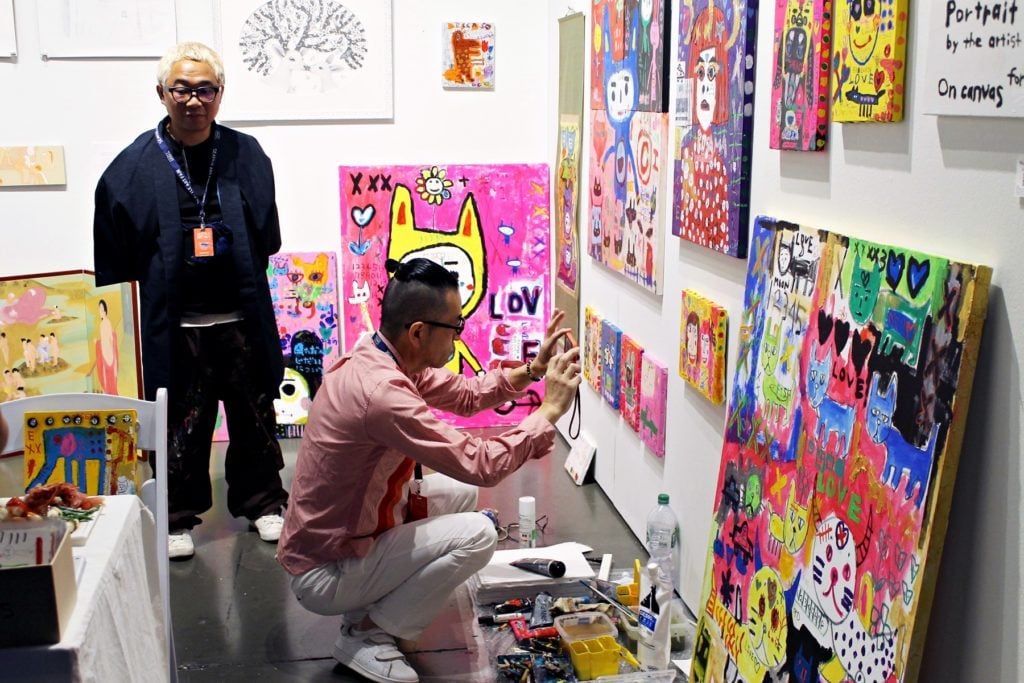
Installation view of OHSHIMA Gallery
booth. Image: Rain Embuscado.
Regional Interests
Despite the shifting exhibitor list, most observers interviewed
by artnet News emphasized the fair’s relevance to the region’s arts
ecology, framing it as an outpost for dealers, collectors, and
artists in the greater Northwest—and beyond.
“We wish galleries like Gagosian and Zwirner were still coming
back,” Seattle-based art dealer Greg Kucera said in an interview.
“But the scene goes on without them. It creates a different
hierarchy of quality to the fair. It allows northwest galleries to
shine.”
One northwest exhibitor that returned to the fold for 2019 is
the Portland-based Russo & Lee Gallery. According to the gallery’s
owner, Martha A. Lee, sales were strong this year, pulling in deals
that ranged from $1,200 to $18,000. When asked about the fair’s
future, Lee insisted that it was too early to say whether or not
the fair was “going to be a ‘regional node.’”
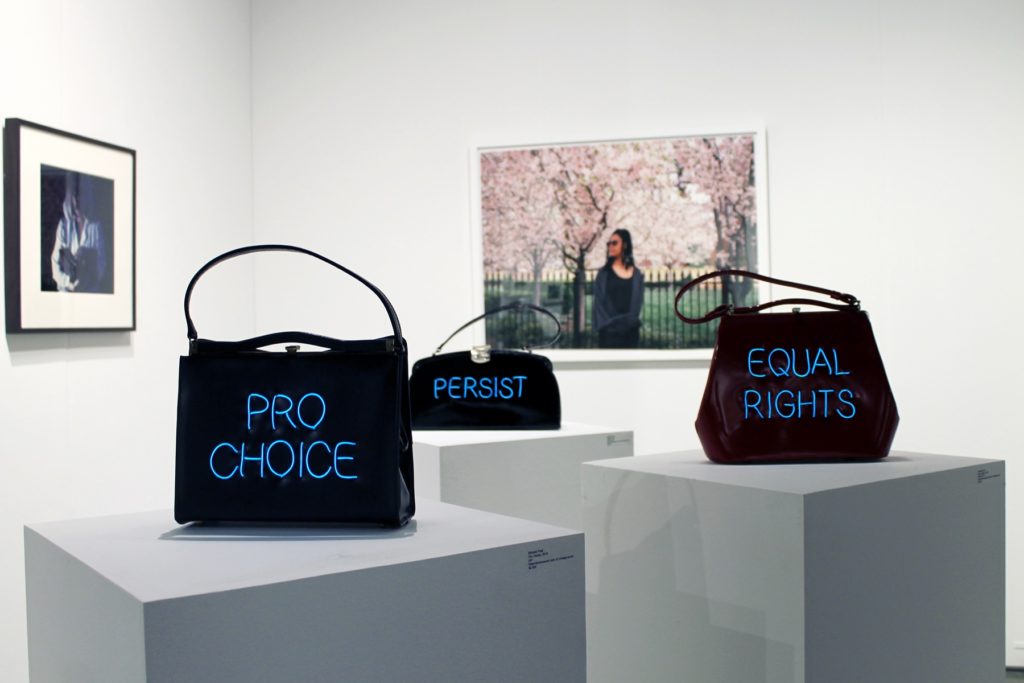
Installation view of selected works by
Cindy Sherman, Michele Pred, and Katherine Simone Reynolds at the
Project Plus Gallery booth. Image: Rain Embuscado.
Margaret Sherer, curatorial and gallery associate for the St.
Louis-based Project Plus Gallery, posits that while the Seattle Art
Fair does support regional interests, it also serves as a direly
needed opportunity for galleries otherwise overlooked in “fly-over
states.”
“We’re trying to weed out [events] that are not mandatory to
attend,” Sherer said, adding that the cost of attending art fairs
has prompted the gallery to reevaluate its financial priorities.
“The Seattle Art Fair is still kicking. We’ve been happy with our
sales here, and people here are open about the art that’s coming
out of St. Louis and the Midwest.”
Notably, Sherer disclosed that the gallery’s sales this year
included works by St. Louis-based artist Katherine Simone Reynolds,
outshining work by other, higher-profile artists represented in the
booth, including prints by the likes of Marilyn Minter and Cindy
Sherman.
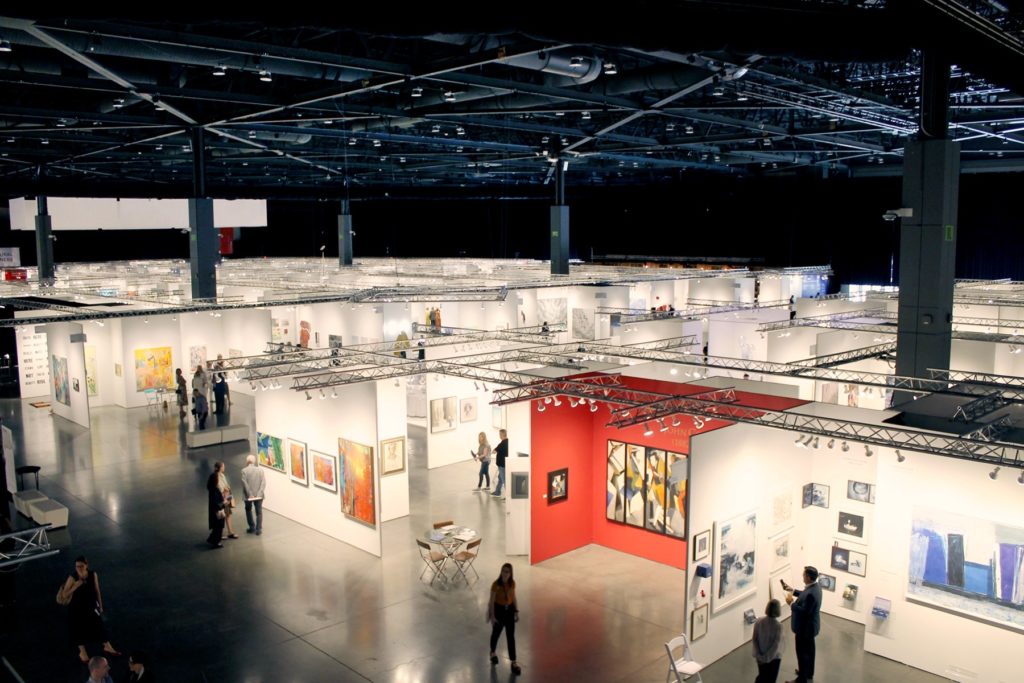
Mezzanine view of the Seattle Art Fair
2019. Image Rain Embuscado.
Whether the fair will regain the interest of the ultra-high-end
tier of galleries is anybody’s gamble. Tapping into Seattle’s
cornucopia of tech-driven wealth—long considered the primary lure
for art dealers braving the trip—remains a puzzle to be solved.
In the meantime, Seattle Art Fair’s director, Max Fishko, sees
nothing wrong with keeping things local. “There’s a lot of success
to be had by growing in a direction that serves the city,” he said.
“We always want to keep the regional focus. Seattle is a great city
to be in, and it’s a great moment to be there.”
The post ‘The Seattle Art Fair Is Still Kicking’: How the
Event Is Recalibrating After the Death of Founder Paul Allen and
High-Profile Gallery Defections appeared first on artnet
News.
Read more https://news.artnet.com/market/seattle-art-fair-2019-1617184
Further reading


Leave a comment