
With a New Show, the V&A Has Become One of a Handful of Museums Outside of Germany to Address the Legacy of Nazi-Era Loot
On Kristallnacht, the Nazi mayor of Frankfurt spotted a
chance to seize the art collection of one of the wealthiest men in
Germany in one fell swoop.
As synagogues burned and Jewish-owned businesses were attacked,
he made Maximilian von Goldschmidt-Rothschild an offer that he
could not refuse: if the 94-year-old banker sold his art to the
city, a sign would go up outside his mansion protecting it as
municipal property.
Within days, the city’s museum directors arrived to create an
inventory of the famed collection, and soon after, the Nazis
declared his home a new branch of the Frankfurt Museum for
Decorative Arts.
A gold snuffbox owned by Goldschmidt-Rothschild is one silent
witness to that terrible night in Germany in November 1938.
The object, which will be on view at the Victoria & Albert Museum
in December in a display titled “Troubling Objects,” is one of
several to tell previously untold stories of Nazi theft.
The show, which is organized by the V&A’s
new provenance and spoliation research curator, Jacques
Schuhmacher, will be the museum’s most significant move thus
far to address objects with “provenance gaps”—a euphemism for art
and artifacts that could have been stolen or sold under duress
during the Nazi era.
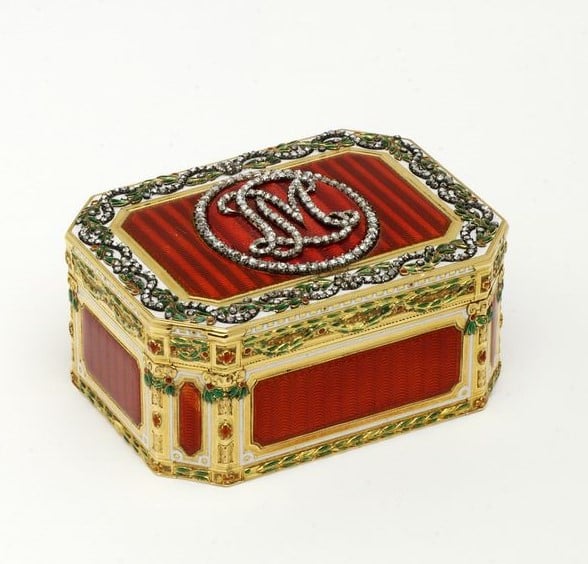
A box from the Goldschmidt-Rothschild
Collection at the V&A, Gilbert Collection. Photo courtesy of
the V&A Museum.
“We knew [the box] had come from a Rothschild collection, but
not which one,” Schuhmacher tells artnet News. After in-depth
research, including into Frankfurt’s archives, Schuhmacher
discovered that after World War II, Maximilian’s son, Rudolf, who
had served in the US military, successfully recovered parts of the
collection, including the gold box. “A lawyer would stop there.
Case closed,” Shuhmacher says. “We will try to use it to tell the
story of Nazi looting.”
Schuhmacher is the first dedicated provenance curator to be
appointed by a UK museum. “In Germany there are more than
100,” he says. “Almost every small municipal museum has had a
display about looting during the Nazi era.”
Exhibitions outside Germany about the topic are only recent
affairs, however. Last year, the Louvre displayed more than 100
works of art with problematic provenances for the first time. And
the Kunstmuseum in Bern has been engaged in a deep dive into its
collection of works gifted by Cornelius Gurlitt, who inherited Nazi
loot from his war-profiteer father, Hildebrand.
The director of Nelson-Atkins Museum of Art, Julián
Zugazagoitia, says painstaking research into Nazi-looted art is
essential. The Kansas City museum is currently showing
“Discriminating Thieves,” which includes a painting looted in 1938
from another member of the Rothschild dynasty.
The Gestapo confiscated Alphonse and Clarice von
Rothschild’s portrait of Augustus the Strong, Elector of Saxony and
King of Poland (around 1715) by Nicolas de Largillière. The
Baroque-era painting was earmarked for Hitler’s planned
Führermuseum in Linz. Discovered in a salt mine in 1945, it was
restituted to the Rothschild family in 1947 after which it made its
legal way to the US museum’s collection.
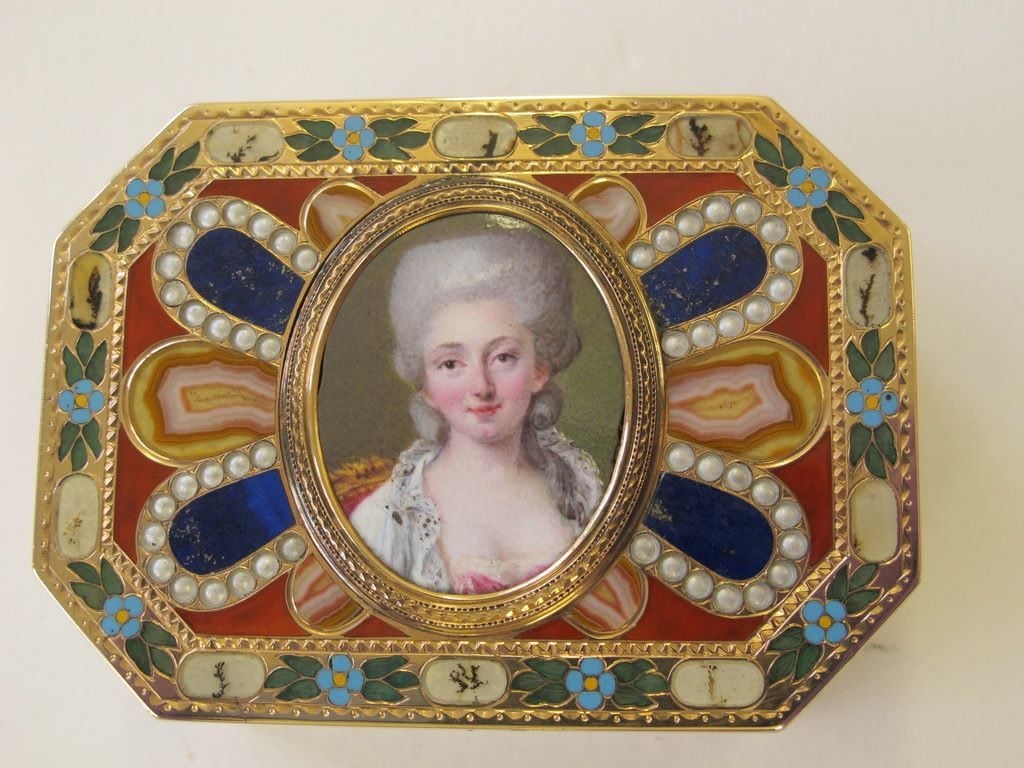
Box with Eugen Gutmann Provenance at the
V&A. Image courtesy of the V&A
Confronting History Head-on
Schuhmacher admits he was surprised after starting at the
V&A that the museum “was not super cautious or stonewalling”
about sharing its research.
“They said, ‘if there was a problem, we will communicate it.’”
He pays tribute to Tristram Hunt, a
politician-turned-museum-director, who is also addressing the
legacy of its colonial-era loot. Last year, Schumacher organized
the display of the Maqdala Treasures taken
from Ethiopia, which candidly presented the history of
their seizure in the 19th century by British troops.
Overall, Schuhmacher has so far identified more than 80 objects
in the museum that have raised red flags when it comes to
provenance research. The V&A’s goal to identify the families to
whom these works may belong, he says, and also to share information
with the wider public.
“The V&A is taking a very proactive stance, which is unusual
outside Germany,” says Emily Gould of the Looted Art Commission.
“There is an increasing understanding that there is so much work to
be done. Provenance research must not be a box-ticking exercise,”
she stresses, adding that there will always be some degree of
tension between legal necessities and ethical demands. “But the law
has not got all the answers about the Nazi era,” she says.
“We now have enough distance from the horrors of World War II to
absorb the impact of the Nazi looting of art,” Zugazagoitia
says. As museums become more transparent about the histories of the
tainted objects in their collection, he adds, it “can help us all
heal and better understand the past.”
The post With a New Show, the V&A Has Become One of a
Handful of Museums Outside of Germany to Address the Legacy of
Nazi-Era Loot appeared first on artnet News.
Read more https://news.artnet.com/art-world/museums-nazi-looted-art-1632652
Further reading


Leave a comment