
In Salt Lake City, a New Museum Director Is Attempting to Bridge the Gulf Between Contemporary Art and Mormonism
It’s a tale of two cultural institutions, separated by just
one-fifth of a mile along Salt Lake City’s West Temple Street.
On one side is the Church History Museum, part of the Church of Jesus
Christ of Latter-Day Saints, where the collection includes a
first-edition Book of Mormon and a Joseph Smith death mask. A
didactic informs visitors that art illuminates its collectors’
values and preferences, and it may “pay devotion to God.”
A five-minute walk south is the Utah Museum of
Contemporary Art, which welcomes “all points of view,
experiences, and ages,” according to its website. It was there, in
2017, that a contemporary Saudi art exhibition, funded in part by a Saudi oil company,
compared and contrasted pilgrimage sites Salt Lake City and Mecca.
And an exhibition earlier this year addressed the
marginalization of LGBT youth, while a 2016 interview on the museum’s website with
artist Leeza Meksin, who had works in a sculpture exhibition there,
said that Mormon leaders “don’t even know how queer they are.” She
added that if the church were more self-aware in this regard it
wouldn’t punish sexual minorities and make them choose between
their families and their lovers.
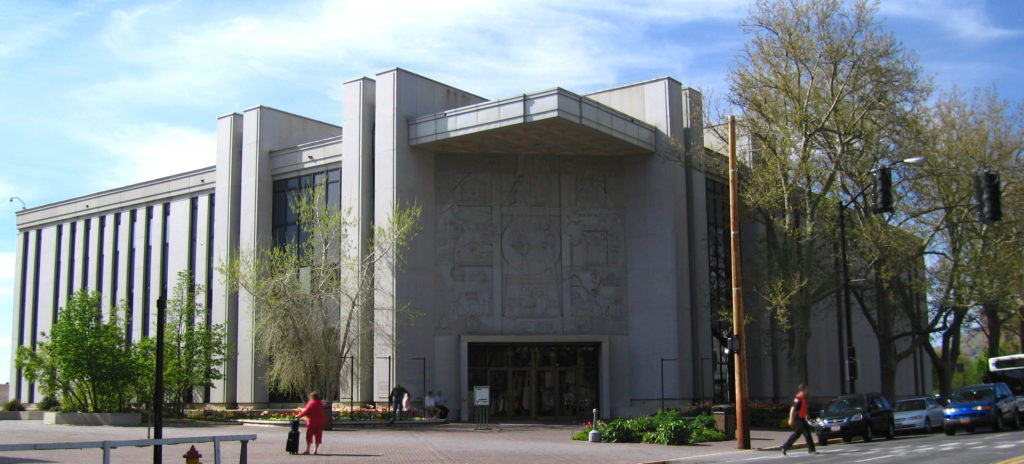
The Church History Museum in Salt Lake
City, Utah. Courtesy of the Church History Museum.
The gulf between the two institutions makes it all the more
surprising that the Utah Museum’s new executive director, Laura Allred Hurtado, came from
the Church History Museum, where she was global acquisitions
curator. At the Utah Museum—founded in 1931 as the Art Barn
Association before becoming the Salt Lake Art Center in 1958 and
the Utah Museum of Contemporary Art in 2011—Hurtado oversees an
$800,000 annual budget, six employees, and two contractors.
Hurtado’s path from church museum to secular contemporary arts
institution may sound like mixing oils and watercolor, but there is
hope in the community that she can bridge the divide.
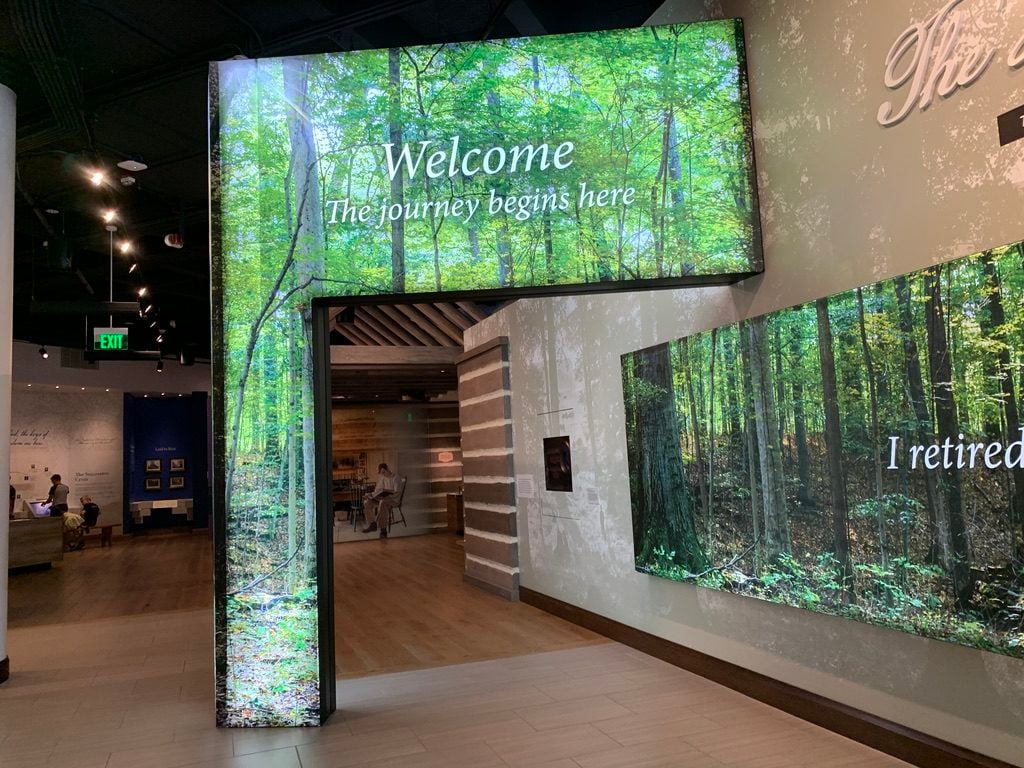
Installation view of the Church History
Museum. Photo: Menachem Wecker.
A California Mormon
Hurtado grew up in California, and although there is a term
‘California Mormon’—perhaps a distant cousin of a ‘Rockefeller
Republican’—she was raised in a devout family with a bishop-father.
She attended Brigham Young University as an undergraduate and
received her Master’s in art history from the University of
Utah, where she wrote a thesis on motherhood and representation in
feminist art. (She returned to that subject in her 2014 Church
History Museum show “Practicing Charity: Everyday Daughters of
God.”)
Early in her tenure at the Church History Museum, Hurtado
realized that the institution largely told a traditional story
through its art collection and could benefit from showing
postmodern and conceptual art as well. “If we were going to create
a record of a people, that record needed to be a whole one,” she
says.
She is particularly proud of several accomplishments at the
museum: a Joseph Paul Vorst retrospective (and acquisitions from the
estate), acquiring the Glen and Marcia Nelson Collection of Mormon
Art, as well as works by Angolan artist Hildebrando de Melo, and
creating culture “capsules” with snapshots of lived religious
experiences (modeled on the Warhol Museum’s time capsules).
Utah is home to a small, collegial art world, according to
Hurtado, and her work at the Church History Museum distinguished
her enough that the Utah Museum of Contemporary Art invited to help
curate two shows, the Utah Biennial and “Church vs. State: Contemporary Collecting
Praxis.” Hurtado, then still working in her previous job,
signed up thinking the latter’s title was “Church and
State.” Ultimately, she and the other curator, Felicia Baca, then
of the Utah Division of Arts and Museums, decided the title wasn’t
a deal-breaker.
Hurtado credits her experience at the Church History Museum with
giving her an ability to bridge communities. “Previous curators
most certainly would not have been asked, in part because there can
be divisiveness within Salt Lake,” she says. “But I was able to
curate these two shows, and both were from the lens of the
church.”
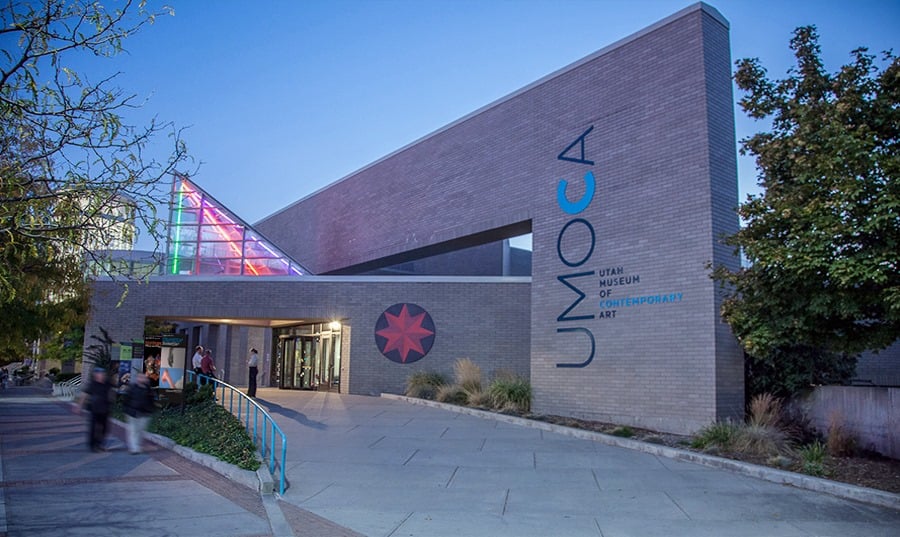
The Utah Museum of Contemporary Art.
Courtesy of UMOCA.
Church and State
Although the church and art have been indelibly linked
throughout history, leaders of religious institutions today may
have little grasp of contemporary art. As the modern state
secularized it gave rise to private art markets and the church
retreated from making major commissions, says David Morgan, an art historian and religious studies
professor at Duke University. “Nowadays, the two worlds don’t
overlap much,” he says.
But in Utah, the crossover may be more apparent. “Because
the church is such a public-facing institution in Salt Lake, the
lines between the church and public life are not so well defined as
they might be elsewhere,” says Matthew Bowman, chair of the Mormon studies department
at Claremont Graduate University. One former Church History
Library collection and acquisition manager went on to direct the
Utah state history office, Bowman notes, and the Mormon church
founded Brigham Young University, which it continues to operate
today.
Hurtado is somewhat reluctant to describe what was or wasn’t
allowed in her former job. Instead, she says, “There were more
ideological or philosophical stereotypes, traditions, and biases
than institutional edicts,” she says. “I worked to negotiate and
navigate these to expand the scope of the collection and the
working definition of Mormon art.”
Hurtado considers the Church History Museum a genre institution
in the tradition of “disaster museums” like the 9/11 Memorial and
Museum or the US Holocaust Memorial Museum. “There’s not going to
be irony or criticism within that space,” she says. “Whereas other
institutions may have a critique or a nuanced perspective, they’re
very exacting to what they’re trying to say and accomplish.”
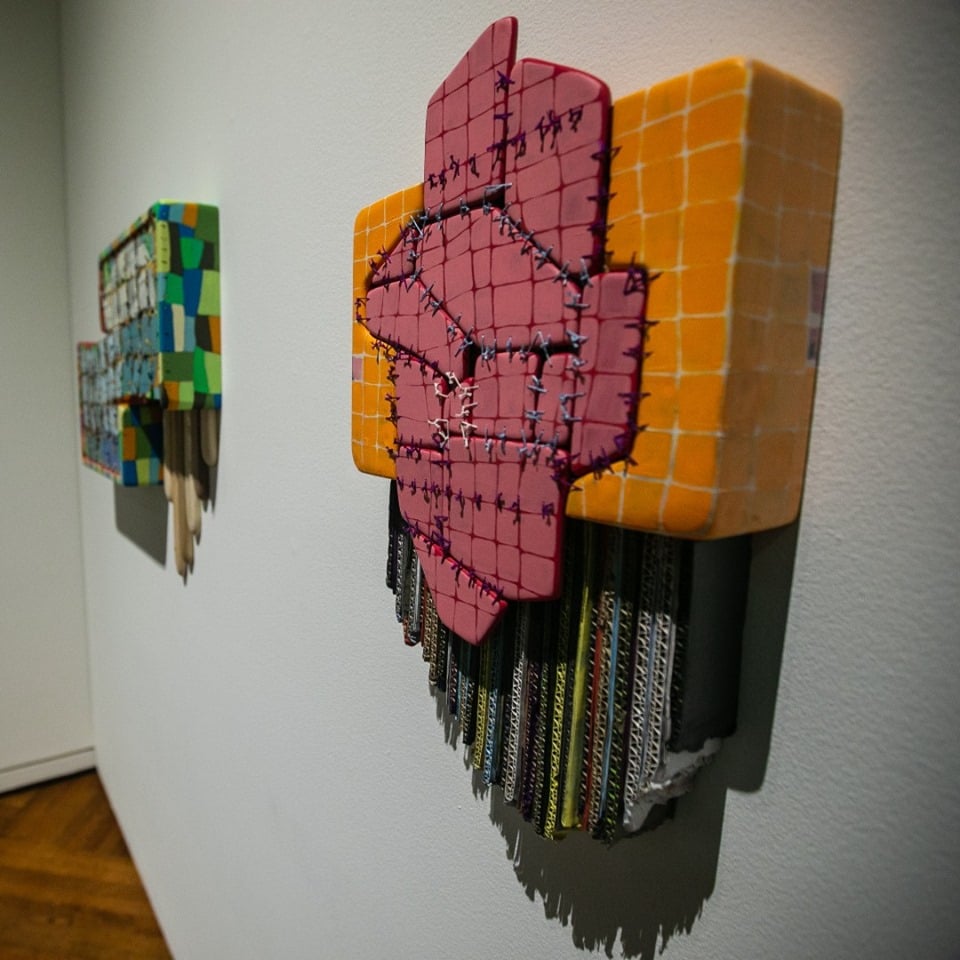
Installation view of Art Morrill’s works
in the main gallery. Courtesy of the Utah Museum of Contemporary
Art.
Navigating New Waters
Religious aspects of Hurtado’s curating haven’t diluted her
shows, says Mark
Magleby, who directs the Brigham Young University Museum of Art
and was Hurtado’s undergraduate adviser. She “very deftly” acquired
works for the Church History Museum that were interesting
conceptually while still not being critical of faith, he says.
“She’s been very brave in what she’s done in various periods of her
life,” he says.
The Church History Museum’s comparatively “vanilla” lens wasn’t
a bad thing to Hurtado, but she feels more freedom working within
the broader mandate of the Utah Musuem. She hopes to bridge Salt
Lake City’s contemporary art and church communities, but she’s also
eager to explore other aesthetic domains beyond the church.
Hurtado compared her old workplace to a cruise ship and her new
one to a speedboat. At the Church History Museum, she was forbidden
from fundraising, which is now a big part of her job. The Church
History Museum “cruise ship” won’t make anyone seasick, but as a
giant nautical hotel also won’t rock you. That’s more par for the
Utah Museum’s course. “As a speedboat, you feel the waves. You also
feel the water in the air, and there’s something that makes you
feel really alive in that process,” Hurtado says.
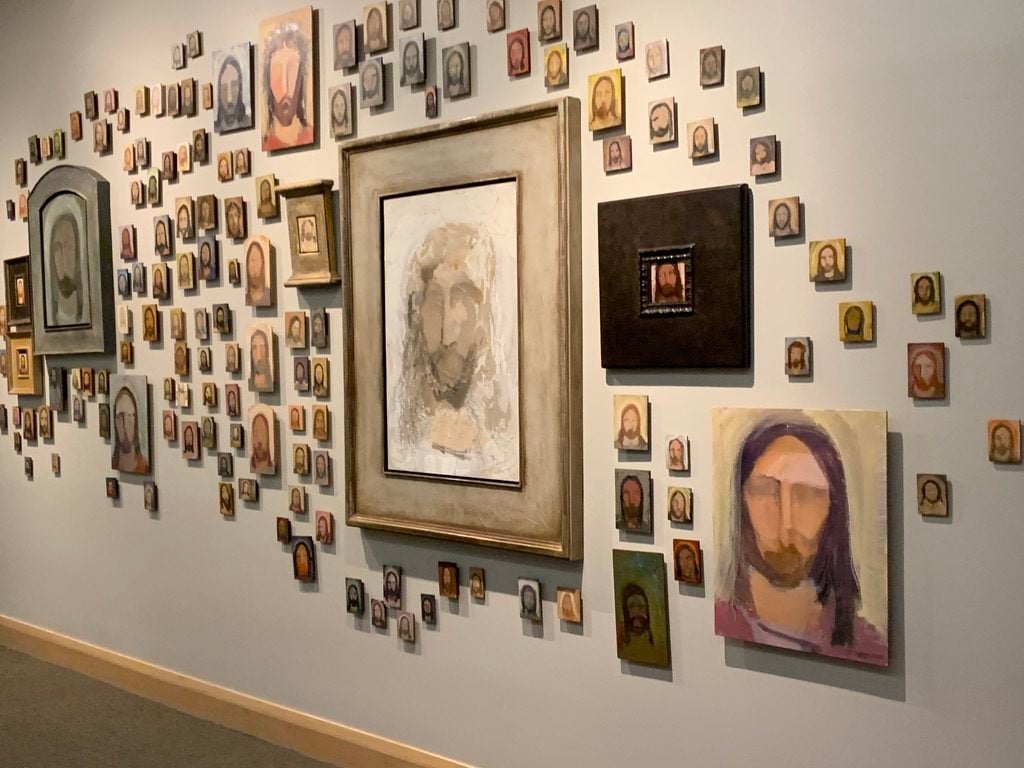
J. Kirk Richards’s “Cristo series” that
Hurtado acquired for the Church History Museum. Photo: Menachem
Wecker.
Hurtado’s unusual perspective on church art surfaced in a 2016 interview with the Mormon Women Project, a
digital interview library. She told the site that she preferred
images where Christ turns his back to the viewer with his face
obscured because, she said, “It allows such a loaded and iconic
figure to be sorted out on a personal level for the viewer.”
At the Church History Museum, Hurtado displayed and acquired J.
Kirk Richards’s “Cristo
Series” of 150 variously-sized paintings of Jesus, often
abstracted. She sent the same series temporarily to the Utah Museum
of Contemporary Art for the Utah Biennial. “I like this version of
Christ, because it mirrors the terrestrial fog in which we access
Christ here on earth,” she told the Mormon Women Project. It’s hard
to imagine better training for navigating the contemporary art
world in than trekking headfirst through terrestrial fog.
The post In Salt Lake City, a New Museum Director Is
Attempting to Bridge the Gulf Between Contemporary Art and
Mormonism appeared first on artnet News.
Read more https://news.artnet.com/art-world/laura-hurtado-salt-lake-city-1659925
Further reading


Leave a comment