
Searching for the Perfect Artist Residency? A Young Artist Has Generously Compiled a Huge Google Doc of Everything You Need to Find It
There’s a point in the evening,
says Everest Pipkin, where artists start talking about
residencies. What
residency do you have coming up? What ones are you applying to? Oh,
did you hear about this one? It might be a good fit for
you…
Pipkin, who resides in
Pittsburgh, goes a step further than most, however.
“Oh, I have this list,” the
artist will say. “Let me send it to you.”
Over the years, Pipkin has
compiled a spreadsheet called The Big Artist
Opportunities List,
compiling over 370 artist residencies and similar opportunities
(“Mostly residencies, some grant funding & galleries,” the Google
Doc promises at the top). They recently shared this trove of info
publicly online, where it quickly made the rounds of creative
circles around the world.
“Most artists have this type of
little running list,” they say to Artnet News on a phone call.
“That reciprocity of, ‘Here’s my list of opportunities,’ and them
saying, ‘Oh, here’s my list’ was really nice. And over time, my
list grew. Sharing it with people is rewarding and rare in a field
where everything is by definition and default a
competition.”
Pipkin says that their move to
share the Opportunities List worldwide was a result of their
current position as a visiting professor at Carnegie Mellon School of Art. Having students,
they say, is a great reminder of how useful such generosity can
be.
“I’ve been thinking a lot about
community and community health, and how you can contribute to other
people’s lives when your skillset is in the arts,” they say. “There
are some people whose practices directly align with public service,
but for an artist like me whose work doesn’t as easily fit that,
what do I have that can directly affect the lives of others? Those
resources can create a massive improvement in the lives of
artists.”
Evidently, artists agree: the
list has been retweeted more than 3,300 times since Pipkin posted
it on November 23rd, and it has been shared far and wide on other
social-media platforms. This surge in popularity actually came as a
bit of a surprise to Pipkin, who had scrawled pithy, casual notes
about each residency (“no internet! no cell! new york, near
albany,” they write about the Blue Mountain Center’s residency, and
“i mean, its redbulllll,, but also 3 months and 12k in funding.
detroit,” about Red Bull Arts Detroit residency). Pipkin had even
put notes, since deleted, itemizing which residencies they’d
personally applied for, gotten into, and gotten rejected
from.
“I wasn’t really anticipating
the attention it’s gotten,” they say. “It wasn’t in a format that I
thought, ‘Thousands of people will find this useful.’ It had
embarrassing personal notes. I had been rejected this many times.
If I had known it would immediately become a resource, I would have
spent a little longer on it.”
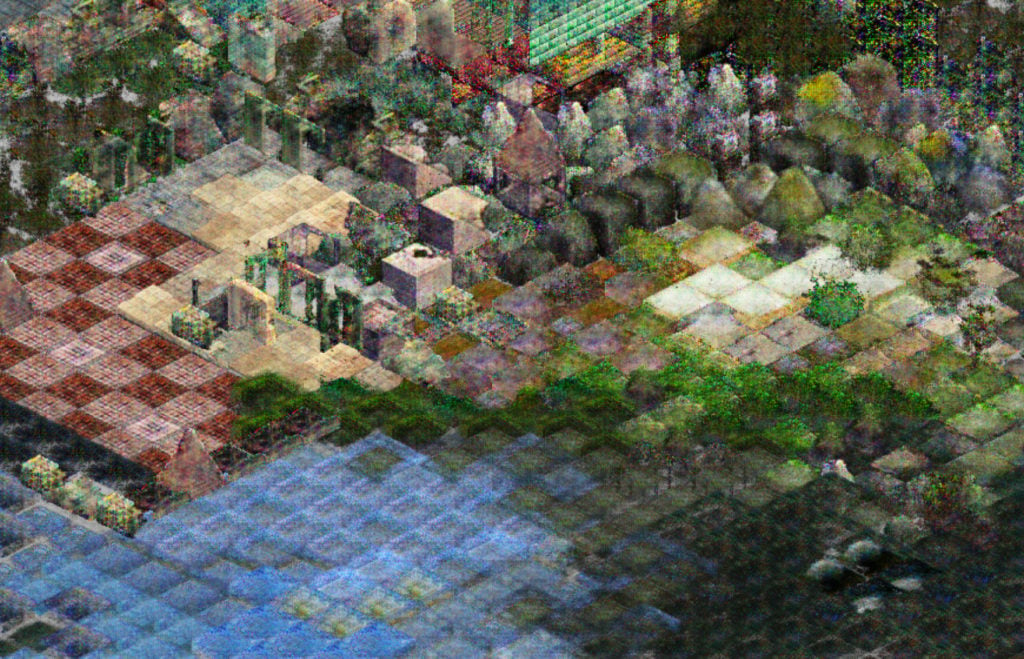
Mushy, 2019, an example of
Everest Pipkin’s data-driven art practice.
For now, they’re working on
adding locations and formatting the list so that it’s more formal.
Such data-formalism comes naturally to Pipkin, who writes on their
website that their practice involves producing “intimate work with
large data sets. Through the use of online archives, big data
repositories, and other resources for digital information, they aim
to reclaim the corporate internet as a space that can be gentle,
ecological, and personal.”
As an avid residency applicant,
Pipkin has plenty of tips to offer to novices.
The first bit of advice is
practical. “I find residencies can be extremely productive, but I
wouldn’t do a bunch of them while paying for another apartment at
the same time,” Pipkin says. “That financial obligation can be
stressful. If you’re in a position where you have to keep
your house, find a short-term residency–think of it as a vacation
and not a full-time lifestyle.”
Pipkin also has some helpful
hints about how to keep your applications fresh and relevant, even
when you may be submitting to so many programs that it’s difficult
to keep them all straight.
“I applied to 110 last year,
which is one every three days,” they say. “When you’re applying at
that type of capacity, it’s important to have reusable material:
your bio in the short and long-form, your CV at the two-page limit
and a longer version, and your statement. But there’s one aspect I
don’t think you should recycle, and that’s what you actually want
to do in the place…. Thinking about why you fit in that place, and
what you want to do there, and why you want to be there is
important and that gets through to the people who review this
stuff. It’s useful for them to see that you actually
care.”
The post Searching for the Perfect Artist Residency? A Young
Artist Has Generously Compiled a Huge Google Doc of Everything You
Need to Find It appeared first on artnet News.
Read more https://news.artnet.com/art-world/big-artists-opportunities-list-1717494
Further reading


Leave a comment