
What Was the Most Influential Work of the Decade? We Surveyed Dozens of Art-World Experts to Find Out
As the turbulent and event-filled 2010s come to an end, we
asked more than 100 artists, curators, gallerists, and other
art-world figures to tell us their picks of the most influential
art and art-makers of the decade. Here is a selection of their
responses.
Yayoi
Kusama, Infinity Room (1965–)
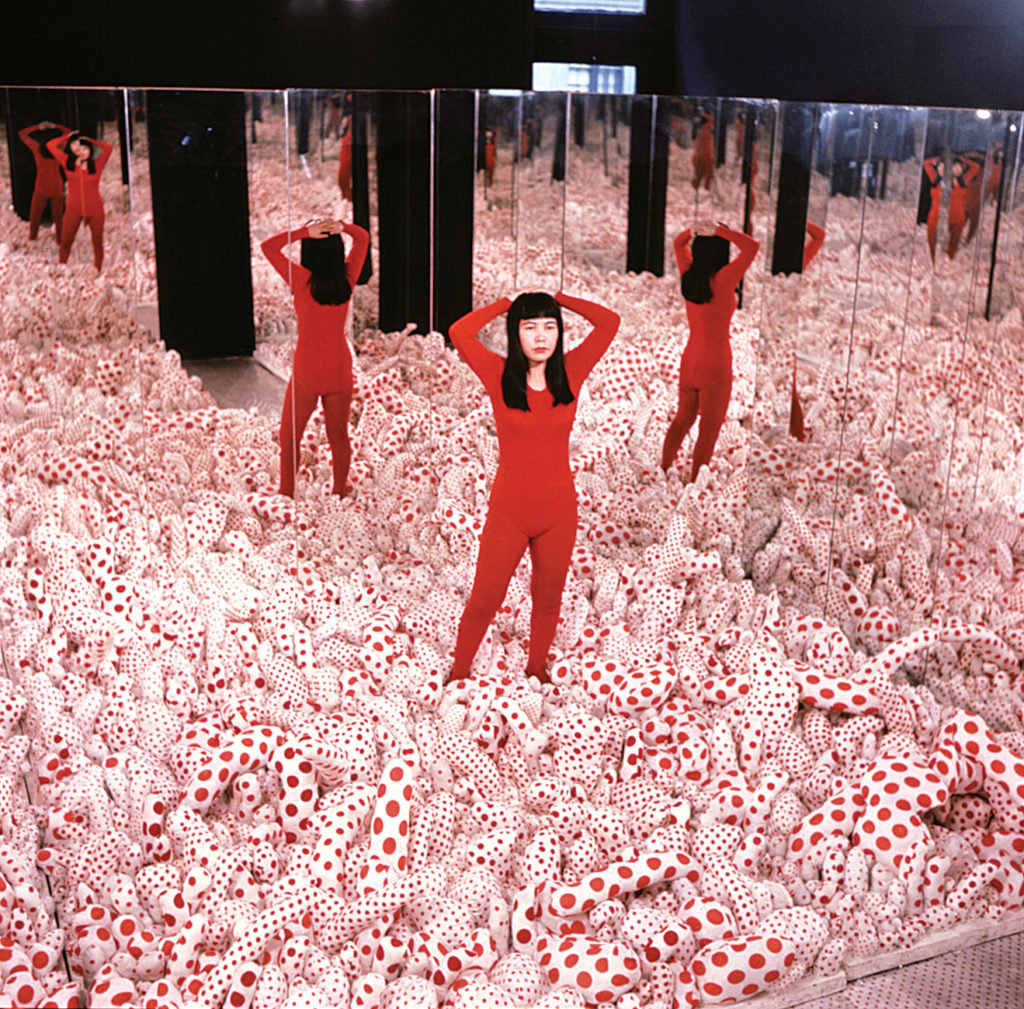
Yayoi Kusama, Infinity Mirror Room
(Phalli’s Field), 1965. Photo courtesy of Yayoi Kusama Studio
Inc.
Without a doubt, Yayoi Kusama’s
infinity rooms were inescapable in this decade. While she started
making them in the 1960s—The Aldrich showed her in 1968—they have
emerged to become the work for our selfie-obsessed moment.
—Cybele Malone, executive director at the Aldrich Contemporary
Art Museum
# or, the Hashtag
(2010)
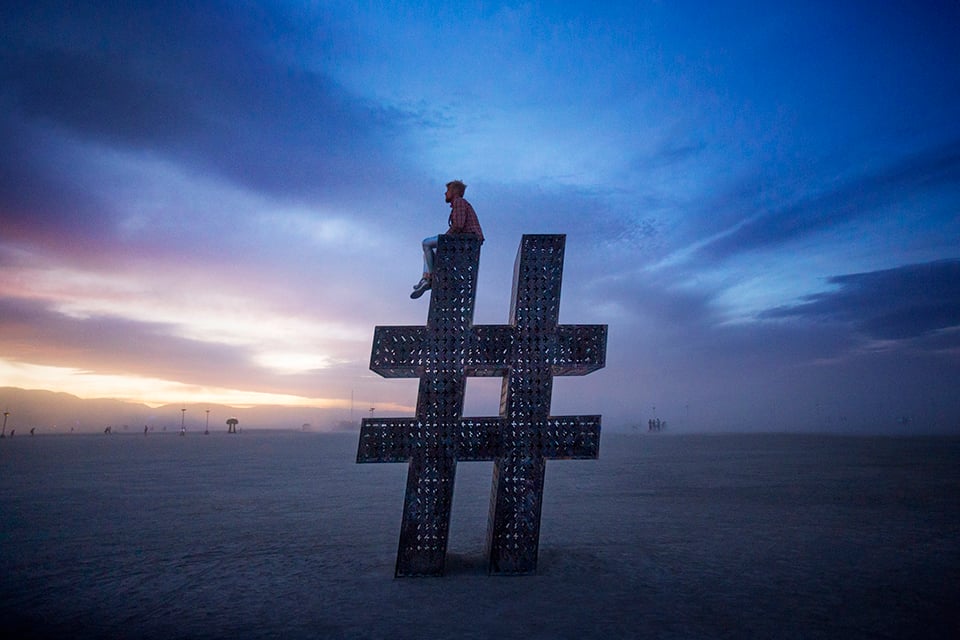
Laura Kimpton and Jeff Schomberg,
#. Photo: Bill Hornstein.
# The hashtag is the most influential mark of the
decade. Digital culture and the # have fundamentally changed the
reception of #art, conversations around art, and who has access to
#culture. #Instagram, introduced in 2010 and now the preferred
social media platform of the #artworld, has altered how people
experience art, from #selfies in #YayoiKusama #infinityrooms to
memes of #MaurizioCatalan’s #banana. The hashtag has also mobilized
conversations around #activism in art—#metoo #blacklivesmatter
#decolonize #timesup—and has amplified the debates around #art
#representation and #culturalappropriation.
—Eva Respini, chief curator at the Institute of Contemporary
Art Boston
Marina Abramović, The Artist Is
Present (2010)
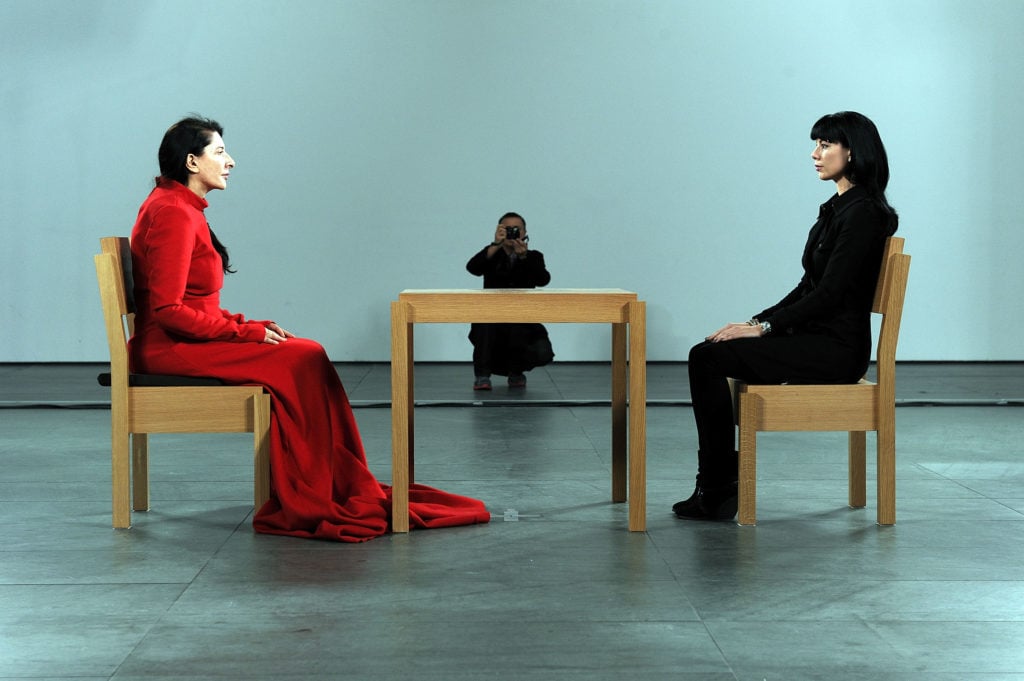
Marina Abramović performs during the
“Marina Abramovic: The Artist is Present” exhibition at MoMA. Photo
by Andrew H. Walker/Getty Images.
I chose Marina Abramović’s performance
The Artist is Present at the MoMA in 2010, when
Performance art entered the popular culture and Marina resurrected
as a new icon. The event was a social and cultural moment involving
an online sensation. It was the first artwork as a public
spectacle, a life experience to be part of and to share with social
media. Here was the beginning of a trend which became integral to
the entire decade.
—Dr. Arturo Galansino, Director, Palazzo Strozzi in
Florence
Hassan
Hajjaj, Kesh Angels (2010–)
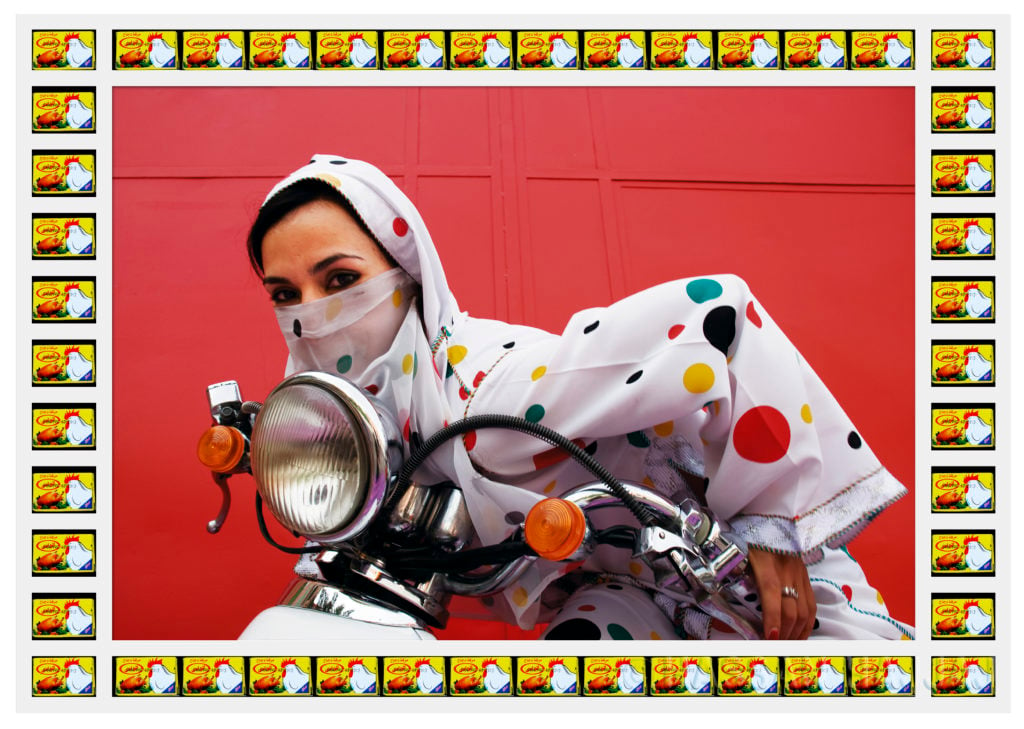
Hassan
Hajjaj, Kesh
Angels series (2014):
The series confronted stereotypes, challenging Western perceptions
of the hijab and female disempowerment. The series also played a
role in bringing international attention to the exciting and
experimental art scene of Marrakech.
—Touria El Glaoui, director 1-54 Contemporary African Art
Fair
Christian
Marclay, The Clock (2010)

Christian Marclay, The Clock
(2011). Still courtesy of wikimedia.
For me this is a toss-up between
three paradigm shifting projects, which each speak to the idea of
the artwork as event across media: Christian Marclay’s The
Clock (2010); Marina Abromivic’s The Artist is
Present (2010); and Kara Walker’s
A Subtlety (2014).
—Alexis Lowry, curator, Dia Art Foundation
Carol Bove, The Foamy
Saliva of a Horse (2011)
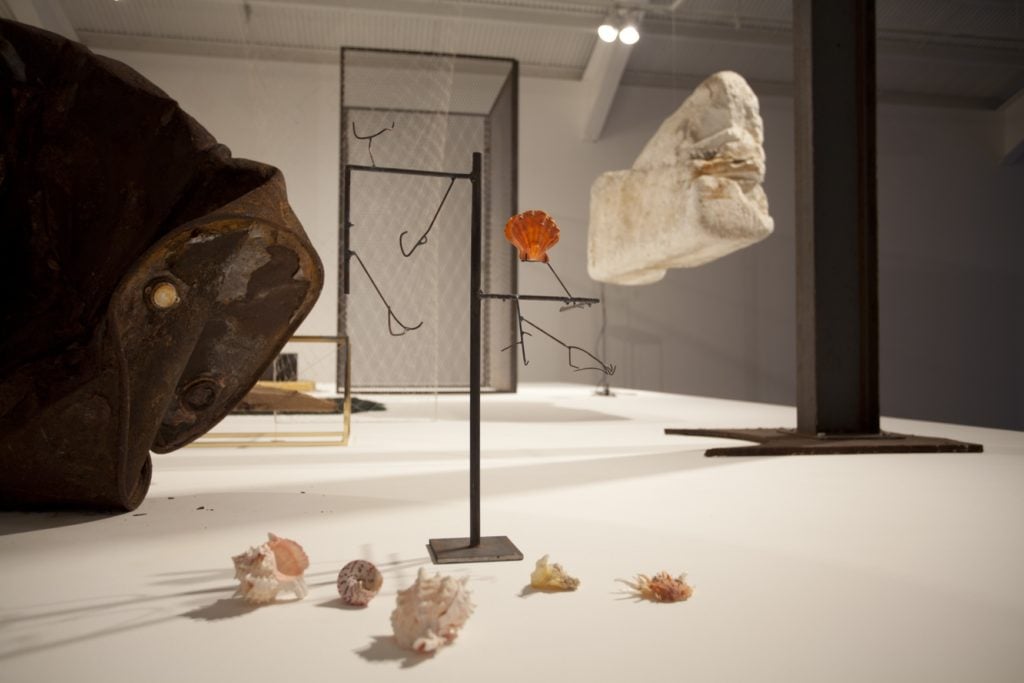
Installation view, Carol Bove, The
Foamy Saliva of a Horse (2011). Courtesy of the artist and
Kayne Griffin Corcoran.
First presented at the
54th Venice Biennial, this was an artwork that
literally and metaphorically stopped visitors in their tracks,
refusing to be ignored. An eye-level plinth collected a
free-association assemblage of found and exquisitely crafted
objects. Comprising materials as varied as an oil can found on the
Hudson River shore near the artist’s New York studio, an exquisite
arrangement of shells, a silver woven curtain, driftwood, display
structures, peacock feathers, and the blissful spaces between these
and other objects, this was sculpture in action.
The Foamy Saliva of a
Horse pressed its way
through the decade, forming a new lexicon that felt as if it had
always been there.
—Lisa Le Feuvre, executive director of the Holt/Smithson
Foundation
Random
International, Rain Room (2012)
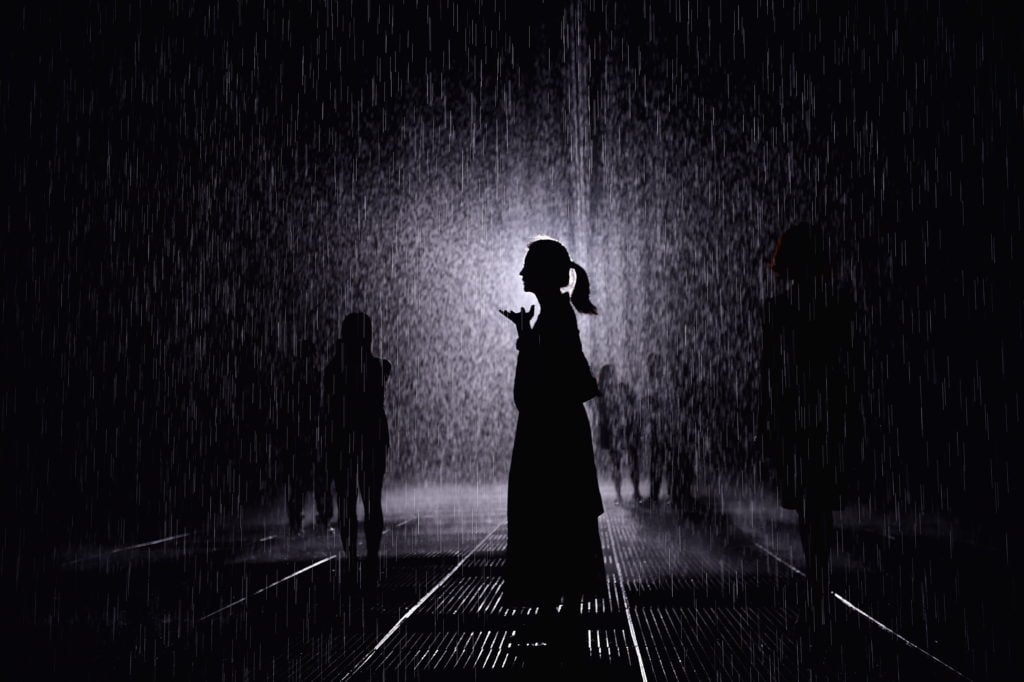
Random International’s “Rain Room” was
displayed at the Yuz Museum in 2018. Photo courtesy of the Yuz
Museum.
Christian Marclay’s The Clock. Random
International’s Rain Room. Andrea Bower’s Open
Secrets. Maurizio
Cattelan’s Comedian.
—Lisa Schiff, art adviser
Pierre Huyghe’s
Untilled at Documenta (13), (2012)
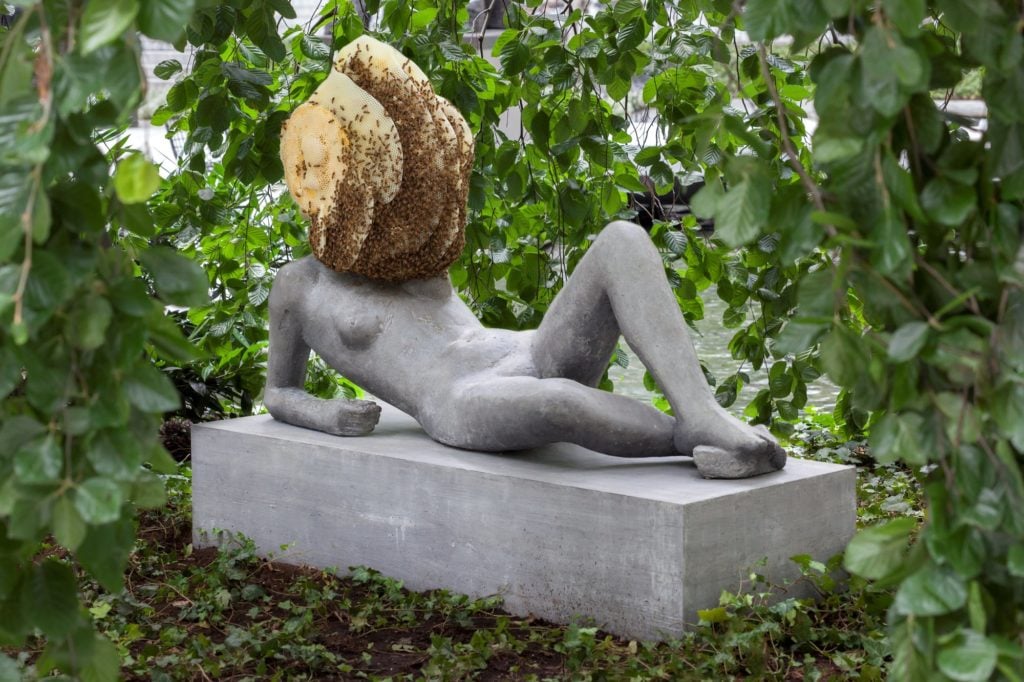
Pierre Huyghe’s, Untilled (Liegender
Frauenakt) (2015). Courtesy of MoMA.
Huyghe’s de-centered composition
of “live and inanimate objects made and not made” on the grounds of
a city compost facility—including two greyhound dogs, a live bee
colony, and a groundskeeper—offered an unforgettable and strikingly
disorienting reimagination of art in public space. It stands as a
prescient harbinger of the societal decay and fragmentation that
closes the decade.
—Olga Viso, fellow at the Andrew W. Mellon Foundation and
senior advisor at Arizona State University’s Herberger
Institute
Andrea
Fraser, There’s No Place Like
Home (2012)
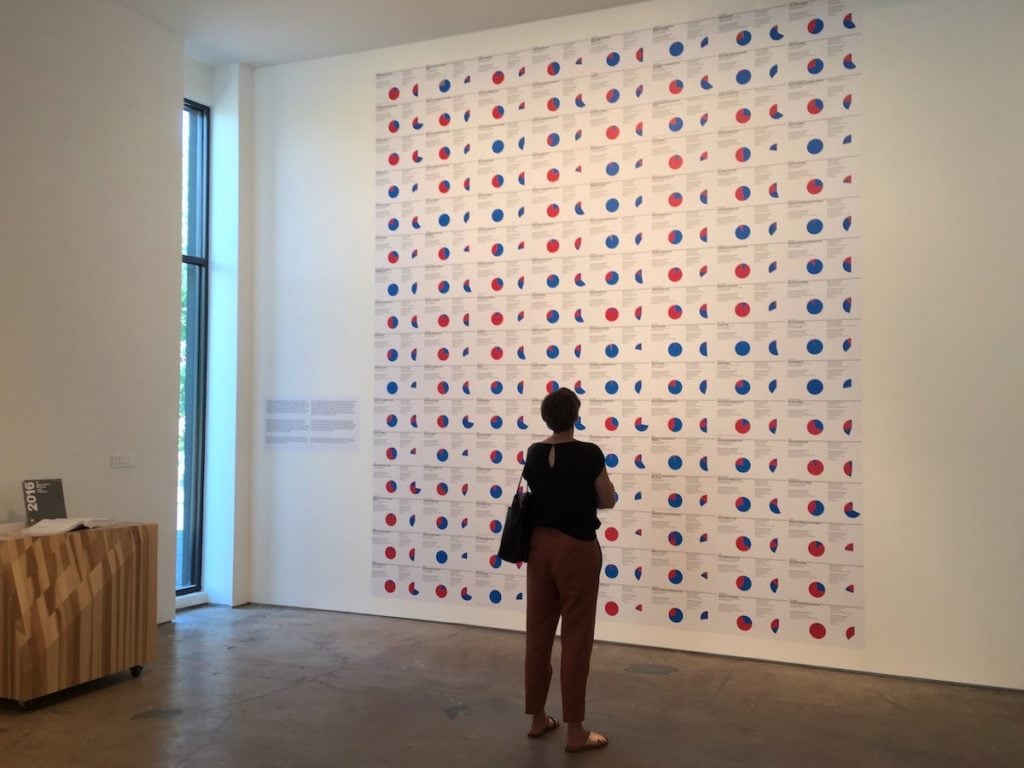
Installation view of Andrea Fraser,
documenting the political contributions of board members of US
museums.
The artwork that knocked around
in my head the most was Andrea Fraser’s essay for the 2012 Whitney
Biennial, ‘There’s no place like home’ in which she discusses the
connections between Art, the patrons who finance it, and her
culpability within that system. To look at recent protests and
actions around the question of who funds our institutions, her
investigations have had a big impact on more than just
me.
I also have to mention the image
of the decade for me is Judith Bernstein’s Union Jack-Off
from 1967 that she showed in her show “Dicks of Death” in 2016 at
Mary Boone. It was made in the ’60s, in the face of the Vietnam
war, but I saw it the day after a Republican debate. That year
brought Trump, and later Weinstein revelations, and stories of
abuse from every industry… so yeah… Dicks of Death sadly
relevant to this and many other decades.
—Gina Beavers, artist
Arthur
Jafa, Apex (2013)
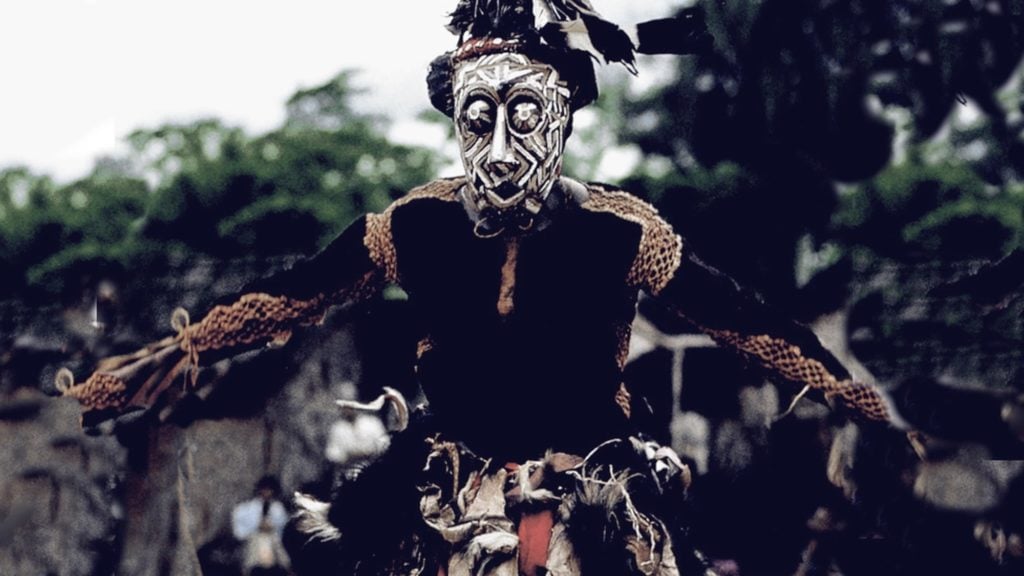
Arthur Jafa, APEX (2013).
Courtesy of the Museum of Modern Art.
Arthur Jafa’s Apex is a
cinematic sequence of direct, confrontational imagery that map the
notion of “blackness,” both culturally as well as politically,
through stark but intuitive edit, which bombard you against an
apocalyptic soundscape.
—Krist
Gruijthuijsen, Director, KW Institute for Contemporary
Art
Dayanita Singh, Museum Bhavan
(2013–)
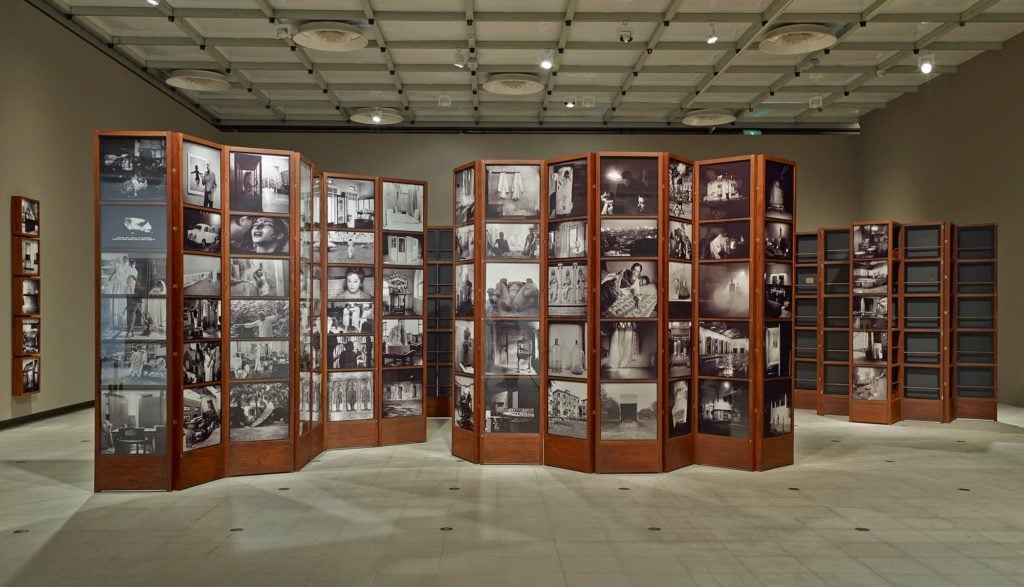
Dayanita Singh, Museum Bhavan
(2013-). Courtesy of the artist.
Singh has a unique approach to
photography, which reflects upon and expands the way we relate to
photographic images. Most recently, Singh has developed a new
format, a mobile museum, entitled Museum Bhavan. It
contains a collection of museums, including the Museum of Chance,
Museum of Little Ladies, or Museum of Furniture. The Museum
Bhavan entails a dis-play system that allows her images from
1981 to the present to be sequenced, archived and viewed. Based on
Singh’s interest in the archive, she presents her photographs here
as interconnected groups of works allowing both poetic and
narrative layers to emerge.
—Stephanie Rosenthal, director of Gropius Bau,
Berlin
Issa Samb, La Cour
(The Yard) (2013)
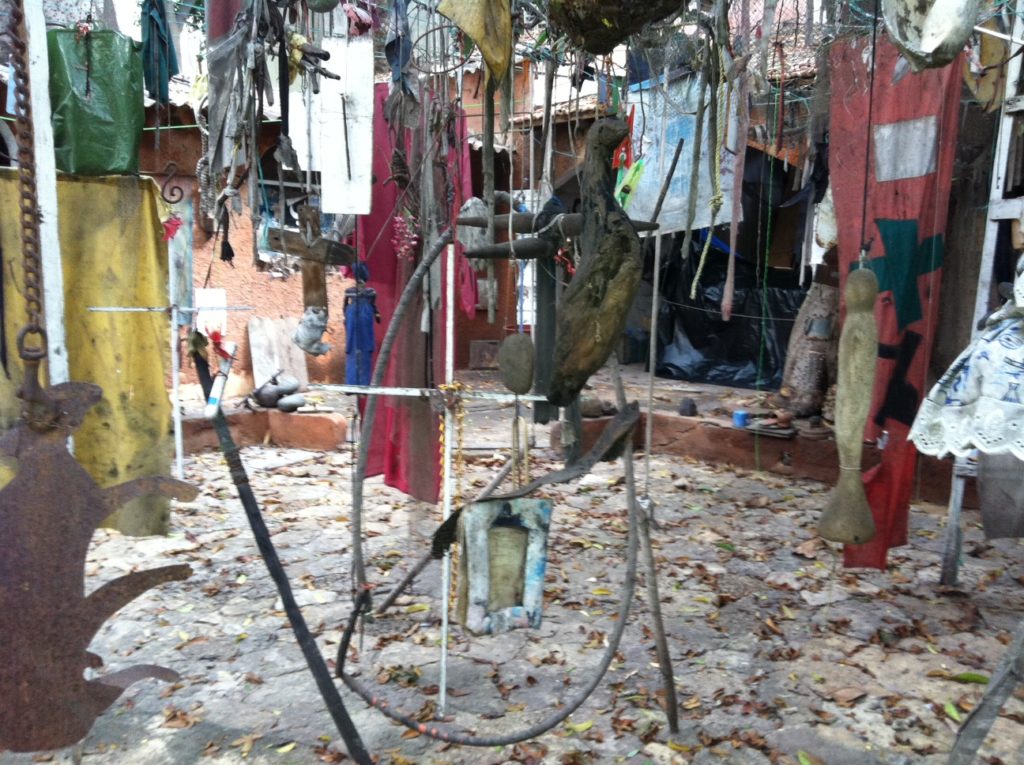
Atelier Issa Samb, Photo: Binna Choi.
Courtesy of Studio International.
Issa Samb’s permanent and ever
evolving installation of a courtyard-home-studio.
—Koyo Kouoh, executive director and chief curator of
the Zeitz Museum of Contemporary Art Africa
Jim Shaw, The Hidden
World (2013)
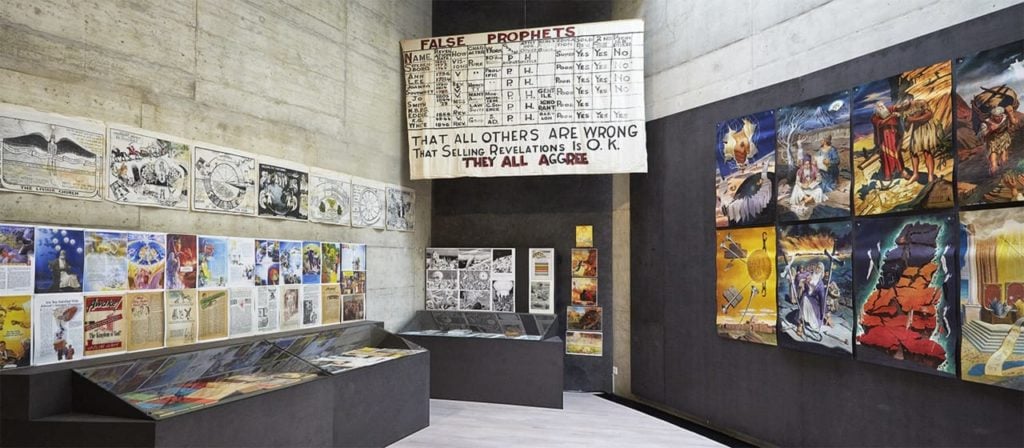
Jim Shaw, The Hidden World
(2013). Courtesy of the artist and Simon Lee Gallery.
The Hidden World by Jim
Shaw. Jim Shaw’s
didactic art collection, collected over more than three decades,
comprises thousands of objects—books, posters, magazines, T-shirts,
record sleeves, and other illustrations—as commissioned by various
sects, secret societies and spiritual movements of all kinds. The
didactic purpose of this collection makes it impossible to classify
as an artwork. And being created by amazing talents, it is also
impossible to consider these items as regular objects. It embodies
this floating state Marcel Duchamp was pursuing when he asked
“Can one make works that are
not ‘of art‘?”
—Marc-Olivier Wahler, director of the Geneva Museum of
Art and History
Doris Salcedo,
Palimpsest (2013–2017)
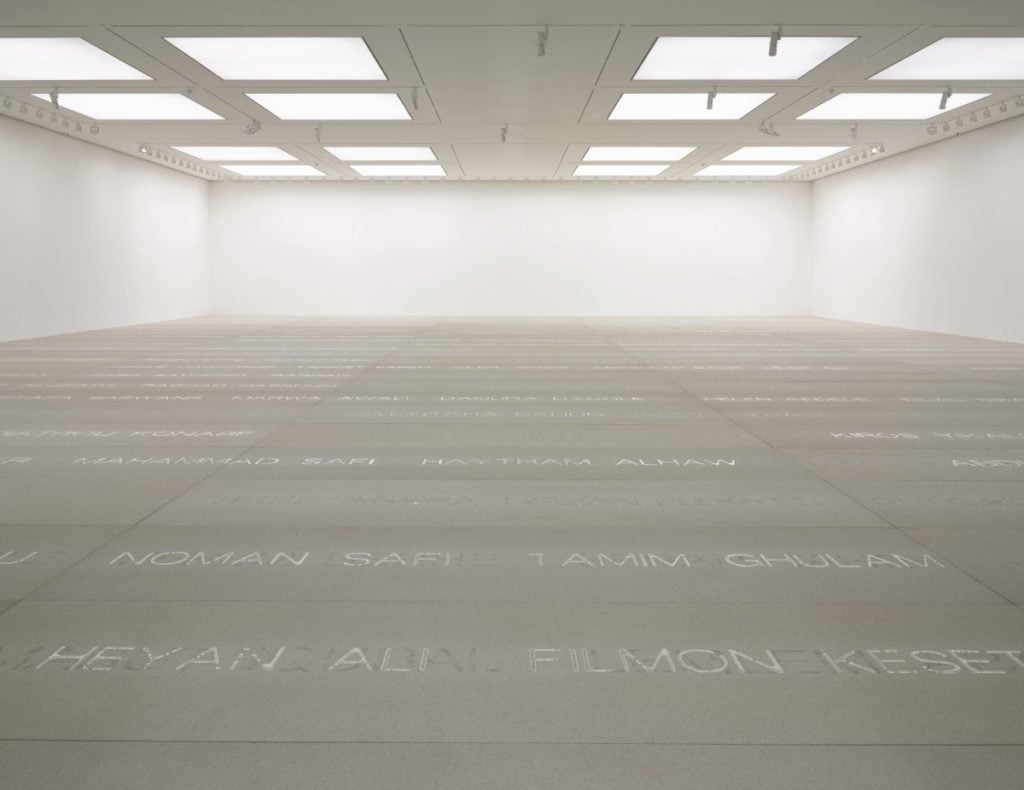
Doris Salcedo, Palimpsest
(2013–2017). Courtesy of White Cube Gallery.
Doris Salcedo’s
Palimpsest, first presented at the Palacio de Cristal,
Reina Sofia in Madrid, is the most emblematic artwork of the last
decade in the way it addresses the scale and cyclical nature of
violence, outrage, and forgetting in various contexts around the
world from mass shootings to refugee crises. Using nanotechnology
and water, she and her studio collaborators invented a way for
victims’ names (those who died crossing the Mediterranean to find
refuge in Europe) to emerge from and dissolve into stone slabs. The
work creates a space for public mourning where the shedding of
tears meets systemic actions, and inactions, that cause these
tragedies again and again.
—Julie Rodrigues Windholm, director and chief curator,
DePaul Art Museum
Kara Walker, A
Subtlety…or the Marvelous Sugar Baby (2014)
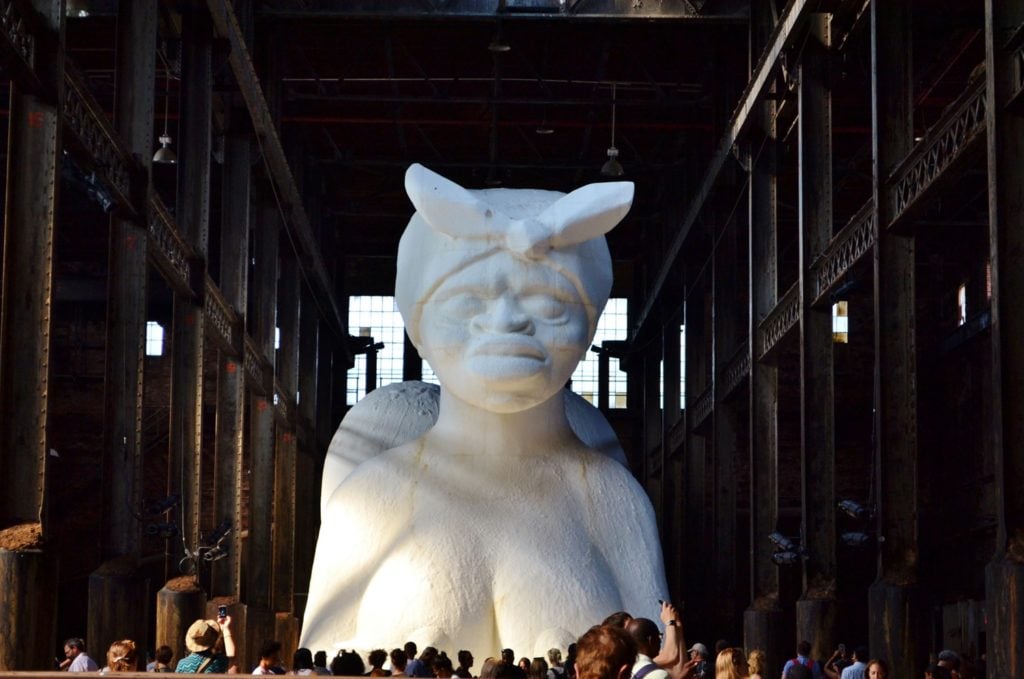
Kara Walker’s A Subtlety…or the
Marvelous Sugar Baby (2014). Image courtesy of gigi via
flickr.
Kara
Walker, A
Subtlety. A
Subtlety was an
immersive arts exhibition on a dream scale. It took on challenging
subject matter in a direct and demanding manner that pulled you in
and did not let go. It is one of those works of art where an
instant sense of community and kinship was established by those who
experience it. A
Subtlety presented a
seamless dialogue between work and site. I hear of it time and time
again as the inspiration for artists and institutions to think on a
whole new scale.
—Justine Ludwig, executive director at Creative
Time
Kara Walker,
A Subtlety, or the Marvelous
Sugar Baby (2014)
—Salvador Salort-Pons,
director, Detroit Institute of Arts
Laurie Anderson, Habeas
Corpus (2015)
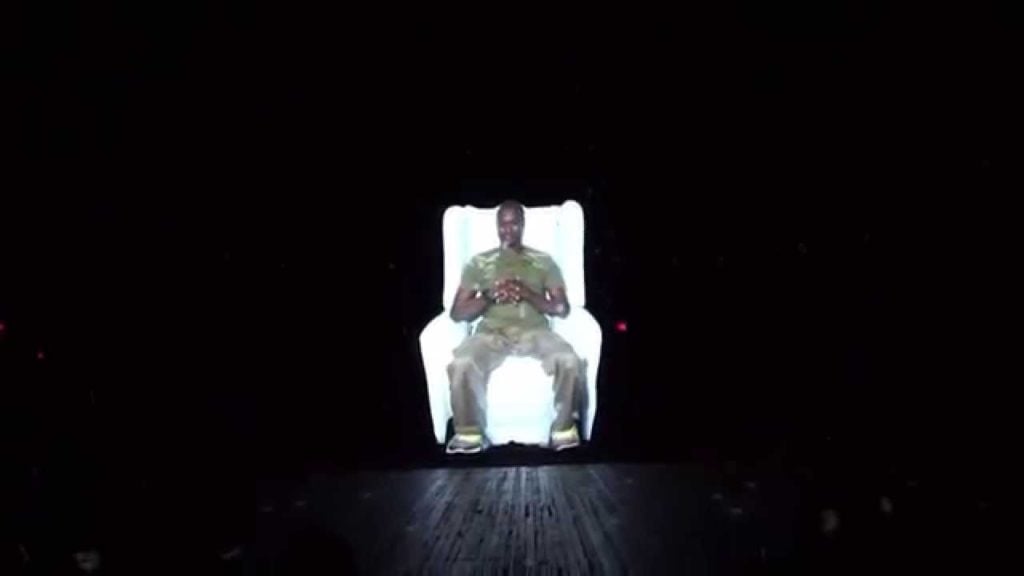
Laurie Anderson, Habeas Corpus
(2015). Courtesy of the artist.
Laurie Anderson’s work featuring
former Guantanamo Bay-detainee Mohammed el Gharani addresses the
personal costs of detention brought about by the war in
Afghanistan, the longest war in America’s history.
—Melissa Chiu, director of the Hirshhorn Museum and
Sculpture Garden
Maurizio Cattelan,
America (2016)
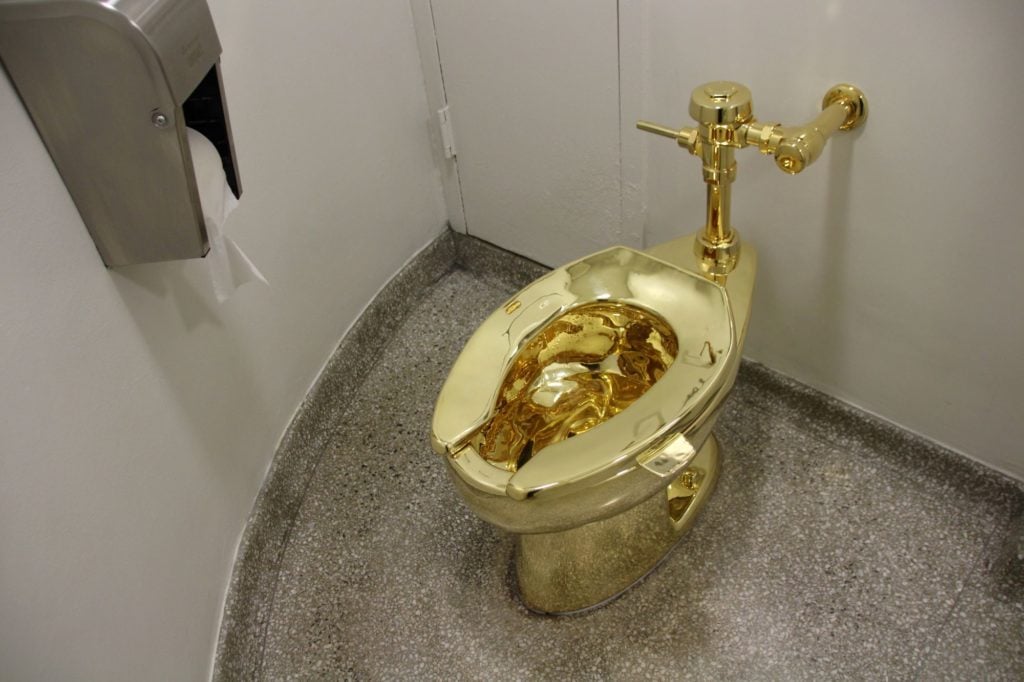
Maurizio Cattelan, America toilet
in the Guggenheim Museum, New York 2016. Photo by Christina
Horsten/picture alliance via Getty Images.
Maurizio Cattelan’s
America, 2016 (a.k.a. the golden toilet). I believe
that Nancy Spector should be considered a co-creator for her
proposal to lend the work to Trump’s White House in lieu of the Van
Gogh they requested, and that perhaps even the thieves who later
stole the work from Blenheim Palace should be credited for
contributing to the work’s storied life and influence thus
far.
—Alexander S. C. Calder, president of the Calder
Foundation
Arthur Jafa, Love
is the message, the message is Death (2016)
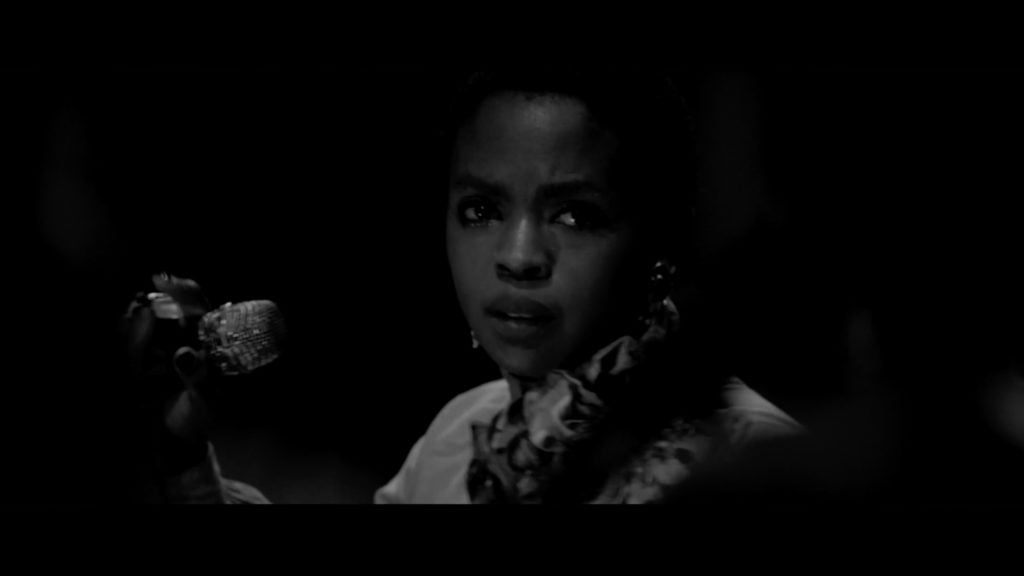
Arthur Jafa’s Love is the Message,
The Message is Death (2016). Courtesy of the artist and Gavin
Brown’s Enterprise, New York City, Rome.
Arthur Jafa, Love is the Message, 2016 and Kara Walker,
A Subtlety, or the Marvelous Sugar Baby, 2014. As
Jafa has said, our time doesn’t need masterpieces, it needs
conversations: these two works actually qualify on both counts.
—Catherine Morris, curator of the Elizabeth A. Sackler
Center for Feminist Art at the Brooklyn Museum
Arthur Jafa’s
Love is the Message the Message
is Death is just
incredible and it is a continued point of reference for so many
artists.
—Javier Peres, gallerist
This video essay is a masterful convergence of found
footage that traces African-American identity through a vast
spectrum of contemporary imagery. From photographs of civil rights
leaders to helicopter views of the LA Riots to a wave of bodies
dancing to “The Dougie,” the meticulously edited seven-minute video
suspends viewers in a swelling, emotional montage that challenges
what it means to contribute to the vast and complex terrain of
Black representation.
—Arnold Kemp, Dean of Graduate Studies, School of the Art
Institute of Chicago
Ugo Rondinone, Seven
Magic Mountains (2016)
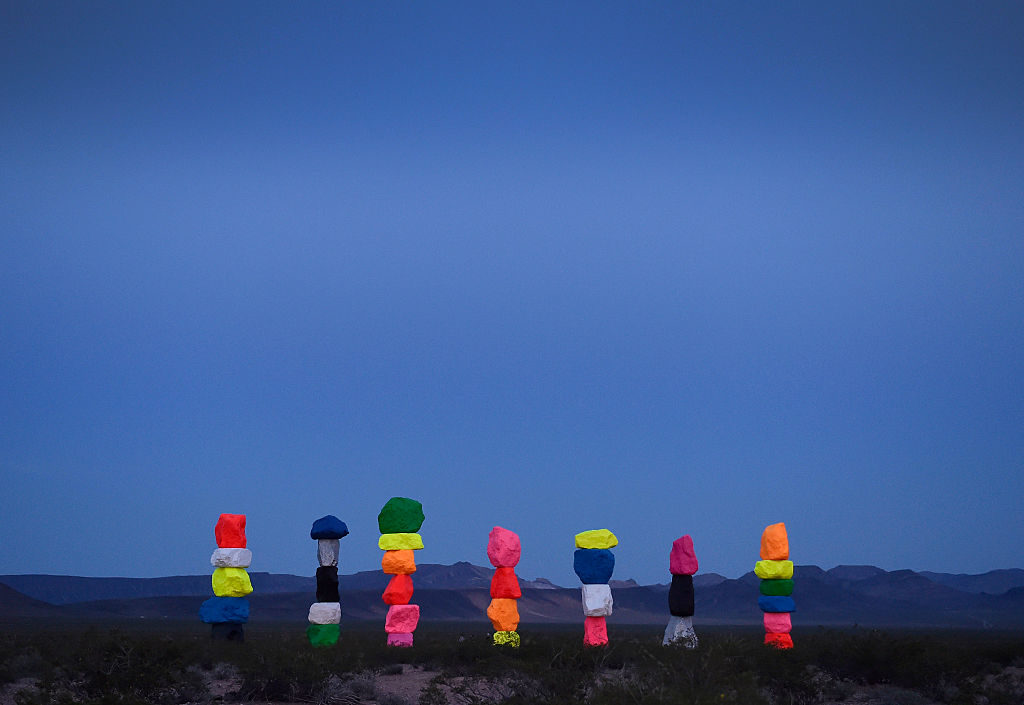
The large-scale public art installation
titled Seven Magic Mountains by Swiss artist Ugo Rondinone near
Jean, Nevada. Photo: David Becker/AFP/Getty Images.
Ugo Rondinone’s
Seven Magic Mountains
in the Las Vegas desert. A major
work by one of the art world’s favorite artists.
Additionally… Ugo Rondinone created (as opposed to “curated”)
a living work of art in the form of the museum retrospective “I
Love John Giorno” at the Palais de Tokyo, which went on to tour 13
nonprofit institutions in New York. Not only did it influence so
many generations, but it was one of the most memorable and poignant
museum shows for me and many friends in the past decade. Given
John’s recent passing, that experience is even more meaningful now
as we look back.
—Elizabeth Dee, cofounder and CEO, Independent Art
Fair
Pierre Huyghe, After
Alife Ahead (2017)
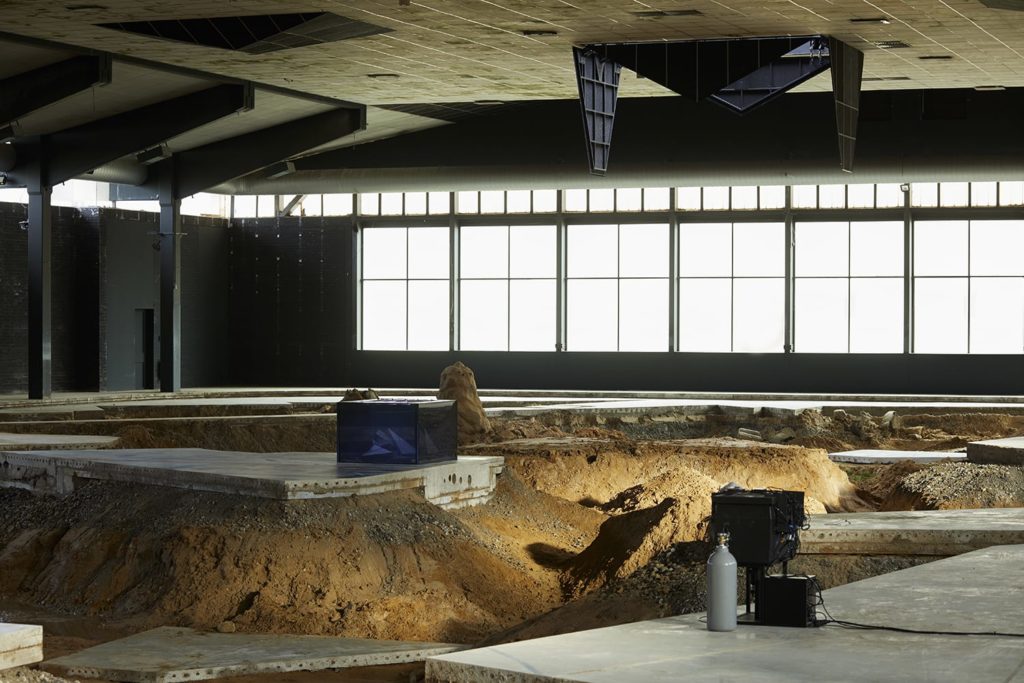
Pierre Huyghe, After ALife Ahead
(2017). Courtesy of the artist, Marian Goodman Gallery.
I hope it’s Pierre Huyghe’s
large installations at the Skulptur Projekte in Kassel in 2017. It
opened a door to the poetry of virtual worlds and also
prophetically hinted at forms of biological computing that—I am
hopeful again—will not suck so much energy that it makes our planet
uninhabitable.
—Daniel Birnbaum, director of the Moderna
Museet
Huma Bhabha, works from “We
Come in Peace” (2018)
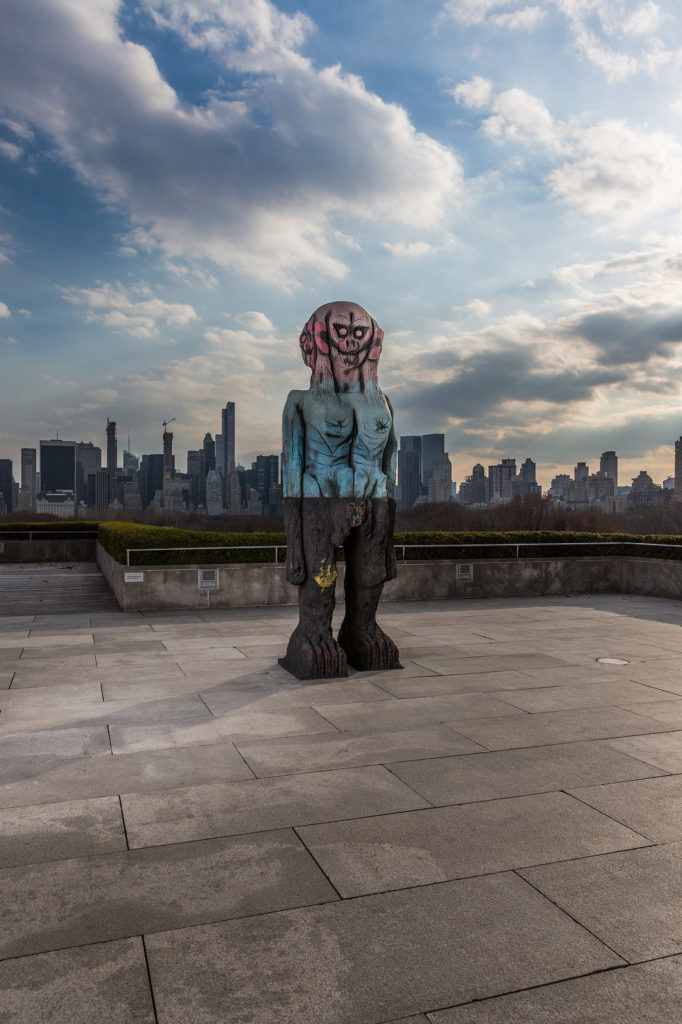
Huma Bhabha, installation view of the
Roof Garden Commission “Huma Bhabha: We Come in Peace,” We Come
in Peace. ©Huma Bhabha, courtesy of the artist and Salon 94.
Photo by Hyla Skopitz, courtesy of the Metropolitan Museum of
Art.
Huma Bhabha’s “We Come in Peace”
on top of the Metropolitan Museum of Art. Completed in 2018, that
sculpture captured fraught power dynamics. It is grotesque,
melancholic. It is a commentary on otherness; and relevant to the
plight of refugees and the crisis of globalization felt around the
world.
—Jason Stopa, artist
For Freedoms’ 50 State
Initiative (2018)
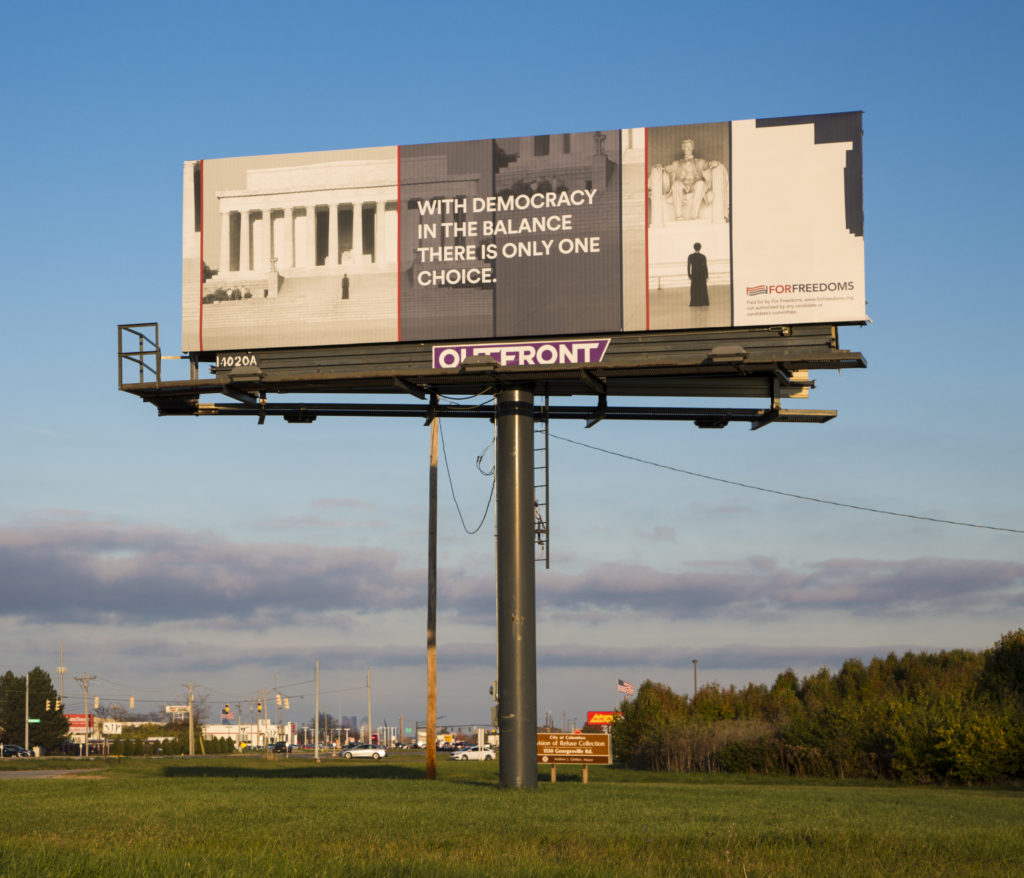
Carrie Mae Weems, “With Democracy In The
Balance There Is Only One Choice” (2018). Courtesy of For
Freedoms.
Launched in June 2018, during
the midterm elections, it is the largest creative collaboration in
American history and offers a new and compelling model for both
art-making and political engagement. 52 artist billboards (1 per
state, plus Puerto Rico and Washington, D.C.) were commissioned,
and over 600 events were held nationwide with over 250 partners
ranging from museums to university art galleries to public
libraries to churches to individual artists. For Freedoms tapped
into an under-appreciated national resource, namely our extensive
civic infrastructure, to create diverse and decentralized
platforms—unique to and created by individual communities to
address and give voice to their specific needs—for engagement,
dialogue, and creative problem-solving. In a decade marked by
political turmoil, deep polarization, generational division, and
rising inequality, the 50 State Initiative shows us how expansive
an artwork can be, and highlights the important and unique role
that artists can and do play in society.
—Rujeko Hockley, assistant curator at the Whitney Museum of
American Art
Amy
Sherald, Michelle LaVaughn Robinson Obama (2018)
& Kehinde Wiley, President Barack
Obama (2018)
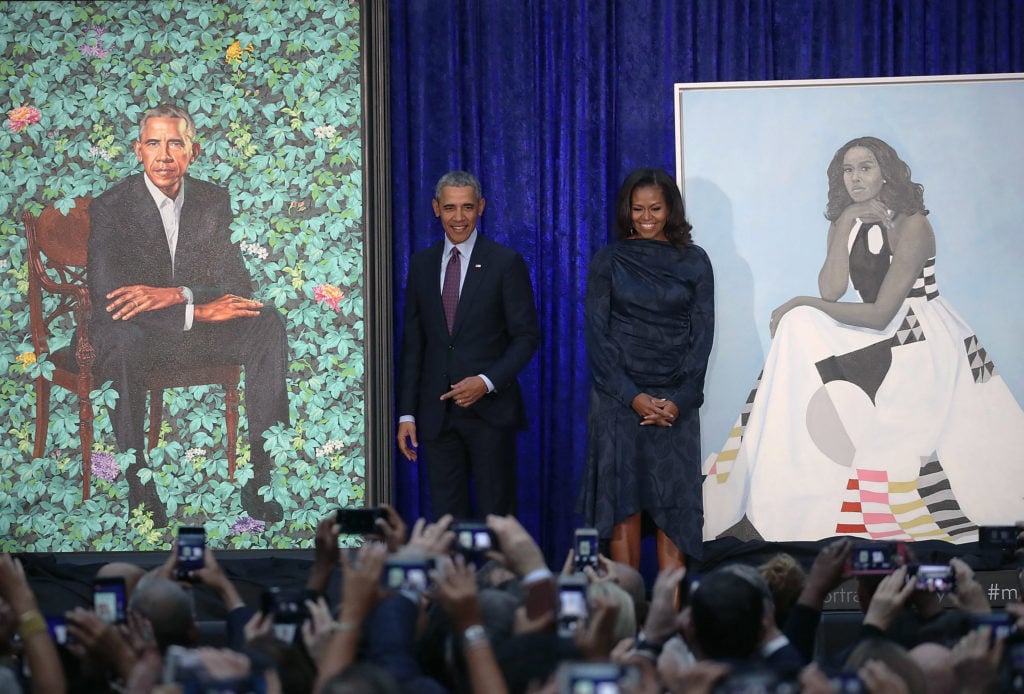
Former U.S. President Barack Obama and
former first lady Michelle Obama stand next to their unveiled
portraits at the Smithsonian’s National Portrait Gallery. Photo by
Mark Wilson/Getty Images.
An almost impossible question to answer! I’ll go for Amy
Sherald’s Michelle Obama portrait which has captivated so many
people.
—Manuela Wirth, president and co-founder of Hauser &
Wirth
Portraits of former President
Barack Obama and Mrs. Michelle Obama by artists Kehinde Wiley and
Amy Sherald.
—Christopher Bedford, director of the Baltimore Museum of
Art
I’d include the portraits of
former President Barack Obama and Mrs. Michelle Obama by artists
Kehinde Wiley and Amy Sherald, respectively. They were among the
most influential and widely seen artworks of the decade, and
forever changed depictions of presidential power in this
country.
—Cara Starke, director of the Pulitzer Arts
Foundation
The Obama portraits by Amy
Sherald and Kehinde Wiley. They have set visitor records at the
National Portrait Gallery, and created a new discourse around
official presidential portraiture and Black artists. They have also
inspired books (Parker Looks
Up and a
forthcoming volume with an essay by Richard J. Powell about the
significance of the portraits).
—Bridget Cooks,
professor of African American
studies and art history, UC Irvine
teamLab, Borderless Tokyo
(2018)
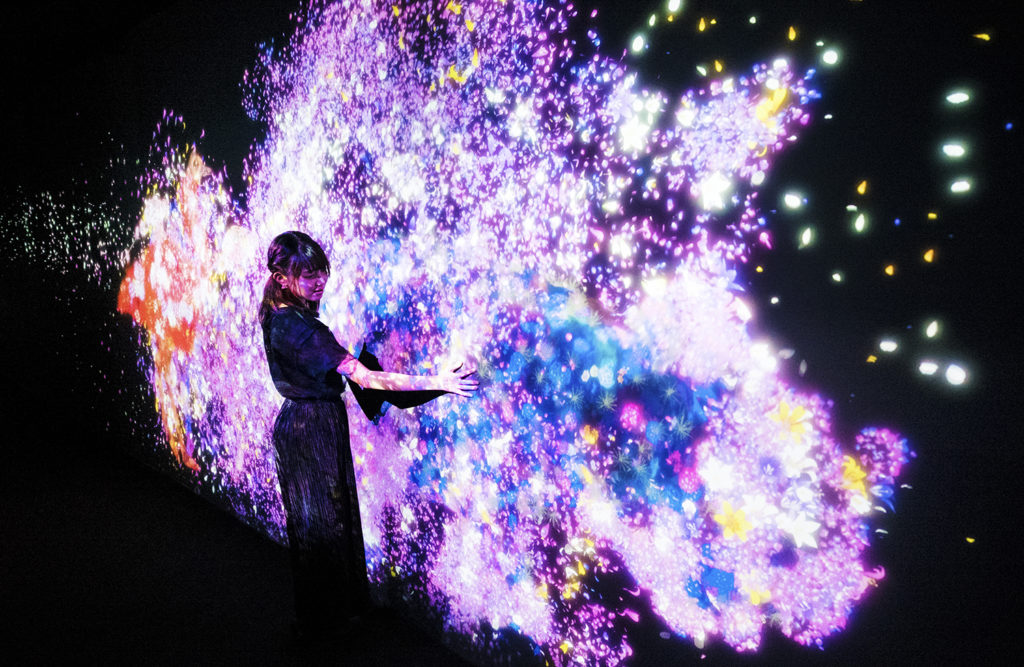
Art from the Digital Art Museum: teamLab
Borderless. Photo courtesy of teamLab.
Team Lab crew works at the intersections of art and technology.
Their work, which we have seen all over the world (I saw their
massive Tokyo installation in July) in the past year or two is
pushing the limits of machine learning as in integral part of
experiential work. They are bold, forward-thinking, and orienting
us toward the future.
—Isolde Brielmaier, curator, International Center for
Photography, and professor, Tisch’s Department of Photography,
Imaging and Emerging Media at New York University
Thomas Hirschhorn,
Robert Walser-Sculpture (2019)
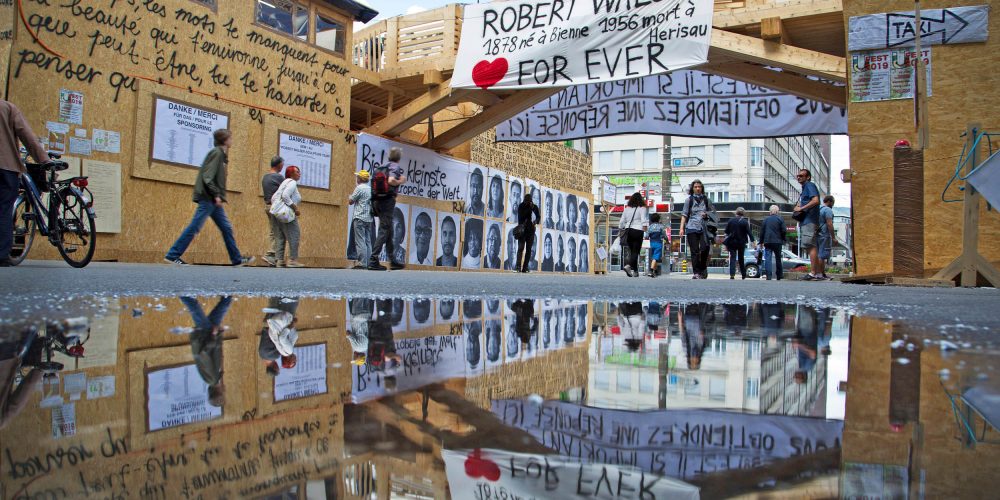
Thomas Hirschhorn, Robert
Walser-Sculpture (2019). Courtesy of the aritst.
I opt for Thomas Hirschhorn’s
Robert Walser-Sculpture, 2019, curated by Kathleen
Buehler, because for a
fraction of time during this summer in the small city of Biel in
Switzerland it fulfilled the utopian dream of a social
sculpture, brought together by lots of tape and love
for Robert Walser:
diverse scholars, psychopaths, artists, children, alcoholics,
writers, esperanto-fans, Ethiopian cuisine, and local
beer.
—Nina Zimmer, director, Kunstmuseum Bern and the Paul
Klee Center
Kehinde Wiley, Rumors
of War (2019)
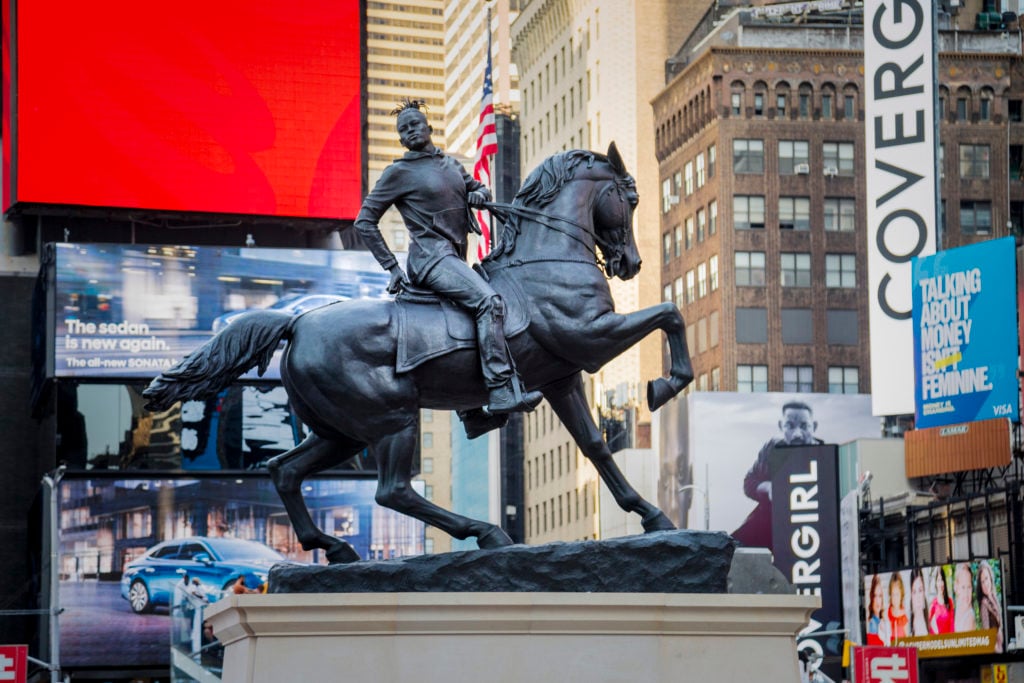
Kehinde Wiley, Rumors of War
(2019). © 2019 Kehinde Wiley. Courtesy of the Virginia Museum of
Fine Arts, Times Square Arts, and Sean Kelly. Photo: Ka-Man Tse for
Times Square Arts.
Kehinde Wiley’s monumental
bronze sculpture of a young African-American man wearing urban
streetwear and sitting astride a massive horse was launched with
pinpoint accuracy in New York City’s Times Square. When it finds
its permanent home at the Virginia Museum of Fine Arts in Richmond
it will stylishly lead the way in advancing a broad range of
critical art issues, including the representation of previously
neglected subjects and how best to respond to civic monuments
glorifying discredited “heroes” of the past.
—Michael Brand, director,
Art Gallery of New South Wales, Sydney, Australia
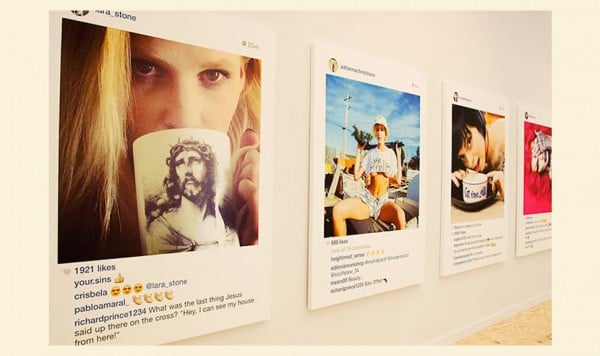
Works by Richard Prince at Gagosian
Gallery’s Frieze booth.
Artwork that explored social
media as a medium in general. Social media was born before 2010,
but in the last 10 years its influence has rocked our lives and
completely reshaped how every person shares and consumes content,
and interacts with each other. Richard Prince’s Instagram art was
very inspiring, and he was in his 60s when he created
them!
—Adrian Cheng, founder K11 Art Foundation and K11
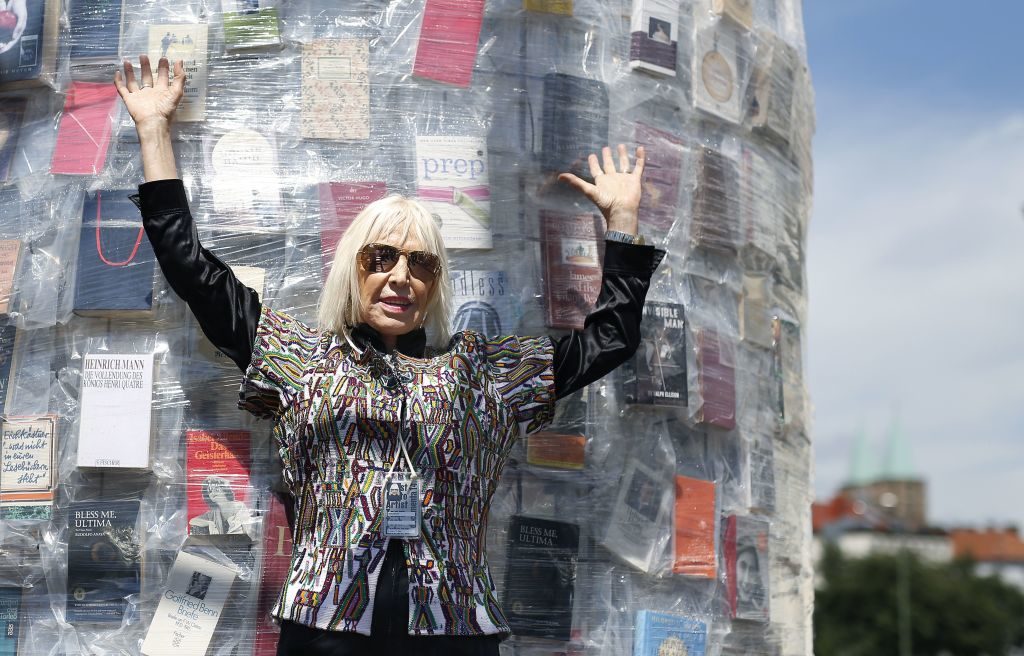
Argentinian artist Marta Minujin poses
inside the ‘Parthenon of Books’ at the Documenta 14 art exhibition
in Kassel. Photo: Ronny Hartmann/AFP/Getty Images.
It’s hard to pinpoint a specific
art work, but I would say social practice. Over the past decade
we’ve seen artists work more and more outside institutions,
collaborate and make work to benefit different communities. I see
this movement rooted in the work many Latin American artists were
doing in the 1960s, such as Julio Le Parc and the collaborative
GRAV, Techo de de la Ballena, Marta Minujín, many of the artists in
Radical Women, etc.
—Estrellita Brodsky, curator, collector, and
philanthropist
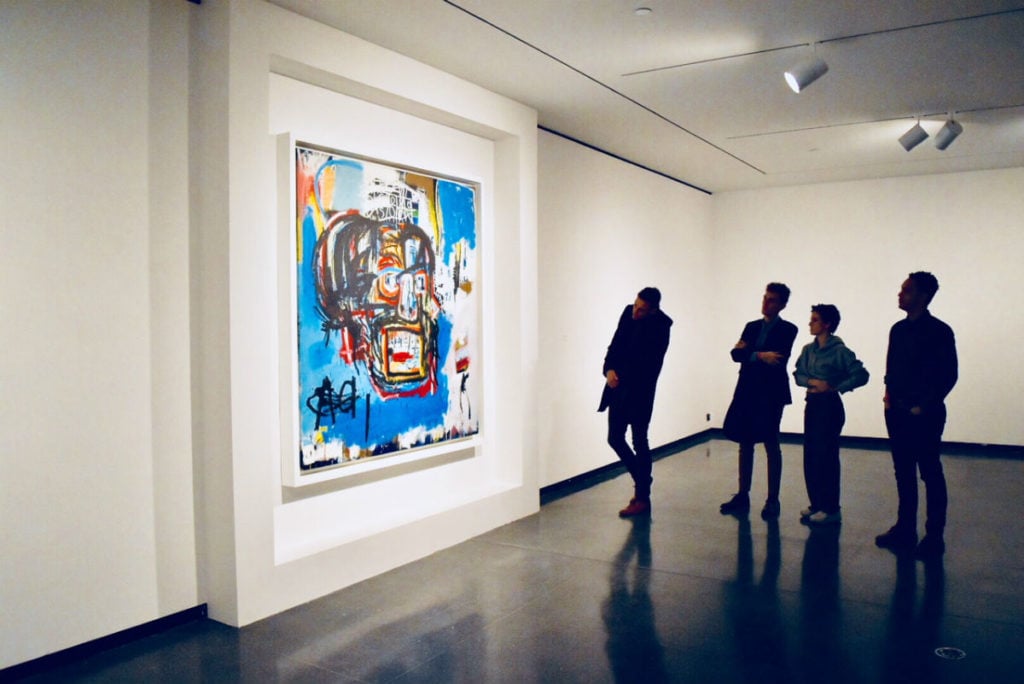
Installation view of “One Basquiat” at
the Brooklyn Museum. Image: Ben Davis.
That’s a really difficult one
for me to answer. I can’t say there is only one. And sometimes
artists are not as influential for their artworks as they are for
other aspects of their endeavor. There have been several artists
that have been influential for different reasons.
The fact that a Jean-Michel
Basquiat painting became the most expensive artwork by an American
artist will have enormous influence on the pricing of art by other
African-American artists from now on.
The fact that artist Steve
McQueen won an Oscar for Best Picture for an uncompromising film he
made about slavery has been enormously influential in shifting
Hollywood’s attitudes regarding black film production and subject
matter.
Of course there are memorable
artworks of the past decade by such artists as Hito Steyerl, John
Akomfrah, Doris Salcedo, Cameron Rowland, Teresa Margolles, but I
am also very interested in social and political gestures by groups
such as GULF, Nan Goldin and PAIN, Kader Attia and his La Colonie
Project in France, and the SIN 349 and San Isidro Movement in
Cuba.
—Coco Fusco, artist, writer, and curator
The post What Was the Most Influential Work of the Decade?
We Surveyed Dozens of Art-World Experts to Find Out appeared
first on artnet News.
Further reading


Leave a comment