
The 100 Works of Art That Defined the Decade, Ranked: Part 4
This is the fourth part of a series looking at the art of
the 2010s. The first three parts are here, here, and here.
25.
Meow Wolf, The House of Eternal Return
(2014–ongoing)
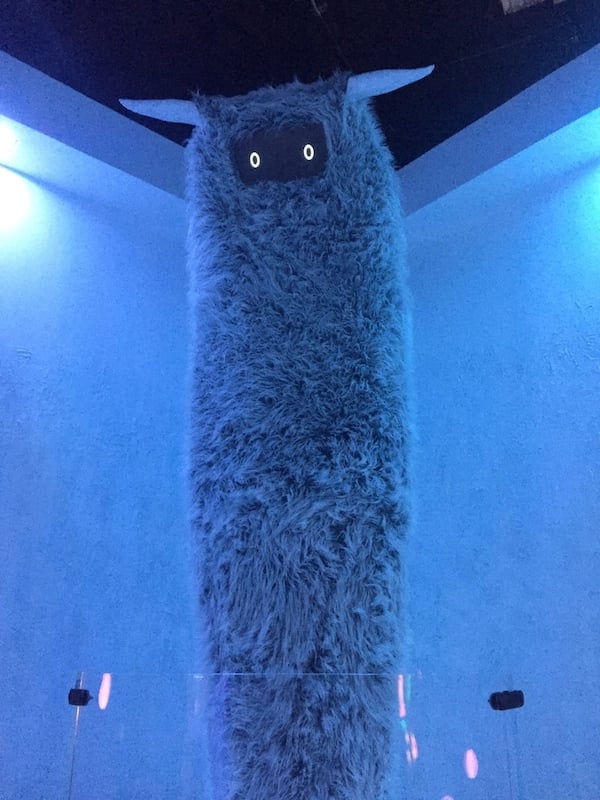
A mysterious beast sighted in Meow
Wolf’s The House of Eternal Return. Image: Ben Davis.
Partially funded by George R.R. Martin (who now serves as its
“chief world builder“),
the art collective Meow Wolf’s installation
environment/fun house in Santa Fe, complete with secret
passages and a labyrinthine back story, has quickly exploded into
something that has slipped out of the category of art and into a
whole other new thing. In the brief years since the debut of the
House of Eternal Return, the “Meow Wolf Model” has quickly
spread, with the group opening massive, multi-million-dollar
environments in other cities.
24.
Awol Erizku, Beyoncé maternity portrait (2017)
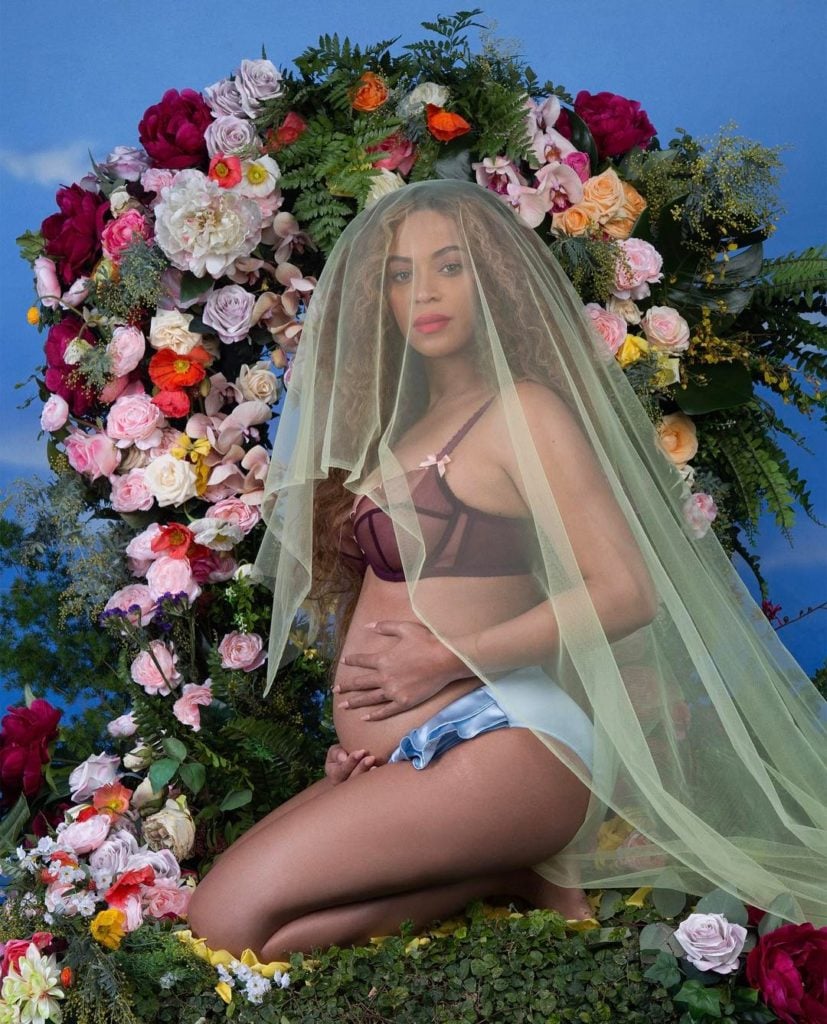
Awol Erizku’s Beyoncé pregnancy
announcement photograph. Photo via Instagram.
Erizku himself is loathe to talk about his
flower-bedecked portrait with Beyoncé, which was posted to her Instagram as the occasion
for her to reveal that she and her husband had been “blessed two
times” with twins. But with 11 million likes, it is one of the most
viral individual artworks of all time, and definitely augured a new
kind of symbiosis between celebrity, social media, and art.
23.
Banksy, Love Is In the Bin (2018)
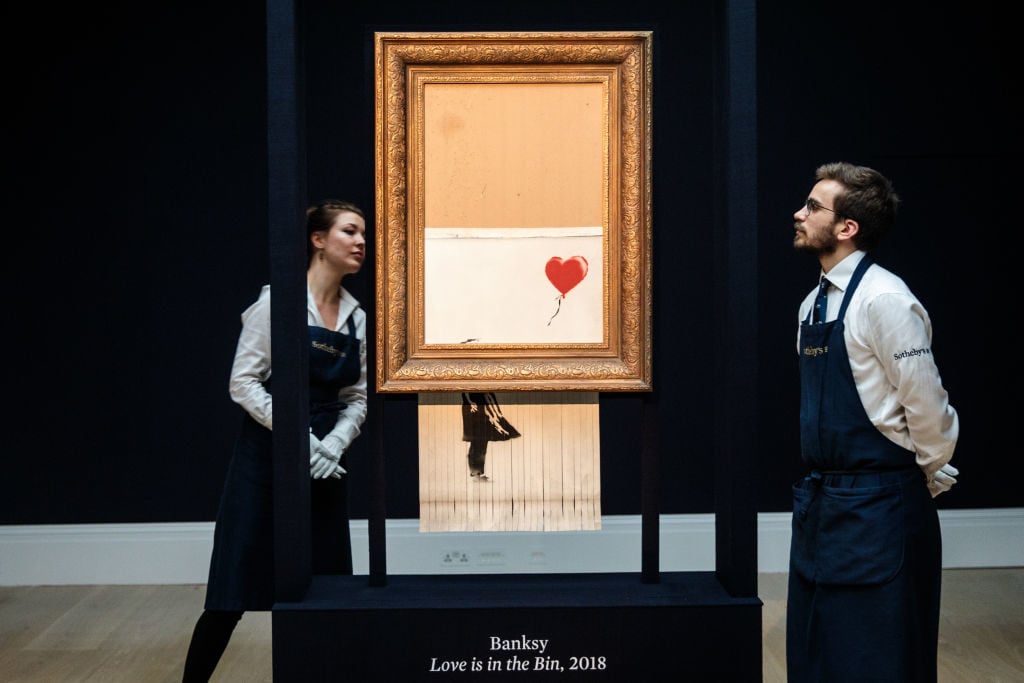
Sotheby’s employees view Love is in
the Bin by Banksy. Photo by Jack Taylor/Getty Images.
I don’t blame you if you are sick of Banksy. But, you know, the
street artist’s self-destructing work of
art, which surprised everyone by shredding itself via a trick
frame at the climax of a Sotheby’s sale, is just outright hilarious
and unexpected. Nothing like it had ever happened before and
nothing like it will happen again.
22.
Wu Tsang, Wildness (2012)
A real touchstone work about
artists’ search for community, queer solidarity, class,
immigration, and a lot more, focusing on Silver Platter,
an LGBT LA bar—which becomes a literal character in the film,
with a voiceover ventriloquizing its thoughts—and the events that
ensue when Tsang and a group of young, queer artists of color
organize a performance party, the titular “Wildness,” in the
space.
21.
Sheila Hicks, Escalade Beyond Chromatic Lands
(2016–17)
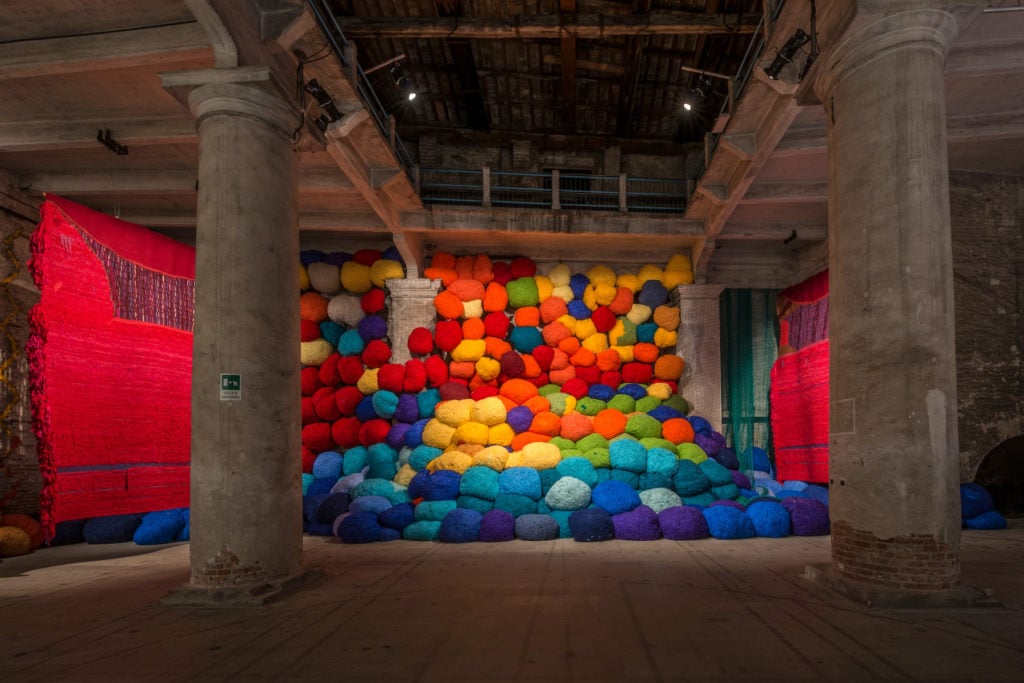
Installation view of Sheila
Hicks, Escalade Beyond Chromatic
Lands (2016–17), at Biennale di Venezia, Venice, Italy,
2017. Photo by Andrea Avezzù. Courtesy of La Biennale di
Venezia.
The climax waiting at one end of the Arsenale space during the
2017 Venice Biennale (and recreated whole at the Bass
Museum), Hicks’s great vertical accumulation of colored
pom-poms made the case for the sheer breadth of her textile art’s
ambition and ability to
hold attention. “This is about massive amounts of color and
how it affects its neighbors,” Hicks explained.
20.
Dread Scott, Slave
Rebellion Reenactment (2019)
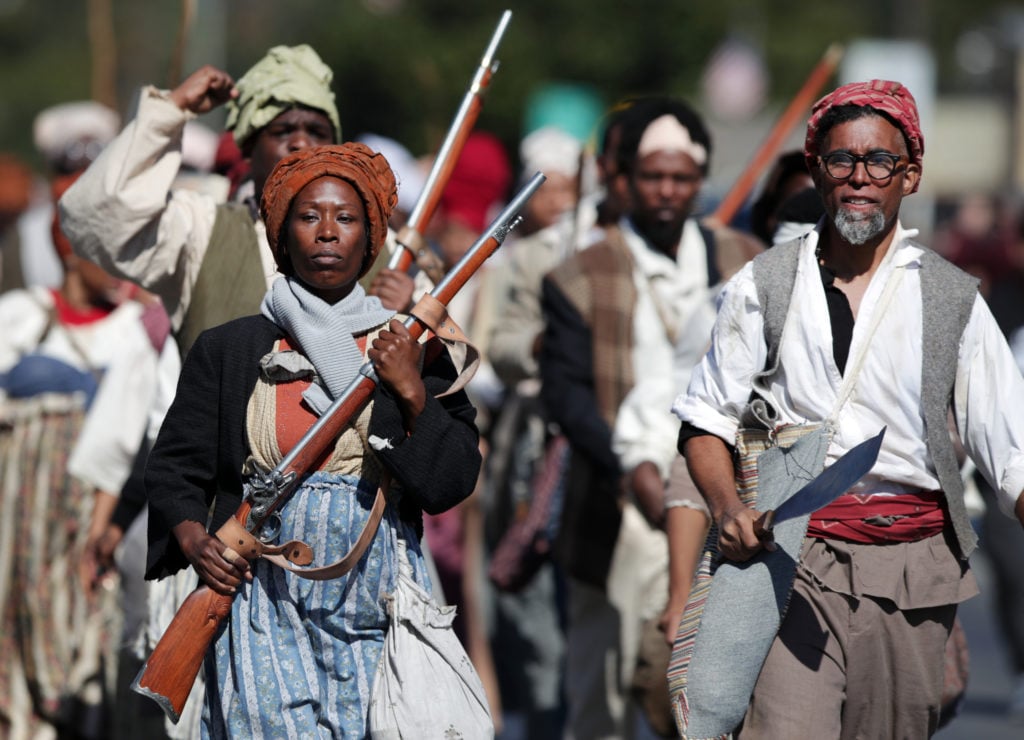
Reenactors retrace the route of one of
the largest slave rebellions in U.S. history on November 09, 2019
in New Orleans, Louisiana. Photo by Marianna Massey/Getty
Images.
A pointed rejoinder to generations of Civil War reenactments,
Dread Scott’s deeply researched mass recreation of the German Coast
Uprising of 1811, aka “America’s largest slave
revolt” (with an alternate ending),
featuring hundreds of volunteers, probably permanently pushed a
piece of history that had been literally stamped out back into the
light.
19.
Shahidul Alam, Crossfire (2010)
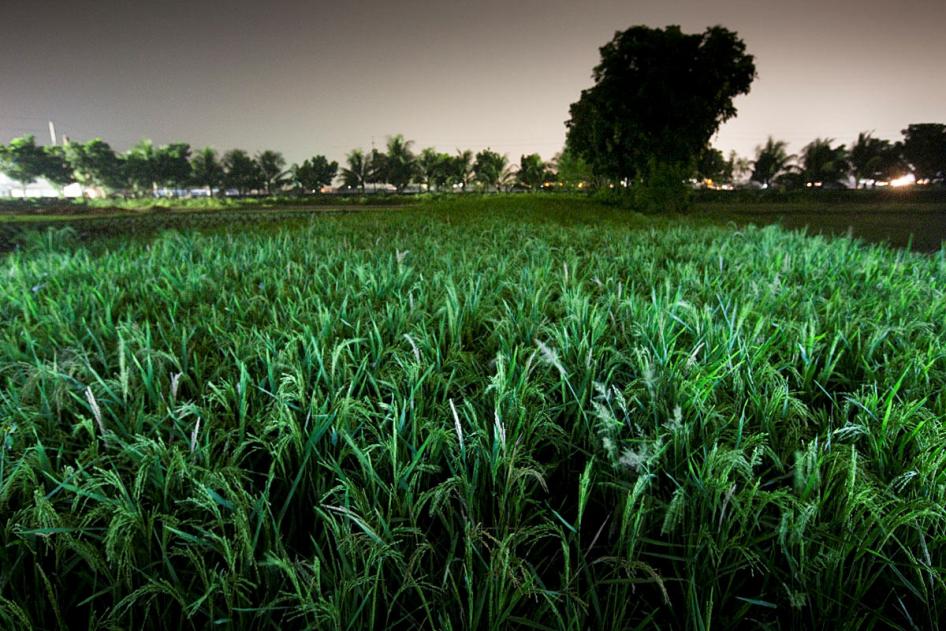
The lead photo “Paddy Field” for the
exhibition “Crossfire: An Installation by Shahidul Alam on Extra
Judicial Killings.” Image courtesy Shahidul Alam/Drik/Majority
World.
As a teacher and activist, Alam is a giant, infamously
having been detained in
2018 by the government in Bangladesh for comments he had made that
ran afoul of draconian laws. It was not his first time. In 2010,
his “Crossfire” series also got him in serious hot water, with the
show shuttered by
authorities at the time of its debut. The series recreates
the supposed sites of so-called “crossfire killings” by the
government’s Rapid Action Battalion, an anti-crime task force whose
extrajudicial violence has been the subject of international
scrutiny. Working with researchers, Alam made images that serve the
purpose of pointing out inconsistencies in official accounts (e.g.
a field that appears undisturbed despite having been reported to be
the site of a fierce struggle) but that also have a forensic
clarity and eery vividness that makes them difficult to forget.
18.
A.K. Burns and A.L. Steiner, Community Action Center
(2010)
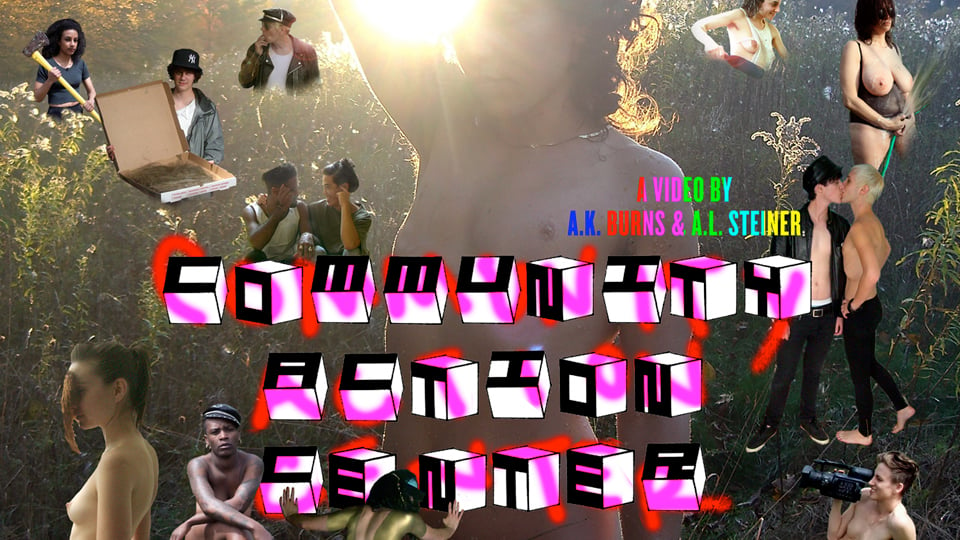
Poster for Community Action Center.
A three-year labor of love in every sense of the term, the
traveling Community Action Center installation was,
as Burns explained, an effort “to
make a space for women and trans bodies to watch sexual content
together, as well as to counter the way porn is now consumed on the
personal computer.” The film itself doubles as document of and for
a certain community and an experiment in utilizing the physical
spaces of art to create a temporary autonomous zone for queer
connection.
17.
Mark Bradford, Pickett’s Charge (2017)
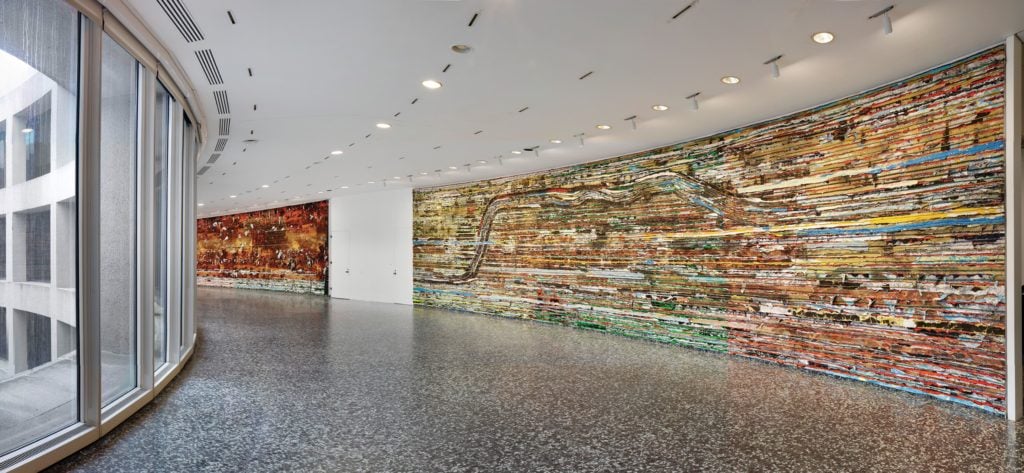
Installation view of Mark Bradford’s
Pickett’s Charge at the Hirshhorn Museum and Sculpture
Gardens, 2017. Photo by Cathy Carver, courtesy of the artist and
Hauser & Wirth.
Some 400 feet long in all, Bradford’s
sweeping series of
murals has tremendous verve. Made from cutting and tearing up
images of the battle of Gettysburg, it packs a heck of a lot of
gravitas into a turbo-charged abstraction.
16.
Wael Shawky, Cabaret Crusades (2010–2015)
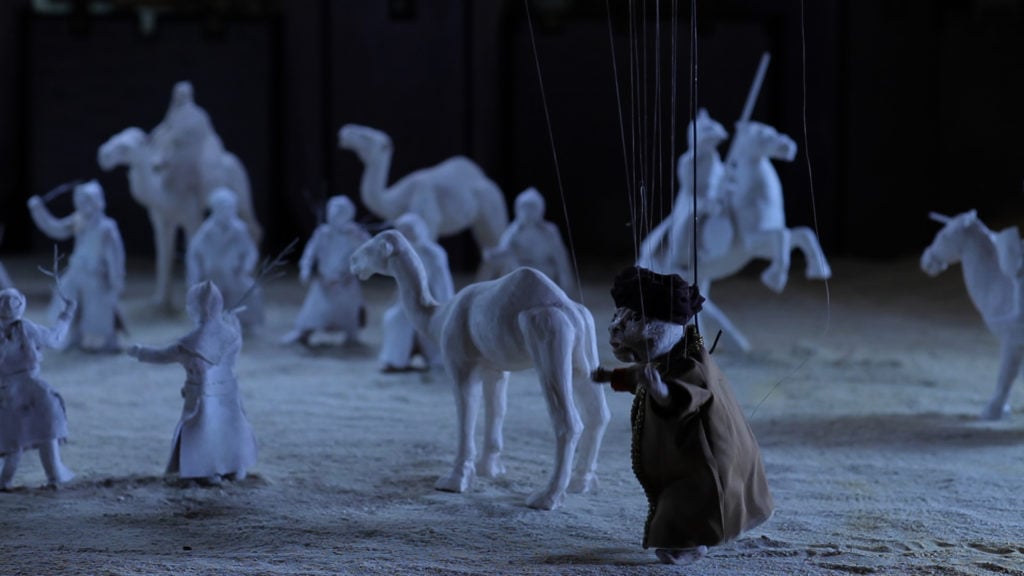
Wael Shawky, Cabaret Crusades:
The Path to Cairo (2012). Courtesy the artist and
Sfeir-Semler
Gallery Berlin/Hamburg.
This cycle of films captures the Crusades in all their glory, or
infamy, through Arab eyes (it is based on the work of Lebanese
historian Amin Maalouf). The fact that the tale is told with
puppets—the first episode alone features more than 100 antique
marionettes—may sound trivializing, but the choice allows for the
telling of a story huge in scope, makes vivid another time in a way
that shocks you out of your received images of it, and lures you in
for something that is both really moving and really
perspective-shifting.
15.
Kerry James Marshall, Untitled (Gallery)
(2016)
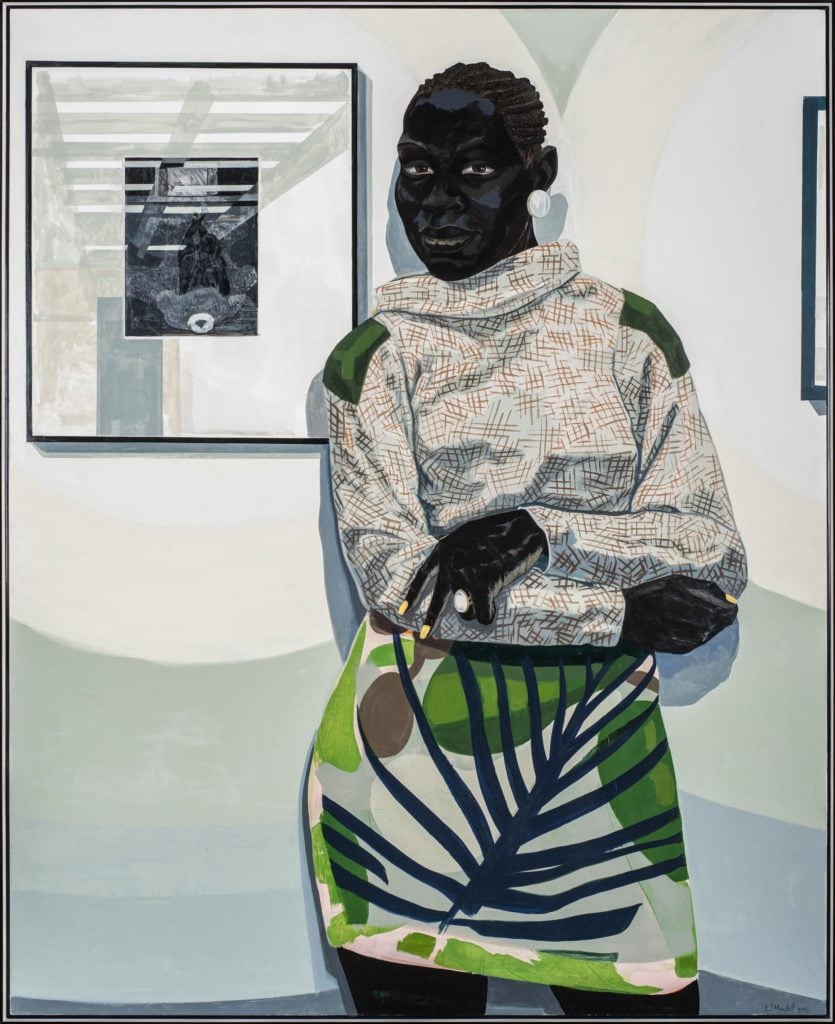
Kerry James Marshall, Untitled
(Gallery) (2016), Carnegie Museum of Art. ©Kerry James
Marshall, Courtesy the artist and David Zwirner, London
Kerry James Marshall emerged in the 2010s as a major, powerful
force in contemporary painting, and his touring retrospective,
“Mastry,” was much-loved. You could certainly pick any number of
his amazing images as “best-of” material. This stylish five-by-four
painting stands as a literal invitation for black museumgoers to
claim the galleries. It was acquired by the Carnegie Museum, amid
much hype, the year it
was painted, and featured in “20/20,” a show it organized with the
Studio Museum the following year.
14.
Postcommodity, Repellent Fence
(2015)
This two-mile-long, temporary monument
composed of 26 tethered balloons bearing the “open eye”
symbol and bridging Douglas, Arizona and Agua Prieta in
Sonora, Mexico is meant as an image of both trans-border connection
and the persistent vitality of Native cultural power. For the
curious, some sense of the massive effort and community-building
that went into the piece—and which is definitely part of
the piece—comes in the form of the documentary about its making.
13.
Forensic Architecture, The Murder of Halit
Yozgat (2016–ongoing)
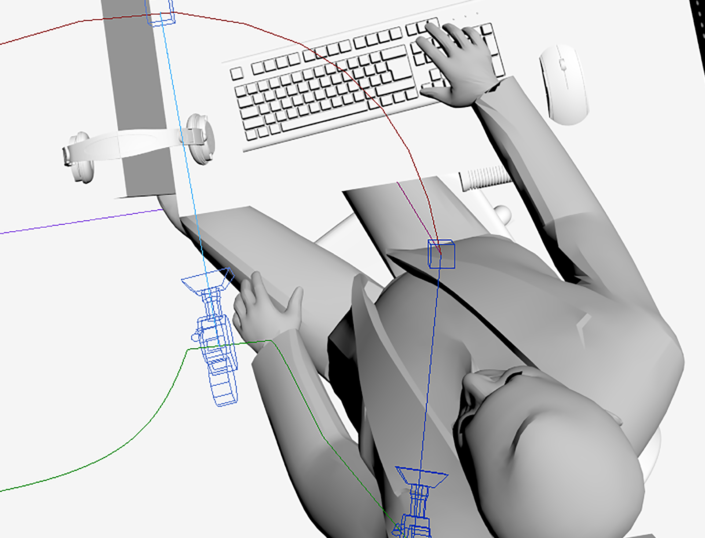
A counter investigation into the murder
of Halit Yozgat. Courtesy Forensic Architecture.
have taken a turn in recent years from raising awareness about
worrying crimes and political issues to employing technical skills
to actually help solve them. Eyal Weizman’s Forensic Architecture
group has found the most success with this difficult maneuver.
Commissioned by an action group called Unraveling the NSU
Complex, this particular investigation, which involved,
among other things, combing through a leak of hundreds of documents
and constructing a 1:1-scale model of the Kassel internet cafe
where a murder took place, was seen at documenta 14 but also was
presented a state parliamentary inquiry and entered into the
stream of real-world
news as proof of a cover-up.
12.
Ai
Weiwei, Sunflower Seeds (2010)
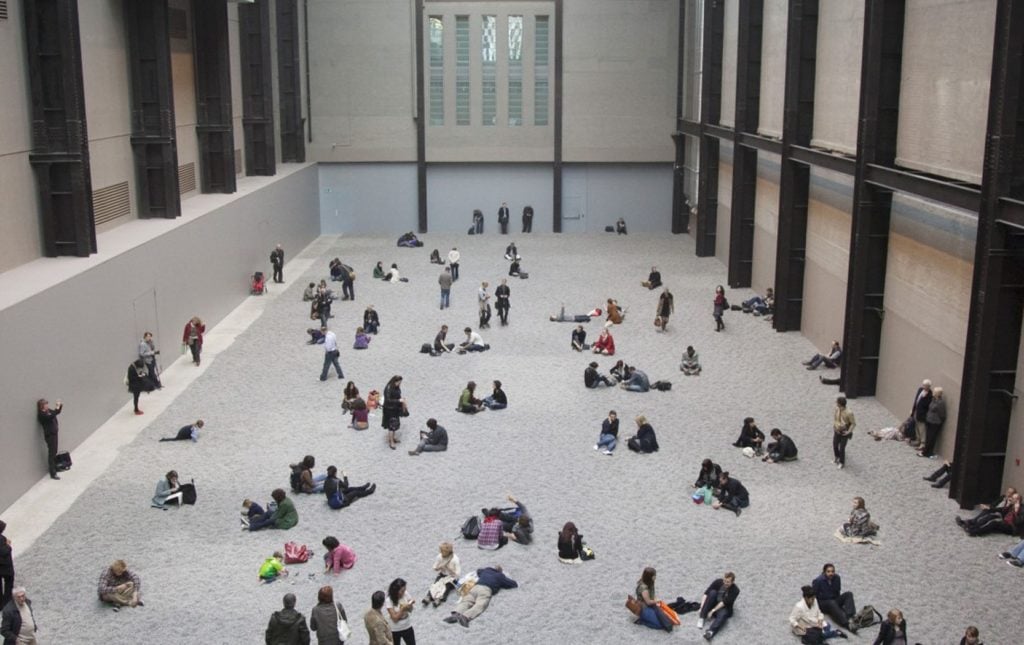
Ai Weiwei, Sunflower Seeds in
the Tate Modern Turbine Hall. Courtesy of Tate.
Created before his detention by the Chinese government made him
an international cause célèbre, Ai’s Turbine Hall commission
probably marks the absolute apex of his work as an installation
artist. The vast bed of individually crafted porcelain sunflower
seeds showed off all the artist’s innate skill for public
engagement, while also lending itself to complex thoughts about art
and labor in a global world and reclaiming a sense of the
individual within the collective.
11.
John Akomfrah, The Unfinished Conversation
(2012)
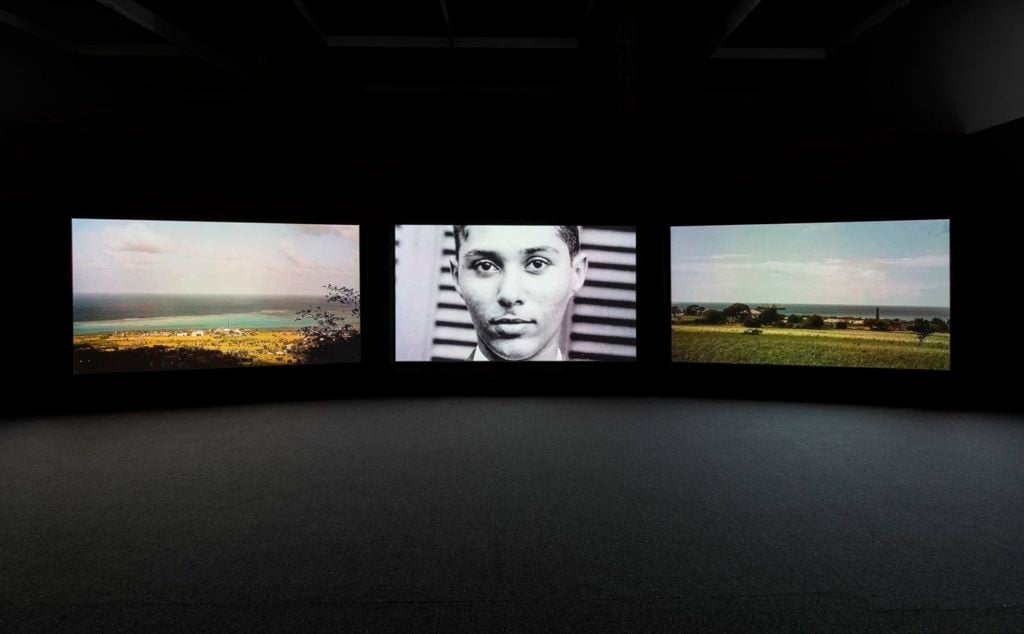
John Akomfrah, The Unfinished
Conversation (video still) (2012). Photo by Toni Hafkenscheid,
courtesy the artist; Smoking Dogs Films; Lisson Gallery.
The Unfinished Conversation is less poetic that
other Akomfrah works such as the stunning Vertigo Sea, but
it’s the work that seized me by my collar and told me to pay
attention when it was shown as one of MoMA’s new acquisitions. A
three-channel experimental documentary about the life and work of
Stuart Hall, the activist, theorist, and founder of “cultural
studies,” it offers a personal, lived-in history that uses its form
to give a sense of a life lived straddling multiple
worlds.
10.
Marina Abramović, The Artist Is
Present (2010)
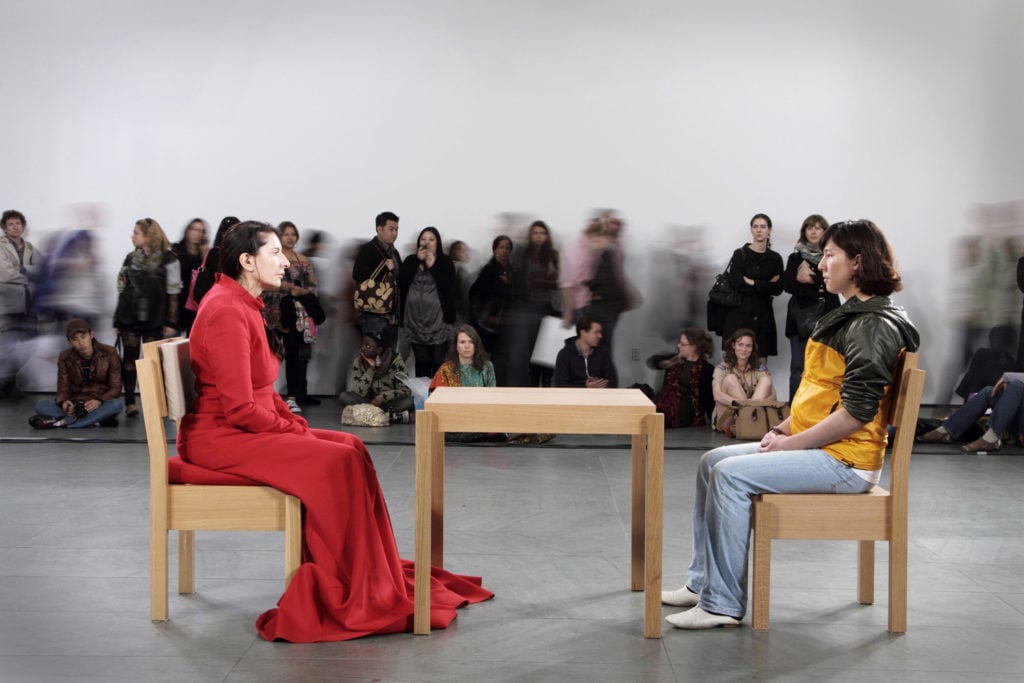
Marina Abramović, The Artist is
Present (2010). Courtesy of the artist and Sean Kelly
Gallery.
Also known colloquially as “the staring
contest,” Abramović’s marathon performance as part of her
retrospective at the Museum of Modern Art in 2010 changed the
status of performance art in the media imagination, from something
that was essentially esoteric, difficult, and kind of the butt of a
joke (à la Maude Lebowski in The Big Lebowski) to
something that was glamorous, popular… and still often the butt of
a joke, but a different kind of joke now.
9.
K-Hole, Youth Mode: A Report on
Freedom (2013)
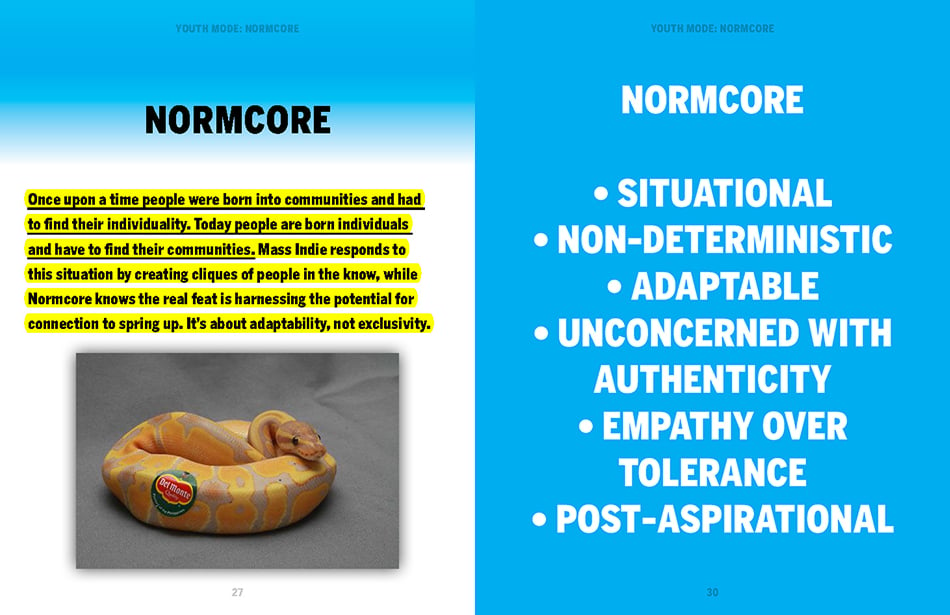
A page from K-HOLE’s Youth Mode: A
Report on Freedom (2014).
Founded by Greg Fong, Sean Monahan, Chris Sherron, Emily
Segal, and Dena Yago, the art collective K-HOLE defined a new potential mode of
operation for artists—as satirical branding
agency—which, in an astounding turn, actually broke out to
affect the language of the culture
at large. Released at the Serpentine’s 89Plus Marathon, the “Youth Mode” report
was essentially an art parody of fashion futurology, looking at how
you can carve out a sense of difference in an age when “be
different” is the norm, hitting upon the idea of “normcore,” which
went on to enter the popular lexicon,
unironically.
8.
Anne Imhof, Faust (2017)
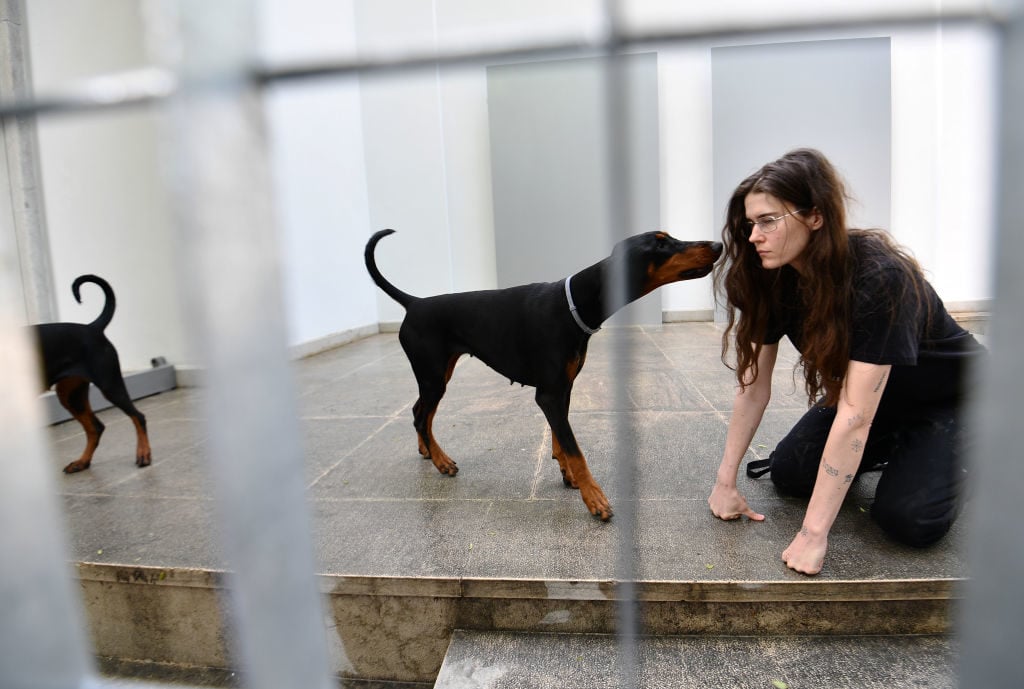
Eliza Douglas in Anne Imhof’s
Faust at the 2017 Venice Biennale. Photo courtesy of
Vincenzo Pinto/AFP/Getty Images.
The most-talked-about event of
the 2017 Venice Biennale was Imhof’s severe performance-art environment, which
featured dogs, vacant-eyed performers, and a glass floor beneath
which parts of the miasmic five-hour action took place. The
blurring together of audience and performer, and of an arch,
clearly fashion-derived affect with an unsettling sense of human
beings malfunctioning, strikes me as reflecting a very contemporary
purgatorial feeling.
7.
Hito Steyerl, Factory of the Sun (2015)
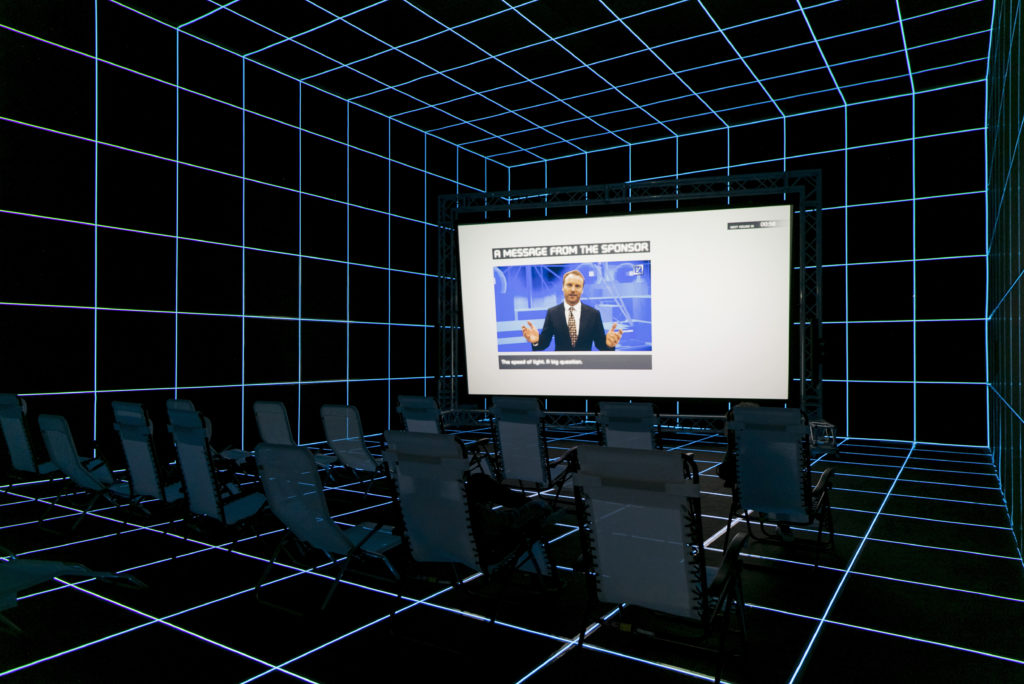
Hito Steyerl, Factory of the Sun
(2015). Installation view at Fondazione Sandretto Re Rebaudengo.
Photo: Eduardo Piva.
Hard to explain, so let me allow the official explanation to do
it: Factory of the Sun “tells the surreal story of
workers whose forced moves in a motion-capture studio are turned
into artificial sunshine.” Steyerl’s experimental style of
theoretical writing exploring the consequences of the collision of
technology, art, and rapacious digital capitalism (collected in her
2017 book Duty-Free Art) has surged into the center
of discussion in recent years. This funny and disorienting sci-fi
narrative, which started out at the 2015 German Pavilion of the
Venice Biennale and then took over museums in the years thereafter,
was probably the best translation of her theoretical sensibility
into lasting images.
6.
Rugilė Barzdžiukaitė, Vaiva Grainytė, Lina Lapelytė, Sun & Sea
(Marina) (2019)
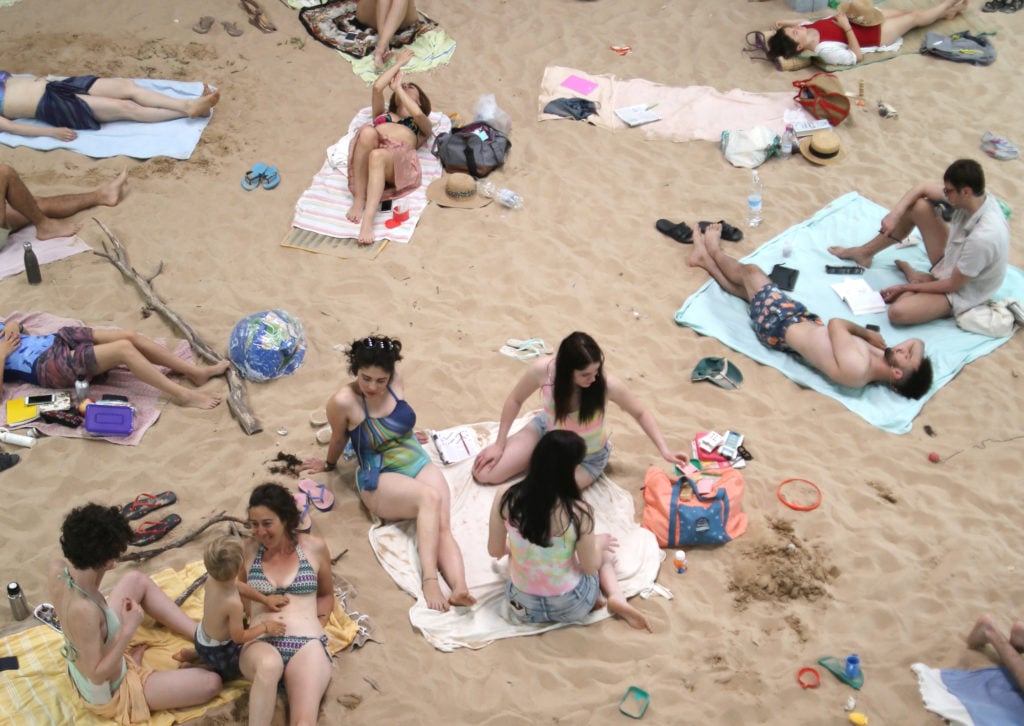
Lina Lapelytė, Vaiva Grainytė and
Rugilė Barzdžiukaitė, Sun and Sea (Marina) (2019).
Performance, Lithuanian Pavilion at the 58th Venice Biennial, May
11 – October 31, 2019. Photo by Laima Stasiulionytė.
While an opera about climate
change may sound like a very Portlandia idea,
Sun and Sea (Marina) actually worked. Staged with
performers presented lallygagging on a beach and singing
reflectively from a future vantage point on life in a blighted
world, the work—presented most recently in the Lithuanian Pavilion
at the 2019 Venice Biennale—was art for the age of “climate grief.” It’s
taking of the Biennale’s
top prize probably marks the arrival of the subject at the
very center of art.
5.
Trevor Paglen and Kate Crawford, ImageNet Roulette
(2019)
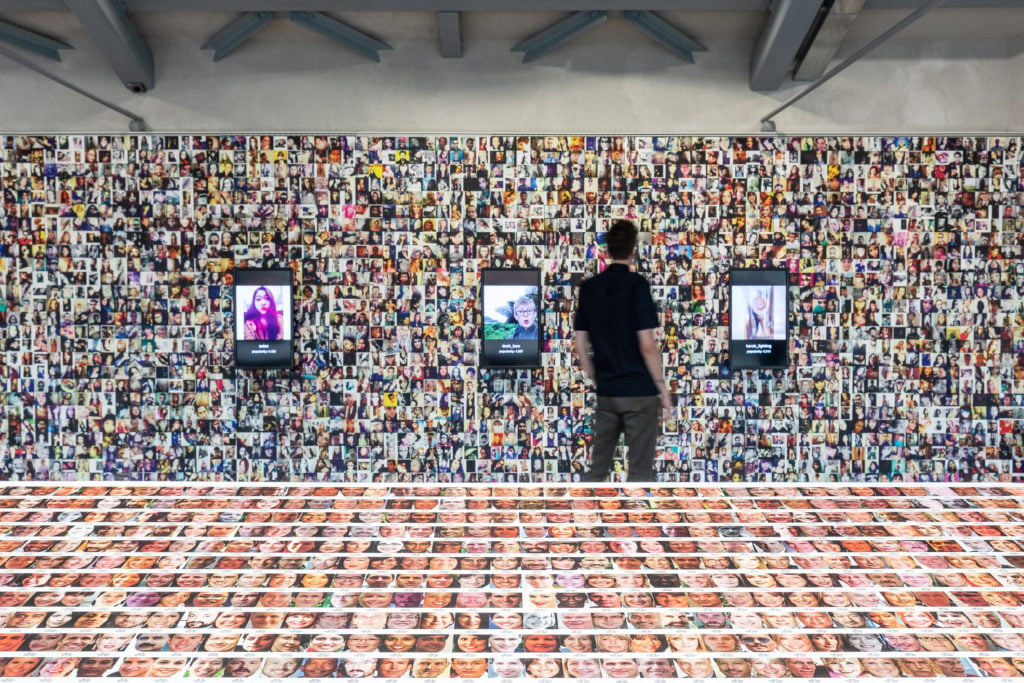
Exhibition view of “Kate Crawford,
Trevor Paglen: Training Humans” Osservatorio Fondazione Prada,
through Februrary 24, 2020. Photo by Marco Cappelletti, courtesy
Fondazione Prada.
A team-up between an artist and a computer scientist, ImageNet Roulette was both an art
installation and an intervention into the debates about the ethics
of facial-recognition software. After it went viral, it actually
caused a kind of modest real change, with the scientists behind the
most commonly used dataset that governs computer vision, ImageNet,
admitting that the
artwork exposed dangerous flaws in how images were categorized.
Given how central virality has been to this decade, what I think is
particularly significant about ImageNet Roulette is how it
launched as an actual app, allowing you to upload an image of
yourself, see how the computer was tagging you in often unnerving ways, and share the
results. Social media normally can be accused of soft-pedaling
digital surveillance by incentivizing self-exposure. In this case,
the creators used these same energies to turn the tables, at least
in a small way.
4.
Ragnar Kjartansson, The Visitors (2012)
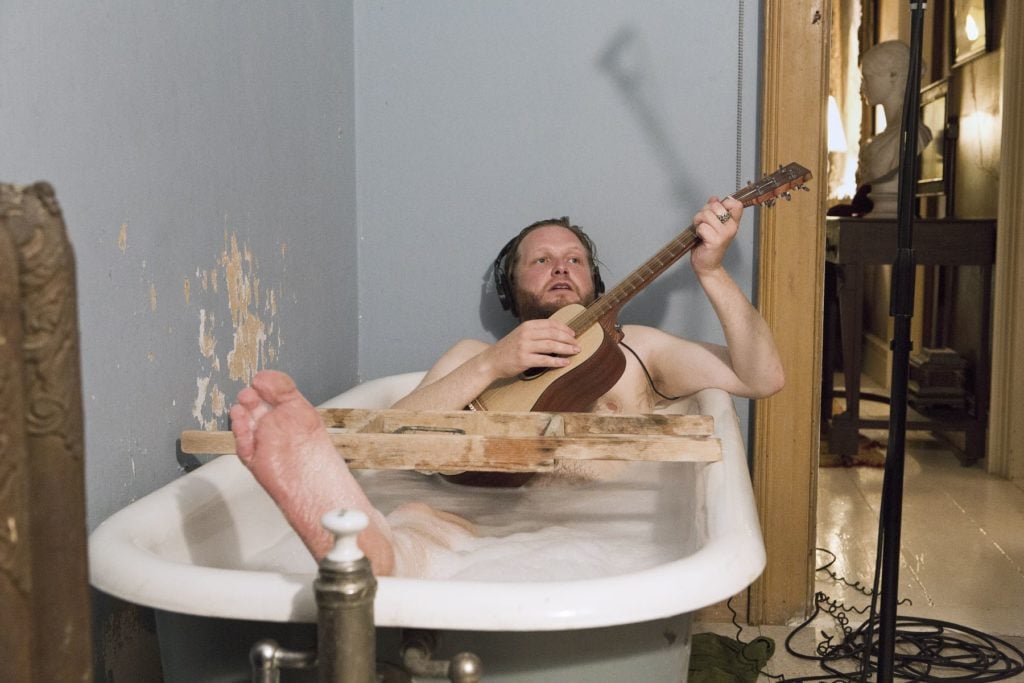
Ragnar Kjartansson, The
Visitors (2012). Photo: Elísabet Davids. Courtesy of the
artist, Luhring Augustine, and i8 Gallery.
I wouldn’t be the first
to put Kjartansson’s dreamy, multi-channel, hour-long video at the
top of their list of faves. The Icelandic artist calls himself a
“neo-Romantic,” and the film, set in the disheveled grandeur of the
rooms of Rokeby Farms in New York, features multiple musicians
setting up, then jamming together on separate screens, slowly
coming together, and then breaking up. It casts a spell that is
hard to describe (see a clip here). Seven years
after I saw it at Luhring Augustine gallery, I can still sing the
hook from The Visitors in my head.
3.
Kara Walker, A Subtlety, or the Marvelous Sugar Baby, an Homage
to the unpaid and overworked Artisans who have refined our Sweet
tastes from the cane fields to the Kitchens of the New World on the
Occasion of the demolition of the Domino Sugar Refining
Plant (2014)
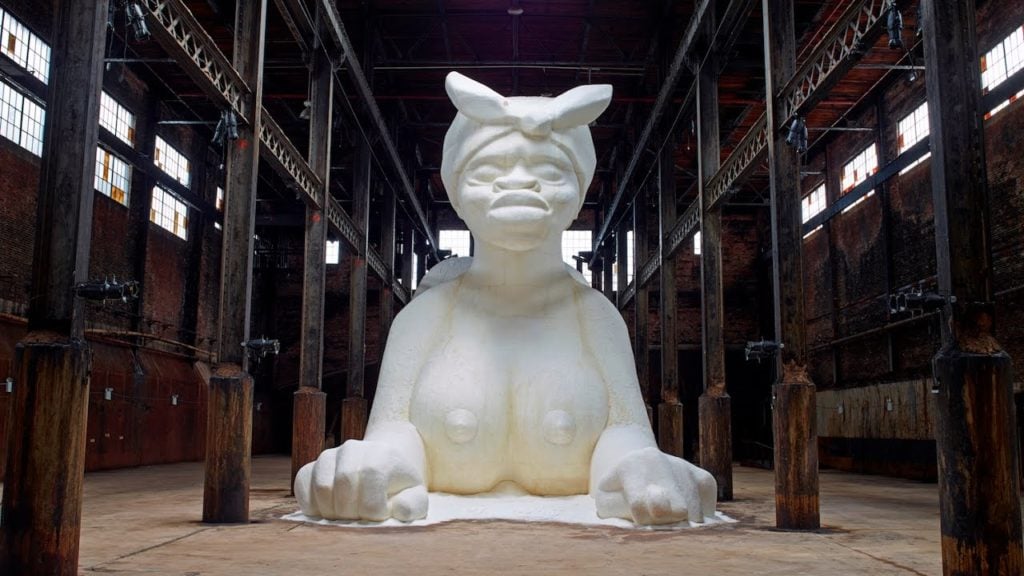
Kara Walker’s A Subtlety… at
the Domino Sugar Factory in 2014. Image courtesy Creative Time.
Scale can be a substitute for interest, and working with a
symbolically charged material, a substitute for meaning. But
Walker’s sphinx, made from some 35 tons of sugar, probably marks a
high point for doing something actually meaningful and interesting
while working at that kind of scale. It draws you in with a
spectacular image in a spectacular site, but its idea is audacious
and multifaceted enough that it has entered the culture in a
lasting way.
2.
Christian Marclay, The Clock (2010)
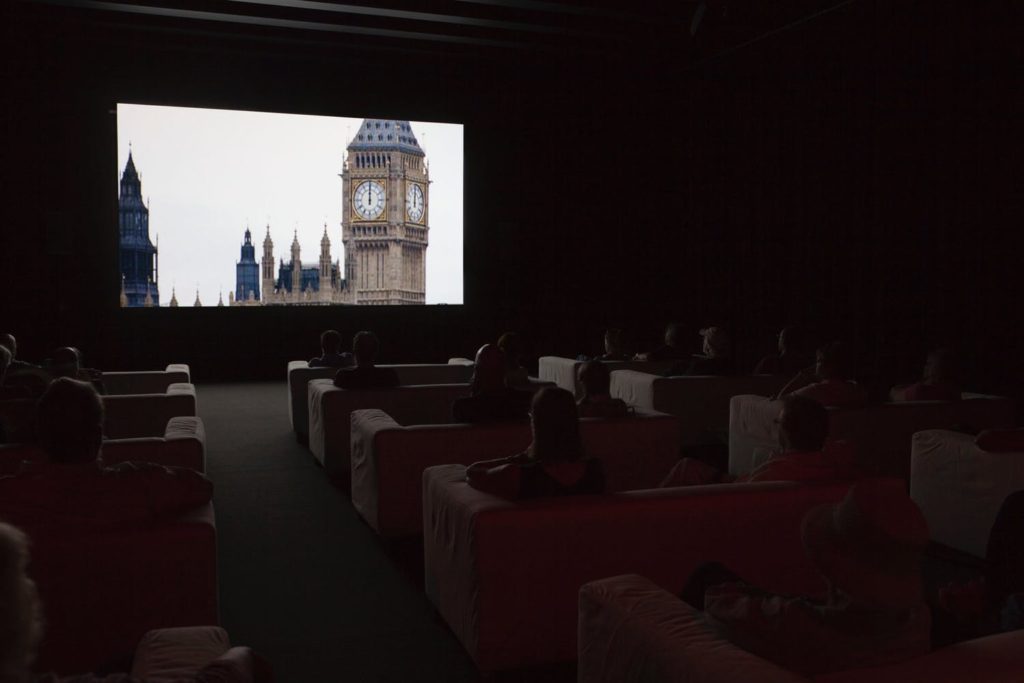
Christian Marclay, The Clock at
the Walker Art Center. Image courtesy the artist and Walker Art
Center.
A work recognized as a classic almost as soon as it came out
(shoot, I called it a “New Classic” for a series in Slate
in 2011!), Marclay’s The Clock is an idea so
perfect that it feels almost elemental: clips of film from
throughout cinema history, each featuring a clock or some reference
to time, but organized so that whatever moment the characters are
experiencing onscreen lines up with the moment you are in, right in
the gallery. It was a tremendous achievement that was rewarded with
vast popularity; there are people who showed up and sat through all
24 hours.
It’s worth saying why, though: The Clock takes
the fragmented, atomized, atemporal way we have come to consume
media, digs into the guts of the mechanism, and rewires it to
reconnect with a sense of continuity, actuality, and a collective
experience of the present. In that sense, it is a work with an
almost healing power. And it is also just wonderfully, innately
lovable.
1.
Arthur Jafa, Love Is the Message, the Message Is Death
(2016) / The White Album (2018)
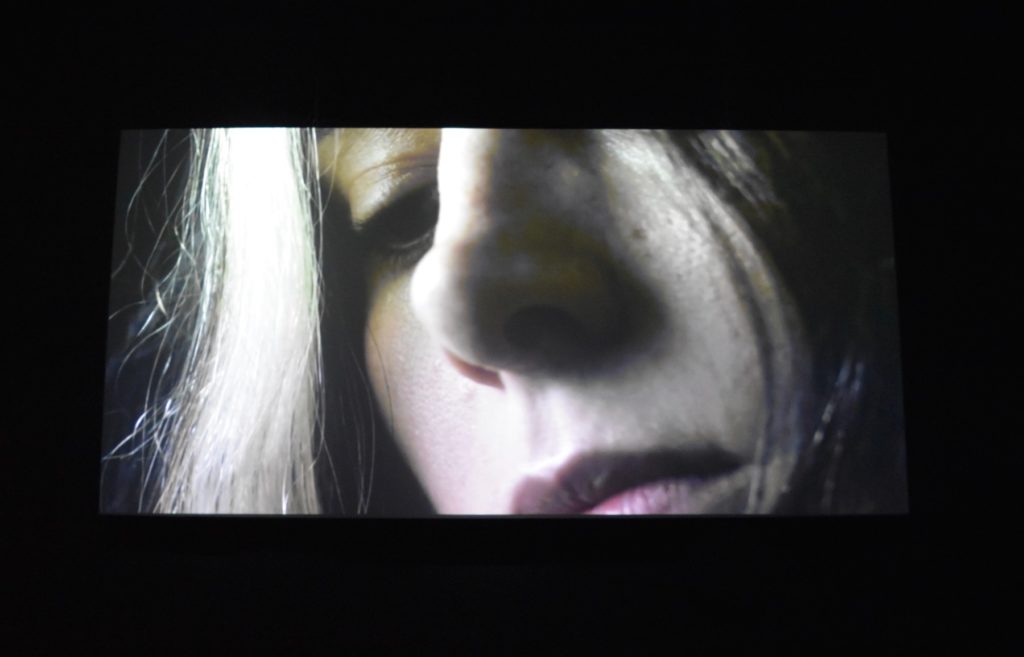
Arthur Jafa, The White Album
(2018) at the Venice Biennale 2019. Image: Ben Davis.
Arthur Jafa’s Love Is the Message, The Message Is
Death seemed to compress the entire hyper-charged media
landscape, where images of racialized ultra-violence circulate
alongside affirmation and commodification of black culture, into
one seven-minute video collage. This decade’s social media
explosion made escaping traumatic images of violence impossible,
stimulating both demands for justice and feelings of vulnerability
for targeted communities. But processing these images into art
without seeming to compromise their reality seemed equally
impossible. Jafa’s video steered straight into this traumatic
paradox, the video’s movement between extremes of horror and
celebration capturing a sense of psychic crisis. Arriving at
Gavin Brown’s enterprise in New York just at the moment of Trump’s
election in 2016, it became a symbol of the anger
and grief of that moment. It drew lines.
In this list, I’ve tried to have only one work by a given
artist, just to keep this totally arbitrary exercise interesting. I
gave myself an exception for Jafa, because it seems to me that
Love Is the Message, the Message Is Death makes sense
at the top for the reasons I just mentioned—but the artist himself
spoke about being
suspicious of the over-celebration of his work by a white audience,
which makes total sense given that it is about how the
celebration of black culture coexists with the reality of
oppression (the title of the work literally encodes this message).
The White Album was his response to that problem, this
time stitching a found-image portrait of white America: of
vigilante violence, of awkward internet rants from people
alternatively spouting clueless shit or struggling towards a
language of anti-racism, of inane viral goofiness that doesn’t seem
so goofy anymore in this context, asking you to sit with what it
all means together. The same compression of highs and lows, but
with the mirror turned around.
These two works felt unexpected and difficult in the way truly
new kinds of art do. Their form, collaging found and viral-media
images with appropriated music, was radical but also a vernacular
and accessible language. They felt both unusually direct and honest
but also meticulous and careful with their material. People will
still be processing them in the 2020s.
The post The 100 Works of Art That Defined the Decade,
Ranked: Part 4 appeared first on artnet News.
Read more https://news.artnet.com/opinion/the-100-works-of-art-that-defined-the-decade-ranked-part-4-1737885
Further reading


Leave a comment