
Sotheby’s London Met Expectations With a $64.8 Million Impressionist and Modern Sale—But Expectations for the Category Are Softening
Are London’s Impressionist and Modern
art sales in terminal decline? Last year, Sotheby’s evening sale
carried the lowest presale estimate since 2009, and, while
realizing £87.7 million ($114.2 million), at the high end of the
estimate, it was down 35.5 percent from the previous winter’s £136
million ($177.1 million) evening sale. Tonight’s pre-sale low
estimate was down again on the previous year’s total, by 36.7
percent, to £41.8 million ($54.2 million).
The slide has not been restricted to
Sotheby’s. This evening’s sale was the first in a series of
Impressionist, Modern, and Surrealist sales where combined
estimates for the evening and day auctions at Sotheby’s and
Christie’s have fallen overall by 50 percent from last year. It is
not so much that values are down, although this is sometimes the
case, but that high level consignments have dropped. How much of
this was due to the indecision over Brexit, Brexit itself, or the
threat of a Labour Government driving the wealthy out of the
country during the business getting period is not clear, but in any
case, the supply of masterpieces just wasn’t there, according to
Helena Newman, chairman of Sotheby’s Europe.
While last year Newman had a £27.5
million ($35.8 million) painting by Claude Monet, her highest
estimated lot this year was an £8 million to £12 million ($10.4
million to $15.6 million) neo-Impressionist Camille Pissarro
painting of peasants working in a field. The estimate was the
highest yet for a single canvas by Pissarro and produced the
artist’s second highest price at auction. After bidding from
Sotheby’s Monaco representative, Mark Armstrong, it sold to Tania
Remoundos from the auction house’s London department for £13.3
million ($17.3 million).
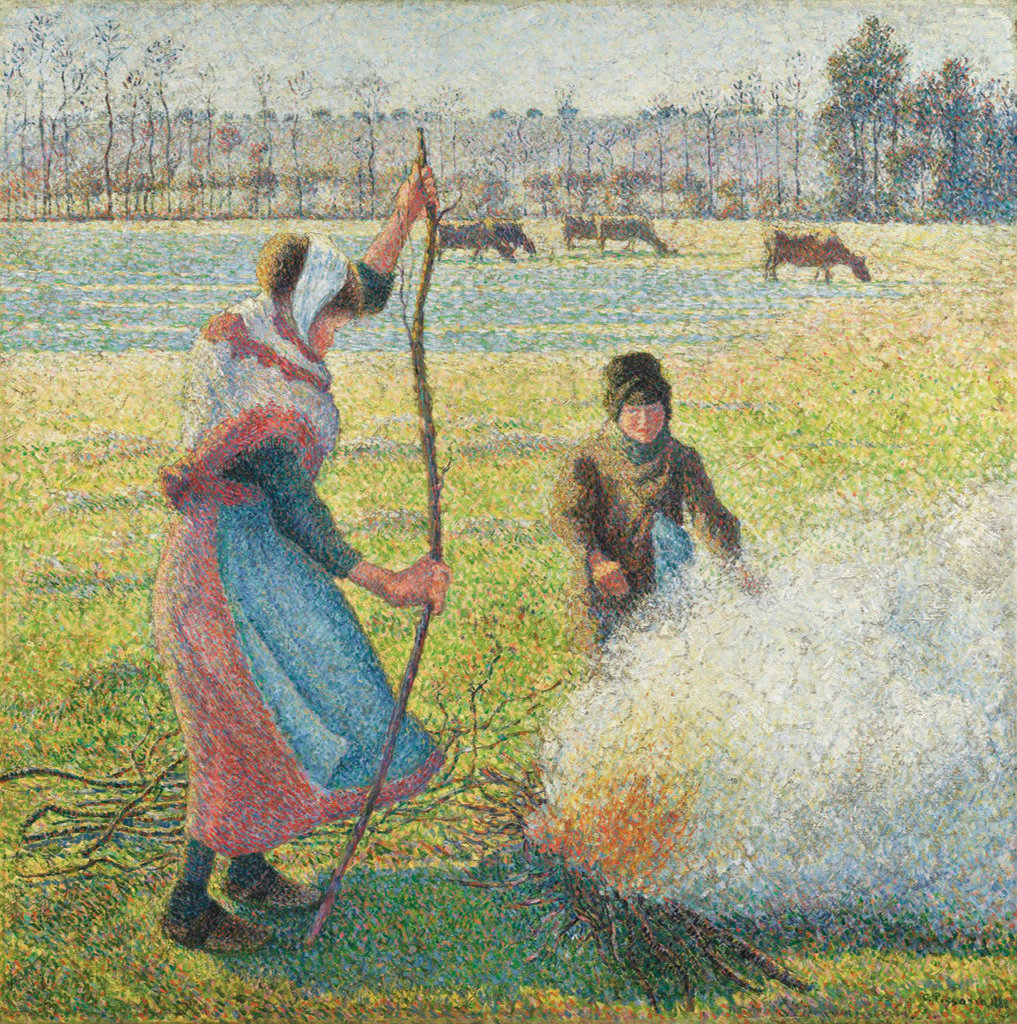
Camille Pissarro, Gelée blanche,
jeune paysanne faisant du feu (1887-88). Courtesy of Sotheby’s
Images Ltd.
The Pissarro was followed by a radiant
1907 pointillist marine painting by Paul Signac, La Corne
d’Or,Matin, which, like the Pissarro, had been looted by the
Nazis from the Jewish collector Gaston Levy. It was assigned to the
Musee d’Orsay in Paris from 2000 to 2018, when in was restituted to
Levy’s heirs. The £5 million to £7 million ($6.5 million to $9.1
million) estimate was fractionally higher than for a similar view
of the same subject in Constantinople that sold for £8.8 million
($13.9 million) to a Russian buyer in 2012. Today it attracted
bidding from Taipei but sold elsewhere within estimate for £7.6
million ($9.9 million). Sotheby’s said about one-third of bids came
this evening from Asia.
A third lot restituted to the Levy
heirs, this one rescued from the Cornelius Gurlitt horde last
summer, was a Signac painting of the Seine, by the Pont de Clichy.
Smaller and more subdued than the Turkish subject it was estimated
at £600,000 to £800,000 ($781,200 to $1 million) and pursued by
Paris dealer Guillaume Duhamel before selling elsewhere for £1.3
million ($1.6 million).
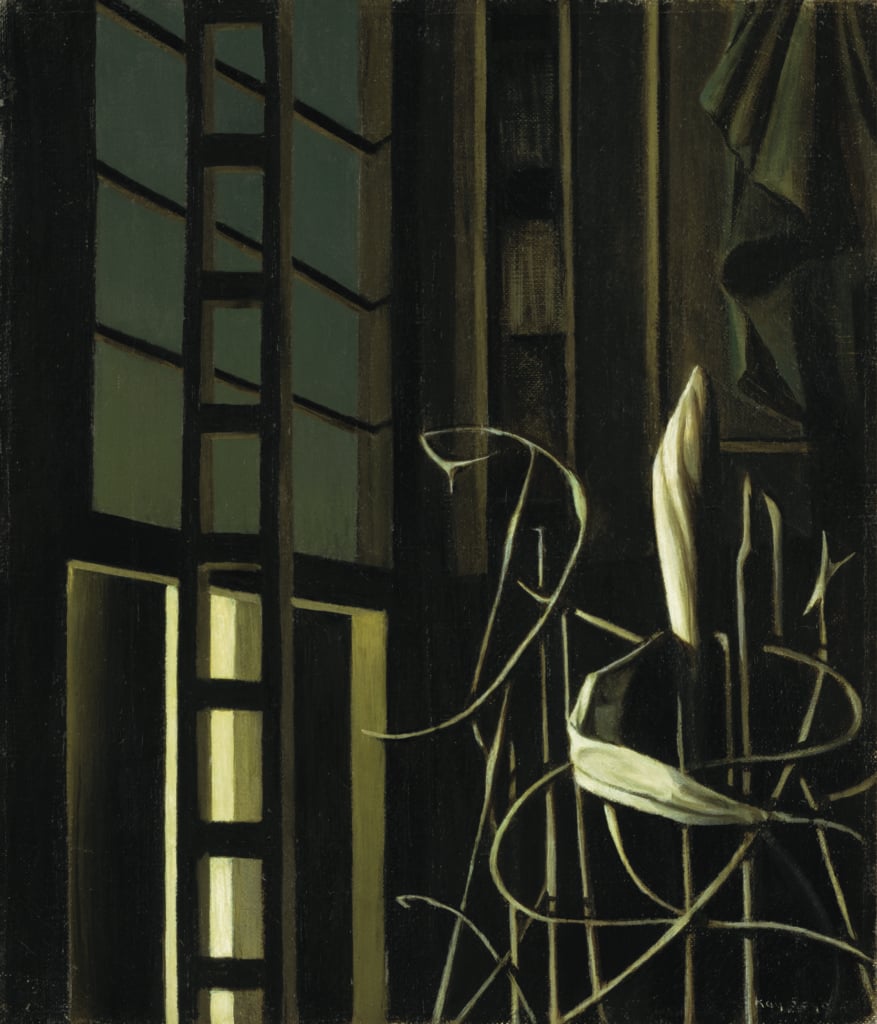
Kay Sage, Journal of a Conjuror
(1955). Courtesy of Sotheby’s Images Ltd.
The sale kicked off with a dark and
mysterious interior, Journal of a Conjuror by
the surrealist painter Kay Sage. Painted in 1955, the year of the
death of the artist’s husband, French surrealist Yves Tanguy, it
was last sold for $3,200 in 1990 when it was bought by Count
Alexandre de Bothuri Bathary, a French aristocrat of Transylvanian
descent, (identified by Sotheby’s only as “an Important Noble
collection”). Sage’s reputation has been completely overhauled
since then and she reached a record £4.3 million ($5.6 million) in
2014 for a painting estimated at £70,000 to £90,000 ($91,140 to
$117,180).
The Conjuror’s estimate was
understandably higher, at £120,000 to £180,000 ($156,250 to
$234,360), and, in spite of being fairly somber, sold on the high
estimate for £225,000 ($292,342). It was followed by a late gouache
composition by Tanguy that sold for £175,000 ($227,850). It is a
measure of how far his reputation has also advanced that it was
last sold in 1994 for £34,000 ($44,268).
Overall, there were relatively few
Surrealist works at the sale, the selection of which was led by
Joan Miró’s 1938 gouache Personnages et Oiseau, last
at auction in 1969 when it sold to the McCrory Corporation for
£30,000 ($39,000) and now sold by a Swiss collection on the high
estimate for £2.4 million ($3.1 million) to New York’s Acquavella
Galleries. A little ways behind was Francis Picabia’s gaudy bright
green and pink image of flirtation, Sous les
Olives (1925). Carrying a punchy £1.5 million $2 million)
estimate, it had only recently sold in New York, in 2018, for $2.5
million, and, back on the block, sold below estimate for £1.7
million ($2.3 million). The buyer was French art consultant
Christian Ogier.
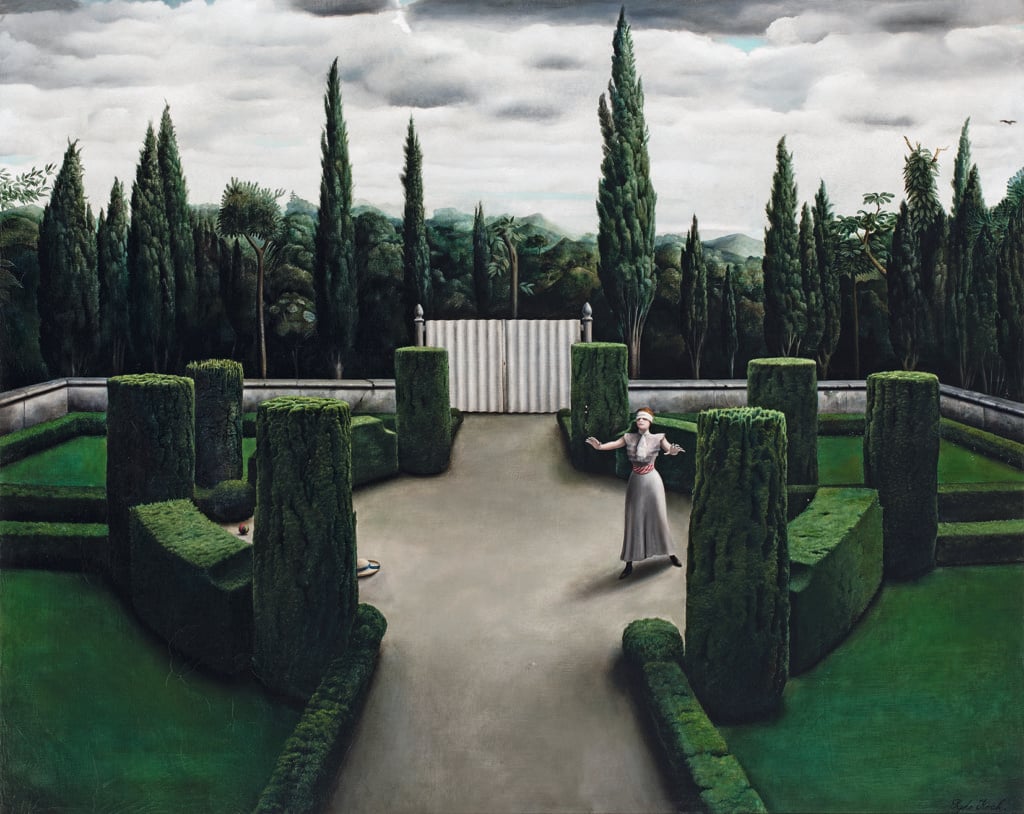
Pyke Koch, Florentijnse tuin (Florentine
Garden) (1938). Image courtesy of Sotheby’s Images Ltd.
The evening’s most unexpected
appearance was the first work in a London evening sale by the Dutch
magic realist Pyke Koch, whose Florentine
Garden (1938), with overtones of Delvaux, carried the
highest estimate yet for the artist at £200,000 to £300,000
($260,400 to $651,000). Coming near the end of the sale it
attracted several phone bids before selling for a record £555,000
($722,600) to a buyer relaying bids on the phone to Sarah de Clercq
from Sotheby’s Amsterdam office.
It’s worth mentioning a point about
the guarantees. When the catalogue was printed, there was only one
guarantee, for Pissarro’s view of Le Pont
Royal, which had been bought in Paris in 2018 for $1.4
million. This evening it barely broke even selling below estimate
for £1.3 million ($1.7 million) to a Russian phone
bidder—presumably the guarantor. But by the beginning of the sale
another nine lots had been guaranteed by third parties—a now
classic last-minute rush by speculative dealers to share any
profits to be had.
The best performer by a mile was
cubist painter Jean Metzinger’s zingy ‘Le
Cycliste’ (1912). The painting carried a potentially
record busting £1.5 million to £2 million ($1.8 million to $2
million) estimate—the highest yet for an artist whose record was
set at $2.4 million in New York in 2007 for a more “purist” 2016
landscape. Tonight it was snapped up by a private American
collector who outbid advisor Abigail Asher to buy it for a new
record £3 million ($3.9 million). Other guarantors had to stick
with the works they guaranteed, including some mediocre works by
Vincent van Gogh.
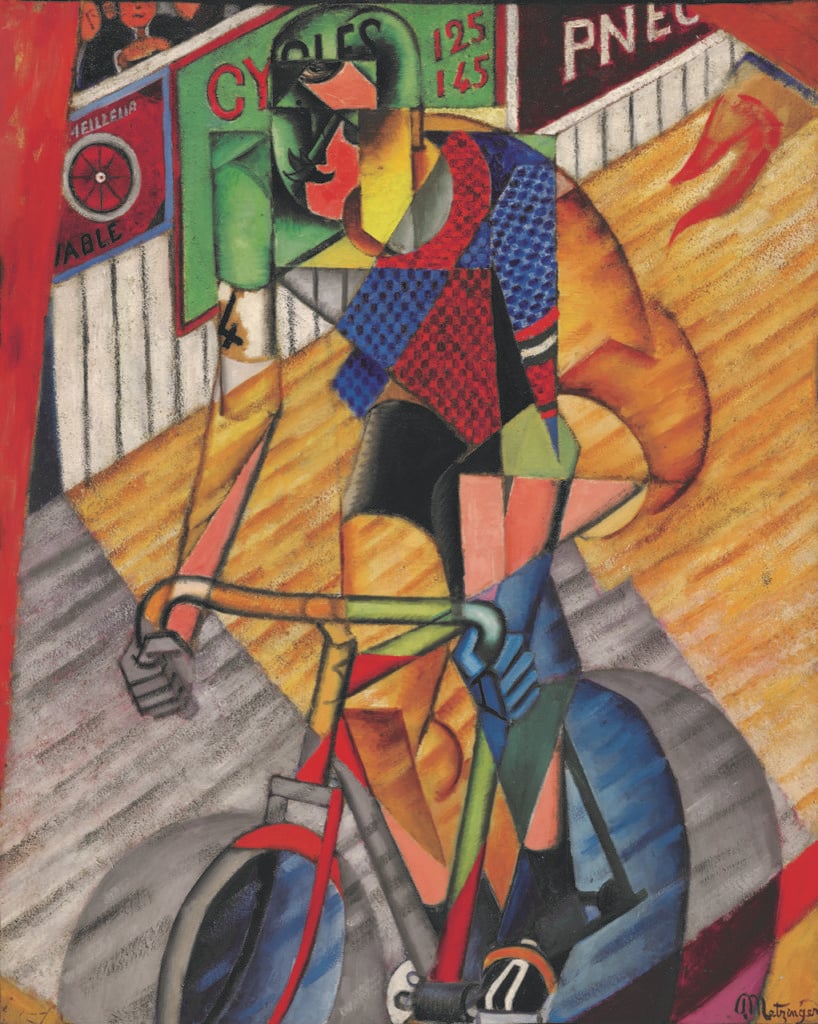
Jean Metzinger, Le Cycliste
(1912). Courtesy of Sotheby’s Images Ltd.
At the end, the slim 33-lot sale
realized £49.9 million ($64.8 million) against a £41.8 million to
£59.6 million estimate with just four lots going unsold—down 63.3
percent from last year. Exiting the saleroom, advisor Christopher
Eykyn said that the sale, while solid, wasn’t going to set the
Thames alight. “Looking ahead,” mused Guy Jennings of the Fine Art
Group advisory, “I think the Imp/Mod market is
getting like the Old Master market—lifted only occasionally by
masterpieces, rather than on a regular basis.”
It could be one reason why Phillip
Hook, Sotheby’s longstanding senior director of Impressionist and
Modern art in London, announced his retirement tonight.
The post Sotheby’s London Met Expectations With a $64.8
Million Impressionist and Modern Sale—But Expectations for the
Category Are Softening appeared first on artnet
News.
Read more https://news.artnet.com/market/sothebys-london-imp-mod-sale-february-2020-1769976
Further reading


Leave a comment