
Celebrities From Brad Pitt to Seth Rogen Are Massively Into Pottery. Here’s a Primer on Bro-ramics (and Its Colorful, Fraught History)
If you follow the
celebrity-artist circuit, you may have picked up on a trend of
late—Hollywood bros are into getting into ceramics
hard.
Seth Rogen and James Franco, who
both burst into the public imagination as misfit teenage stoners on
the TV comedy Freaks & Geeks, have each added the title of
“ceramicist” to their resumes in recent years.
In 2017, actor and art-world
dilettante Franco teamed up with his brother Tom to collaborate on
a series of enormous ceramic sewer-pipe sculptures, which were displayed at the
Ceramics Research Center at the Arizona State University Art
Museum. (Granted, audiences may now be less interested in Franco’s
ceramic dabblings, given persistent accusations of
sexual misconduct.)
Rogen, meanwhile has taken up the medium with
earnest devotion, posting images of his vases and ashtrays on
social media. “I didn’t know I would like it as much as I do,” the
actor told Ben Barna in a recent conversation in
Interview magazine. Rogen and his wife, the actress
Lauren Miller, “joined a studio near our house in Los Angeles, and
we just found ourselves, in every moment we could, wanting to go
and do it more.”
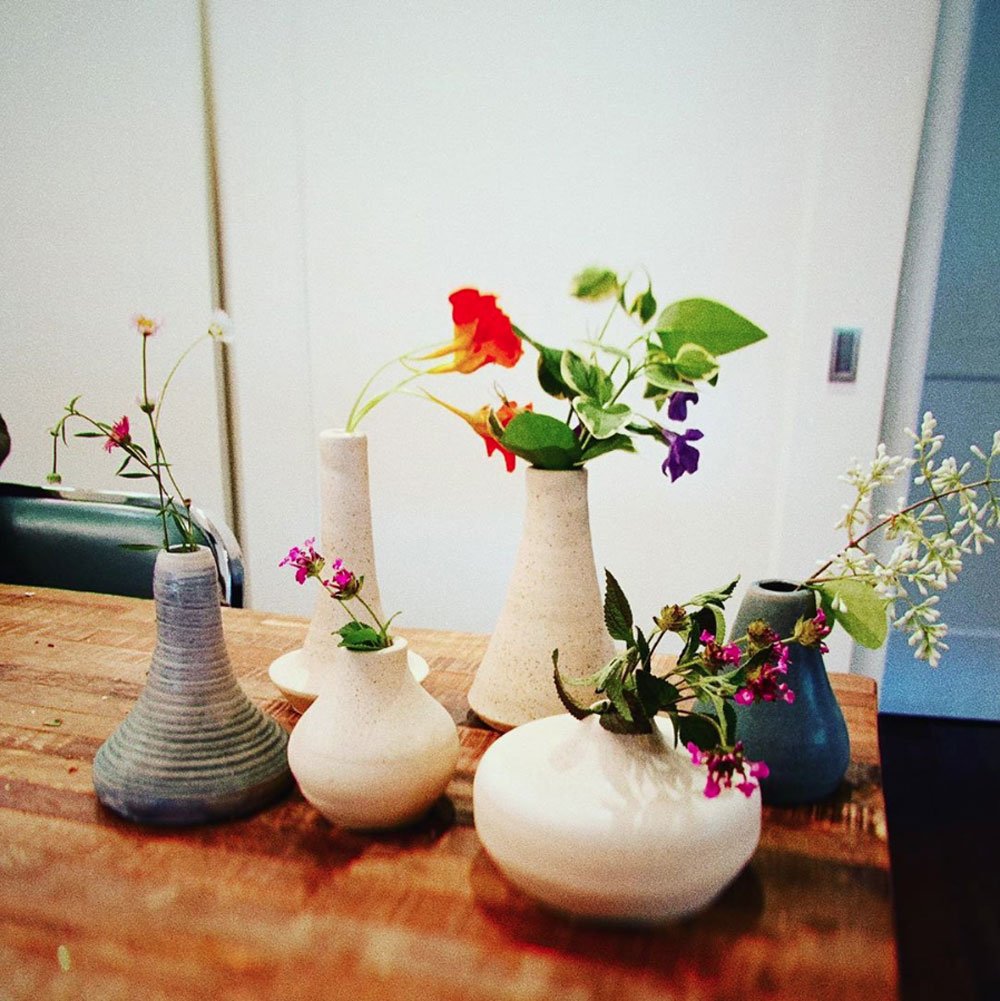
Seth Rogen’s handmade ceramic vases.
Courtesy of the artist’s Twitter.
Franco and Rogen are not the
only converts. Artnet News recently reported that “Once Upon a
Time…in Hollywood” stars Brad Pitt and Leonardo DiCaprio have
been pulling late nights in
Pitt’s sculpture studio, making ceramics and eating
sandwiches. A source told The Sun, who first
reported the news, that “They sometimes hang out with Brad’s artist
pals, but other times it’s just the two of them. Leo brings
sandwiches over from their favorite place, Fat Sal’s, and they
spend their boys’ nights creating art until the early hours.” So
wholesome!
And the list of ceramics bros
might be growing. When Shia LaBouef (another Freaks &
Geeks alum) told Twilight actress Kristen Stewart he
was “deeply dissatisfied with life,” she suggested taking a
pottery class.
So why the sudden enthusiasm for
ceramics? We asked some ceramics experts, who happen to be
guys: What exactly is going on here?
The Archetype of the Ceramics-Bro Isn’t
New
First of all, the idea of the
ruffian ceramics dude dates back decades. In the 1960s and ‘70s the
West Coast ceramicist Peter Voulkos defined the macho ceramicist
aesthetic, making bold ceramic creations that dismantled the divide
between craft and high art.
An outsized persona, Voulkos
sometimes plied his craft before enraptured live audiences, the
ceramics world’s very own hibachi chef. Other talented bros stood
up to proclaim that clay was serious business. Ken Price left his
mark as a renegade, declaring himself a “fine artist” from the
start. Robert Arneson, a California artist and father of Funk Art,
carved out the stoner-ceramicist archetype with his humorous and
rebellious ceramic self-portraits.
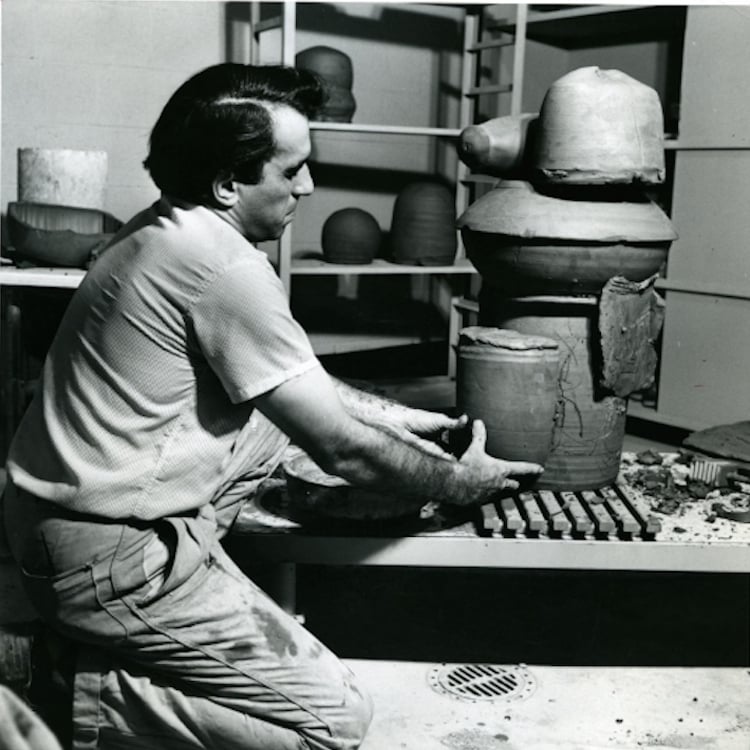
Peter Voulkos. Courtesy of photographer
Oppi Untracht/American Craft Council Library and Archives.
Garth Johnson, curator of the
2017 Franco brothers exhibition and current curator of ceramics the
Everson Museum, says there was a “Montana contingent” to this
mid-century crew, too. This was a group of male ceramicists—made up
mostly of World War II and Korean War vets including Rudy Autio,
and Henry and Peter Meloy—all plying their craft in Big Sky
Country.
“They smoked, drank…womanized.
The stories can be blood-curdling. It’s all about fire and
pyromania in a way,” Johnson mused. These artists discovered
pottery amid the post-war American “Greatest Generation” zeal—years
in which, both coincidentally and not, ceramics ultimately became
an entrenched subject in academia.
Adam Welch, director of New
York’s Greenwich House Pottery, one of the largest ceramics studios
in the city, admitted that there’s always been a strong bro
undercurrent within the field. “Sure, there’s always been that
manly man guy, and because of the ways society is and has been,
they get attention and, for better or worse tend to be well-known,”
he said. “They get to be the famous ones.”
Pot-tery?
You really shouldn’t get behind
the wheel high, except when it’s a ceramics wheel, in
which case a little green appears to be a bro-requisite. There’s no
denying that the macho enthusiasm for ceramics is glazed with a
dash of cannabis.
Brad Pitt recently winked at his
habit during the Screen Actors Guild Awards acceptance speech.
James Franco, on the other hand, claims to never touch the stuff,
which some find unlikely, given his impeccable performance in
Pineapple Express.
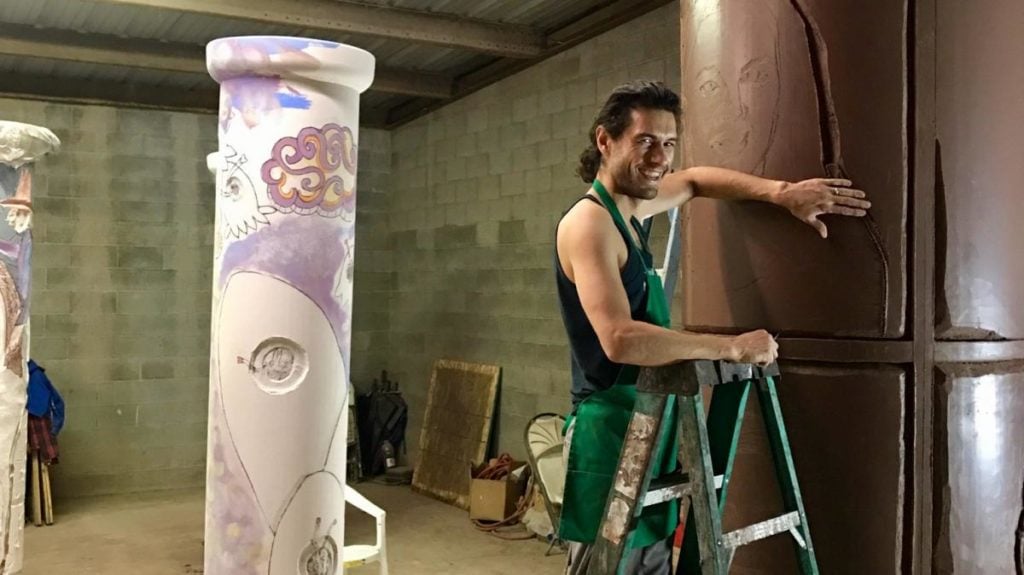
Tom Franco at the exhibition “Pipe
Brothers: Tom and James Franco” at the ASU Art Museum Ceramics
Research Center. Courtesy of the artist and the ASU Art Museum
Ceramics Research Center.
The most openly avowed toker of
the lot, Seth Rogen, found stardom playing a sweet, stoner slouch,
and recently turned his hand toward the business of getting high,
launching Houseplant, his own
cannabis company. Perhaps a shock to no one, it’s his love of
getting blazed that’s fueling his kiln, dare we say. “I smoke
joints all day, I interact with [ashtrays] a lot,” Rogen told Barna
in Interview. ” I’m always looking for a little place to
rest my joints—a little bed—so this became the perfect chance for
me to create the exact ashtray I wanted,” adding that there’s “no
activity I do that I don’t smoke weed while doing, and pottery is
no exception.”
The heady fumes of pot culture aren’t just wafting from the
amateur’s corner, either. Dean Roper, a classically trained
contemporary ceramicist, has earned a significant following with
his quirky sculptures of everything from Supreme skatewear to bongs
(so as to leave no doubt about his passions, Roper’s Instagram
handle is superchillandcool420). Roper
explained that his urge to make bongs and pipes came from a desire
to lovingly embody “shit-head high-schoolers trying to sneak
bongs through the kiln,” or to conjure the sort of “clay
blobs” made by kids at summer camp that later “got repurposed into
their parents’ ashtrays.”
Is Ceramics the New Yoga?
Rogen seems to think
so, telling GQ writer Caroline
McCloskey: “It’s like yoga, if you got a thing at the end. If
you were doing yoga and then some object was produced at the end of
it.”
Welch said that the sense of
concentration and bodily awareness needed to make ceramics, along
with the ethos of a “practice,” do align with elements of yoga.
But Johnson doesn’t
exactly agree; while there may be some similarities, ceramics can
be a whole lot more stressful. It’s “a nightmarish medium to work
with,” he cautioned. “It’s plagued with technical
issues.”
“When you’re in the zone,
there’s nothing like it,” Johnson conceded. “But ceramic artists
have to be really strong personalities to overcome the adversity
that the medium presents.”
In any case, it’s possible that
the bro-enthusiasm for ceramic arts is just part of the medium’s
period resurgence in popularity.
“I started working in ceramics
during junior high, so that’s 26 years,” Welch said. “And I’ve seen
these sorts of cycles of popularity. Even that scene in
Ghost with Demi Moore and Patrick Swayze—there was a
boost. Though some people in ceramics circles hate the reference,
there was definitely a jolt of excitement in the scene when that
came out.”
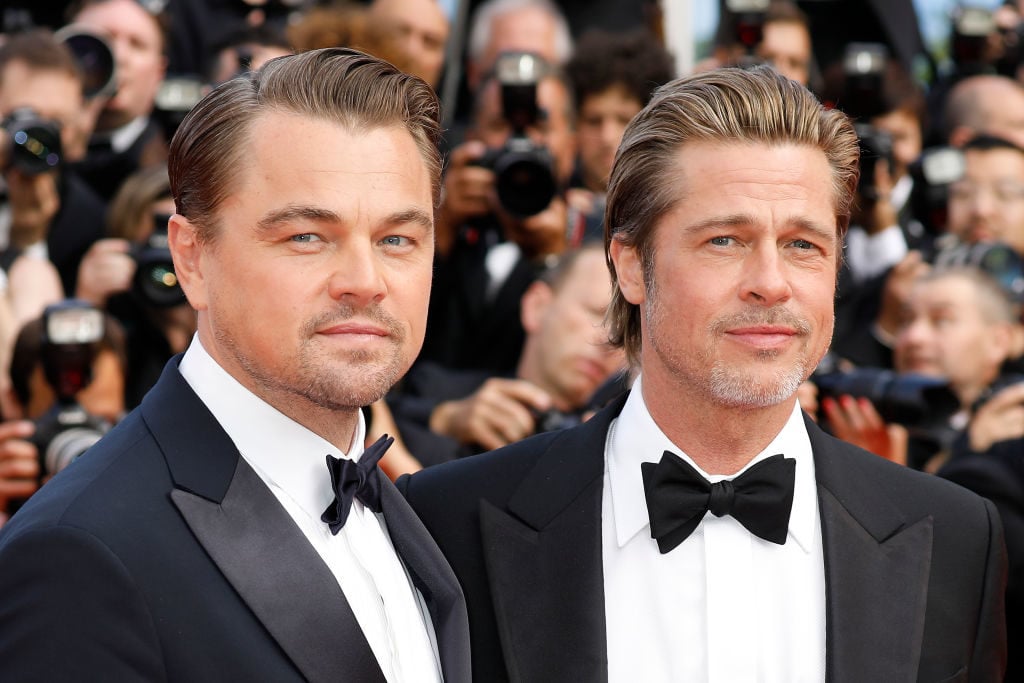
Leonardo DiCaprio and Brad Pitt in
Cannes. Photo by P. Lehman / Barcroft Media via Getty Images.
Nature Boys
What all voices seem to agree on
is that the haptic experience of working with the earth, of
carefully building and firing works, is something more people—not
just men—are actively seeking in the age of constant screen
time.
But for some men, the experience
might reestablish or enforce ideas about a masculine connection to
nature, ventured Sohrab Mohebbi, curator at
SculptureCenter.
“I think ‘bros’ like to
represent some kind of primordial relationship with the source,
nature, or the earth, let’s say. So shaping the earth [or] clay,
and turning it into objects, functional or otherwise, seems to show
how they emerge out of nature and self-actualize,” he
pondered.
This side of pottery is nothing
new, with roots in the ceramics boom of the 1970s, alongside other
DIY trends including food-world activism. “Ceramics were considered a holistic activity
and product” said Johnson. “This boom ranged from people painting
greenware figurines to back-to-the land types who became serious
potters.”
“A lot of those masculine guys were on the GI bill and
studied art, primarily ceramics, as an art-therapy exercise,” said
Roper. “After the war many of them adopted clay as a primary
medium because it was familiar to them. I see
so many different people getting into ceramics, though
the cliche hippy is definitely a real thing.”
Welch, meanwhile, pinpoints the
current resurgence in ceramics to a maturation of the “craft” and
artisanal waves that swept through hipster culture in the early
2000s. The act of making ceramics, then, provides amateurs a way
out of the abstracted digital tangle of daily life and gives them a
way back into their own bodies. “We live three-dimensionally, not
two-dimensionally,” offered Welch. “Working with clay, with the
earth, in three-dimensions—I hate to say it, but there really is
something primordial to it, about connecting back to
nature.”
Let’s Not Forget That Women Have Ruled the Ceramics
World For Centuries—And
Still Do
Sure, it’s great that Seth Rogen
and Brad Pitt are having fun, but pottery bros need step out of the
spotlight. What’s not up for debate is that ceramics in America
developed as a female-dominated and developed field dating back to
the 19th century, when painting ceramics became an immensely
popular hobby for women.
“The most important makers in
ceramics throughout history have been women,” Welch emphasized and
cited the “Cincinnati women”: Mary Louise McLaughlin and Maria
Longworth Nichols Storer, two Ohio-based artists and businesswomen
who transformed the American ceramics market in the late 19th
century. “They made ceramics famous way back when,” Welch said.
“Then men came in, took over the factories, and wrote them
out.”
And while there may have been a
“macho” strain to ceramics mid-century, an enormous gender parity
existed in those years too. “The most important figures in the
ceramics world in that era were women” said Johnson, naming
Marguerite Wildenhain, Betty Woodman, and Viola Frey as a handful
of the leading visionaries. “But very few reached the upper
echelons of the academic world,”Johnson said. “Which
is…fucked.”
Betty Woodman. Photo: Stefano Porcinai,
courtesy of Salon 94.
Today, women still dominate the
field as students and as practitioners— though they may not get as
much attention for it. Welch ventured the unscientific
estimate that 92 percent of Greenwich House Pottery students are
women.
While the Brad Pitts and Seth
Rogens of the world are illustrating that ceramic art is currently
the popular kid in the hobby class, we should note that this
popularity is largely owed to the diverse array of women, as well
as to LGBTQ and non-white artists who have driven its resurgence.
That includes talents like Roberto Lugo, Grayson Perry, Simone
Leigh, Shio Kusaka, and so many others.
All the experts seem to feel the
attention paid to the “bro” strain of ceramics is largely out of
proportion—but they welcome the enthusiasm and visibility it brings
to a medium that has long been sidelined.
“The hobbyist wave of the 1970s
actually paid off in terms of building two decades of support for
high-end works in craft materials, and I am guessing that this wave
of popularity will actually integrate with energy from art
galleries and produce less ghettoization of clay in the future,”
said Johnson. “The popularity may wax and wane, but I don’t think
we’ll return to anything like the material biases that existed in
the late 20th century…and Seth Rogen will turn to underwater
basket-weaving, eventually.”
The post Celebrities From Brad Pitt to Seth Rogen Are
Massively Into Pottery. Here’s a Primer on Bro-ramics (and Its
Colorful, Fraught History) appeared first on artnet
News.
Read more https://news.artnet.com/art-world/ceramics-celebrity-trend-1770717
Further reading


Leave a comment