
David Zwirner Gallery Lends a Hand to Shuttered New York Galleries by Hosting Them in a Dedicated Viewing Room
After galleries across New York City and around the world
were forced to close their
doors in recent weeks, dealers have accelerated efforts to move
their operations online. But many galleries with smaller
budgets cannot afford to pay a top-of-the-line developer to
build out a bespoke online viewing room—especially not in a matter
of days.
That’s why David Zwirner Gallery—one of the first galleries to
launch a viewing room, way back in January
2017—has stepped in to offer itself as a one-stop-shop of
sorts. The gallery is opening up its digital doors to host a dozen
smaller New York-based galleries in a special viewing room. The new
initiative, which goes live on April 3 and will be open for about a
month, is called “Platform: New York.”
The 12 participating galleries are at various stages in their
own digital development, but all have a reputation for dynamic and
forward-thinking programming. They are: 47 Canal; Bridget Donahue;
Bureau; Company; David Lewis; Elijah Wheat Showroom; Essex Street;
James Fuentes; JTT; Magenta Plains; Ramiken; and Queer
Thoughts.
“It’s been a tough situation for everyone,
but all things considered, our gallery has been fortunate—we’ve
been able to quickly move our exhibitions and presentations online,
since we already have a digital space built out,” David Zwirner
director Thor Shannon told Artnet News. “Recognizing that not every
gallery is in this exact same position… we realized that something
we could concretely offer was the digital infrastructure that we
already have in place.”
While the gallery would not disclose overall
traffic to its viewing rooms, a spokesperson said traffic to David
Zwirner Online had increased more than 500 percent since its
physical galleries closed last month.
All inquiries and sales for “Platform” will be managed by the
individual galleries, and works can be “rehung” if they sell.
Zwirner is not charging anything to participate, nor will it take a
commission. Unlike in David Zwirner’s own viewing rooms, visitors
can access the presentation without entering their email addresses,
to keep the barrier to entry as low as possible.
In the coming weeks, the gallery will announce future editions
of “Platform,” beginning with a London edition in April. “The happy
truth here is that we’re not all in bloodlust competition with one
another,” Shannon said. “The art world isn’t a
zero sum game.” Uniting on one platform, she continued, “is
hopefully one way of underlining that… we all benefit when our
community collectively succeeds.”
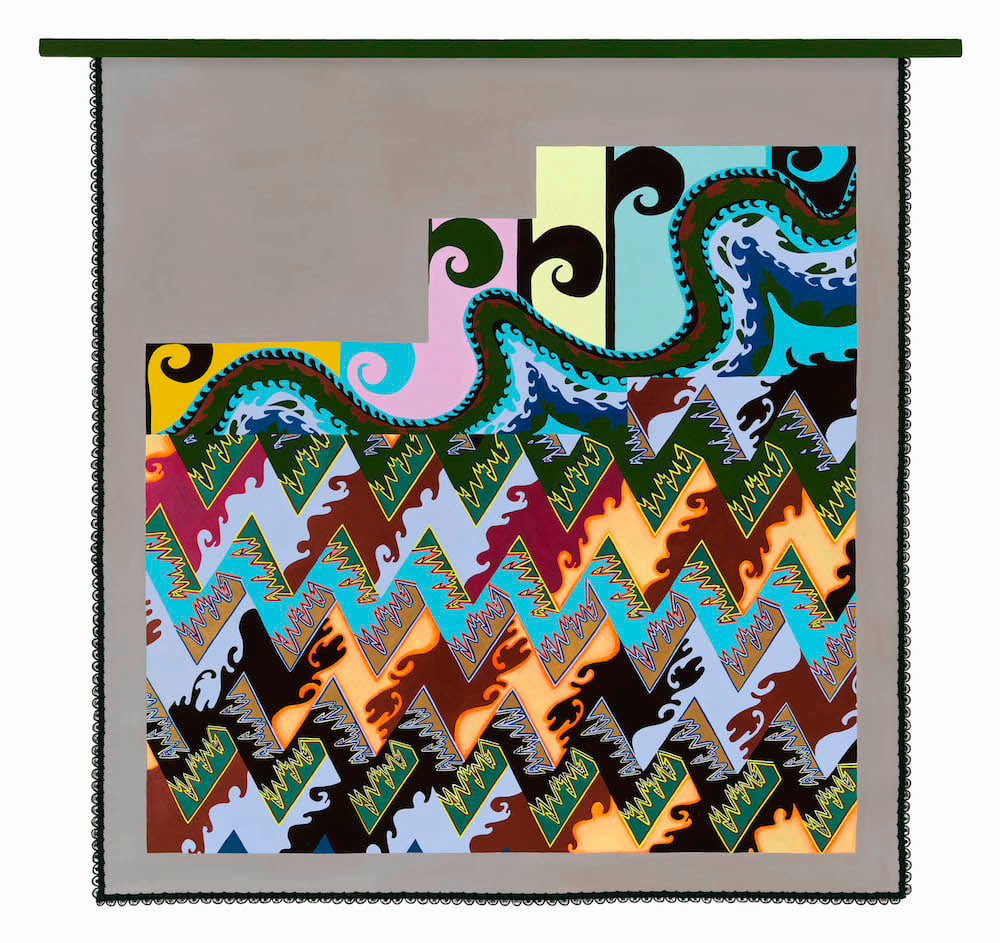
Lisa Alvarado, Traditional object
(Thalweg) (2020). Photo: Tom Vaneynde. Courtesy the artist and
Bridget Donahue.
Each participating gallery will present two works by one artist,
many of whom were scheduled to be featured in spring exhibitions or
whose shows were cut short by last month’s closures. Like in David
Zwirner’s viewing rooms, prices will be visible.
Part of the goal, it seems, is to introduce into cyberspace the
same potential for serendipitous discovery that an art fair
offers—like when a collector is waylaid on the way to David
Zwirner’s booth by a stand of a less familiar, less
well-capitalized gallery. Many have noted that it is these
spaces that are likely to suffer disproportionately from the lack
of cash flow during what amounts to an indeterminate global
shutdown.
The project, which came together in about a week, was the
brainchild of two of Zwirner’s children, Lucas and Marlene, as well
as younger staff members Alec Smyth, Cristina Vere Nicoll, and
Shannon, according to the gallery. Dealer Bridget Donahue called it
“a kind gesture, albeit digitally, of what we do as colleagues:
introduce one another to our friends and collectors.”
Donahue will showcase the work of Chicago-based artist and
harmonium player Lisa Alvarado, whose paintings frequently operate
as stage sets and ritual objects and whose planned April show “will
be the opening most affected by our homebound reality,” the dealer
said. The Zwirner viewing room is a supplement to Donahue’s
existing viewing room,
created by developers Nil-database. Prices are under $20,000.
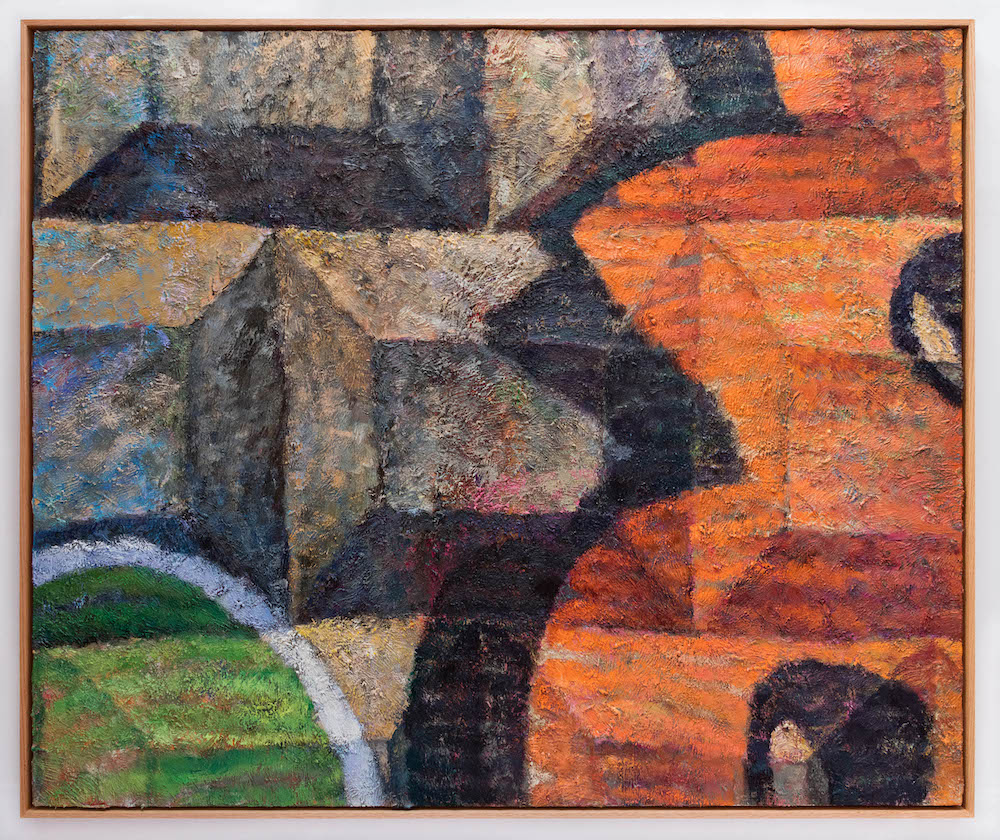
Keegan Monaghan, Outside (2019).
Image courtesy of James Fuentes.
“This is a meaningful opportunity to shed a
light on our gallery program in a moment where all physical gallery
spaces are off-limits,” dealer James Fuentes told Artnet News. “The
art world is an ecosystem, and at this moment, how the art world
communes online will become more and more
evident.”
Fuentes will present works by Keegan Monaghan, a Brooklyn-based
painter whose tactile, tightly cropped paintings of outdated
technology were a highlight of the 2019 Whitney Biennial, and who
was set to be the subject of the next show at the gallery on
Delancey Street. The works are priced between $30,000 and
$40,000.
Before the gallery closed to the
public on March 13th, Fuentes said, they had begun working on a
redesign with the Brooklyn-based studio Other Means. Currently,
they are focusing on creating the gallery’s first online viewing
room, which will launch in mid- to late April.
“Platform” isn’t the first time David Zwirner has extended a
helping hand to galleries in need. In March 2019, when structural
problems on Manhattan’s West Side piers ultimately resulted in the
displacement and potential cancellation of the Volta fair,
collector Peter Hort quickly pulled together an
alternative, teaming up with Zwirner to host a number of the
affected dealers in the gallery’s massive Chelsea space.
“Platform: New York” will be on view on davidzwirner.com
from April 3 until May 1.
The post David Zwirner Gallery Lends a Hand to Shuttered New
York Galleries by Hosting Them in a Dedicated Viewing Room
appeared first on artnet News.
Read more https://news.artnet.com/market/david-zwirner-gallery-platform-viewing-room-1818993
Further reading


Leave a comment