
‘Bergamo Is a Besieged Territory’: Dealers, Artists, and Curators on How Northern Italy’s Art Scene Is Surviving Under Its Second Month of Lockdown
The singing on the balconies has stopped.
As Italy enters its second
month of lockdown, the ornate streets have fallen quiet and signs
of fatigue have begun to set in. Isolation and a pervasive sense of
loss seem to be grinding down the spirits of those known around the
world for their vibrant and sensorial culture—especially in the
Northern Lombardy city of Milan, where fashion, design, and art are
the most important industries. And though the daily death toll
seems to be reaching a plateau—Lombardy reported 7,176
coronavirus deaths in March—officials recently extended the
nationwide lockdown by at least another few weeks.
From the outside, then, Milan’s art world appears to be at a
standstill. Miart, the Italian city’s international art fair,
has been rescheduled from April to September, and authorities have
converted its venue, the fieramilanocity, into a temporary
hospital. The city’s design fair, Il Salone del Mobile, which
brings thousands of tourists to Milan every June, has been
cancelled.
Behind the scenes, however, dealers, artists, and curators are
doing their best to remain engaged in their work and with each
other. They are hatching ideas for how to raise money for those
affected by the health crisis and how to advocate for broader
governmental support of culture. If Milan offers a window into what
cities like New York and London might experience in a few weeks’
time, the takeaway is that members of the art world will find a way
to connect—even if they aren’t always feeling particularly
inspired.
“Creatively speaking, the first
period was not very fruitful as the actual fear of something
unknown prevailed,” the Milan-based artistic duo MASBEDO tell
Artnet News. Before long, however, they began to create videos and
perform interventions through their cell phones and
computers. “Art and culture do not stop, or at least it
refuses to stop,” the artists say.
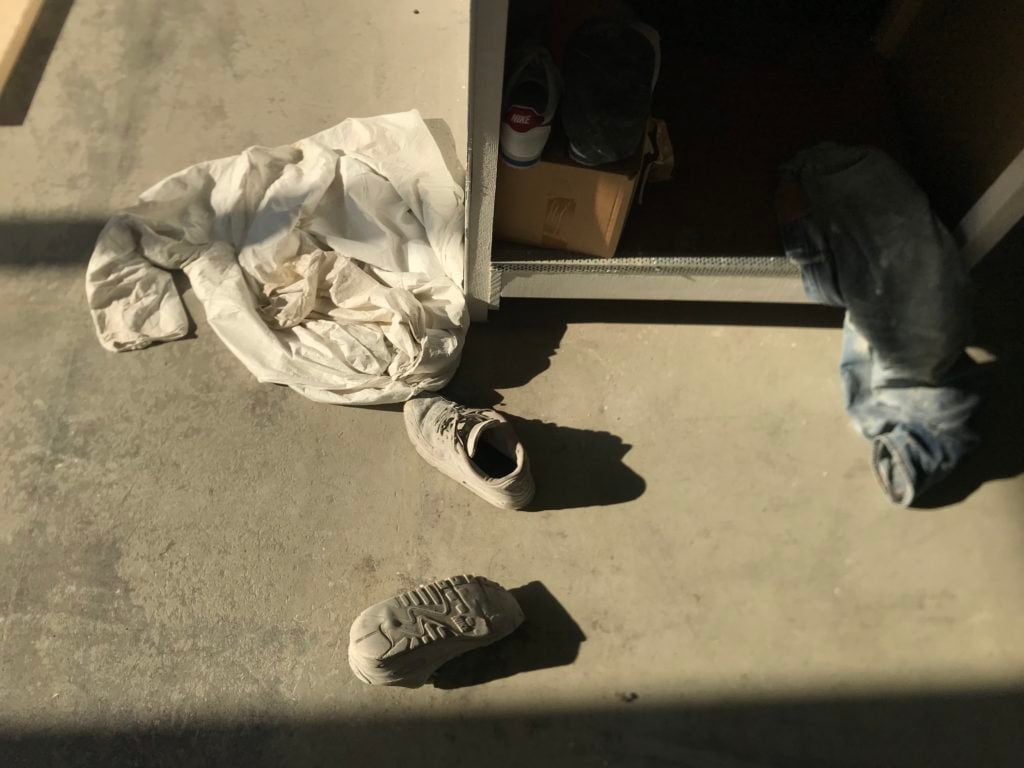
An iPhone pic from Dominic Samsworth’s
studio before he left it in the impending lockdown. Courtesy the
artist.
Resetting the Art Market
Around the world, the pandemic has exposed weaknesses in
political and cultural systems, which were already threadbare in
many places. “Metaphorically, this is a pop quiz which requires, in
the near future and not just today, considerable efforts and
several months, or perhaps years, of work,” says curator Domenico
de Chirico.
For many in the art market, it is too soon to tell just how
catastrophic the lockdown might be. Pushing online sales can boost
artists who are already sought-after, but for less familiar fare,
online promotion can only go so far. “It is very challenging to
reach customers who cannot leave their places to personally see the
works,” says Annamaria Maggi, director of Galleria Fumagalli.
Plus, she notes, all the investment in social media “does not help
the commercial activity, which is almost zeroed.”
She suspects that one avenue toward recovery is collaboration
between galleries and auction houses, proposing an online auction
dedicated exclusively to the wares of Italian galleries. Such an
initiative “could improve sales and bring back to normality an
annual budget that promises to be disastrous,” she says.
Dealer Gió Marconi suggests that galleries will be in
urgent need of tax relief once the acute crisis recedes. “Reducing
the VAT rate, for instance, would be a good idea in order to boost
artworks sales and support the art sector,” he tells Artnet
News.
Fumagalli and Marconi aren’t the only ones feeling the pain.
Nicolò Cardi, owner of Milan’s Cardi Gallery, notes that his
gallery had expected to earn considerable revenue at spring fairs
including Art Basel Hong Kong,
Frieze New York, TEFAF New York, and miart, which have all been
cancelled or postponed. There is some optimism that the European
Union’s art market may be able to bounce back faster than the US,
but that will depend on the condition of the EU at the end of the
crisis.
Many dealers are taking this
moment as an opportunity to reflect, at the same time that they are
being asked to transition offline elements of their business into
the virtual world. “Days are very long,” says dealer Tommaso
Calabro. “I read a lot and try to focus on future projects, such as
exhibitions and catalogues. It is a deeply tragic moment; yet it is
often during such hard times that the most innovative ideas can
originate.”
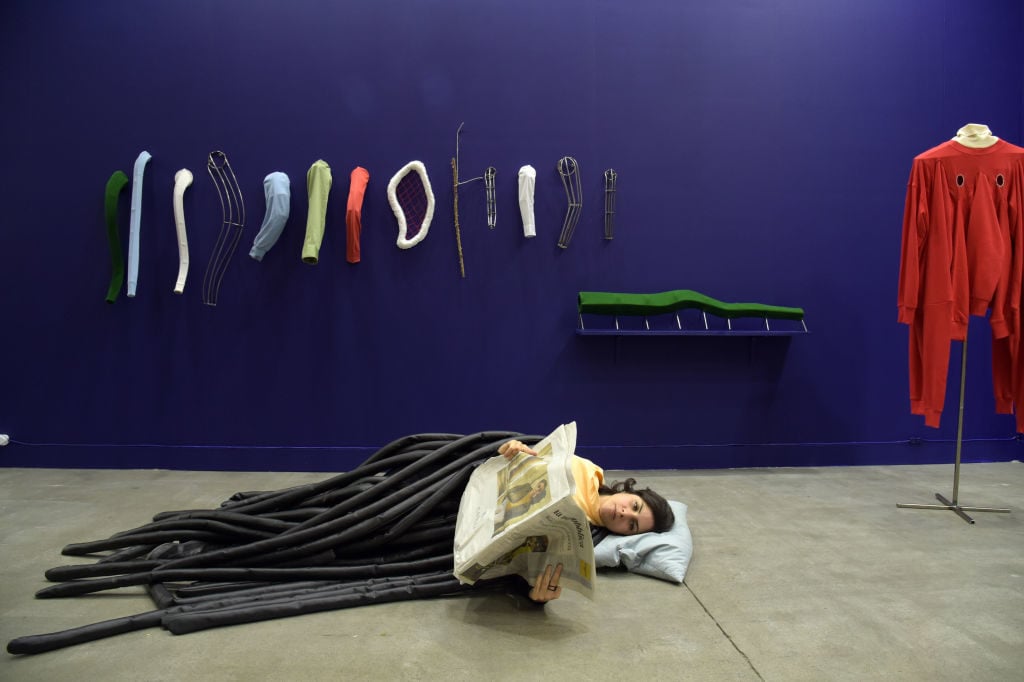
An artwork by Eva Kot’atkova is
displayed at the Miart 2018 opening. Photo by Pier Marco
Tacca/Getty Images.
Waiting for the Tides to Change
While there is solidarity among
the city’s art workers, there has not been a holistic or
comprehensive government or industrywide effort to boost the city’s
art scene. Instead, friends and colleagues have organized
grassroots benefit auctions and online creative projects to help
members pull through together. And the government has been able to
supply such a tax-exempt €600 payment to almost five million
workers, according to Euractiv. The money,
while surely welcome, covers about a month of
rent in Milan.
Artist Francesco Joao Scavarda,
who has been at home for 38 days and had two projects in Brussels
and Milan cancelled this spring, says he is impressed by the
efforts the arts community has made, including launching
fundraising campaigns, distributing coloring books with images of
works by artists, and assembling quarantine playlists.
But Lorenzo Giusti, artistic
director of the Galleria d’Arte Moderna e Contemporanea in Bergamo,
says it quickly became clear that his institution needed to do more
than just help the art community. He began to broadcast appeals
inviting the institution’s followers to donate to the local
hospital. “Bergamo is a
literally besieged territory,” he says. “For more than a month, I
have been trying to do this personally, writing to the artists,
curators and friends from various parts of the world, asking them
not to underestimate the danger of the virus.”
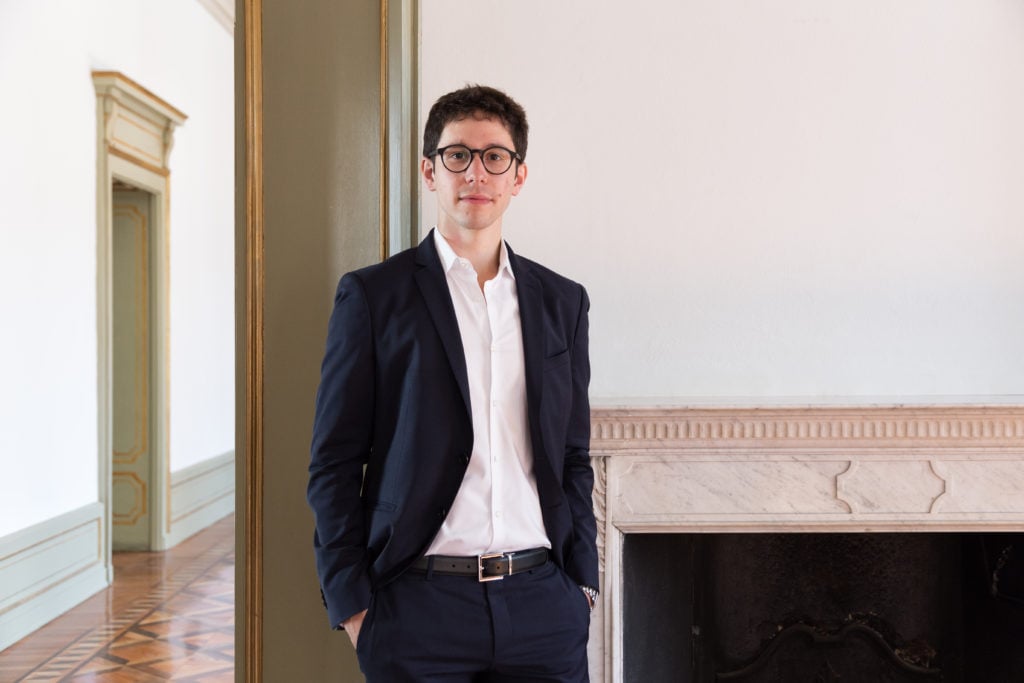
Milan-based art dealer Tommaso Calabro.
Courtesy the gallery. Photo: Copyright: Riccardo Gasperoni.
Many agree that, post-pandemic,
the art world will look quite different than it did before. On the
commercial side, those who have found success online may cut down
on their art-fair participation and excess travel. Others may not
reopen at all.
“A change toward sustainability in the way we were making
business was much needed, we were all aware, it was an everyday
topic in the art world and an ongoing discussion between the
players,” Nicolò Cardi says. “We should try to turn this tragic
pandemic into an opportunity to start this change and end up with a
better world for everybody.”
Irene Crocco, the founder and
director of Viasaterna gallery, agrees that it is a crucial moment
for dealers in Italy and elsewhere to rethink the structures they
were working in. “It is appropriate to leave room for silence,
respect for those who suffer and wait for art with its strength to
tell us and give us ideas to rethink the future,” she says. In
Italy, she adds, “We will sure need some help to start
again.”
Dealer Tommaso Calabro
expects “a significant reduction in the number of art fairs,
exhibitions, and auctions” on the other side of the crisis. “As
usual, somebody will suffer, others will benefit from the epochal
change we are experiencing,” he notes. “Nevertheless, art will
always be there, in all its unrestrainable and innovative
power.”
The post ‘Bergamo Is a Besieged Territory’: Dealers,
Artists, and Curators on How Northern Italy’s Art Scene Is
Surviving Under Its Second Month of Lockdown appeared first on
artnet News.
Read more https://news.artnet.com/market/milan-life-under-lockdown-1827096
Further reading


Leave a comment