
A Trove of Counterfeit Middle Eastern Antiquities Intercepted at Heathrow Points to a New Front in the War Against Art Scammers, Experts Say
Since last summer, British
Museum curators and British authorities have been working together
to investigate a trove of counterfeit Middle Eastern artifacts.
Today, the museum has revealed what its experts discovered, and the
results point to a new
mutation in the market for illicit antiquities.
A Border Force officer at
Heathrow Airport discovered the hundreds of clay figurines, pots,
and tablets covered in cuneiform script in a pair of metal trunks
last July. Intercepted en route from Bahrain to a private address
in the UK, the objects were sent to the British Museum for
inspection. There, they were discovered to be fakes.
The striking thing about the
discovery, says St John Simpson, a curator at the British
Museum, is not the number of counterfeit relics. It’s the
type.
“These particular fakes were not
of high quality but are of a type we have not seen before,” Simpson
tells Artnet. “They show how there is a growing market for fakes
which are sometimes traded with looted and trafficked antiquities,
and are part of the same problem. There is increasing evidence for
the use of the internet and social media to trade both of these
categories and the market is flooded with fakes.”
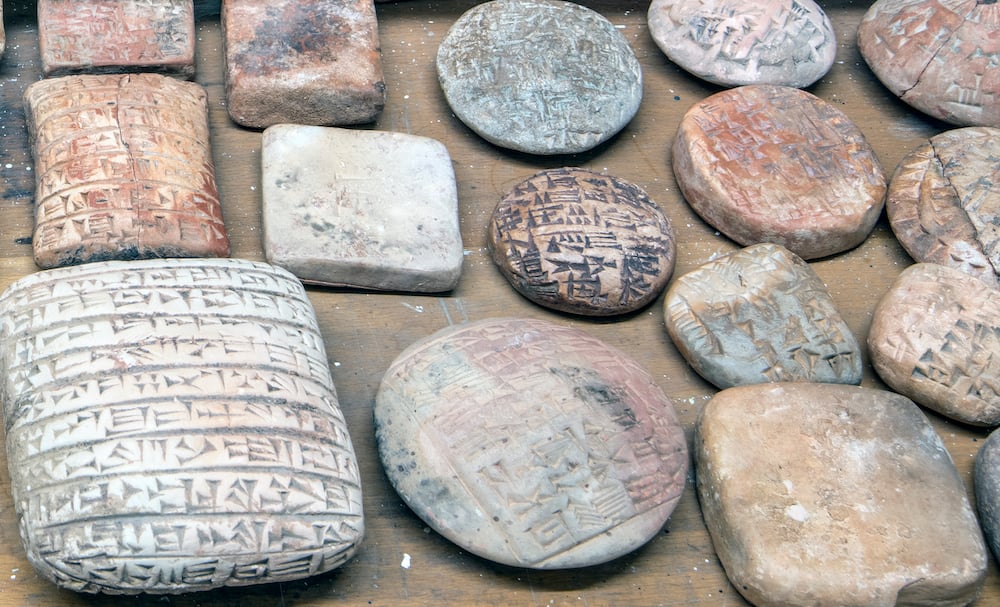
Fake tablets unwrapped for assessment.
©Trustees of the British Museum 2020.
Though the practice of faking
ancient objects goes back hundreds of years, this batch of
supposed relics represent a new
type of antiquities
forgery that’s popped up in the
last couple of years as countries in the Middle East and elsewhere
are policing archaeological sites with greater intensity and
clamping down on the import and export of cultural
objects.
When the museum’s curators
received photos of the objects and, eventually, the objects
themselves, they were easily able to discern that they were
inauthentic.
The objects in the trunks were
generic ceramic shapes that were inscribed, in many cases, with
gibberish cuneiform and
made-up symbols. The type of clay didn’t match the period from
which they purported to hail, nor did the size and thickness—a
clue, perhaps, that the forgers were working from found historical
photographs. They were clearly fired in a kiln as opposed to the
sun and were all in one uniform piece—a rarity for truly ancient
objects.
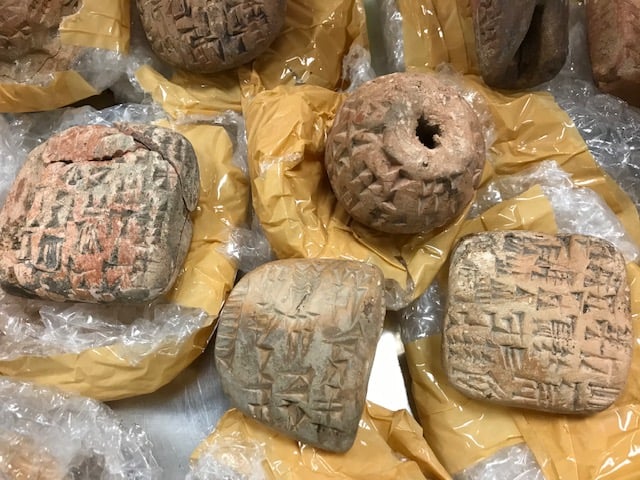
Fake cuneiform tablets in their
wrapping. ©Trustees of the British Museum 2020.
As contemporary objects, the
ceramics are worth virtually nothing. From an unsuspecting
collector, however, they could fetch thousands of dollars, experts
at the museum say.
An investigation into who was
behind these objects, and where they were headed, remains ongoing.
The fakes will go on view for a short stint at the British Museum
when it reopens. They will be used for training purposes
thereafter.
“It seems very likely that more
trunks of fakes are out there, that there are more fakes than there
are genuine objects,” says Simpson in a statement put out by the
museum. “Consignments which are almost too perfect to believe
should be treated with great caution.”
The post A Trove of Counterfeit Middle Eastern Antiquities
Intercepted at Heathrow Points to a New Front in the War Against
Art Scammers, Experts Say appeared first on artnet
News.
Read more https://news.artnet.com/market/counterfeit-antiquities-heathrow-british-museum-1852233
Further reading


Leave a comment