
23 Top Collectors, Artists, and Dealers Tell Us About the Artwork That Is Keeping Them Inspired at Home
As we end yet another month spent largely at home, one thing
that has become clear is that the things we surround ourselves with
have become more important than ever. We checked in with a group of
artists, curators, and dealers to ask about which works in their
collections are keeping them inspired in these troubled times.
Here’s what they said.
Monique
Meloche, art
dealer
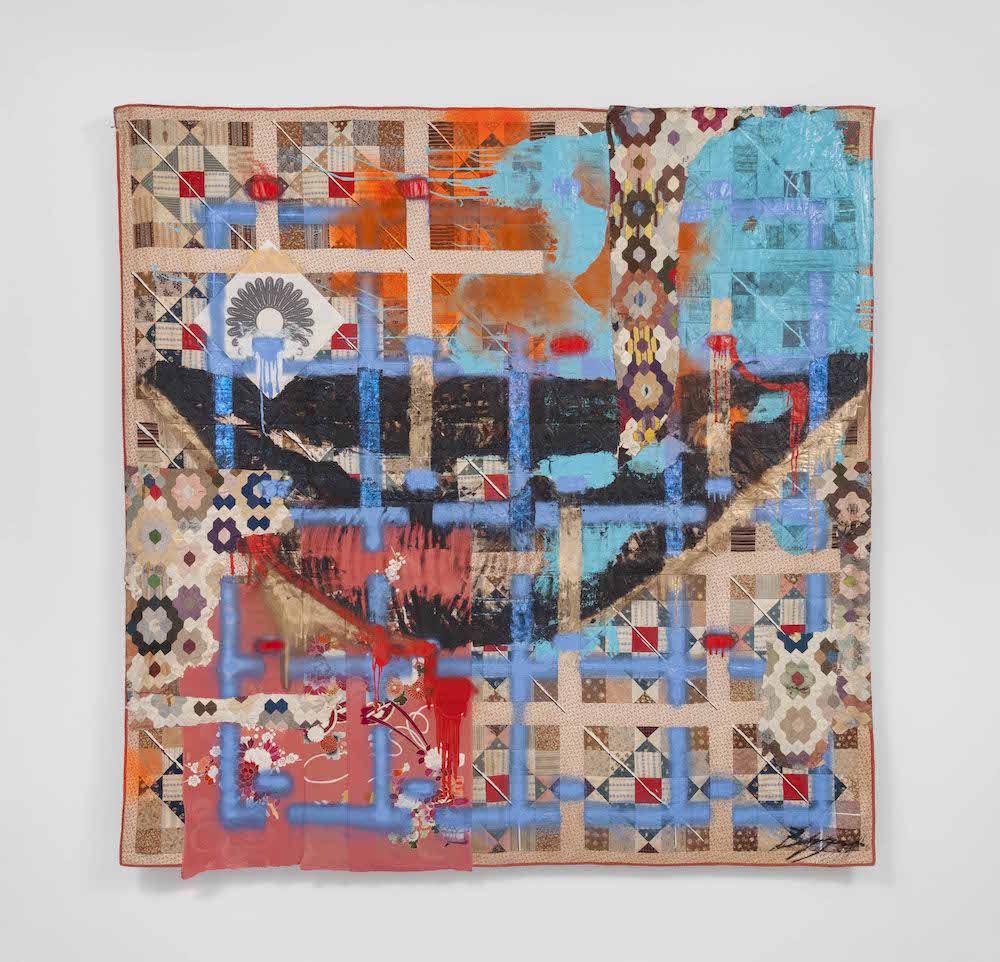
Sanford Biggers, Hat and Beard
(2016). Image courtesy of Monique Meloche.
I set up my home office in
Chicago at my kitchen table where I see both Rashid Johnson’s
Black Love from my vantage point and Sanford Biggers’
Hat and Beard behind me in every zoom meeting. This
is one of Johnson’s earliest black wax altarpieces and has hung in
our kitchen sitting room since we acquired it in 2007. It has
continued to gain new meaning through the years, but we’ve
ruminated over the inexcusable mis-handling of the Ahmaud Arbery
shooting during quarantine and this piece keeps striking a balance
of calling out injustice with the brass funerary urn/makeshift
altar while offering healing vibes with the music and shea butter
offerings.
The smiling Cheshire grin in
Biggers quilt painting Hat and Beard had proven to be
a “friendly” backdrop for my frequent zoom meetings installed high
above our back door. However, I find the more meditative details of
the slave ship diagrams hidden in the lotus flower and the subtle,
but rough application of the tar forming what I see more as a
minstrel smile a constant reminder of the push and pull between
beauty and political content throughout our collection.
Katie Stout, artist
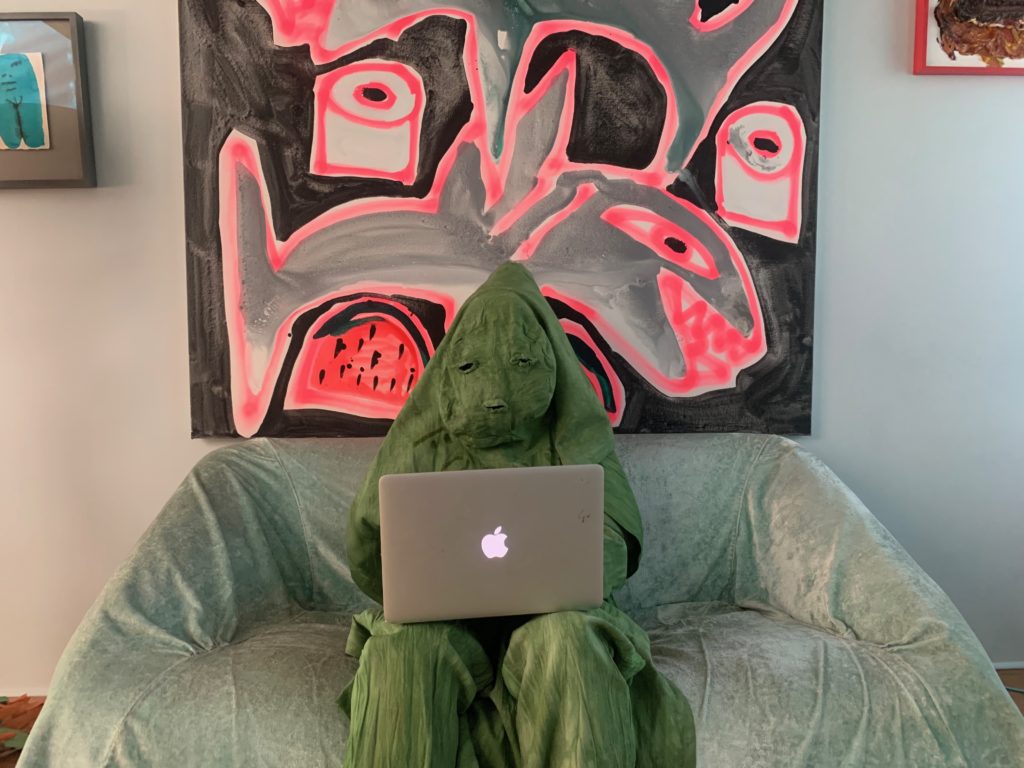
Artist Katie Stout at home wearing
Nicola L’s Forest (1970–78). Photo courtesy of Katie
Stout.
Since quarantine, Nicola’s
L’s Forest
has become an emblem of cooperation
and a reminder of our inherent connection to each other, despite
our physical distance. I was reading The Overstory, and there’s a quote I like: “There are no
individuals. There aren’t even separate species. Everything in the
forest is the forest.”
Before quarantine, I
perceived Forest as separate from me. After hours and hours and
hours together, I began to understand her one-size-fits-all nature,
so I stopped viewing Forest all together and finally tried her on. Probably
wouldn’t have done that if it wasn’t for quarantine.
Markus Reymann, co-founder
and director of the TBA21-Academy
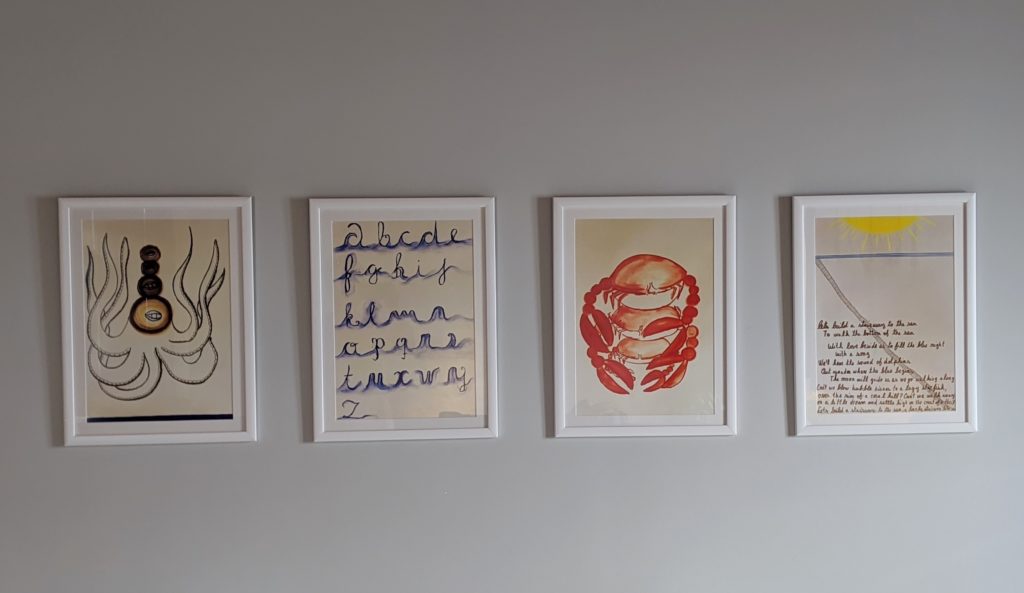
Courtesy of Markus Reymann.
One morning a few weeks ago, I found, when I reached for my
phone after finishing my daily routine, the four drawings I am
sharing with you from a WhatsApp conversation with Eduardo
Navarro. A few years back, I had the great joy to go with Eduardo
on two of TBA21–Academy’s programmed voyages to the Marquesas
Islands and more recently to Aotearoa. Ever since, we
regularly exchange thoughts about art, the ocean and what keeps us
sane. Finding the drawings on my phone was naturally a huge joy and
as soon it was possible, I printed and framed them. They have
become valued companions accompanying me through these
anxiety-inducing times.
But what I am really looking forward to is: we agreed that when
we see each other again, the prints will be exchanged for Eduardo’s
original drawings.
Javier Peres, art dealer
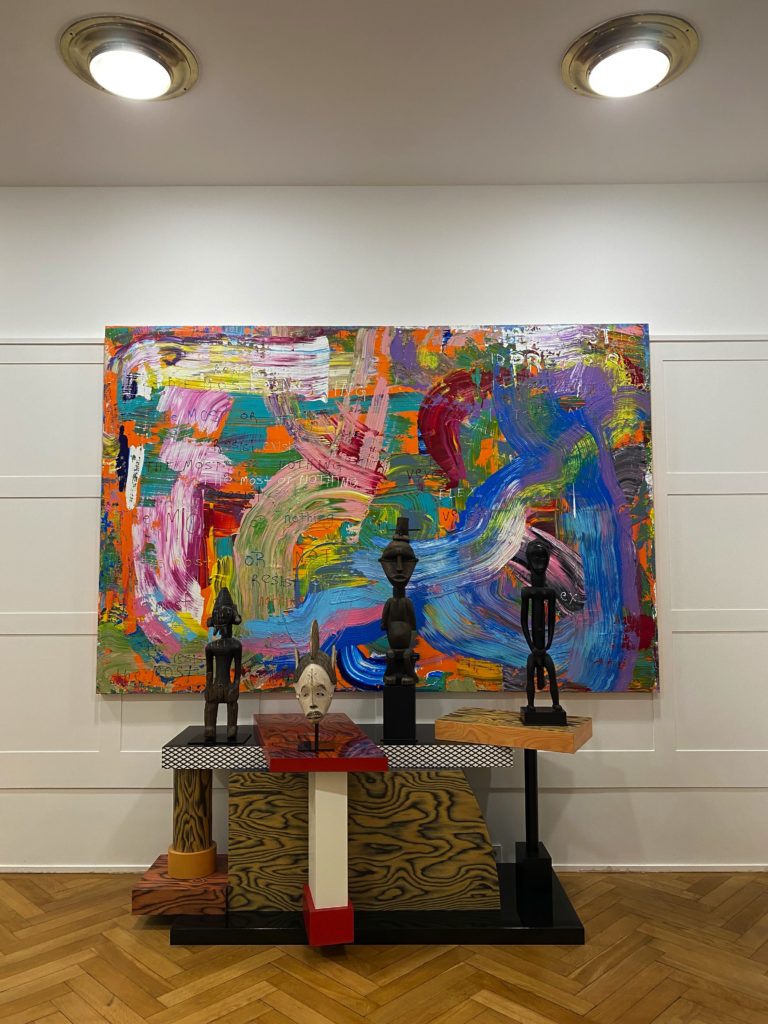
Richard Kennedy’s MX. BARTLEBY
(2020); Jukun, Benue river area, Nigeria, male ancestor
figure (Wurbo style), 19th century or earlier; Igbo,
Nigeria, Agbogho Mmuo Mask, mid to late 19th century; Igbo
(Ibeku, Oloro, Olokoro or Ngwa group), Umuahia area, Cross River,
Nigeria, Figurative Male Ogbom Headdress, possibly late 19th –
early 20th century; and Fang, Gabon, Reliquary Guardian
Figure, Early 19th century. Courtesy Javier Peres.
I have one of Richard Kennedy’s
new works in my house
that he made during the lockdown that I’m obsessed with,
called MX.
BARTLEBY, which is such
a wonderful compliment to an important group of classic African art
mostly from present day Nigeria and one from Gabon. Richard’s work
has a strong performative quality which for me goes very well with
African art since most of these pieces were used in a variety of
ritual contexts which to use would seem performative. Of course,
the text in Richard’s painting is also poignant and gives me the
perfect mantra for our times, THE MOST, RESIST OR
NOTHING.
Maria Brito, art
advisor
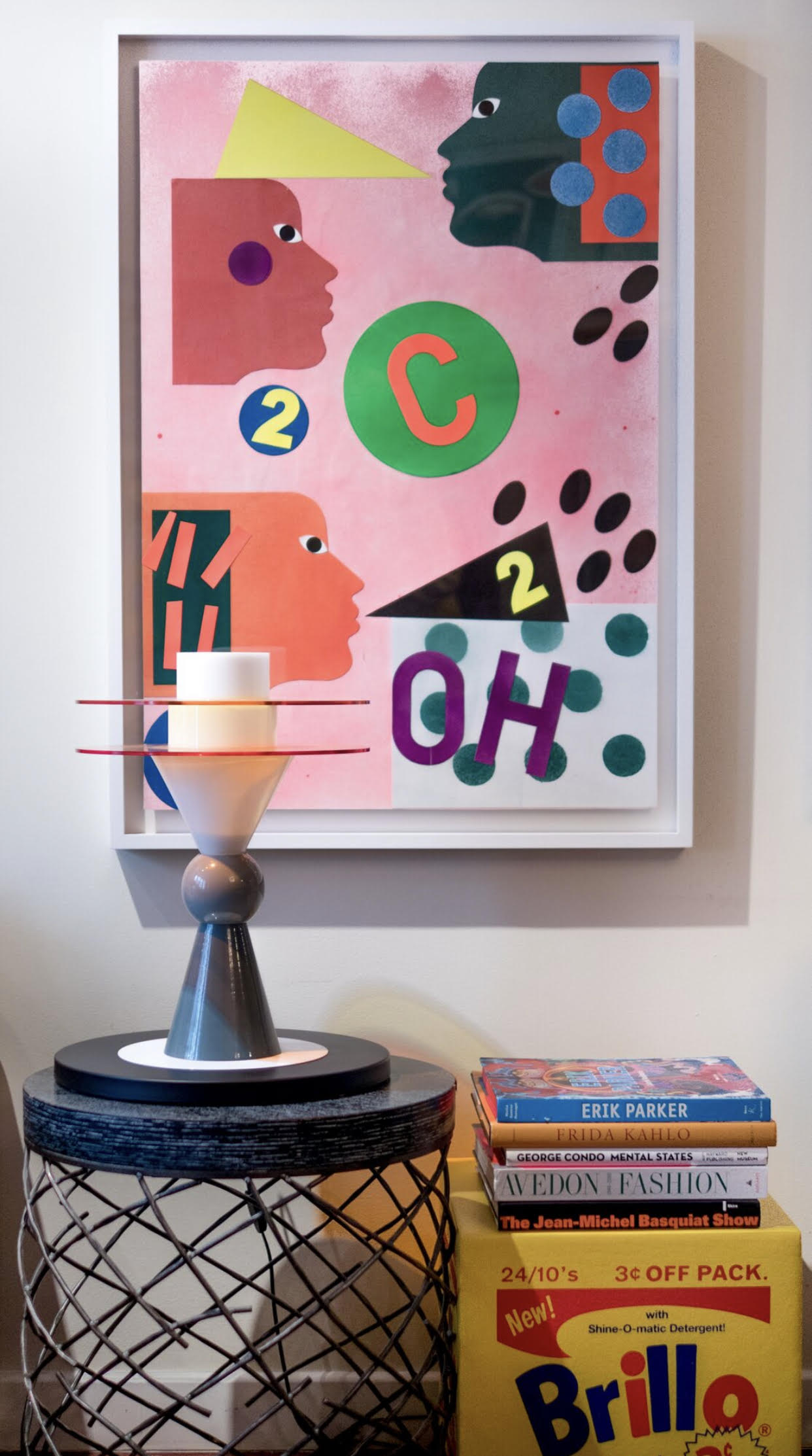
Nina Chanel Abney, Brazil (2015).
Courtesy of Maria Brito.
Nina was doing a residency in
Brazil and I bought this right after she came back. It’s about
optimism and also has cryptic messages about gender, race, and
identity, in the best style that only Nina can do!
I love how graphic and strong
this work is. It also reminds me of Nina’s own struggles and her
persistence. Resiliency is one of the most important human
qualities that I’ve cultivated throughout my life and this piece
brings me a sense of resilience too.
Deborah Roberts, artist

A work from ‘The Kitchen Table’ (1990)
series by Carrie Mae Weems. Courtesy Deborah Roberts.
work from ‘The Kitchen Table’ (1990) series by Carrie Mae Weems.
The care and personal contact that is shown in this work reminds me
of my family and friends I hope to embrace once COVID-19 is
over. For me, it encapsulates the notion that this moment is only
temporary and will eventually pass, giving all of us our lives
back.
Mariane Ibrahim, art
dealer
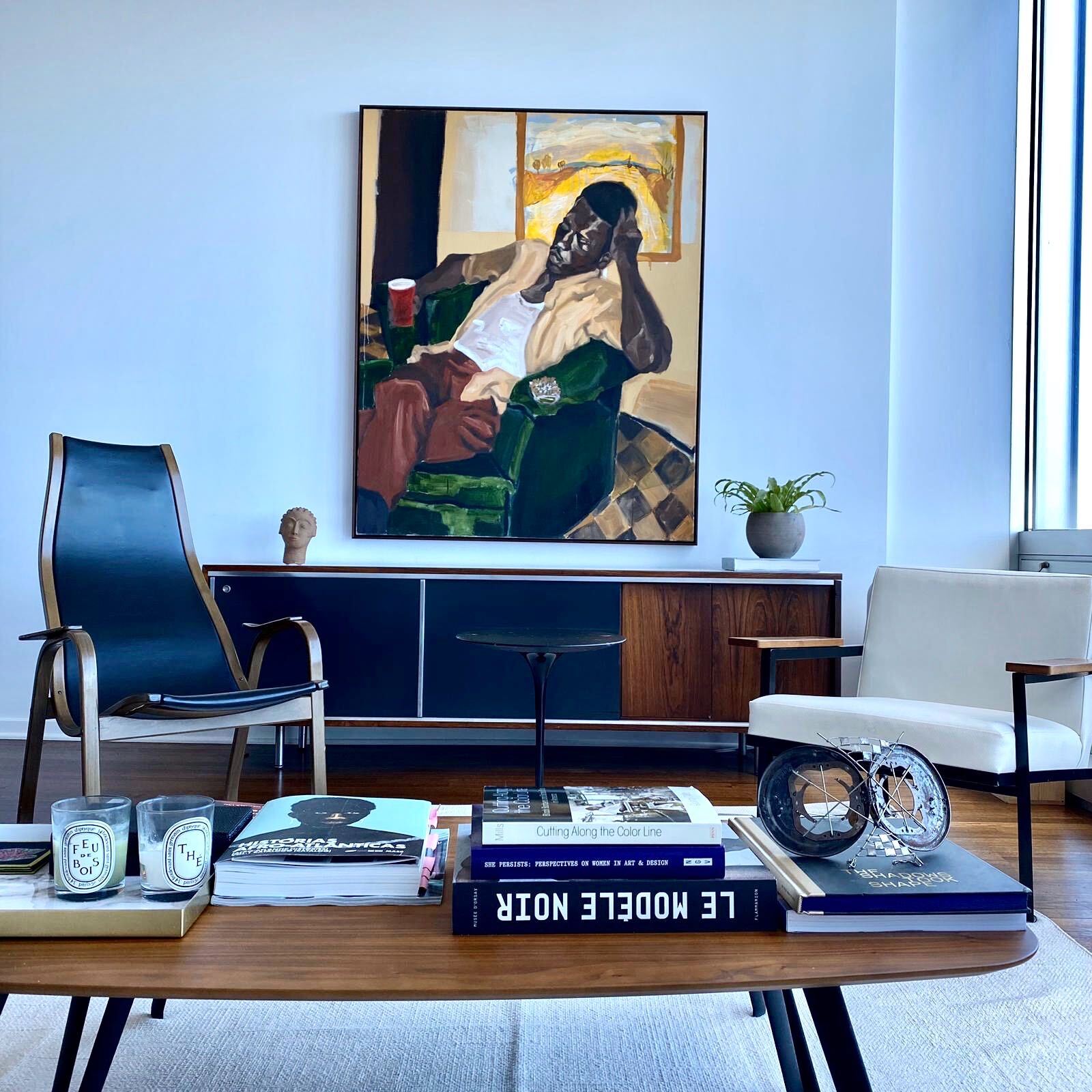
Jerrell Gibbs, Turner (2019),
at art dealer Mariane Ibrahim’s home. Photo courtesy of Mariane
Ibrahim.
Turner
is the title of a painting by
Jerrell Gibbs. This was the first piece my husband and I bought
before any representation. It was love at first sight. The painting
reminds me of The
Thinker by Rodin. During
these difficult times, it is important to reflect. I sit in front
of this man seated on the green couch every morning, and
contemplate. The longer I stare at the work, the more the work
comes to life.
Etsuko Nakajima, Asia
director at Galerie
Perrotin
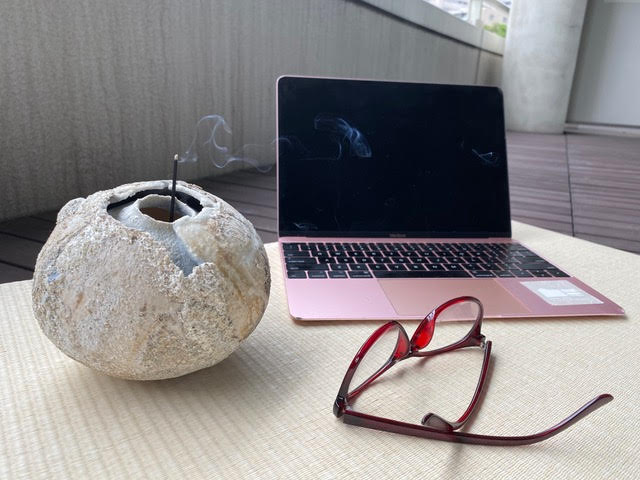
Yuji Ueda, Untitled (2016). ©️2020 Yuji
Ueda/Kaikai Kiki Co., Ltd. All Rights Reserved.
I enjoy the work of Yuji Ueda, a
Japanese ceramic artist based in Shigaraki, an ancient pottery town
about an hour away from Kyoto. Ueda creates pots in various sizes,
which are rich in textures, adorned with layers of glazing and
natural fissures. Every piece is truly unique and embraces the
aesthetics of wabi-sabi. I like to put flowers in the pots or
incense while meditating. It brings serenity to my life in
quarantine.
Jordan Schnitzer, collector
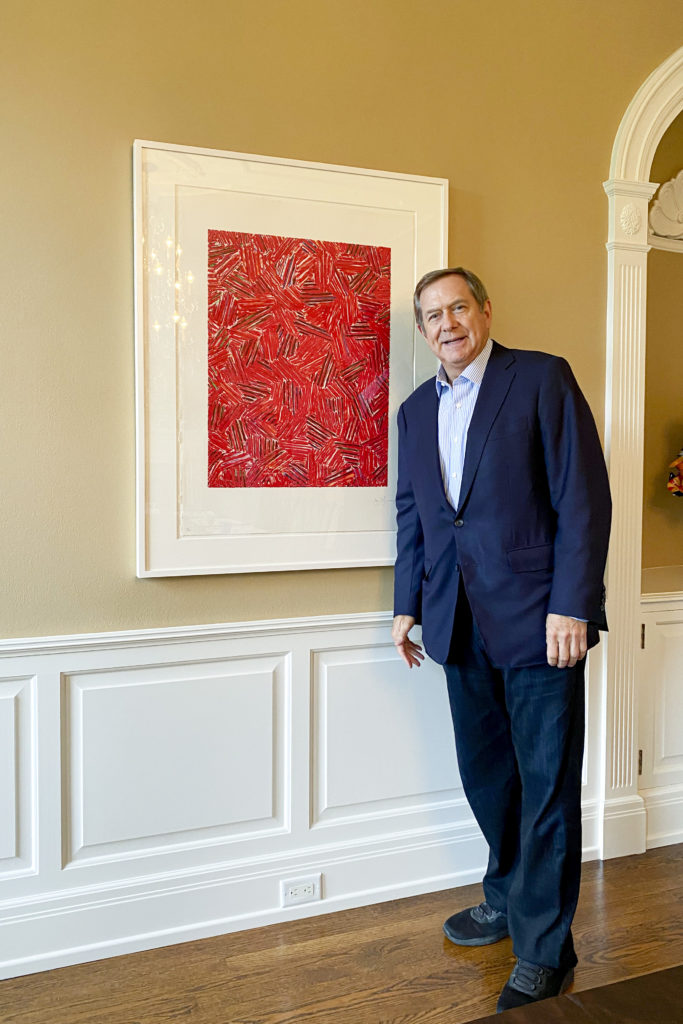
Jordan Schnitzer at home with his Jasper
Johns lithograph
Cicada (1981). Photo courtesy of Jordan Schnitzer,
publisher/printer Gemini G.E.L., Los Angeles.
Jasper John is one of the greatest artists of our time.
Cicada, made in 1981, is a brilliant example of his
cross-hatch series. Master colorist; the work takes my breath away.
It draws me into another time and place. Thank you Jasper!
Eugenie Tsai, senior
curator of contemporary art at the Brooklyn Museum
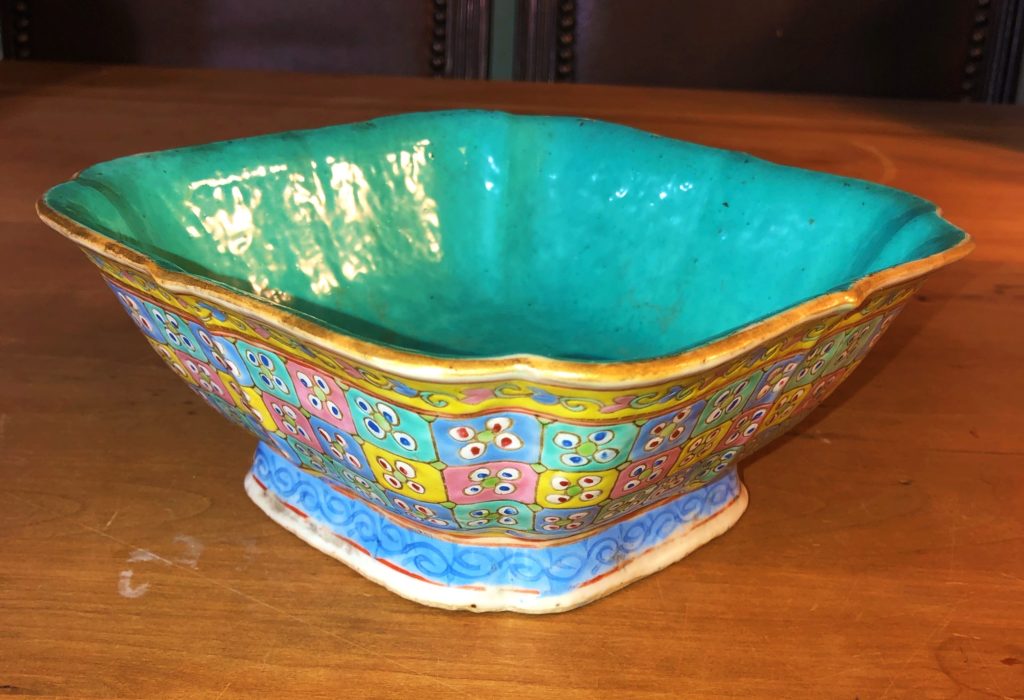
Qing dynasty porcelain bowl. Photo
courtesy of Eugenie Tsai.
This porcelain bowl from the late Qing dynasty was part of my
grandmother’s dowry when she wed in Shanghai at the turn of the
twentieth century. A few years ago, on a trip to Shanghai, my aunt
gave it to me, along with a tea set that had belonged to my father.
During the Cultural Revolution, the family home was ransacked and
many possessions destroyed. My aunt didn’t reveal the hiding place
of these fragile objects but they survived, as did she. These
emblems of survival and resilience resonate with me today.
Roxana Afshar, senior
director at Waddington
Custot
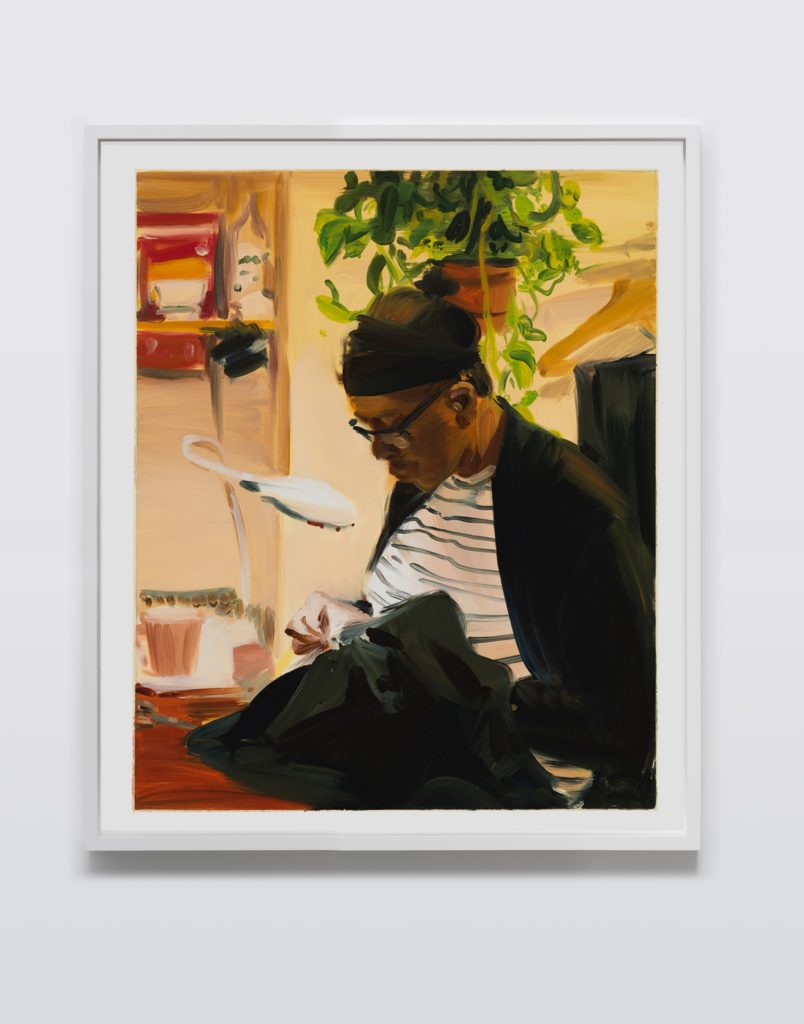
Caroline Walker, Study for Marion
(2019).
This recent work on paper by
London-based artist Caroline Walker hangs in the study
of my London flat. I was instantly drawn to this contemplative
portrait, which has a sense of calm focus. After discovering the
inspiration and motivation behind Walker’s practice I was even more
adamant to own this piece.
Walker is known for her depictions of
female figures, who are usually at work and often seen alone,
absorbed by their task at hand. Profiling women who work in the
service industries, Walker considers how these roles are frequently
overlooked, exploring the idea of invisibility, as in the artist’s
own words, many of these jobs are typically ‘designed to be
unseen’.
In these strange times we are living
through, Walker’s work is particularly poignant, revealing and
showcasing key workers that we rely on, but too often take for
granted. Having this work close to me is a constant reminder of
those people who are continuing to face their jobs with courage and
determination, despite adversity.
Casey Fremont, executive
director at Art Production
Fund
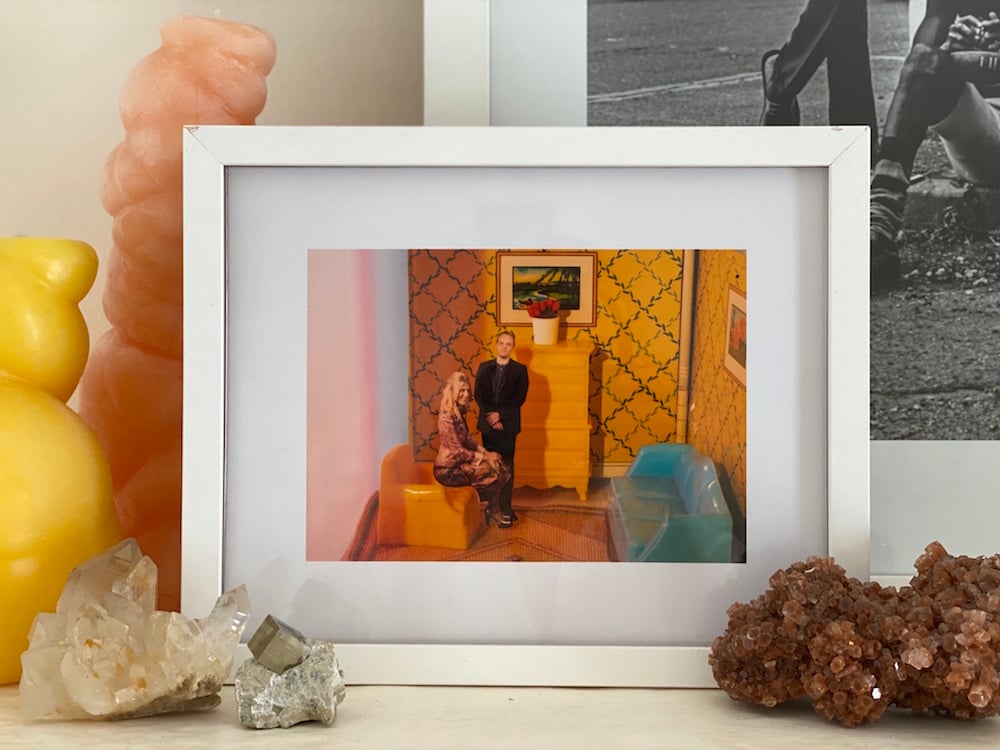
Laurie Simmons’s portrait of Casey
Fremont and Brandon Crowe. Image courtesy Casey Fremont
Laurie Simmons photographed my
husband and me at The Seagram Building during Art Production Fund’s
2018 gala. Our portrait was then collaged into one of her
iconic dollhouse furniture environments, and this is the finished
photo of the merged images. These portraits were sold at the gala
as a fundraiser for APF. It makes me think not only of a wonderful
night, back when we used to socialize without distance, but it
reminds me of the incredible support and generosity that artists
have shown Art Production Fund over the years. While being
apart during this unprecedented time is unsettling for many
reasons, I feel comforted by these memories and deep gratitude for
our community of supporters.
Like everyone, I’ve been
thinking a lot about my home and surroundings. I love the
fantasy of this collaged image, the idea of being taken from one
place and dropped in somewhere completely different. I can’t help
but find it strangely prophetic of our current digital lives, set
in virtual backgrounds.
Margot Norton, curator at
the New Museum
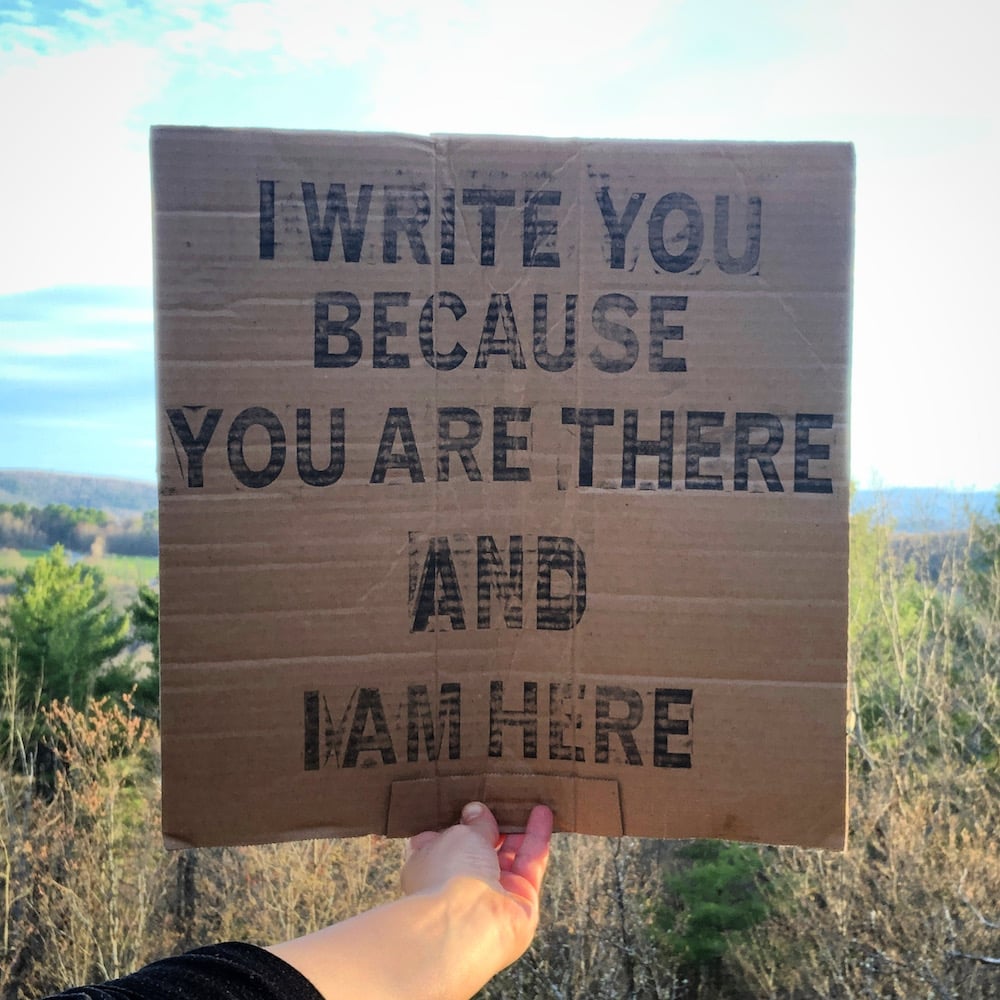
David Horvitz, I Write You Because
You Are There and I Am Here (2020). Image via Margot Norton’s
Instagram
David Horvitz has worked in mail
art for many years as well as with net-based and viral art
projects. After the pandemic hit, Horvitz started making works with
this phrase, “I write you because you are there and I am here” and
sending them to friends through the mail. There is a stamp on the
work in ink, which identifies the text as being “sympathetically
appropriated by Endre Tót.” Tót is a Fluxus artist known for his
mail art projects with text-based declarations and conceptual
prompts. As with Tót’s works, Horvitz’s projects gain momentum
through word of mouth and physical movement or distribution. They
demonstrate the significant ways that relationships, communication,
and technology form an unconventional network of rituals that might
challenge traditional systems and parameters. Horvitz’s often sly
and always meaningful interventions draw attention to alternative
ways of measuring, recording, and transmitting our distances.
During this time of isolation, Horvitz’s project brings to mind the
ways humans have connected with one another for centuries. Our
current state of hyper-paced Zoom calls, emails, and images
transmitted through screens can render the physical objects he
sends—objects that often play with the size and material
limitations imposed by the USPS—all the more gratifying and
impactful.
Helen Toomer, executive
director of Artists in Residence in Everglades and
cofounder of Stoneleaf
Retreat
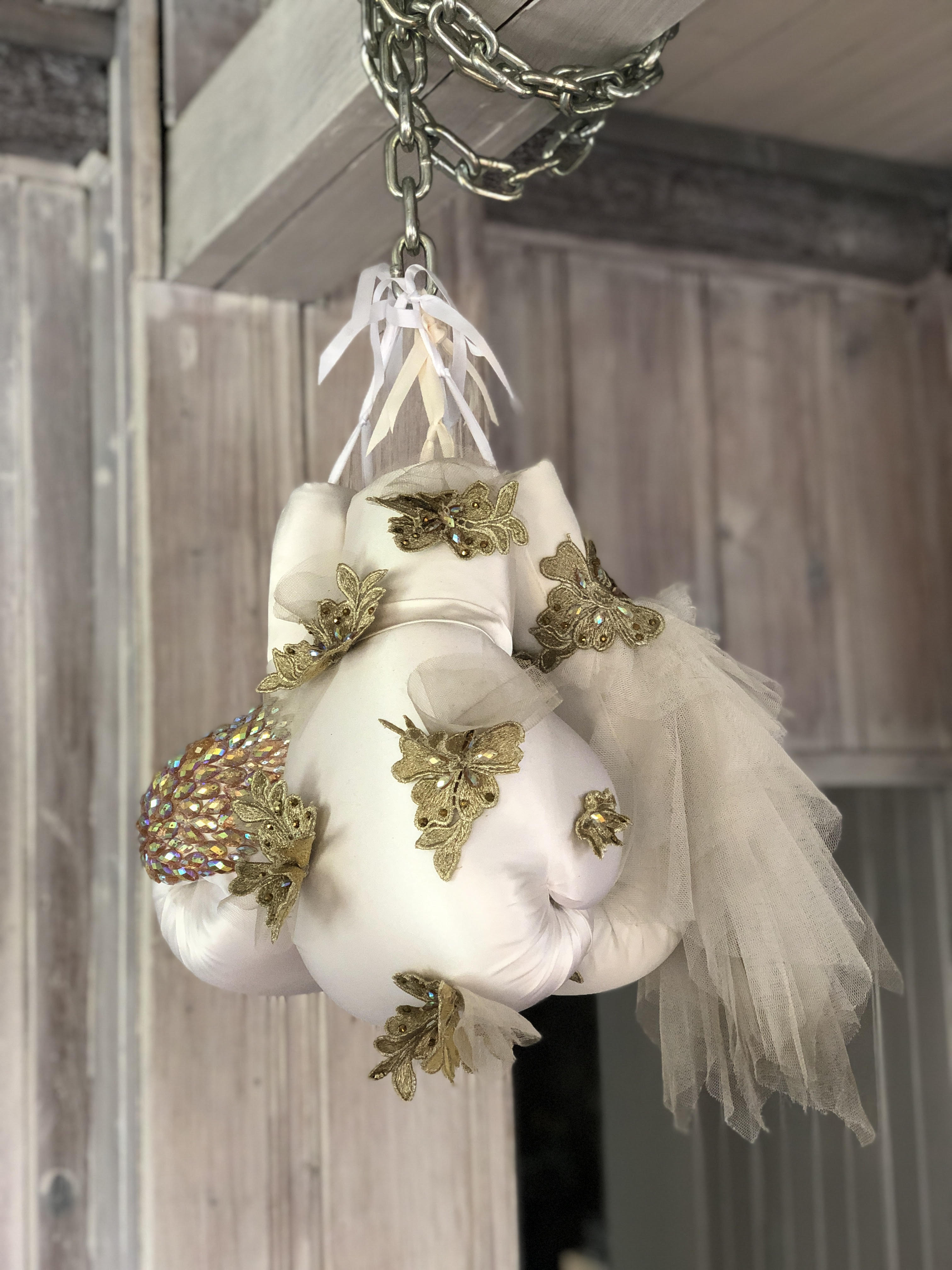
Zoë Buckman, commissioned work from “Let
Her Rave” series, (2017). Photo courtesy of Helen Toomer.
My husband Eric stole my wedding
dress and asked our dear friend and epic artist Zoë Buckman to make a special work as a
surprise Christmas gift for me. We had been trying to have a baby
for years and he asked Buckman to make three boxing gloves to
symbolize the additional family member we hoped to have. A few days
after I received this wonderful gift, I found out I was pregnant
with Harry! So this piece really is full of love and is part of our
everyday lives, hanging in the heart of our home.
Isabelle Bscher, director
at Galerie Gmurzynska
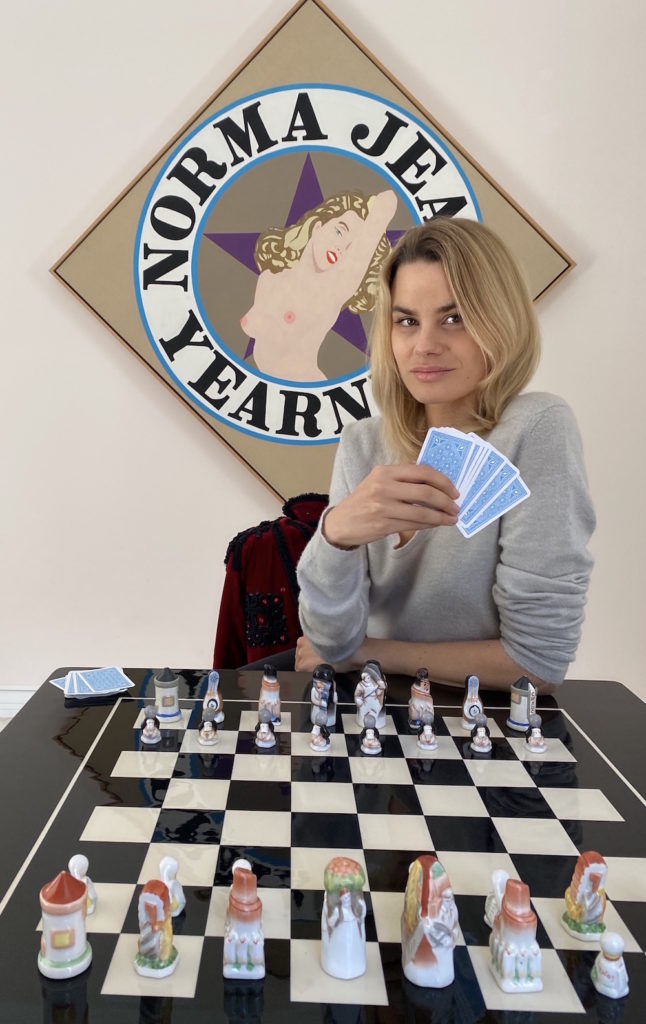
Isabelle Bscher with Robert Indiana’s
Marilyn Marilyn II (1999). Image courtesy Isabelle
Bscher
I always loved this painting, it
reminds me of visiting Robert Indiana in Vinalhaven. It hangs in
front of our game table where we spend hours playing risk,
monopoly, or cards . Also I just saw Some Like it Hot
again after years and it made me smile.
Anna Zorina, art dealer
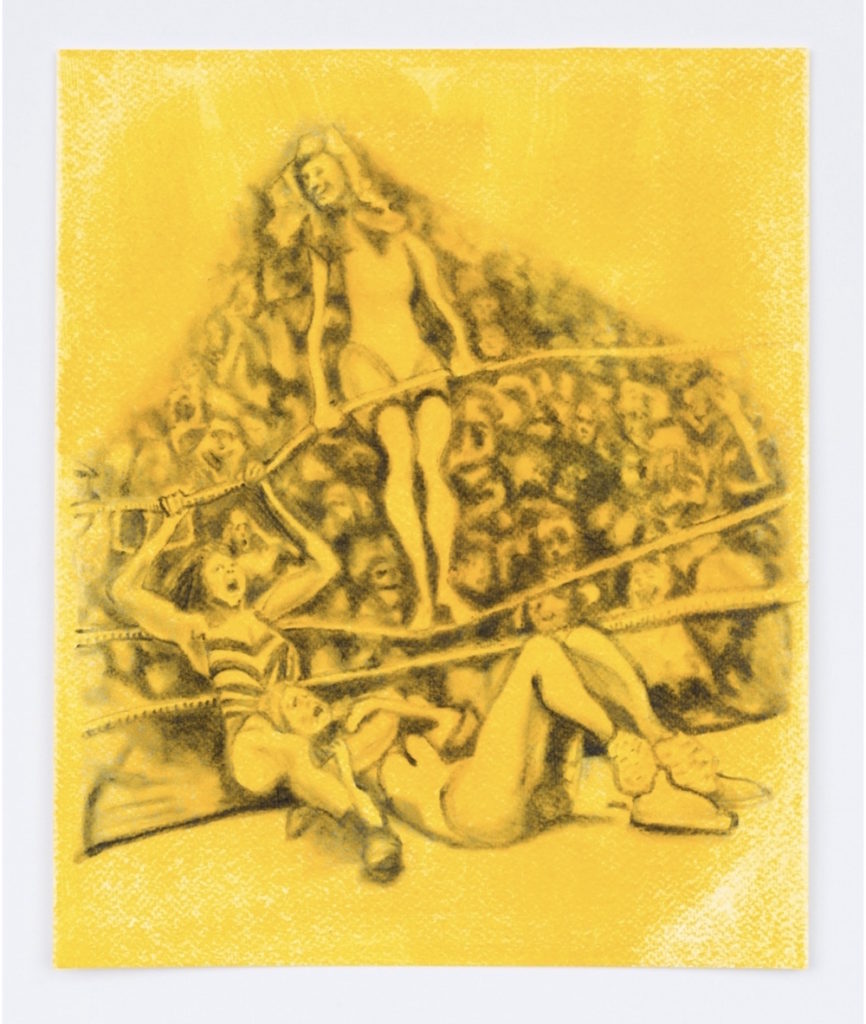
Rob Thom, Untitled (BLK + YLW
Wrestling) (2018). Image courtesy Anna Zorina
This work by Rob Thom has been
lifting my spirits these days. The piece shows a fight for control
yet maintains a positive outlook. It’s a strange amount of people
to be in a fight. The odd third person seems to have a benevolent
force that could be the deciding factor of the struggle. Seems to
make peace with the absurdity of the moment. Although there is a
battle being waged we can have faith that positive forces are on
our side.
Patrizia Sandretto Re
Rebaudengo, art collector and president of Fondazione Sandretto Re
Rebaudengo
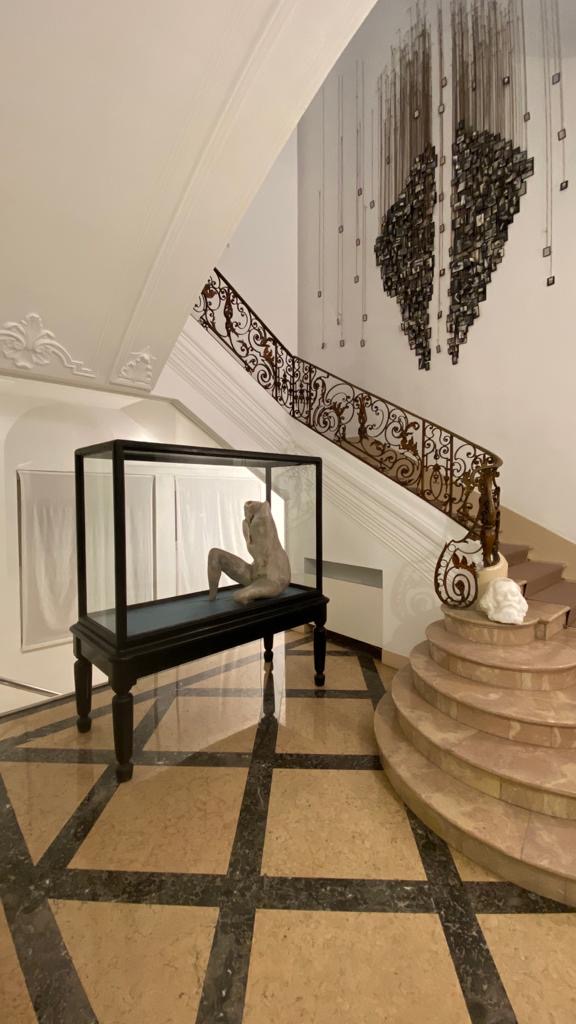
La femme sans tête by Berlinde De
Bruyckere (2004) in situ at Patrizia Sandretto Re Rebaudengo’s
residence in Turin. Photo courtesy Patrizia Sandretto Re
Rebaudengo.
La femme sans tête
by Berlinde De Bruyckere (2004) has
been a particularly meaningful presence in my house during
lockdown. It’s a female body cast in wax, headless and sealed in a museum
vitrine. This figure conveys a sense of suffering, but also
our need for protection. It
represents the vulnerability that we are all experiencing in these
times – how we feel
fragile and broken in front
of pain and death. But it also gives shape to a beauty that keeps
on nurturing our love for life. The same conflicting emotions characterize the artist’s solo
exhibition currently on view at Fondazione Sandretto Re Rebaudengo.
The main installation at the core of the
exhibition, Aletheia-On
Vergeten, confronts us
with an immense, devastating tragedy, and yet it is able to
communicate a sense of inner peace, found in consolation and the hope of repair.
Sunny Rahbar, founder
of the Third Line
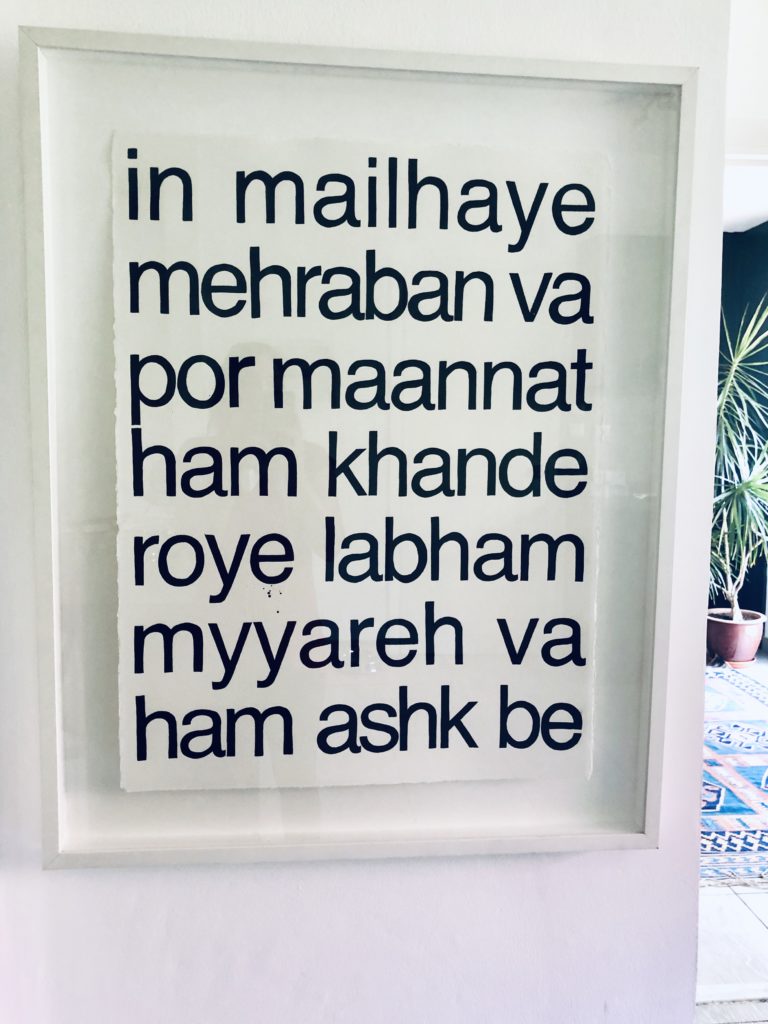
Abbas Akhavan, in mailhaye… ,
2008. Courtesy of Sunny Rahbar and the Third Line, Dubai.
This is a piece I bought some years ago. It’s part of a set of
three works that together make up the text of an email the artist
wrote to his mother when they were apart. It’s a transliteration of
Farsi into English. It reads, “These kind and heartfelt emails
bring both a smile to my lips and a tear to… ” This resonates with
me more now than ever before, as we are all far from one another.
Receiving letters, texts, or emails from friends and loved ones
really does help to brighten our days and get us through these
challenging times. It also serves as a reminder to stay in touch.
Beth Rudin Dewoody, art collector

Billy Al Bengston, Tachometer
Drive (1961), in Beth Rudin Dewoody’s Los Angeles bedroom.
Courtesy of Beth Rudin Dewoody.
This work is one of Billy Al’s
early paintings from his motorcycle series. It’s hanging on the
wall to the left of my bed, so I look at it all the time. A ray of
sunshine for the day, and a big star for the night. It def cheers
me up and reminds me that nature and life go on, and how much we
have to honor them and be grateful for all that we have.
Alexandre da Cunha, artist
at Thomas Dane Gallery
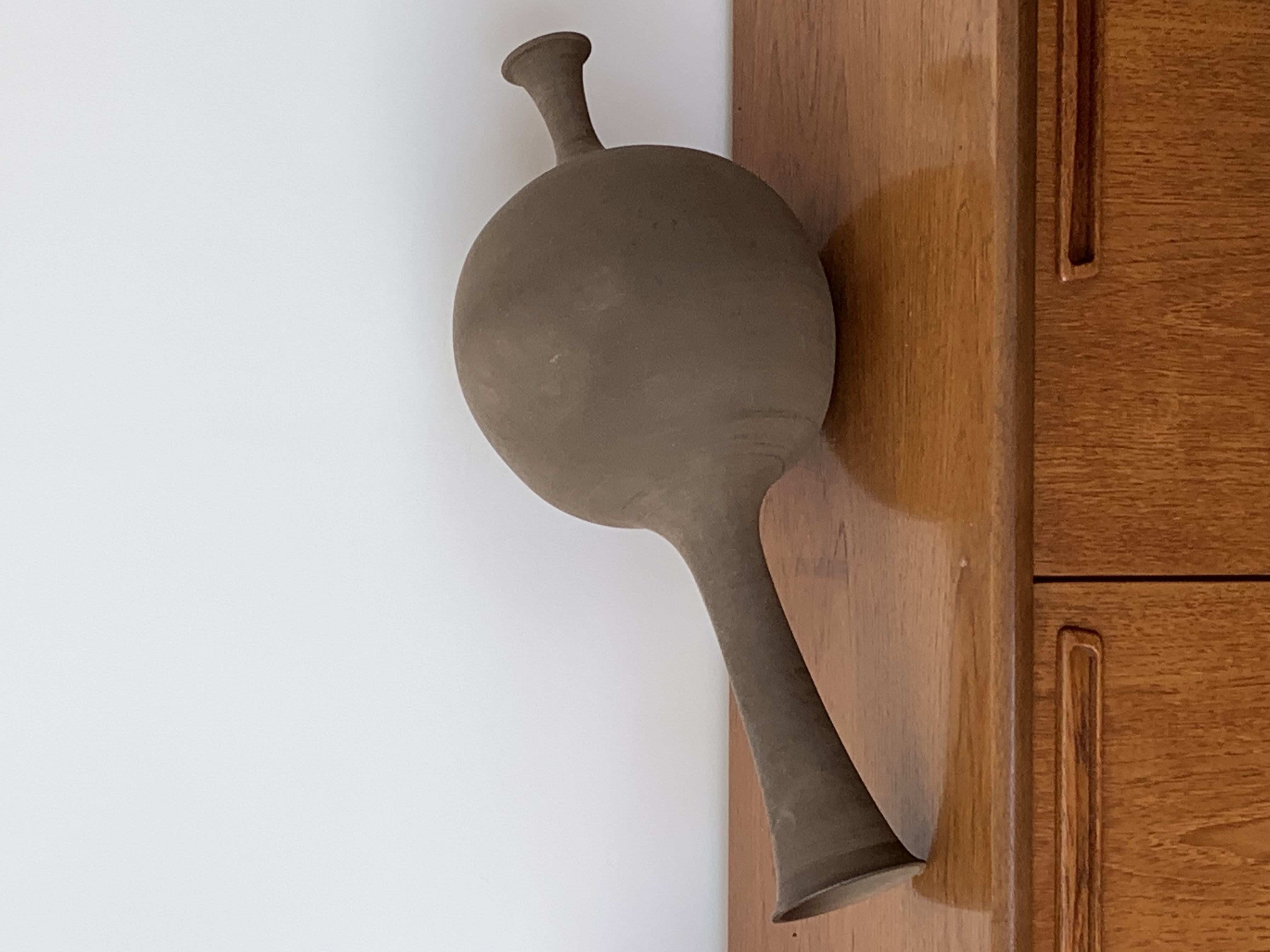
Camila Sposati, Tumbum Livre
(2015). Courtesy of Alexandre da Cunha.
This beautiful piece by Camila
Sposati has been a great company at home during these strange
times. Its evocative shape reminds me of an instrument for old
rituals and it has an strong earthy feeling to me which is somehow
calming. It makes me think of the planets, nature, traveling,
plants, and cycles, and at the same time it has a robust presence
as a body or an animal. A peaceful creature that functions as a
guardian of the home or an amulet.
Sara Maria Salamone,
founder of Mrs. gallery
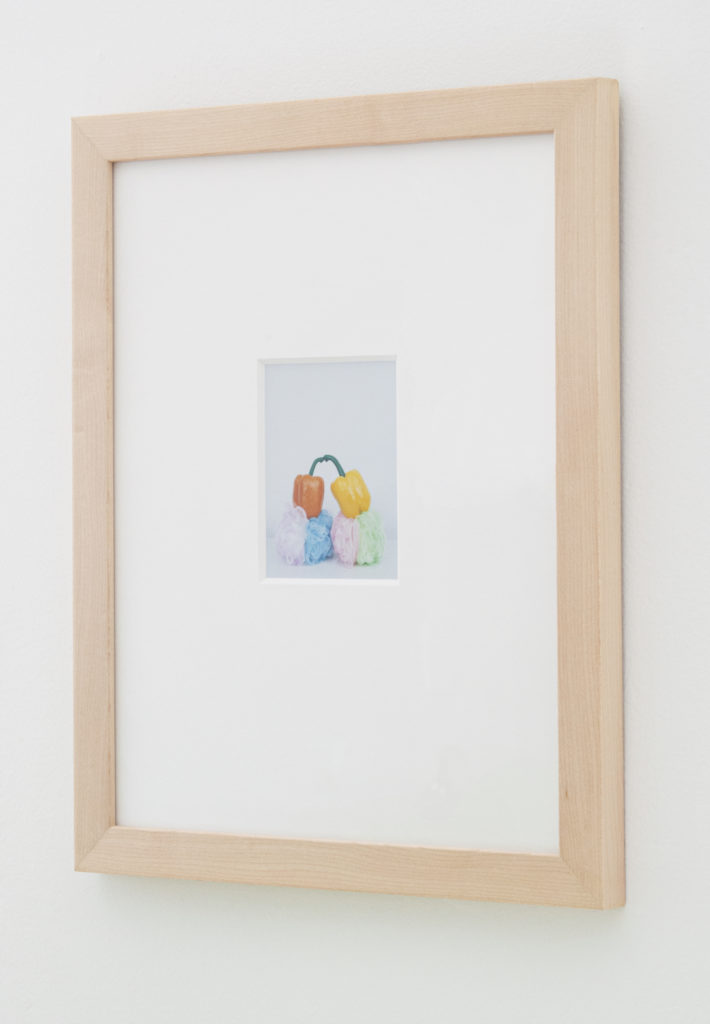
MarieVic, The Kiss, 2016. Photo
by Sara Maria Salamone. Courtesy of Sara Maria Salamone and Mrs.,
New York.
This Polaroid by MarieVic was given to me
and my husband by the artist as a wedding present. I love the
playfulness of the readymade pictured and the humor in titling the
work The Kiss, considering both the content of the
image and the reason for the gift. This piece lives in our kitchen,
where we appreciate it daily. It is especially dear to me, since
MarieVic and I were in graduate school together at Parsons and have
been longtime friends since.
Celine Mo, founder of
Victori + Mo Gallery
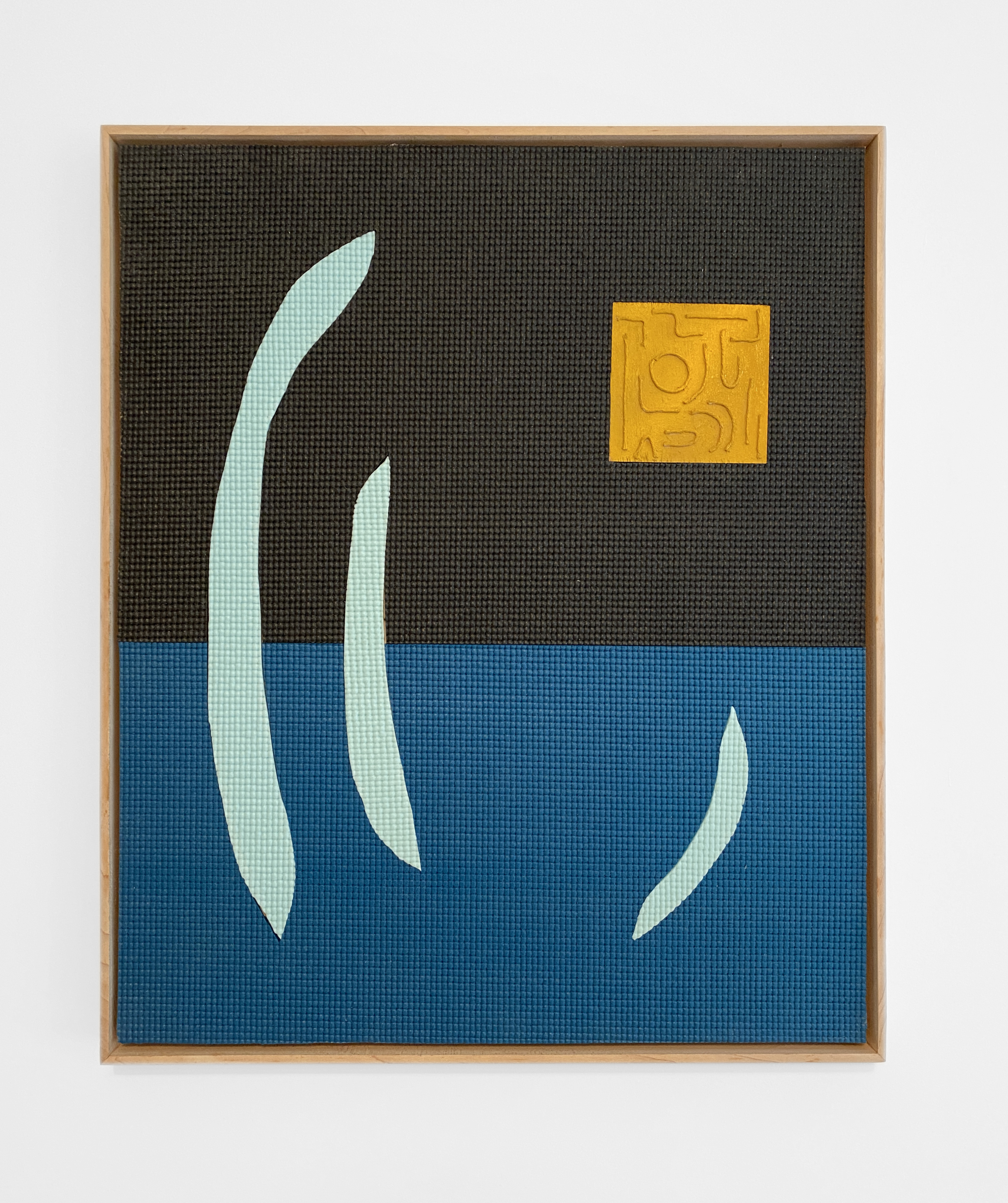
Alex Ebstein, Night Flora
(2016). Collection of Celine Mo.
I have an Alex Ebstein piece
which is made of cut yoga mats that sits above my bed that I love.
Now that I’ve been spending so much time at home I definitely look
at it more and it reminds me of how important my health is. The
pandemic has made me realize that jobs and money are replaceable
but my health isn’t.
Susan Mumford, founder of
the Association of Women Art Dealers and
cofounder of ArtAML
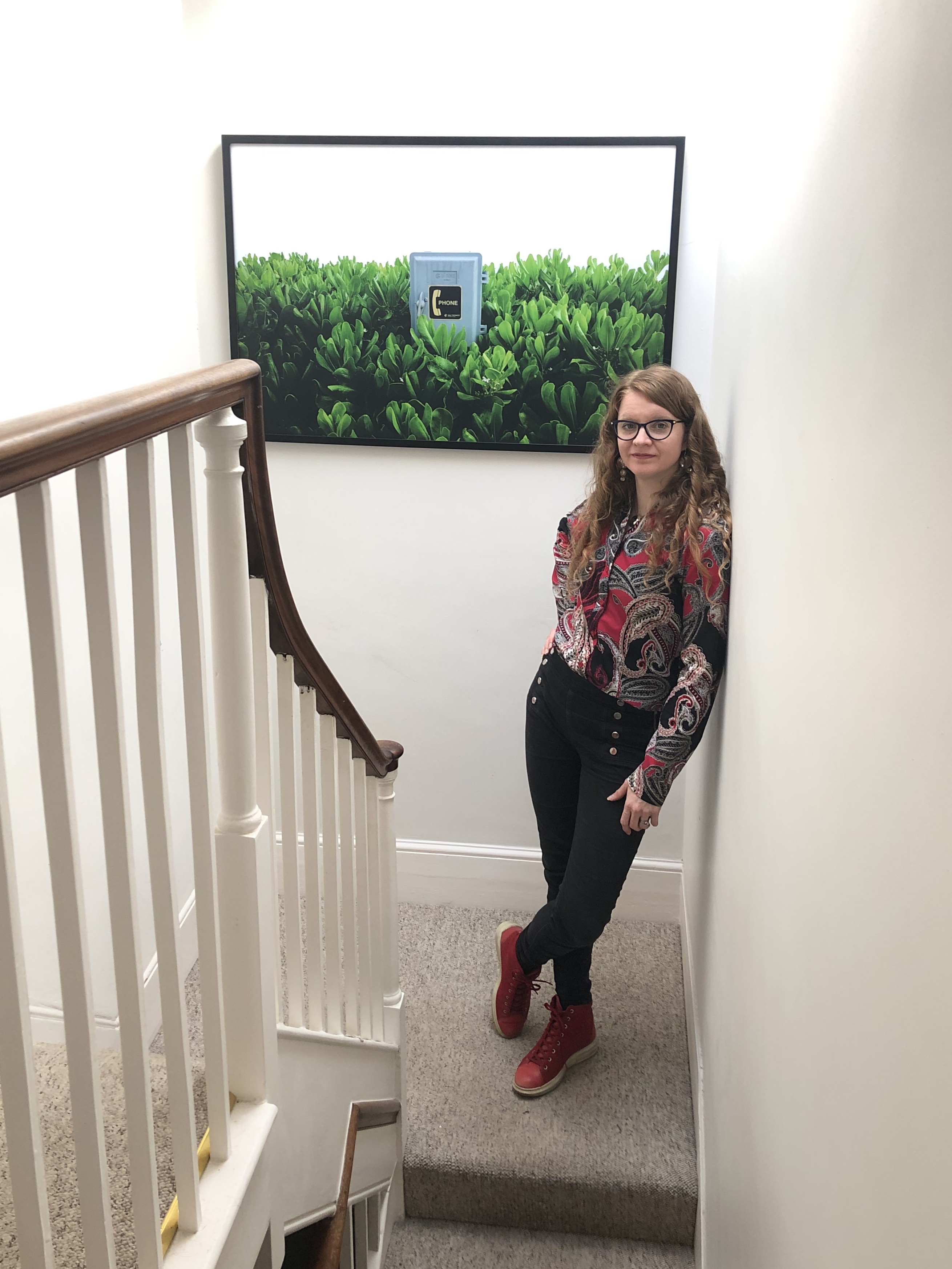
Susan Mumford with Answer |
Ignore, a photograph by her husband, Chris E. King. Photo
courtesy of Susan Mumford/Ivy Brown Gallery.
Spending every moment of every
day at home in Lewes, East Sussex, England, with the exception of
“essential” trips, has reinforced the importance of the immediate
surrounds. The first week of lockdown saw the placement of a large
colour photograph, Answer
| Ignore (2014, Edn. 5)
by my photographer husband Chris E. King.
Situated at the top of the
stairwell in the early Georgian house, and opposite the bedroom and
bathroom, the piece greets us throughout the day in trips up and
down the house, bringing a spring to the step. The surreal scene of
a phone box placed in a bed of brilliant green leaves takes on the
seeming identity of a window that looks into another reality, all
the while bringing a punch of colour to brighten the setting. Most
recently, it’s garnered notable attention during video tours of the
house (!).
The post 23 Top Collectors, Artists, and Dealers Tell Us
About the Artwork That Is Keeping Them Inspired at Home
appeared first on artnet News.
Read more https://news.artnet.com/art-world/favorite-artworks-at-home-1865070
Further reading


Leave a comment