
Three Museum Directors Offer a Behind-the-Scenes Look at How They Are Tackling the Challenge of Reopening Their Institutions Post-Lockdown
This article is part of a
package about the museum reopening process. For a thorough how-to
guide and checklist for how art institutions can safely and
smoothly reopen, click here.
As museums across the US prepare
to open their doors to visitors after lockdown, administrators must
consider questions that never would have occurred to them just
months ago. Is it safe to hang two small works of art next to each
other? Is it possible to reconfigure every door to open
automatically? What will make people feel safe enough to
visit?
We published a planning
tool to offer museums a general, practical checklist to
approach these questions—but we also understand that every
institution and community is unique.
To get a sense of the scope of
the challenges facing individual institutions, we caught up with
three museum directors in three different cities—Mary Ceruti of the
Walker Art Center in Minneapolis; Franklin Sirmans of the Pérez Art
Museum Miami; and Adam Levine of the Toledo Art Museum—who are in
the midst of figuring out how to welcome back their
publics.
Mary Ceruti, director, Walker
Art Center
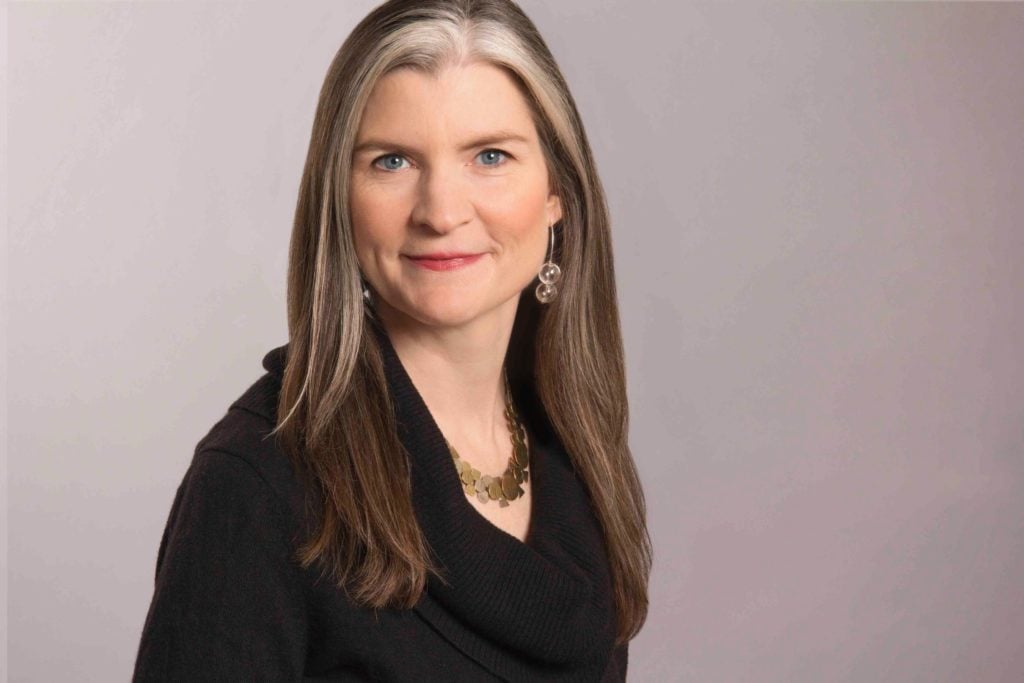
Mary Ceruti, director of the Walker Art
Center. Photo by Troy Benson.
How will you determine when to reopen?
We’re using a few different
inputs—official public health guidance, the field-wide collection
of best practices, common sense, and direction from the governor.
Because the Walker is multidisciplinary—we are a museum, theater,
cinema, event space, restaurant, shop—we are looking at lots of
different institutions.
Have you gotten guidance from the governor on where museums
fall in the reopening plan?
I am not optimistic that he is
going to give us any concrete information at this point. After I
get off the phone with you, I have a call with a group of
us—museums, performing arts venues, historical societies—that are
meeting regularly with his office. They are waiting for us to
develop solid guidelines as a group. It’s challenging because of
course, we will all have different timelines and issues we need to
address, so we are now breaking into subgroups.
How are you deciding what to open first?
We’re going to start with the
galleries, which is a bit easier because museums are already
designed to control how people move through those spaces. We also
have HVAC systems and can make sure the filtration is good. It’s
different from a theater, where you are putting people in an
enclosed space for over an hour.
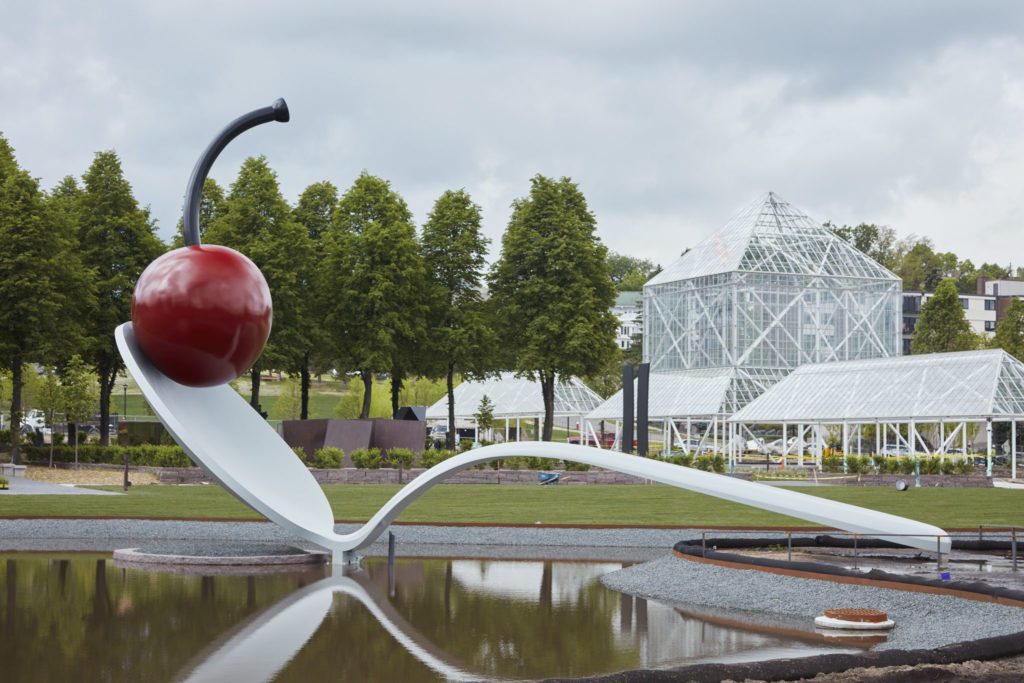
Minneapolis Sculpture Garden, Claes
Oldenburg and Coosje van Bruggen, Spoonbridge and Cherry.
Image courtesy of the Walker Art Center/Gene Pittman.
How are you adapting your exhibitions to this new
reality?
The first show that we’ll be
installing this summer is called “Designs for Different Futures,” a
design exhibition that is about imagining how the world could
change: the future of food, work, parenting. It feels like a really
relevant exhibition, but it also has a lot of interactive elements,
which we are now removing or showing without a mouse or
touchscreen. As we go through the floorplan and checklist, the
curators are also trying to write new guidelines for how you make
an exhibition right now.
What’s an example of something that has to
change?
A video gallery is a small,
enclosed space, which usually, in temporary exhibitions, doesn’t
have ventilation. We are also thinking about using directional
speakers instead of headphones. But my big lesson in this—one that
I have to keep teaching myself—is not to make decisions too soon.
Information is evolving all the time, and we are going to make
better decisions the more we know.
How do you weigh risk differently for the performing arts
segment?
It’s complicated because there
are all these questions about social distancing on stage, in
dressing rooms, in the back of house. What does that look like?
We’re really not there yet. We’re encouraging our performing arts
programmers to think about using this time to work with artists in
different ways. Maybe it’s residencies, maybe it’s research and
development. Maybe a performing artist wants to think about
audience differently and use the building instead of a theater
space. I think it’s going to be a really interesting moment of
experimentation.
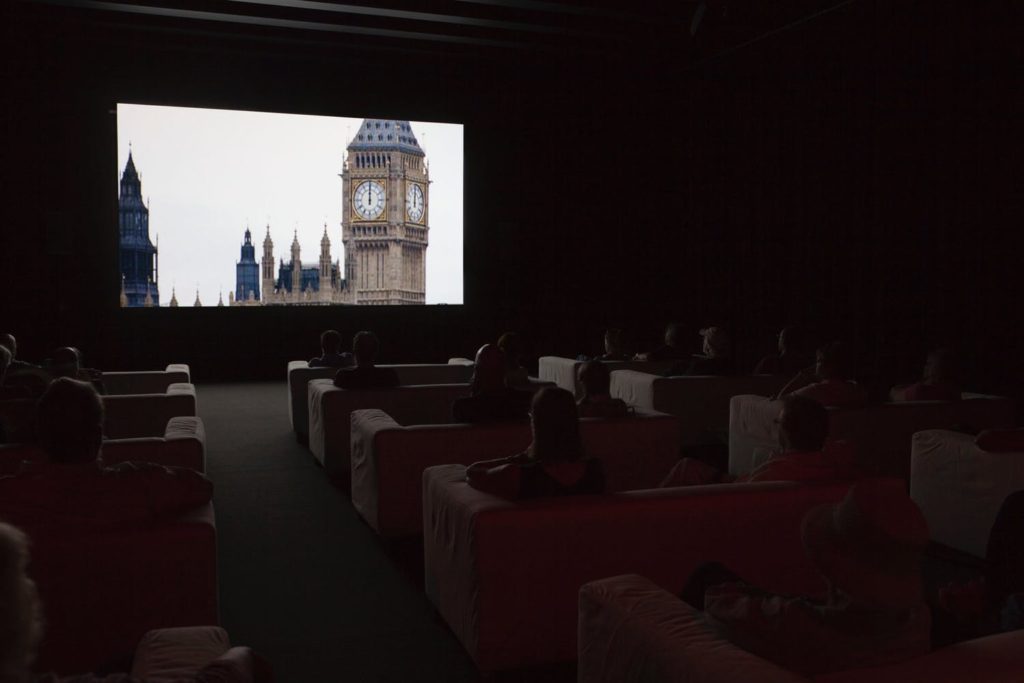
Christian Marclay, The Clock at
the Walker Art Center. Image courtesy the artist and Walker Art
Center.
I was recently listening to an interview with the chef Tom
Colicchio, and he was describing the challenge of reopening
restaurants. Since it still costs them the same amount of money to
operate, even if they are at 25 percent capacity, it can actually
be a money-losing proposition to reopen. Are you going to confront
the same challenge?
Absolutely. Performing arts
organizations have a bigger challenge in that regard because of
their business model. The reality is that museums break even as
nonprofits, but I don’t know any museum that earns all their
revenue, so they are always operating at a loss. It’s just a
question of, how much can you make up for it? In our case, it’s
going to be a matter of subsidizing our budget to a greater degree
from endowment draw and contributed income. You still have to size
things: we will have fewer shows turning over in the next year or
two. We will initially be open fewer days of the week. It’s also a
bit of a different equation [from restaurants] because we aren’t in
it to make money.
What has been the most difficult part of the reopening
process?
So far, the hardest part is
understanding not just the risks, but the psychology. Because there
is so much uncertainty, there is a big range in terms of how people
feel—both staff and potential audience. That is the biggest
challenge: to give people confidence that we are doing everything
we can, but also recognizing that we can’t create zero risk for
everybody.
I think people are going to feel
a lot better when they are in these environments. I was just saying
to our visitor-services person, “You, me, and our designer need to
go into the building in a socially distanced way and think through
some of this stuff.” Our visitor-services people are thinking
through every single step they take when they sell a ticket—a clean
pen goes into the dirty pen box, etc. It’s amazing they can do it,
but another part of me feels that it’s ripe for overthinking. Once
we are in there doing these things, it isn’t going to feel so
scary.
Franklin Sirmans, director,
Pérez Art Museum Miami
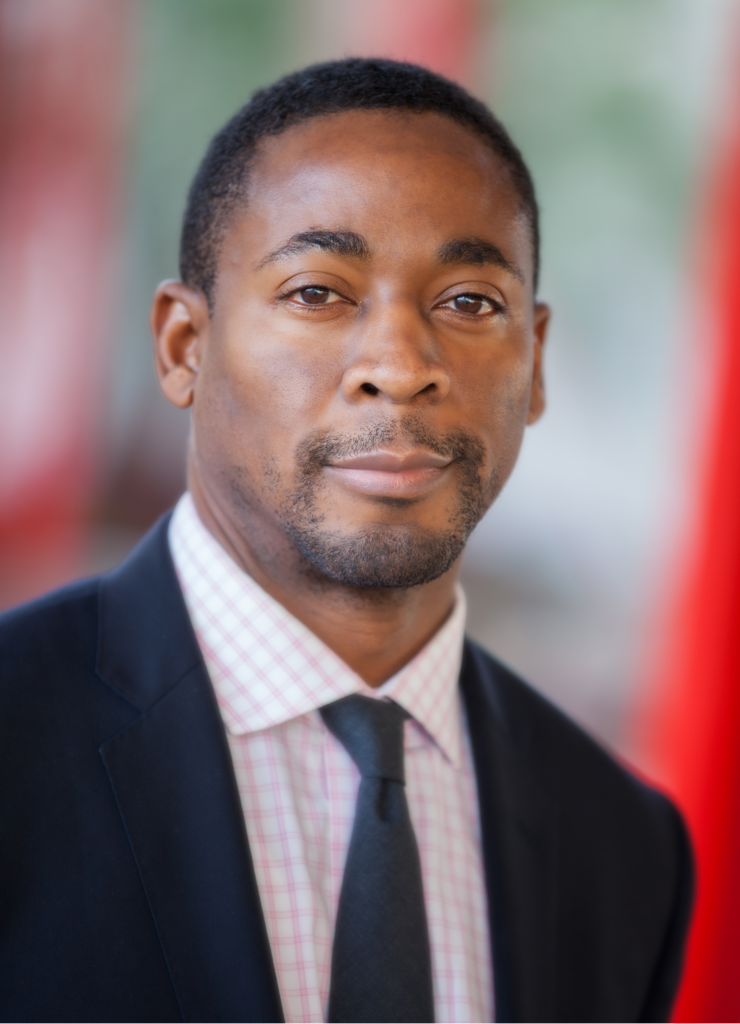
Franklin Sirmans, director of the Pérez
Art Museum Miami. Image courtesy of the Pérez Art Museum Miami.
Florida was one of the first states to begin reopening, at
the beginning of May—earlier than most experts said was advisable.
On the other hand, PAMM was one of the first institutions to
state publicly that it
would remain closed all summer (weeks before the Metropolitan
Museum of Art made a similar
announcement). How did you make that call so quickly?
About a month after everyone
started working from home on March 16, we were able to make an
assessment of the impact of the closure. We looked at a three-month
scenario that would put us at early summer and a six-month
scenario, which would put us at the beginning of fall. Accounting
for our research and looking specifically at our museum, where
summer is the height of the tropical season and kids are getting
ready to go back to school, it looked like September 1 was a good
target date. If things were to drastically change, and you get
nothing but a decrease in cases here, then we could try and
accelerate that schedule. But right now it feels
right.
What will be happening between now and then?
It allows us to do some things
in phases. Can we get our sculpture garden up within the next six
weeks? I think that’s a strong possibility. Can we, assuming that
there is interest, do a really cool program on our beautiful
portico looking out at Biscayne Bay, providing a scene of
incredible solace for people to come back to? We’re connected to a
30-acre park. Can we bring people back in a way that makes outdoors
the new indoors for a little bit? How do we take advantage of the
fact that we are in a warm-weather place?
How are you caring for the building and the collection in the
interim?
We have a ride-out team—we’re
used to that because we always have a crew for hurricane season.
That put us a step ahead. Then the question becomes, how do we add
people to that team safely? Can we move a 20-something-foot-wide
wood piece by Leonardo Drew under social distancing? How do the
doors open? Do they open automatically? We close all the water
fountains, obviously. Do we provide a new kind of signage that is
digital? How do we bring people up from our parking lot if you can
only have one or two people in an elevator all of a
sudden?
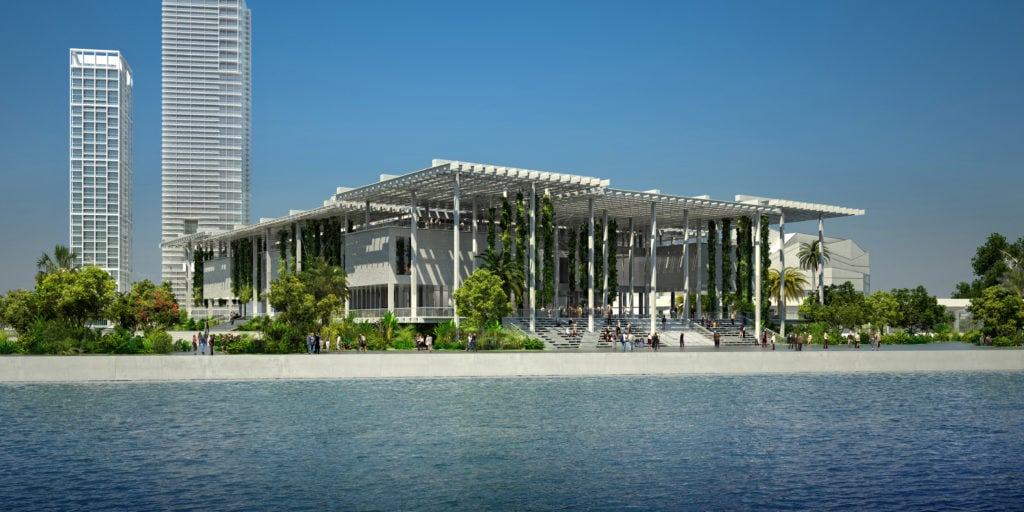
The Pérez Art Museum Miami. Image
courtesy of the Pérez Art Museum Miami.
How is this closure affecting your programming? I know you
all ended up cancelling one of your upcoming exhibitions, “Solidary
& Solitary: The Joyner/Giuffrida Collection,” a show of abstract
painting by black artists that has been traveling around the
country.
It was a really hard decision to
make, but I think one that had to be made, to let the show go. Do
we just keep bumping everything back forever? All the works for the
other exhibition [“Allied With Power: African and African Diaspora
Art From the Jorge M. Pérez Collection”] are already in Miami. And
we have other things to consider. We can’t put small, intimate
works next to each other anymore, at least not for a while. So as
we are thinking of expanding the [Pérez] show to take up the entire
space, do we really need to add more work? Maybe
not.
You have had to make dramatic changes to your
staffing, laying off 15 people and furloughing 54 out of a
staff of 120. How does that factor into your reopening
plans?
Our assessments unfortunately
involved letting go of some people in order to cover the decreased
revenues of the entire year. We anticipated that the combined
contributed and earned revenue was going to be off 20 to 30
percent, $3 million to $5 million. The majority of those
people—visitor services, retail staff, teaching artists—are
furloughed, and the idea is that they will come right back as soon
as we reopen. We can’t function without them.
Have you been able to pay the staff on furlough?
We were able to pay them with no
changes through May 4. So the changes went into effect very
recently.
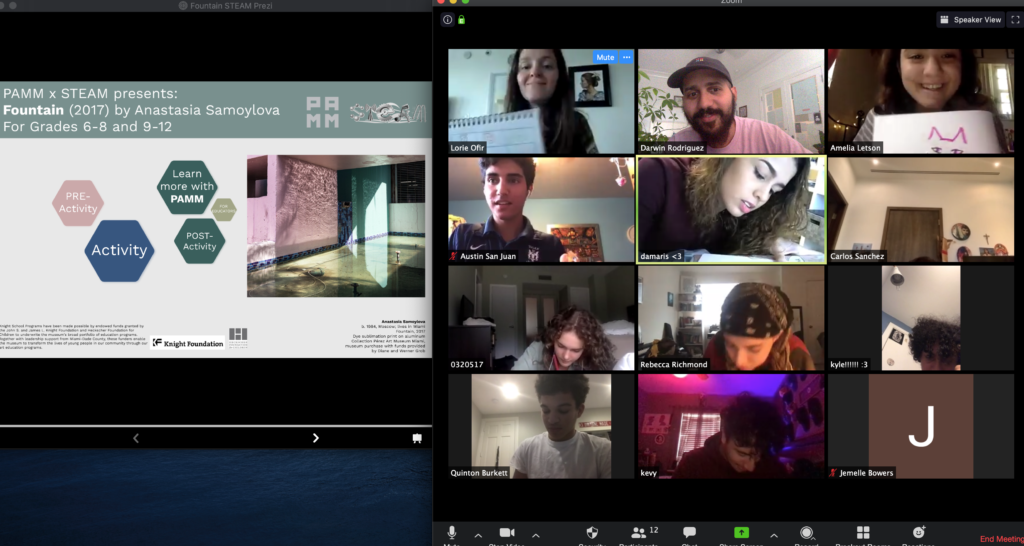
A PAMM virtual classroom visit. Image
courtesy of the Pérez Art Museum Miami.
One subject that has come up in a lot of my conversations is
access. For years leading up to this point, museums had been
working to break down the barriers that had made them inaccessible
to so much of the population. And now, certain barriers must be put
up again. If you can only sell tickets online, you are inaccessible
to those without internet access. If you are eliminating high-touch
offerings like touchscreens, that makes it more difficult for
disabled people to navigate the museum. How are you thinking about
that paradox?
We knew then, and we know now
more than ever, that we have to figure out a way to deal with
inequity, to deal with the fact that there is a major disparity in
access to the things we provide. We’ve done that through free days
and targeted programs, but this has only exacerbated the problem.
We have been continuing to provide school tours for
classrooms—educators are taking students around the museum
virtually on Zoom—but of course not everyone has internet access.
We need to come up with new ways to function as a
museum.
When you have a hurricane, the
museum can be a source of relief supplies, people can come and pick
them up. What’s hard about this invisible thing is that we feel
like we can’t be active in our community. Everyone is trying to
help each other—how to get back up and running safely is the number
one concern.
Adam Levine, director, Toledo
Museum of Art
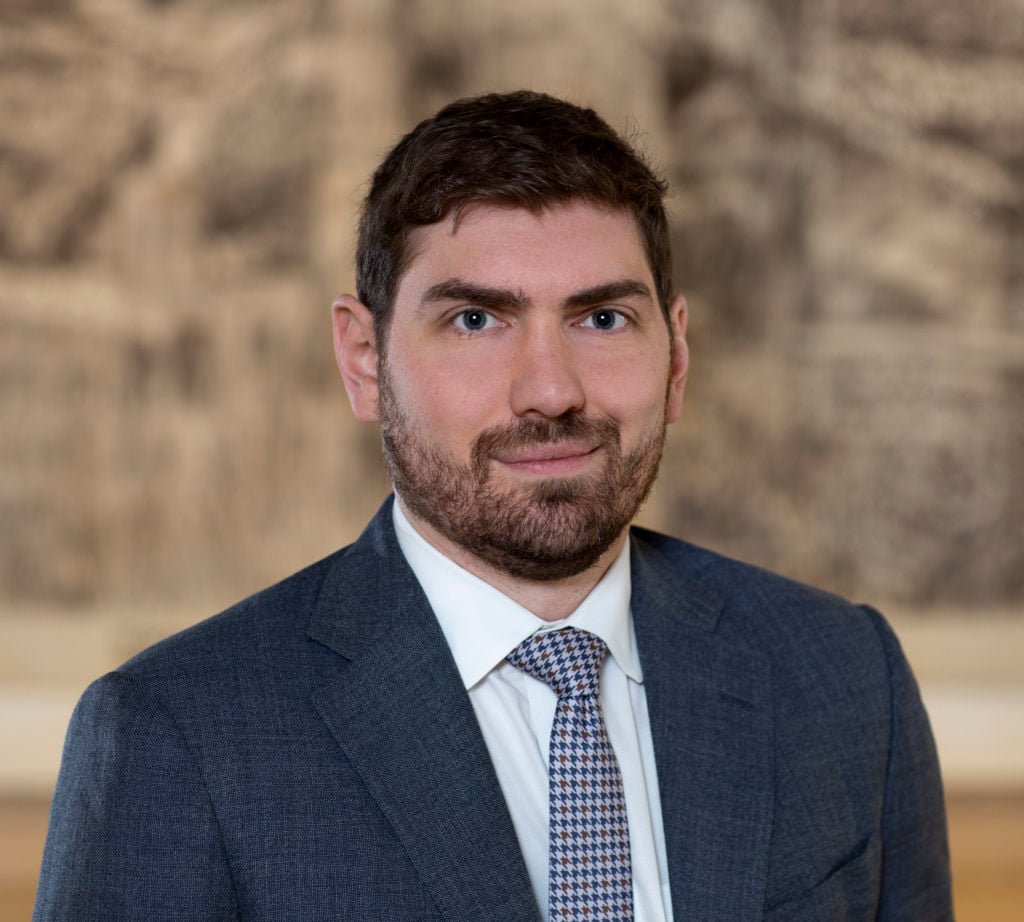
Adam M. Levine, the Edward Drummond and
Florence Scott Libbey Director, President and CEO of the Toledo
Museum of Art. Image courtesy of the Toledo Museum of Art.
You took this job as the country was going on lockdown. What
was that like?
This is an unprecedented moment,
obviously. But I had spent six years in Toledo previously [before
my prior job], and that certainly helped. The onboarding process
went from listening to people in person to over the phone and on
Zoom.
How are you going to determine when to reopen?
We will not reopen before the
governor says it’s OK to do so. Ohio’s stay-at-home order expires
on May 29, so we have been working toward the following month—and
even if we aren’t allowed, it doesn’t hurt to be over prepared. We
created a task force and identified three hurdles we needed to
clear: the rearranging of physical space, the generation of HR
policies, and the provision of personal protective equipment [PPE]
to our team. There was no circumstance in which we would reopen to
visitors before we had staff back in the building. So phase one is
getting staff back, with a phased reopening for our audience in the
weeks to follow.
How are you working to adapt the office space?
In Ohio, offices were able to
reopen on May 4. But we still have not brought staff back to the
museum. Our utilities, maintenance, and IT staff are in the
building this week reorienting the space. Then we are having an
infectious-disease expert come in to review our layouts.
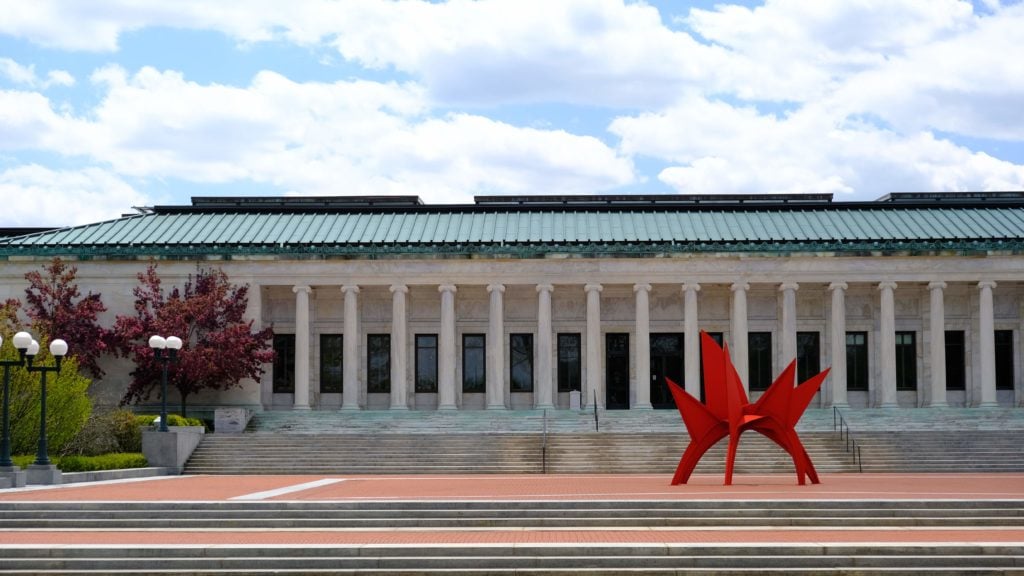
The Toledo Museum of Art is situated on
nearly 40 acres in the city’s Old West End neighborhood. Image
courtesy of the Toledo Museum of Art.
What sort of changes are you making?
This is a place where museums
have a competitive advantage: we have preparators on staff and we
have Plexiglas because we make vitrines, so we are actually able to
make our own barriers. And our installation designer designed the
Plexiglas barriers so they are incredibly elegant to look at. We
will continue to promote working from home to the extent that’s
possible.
The issue [of social distancing]
is not so much in the gallery space as the bottlenecks. The staff
entrance is not configured to be a grand, spacious place. So staff
will report to work in 15-minute increments for staggered entry.
You also have to consider the fact that some employees will be
hourly, so people will be compensated for wait
time.
What safety measures are you looking to put in place when
opening to the public?
All of our plans for staff and
visitors will be subject to an industrial hygienist review:
cashless environment, timed tickets, frontline staff behind
plexiglass, temperature scanning on the way in. We’re aware that
not everyone has access to an online resource to book a ticket, so
we are making sure there is capacity for walk-ins. We did some
sophisticated modeling for how people will migrate along a path in
the museum. We’ve had that flow and our opening capacity approved
by the fire marshal, so we are ready to go.
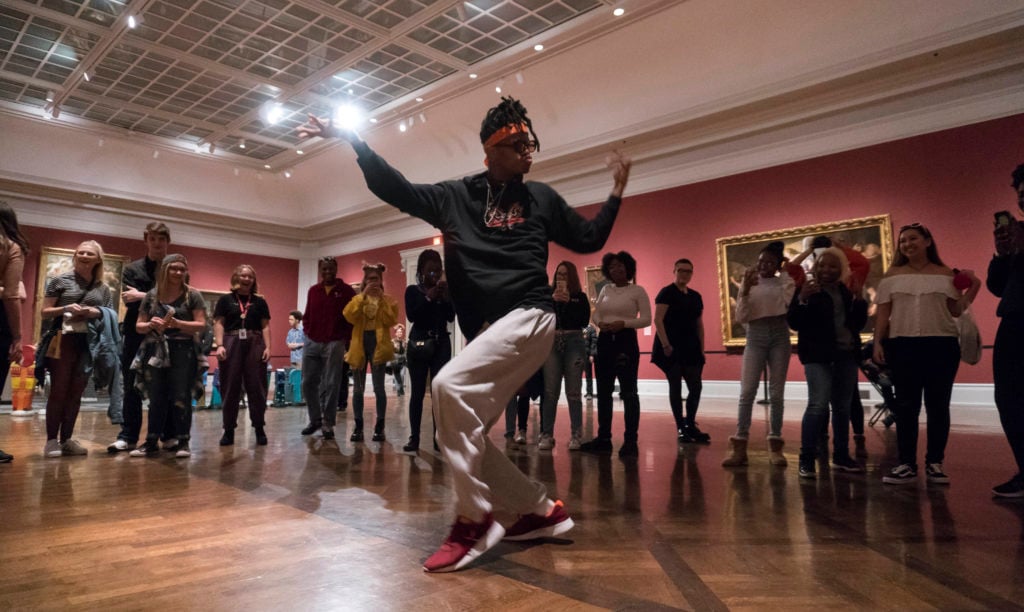
A Teen Night in the Toledo Museum of
Art’s Great Gallery. Image courtesy of the Toledo Museum of
Art.
What are the most logistically difficult measures to
implement?
Nothing about this is easy. And
nothing is easier than I thought. But the thing which is most
important to understand is that visitors and staff need to be
treated with tremendous empathy right now. The challenge and the
opportunity is to make staff and visitors feel comfortable and to
bring some prism of equity to this conversation and appreciate that
different people have different expectations. Managing all of those
concurrently is an awful lot of the job and communicating the
decisions is a really complicated part of this moment. In the same
way that institutions that have invested in digital systematically
and over a long period are well positioned, institutions who have
cultivated empathy will also be rewarded.
Does communicating about this to staff require different
considerations than communicating about anything
else?
Communicating through a crisis
requires more frequent communication, but the nature of the
communication—and our principles of being compassionate,
accommodative, logical, and reasonable—are the same. You don’t have
to have the answer to every question, but you do need to share that
you are working on the answer to that question. People will give
you grace if you are graceful back to them.
Are there certain artworks or areas to which you will have to
limit access? How will new rules affect something like the Kusama
“Infinity Room” you had on view before lockdown?
We have the Infinity Room
Fireflies on the
Water on loan from the
Whitney, and that will be closed when we reopen. That is a good
example of something that we need to think through methodologically
to get us comfortable that it is safe for visitors, and to figure
out how to make visitors feel safe.
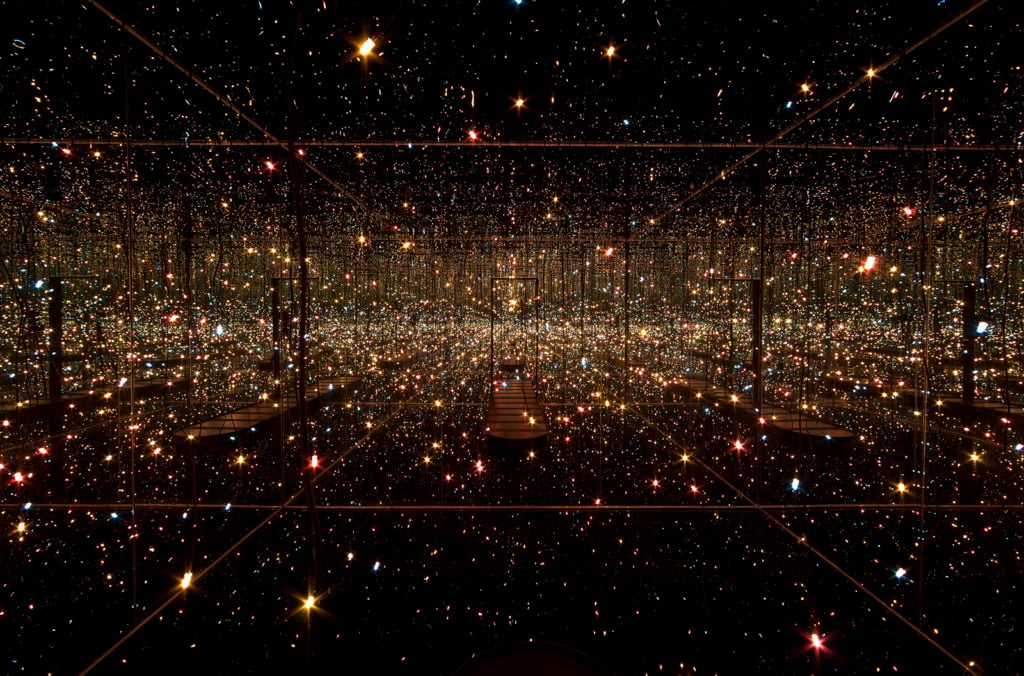
Yayoi Kusama,Fireflies on the
Water (2002). Courtesy of the Whitney Museum of American Art,
New York. Photograph by Sheldan C. Collins
Have you had to make any layoffs or furloughs during this
period?
We have not laid anyone off or
furloughed anyone, and we have made no pay cuts. We have just
extended that policy through June 30.
So many museums have had to make cuts—how did you avoid
it?
We valued our employees. The
museum was well managed coming into this, we had liquidity, and we
were able to increase liquidity over the run of the closure,
leveraging some tools that were available to us and making a choice
that retaining full employment was going to position us well in the
short term as we spin back up, and in the long term, as a way to
differentiate ourselves. We have 300 people on payroll, including
part-time workers.
Does being an encyclopedic museum present different
challenges than a contemporary art institution or
kunsthalle?
I don’t know that there are any
substantive differences. But the museum was founded in 1901, and
that means it was around in 1918 [during the flu outbreak]. It’s
very helpful to remember that institutions, including ours, have
been through this before. On October 13, 1918, Mayor Cornell
Schreiber issued a closing order and the Toledo Museum was closed
for 46 days. We made it through that and we will make it through
this.
The post Three Museum Directors Offer a Behind-the-Scenes
Look at How They Are Tackling the Challenge of Reopening Their
Institutions Post-Lockdown appeared first on artnet
News.
Read more https://news.artnet.com/art-world/3-museum-directors-behind-scenes-look-reopening-process-1870929
Further reading


Leave a comment