
By Redeploying Her Staff in Some Ingenious New Ways, the Director of Texas’s Blanton Museum Has Managed to Avoid Job Cuts Entirely
As museums shuttered throughout
the US, many were forced to cut staff through layoffs and furloughs,
including New York’s Metropolitan Museum of
Art and the Broad in Los Angeles.
But thanks to some creative strategizing, the Blanton Museum of Art at the
University of Texas at Austin has managed to keep its entire staff
on the payroll since the school shut down operations on March
13.
Museum director Simone Wicha, who recently published an
op-ed about her
approach in the Wall Street
Journal, began thinking about ways to redeploy
staffers who were unable to work during a prolonged shutdown in new
ways.
“From the beginning, I realized my team would likely be idle for
at least four to six months and we needed to reinvent,” Wicha told
Artnet News in an email. “What also was clear was that social
distancing would be needed for a much longer time frame, so
budgeting would be different for a very long time.”
“I was distraught about what [the shutdown] might mean for our
team, and started realigning the budget immediately to prevent
layoffs,” she added. “Beyond the financial challenges, I was
especially mindful that losing our sense of purpose as a team or
having individuals whose job was suddenly obsolete would create
tremendous anxiety—and that’s not healthy.”
With that in mind, Wicha asked the museum’s department heads to
identify potential projects to work on during the lockdown—things
that normally would be pushed to the bottom of the to-do list by
more pressing day-to-day needs. Then she drafted a questionnaire
for staffers, asking them to evaluate their skills in areas not
necessarily related to their regular job responsibilities—were they
a Photoshop whiz? A great writer?
Wicha then matched the 32 employees whose jobs were most at risk
to 30 new lockdown projects.
“I already knew that our staff was multitalented, smart, and
adaptable,” she said. “The surprise has been in learning about
their specific talents.”
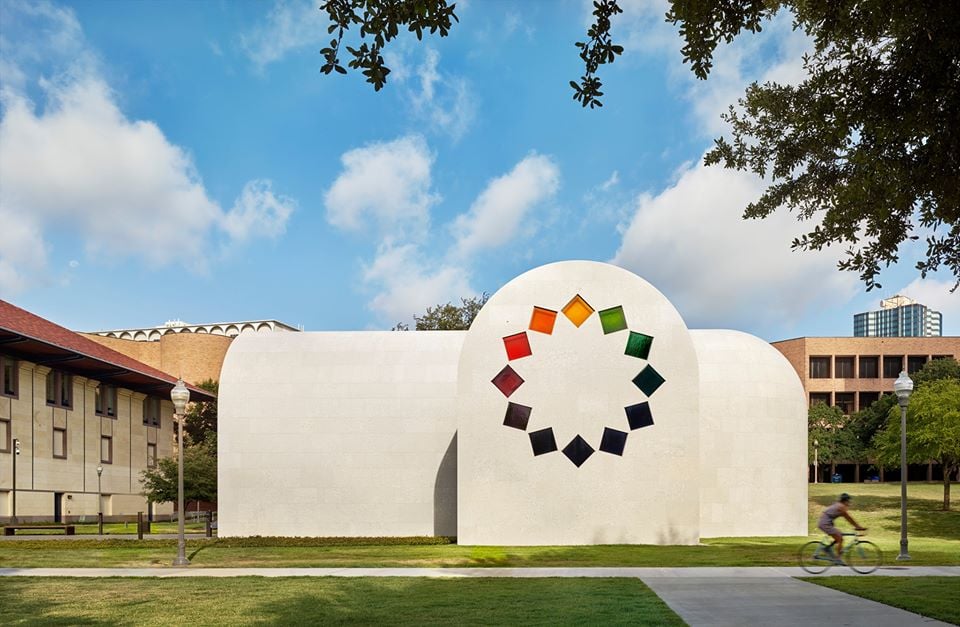
The Blanton Museum in Austin, which has
so far avoided layoffs. Image courtesy of the Blanton Museum of
Art.
The maintenance man stopped worrying about paint touchups and
HVAC repair and started assisting the development department by
drafting thank you notes for donors, making use of his beautiful
handwriting. Security guards were redeployed to add “alt text,” or
descriptions for the visually impaired, to images on the museum
website. Art handlers and event planners have been doing collection
research about the museum’s lesser-known artists.
More than just busy work, these tasks will help the museum
long-term as it looks to bounce back from the extended closure. And
not only are they keeping staff on the payroll, these new
responsibilities have been good for morale.
“I’ve heard directly from various staff members about how
they’ve enjoyed interacting with others not usually involved in
their workday routine, and how they’re proud of advancing the
museum’s mission for our community,” said Wicha. “Some of the staff
is really getting to stretch and develop new skills that I know
will serve them and us well in the future.”
The Blanton Museum of Art at the
University of Texas, Austin. Photo by Benjamin Sutton.
Although these measures have been a success, the Blanton’s
finances are still shaky, and will likely remain so even after
reopening.
The Blanton’s annual operating budget is an average of $7.7
million, and the university provides about 18 percent of that,
making admissions from visitors and fundraising its primary sources
of income. With the doors closed, that money would no longer be
coming in, but some 40 percent of the museum’s expenses went toward
programming and departmental needs—installation costs, advertising,
summer programming—which Wicha could cut. The rest represented
salaries and benefits for the staff of 70.
“The fact is, like many of our colleagues across the country, we
expect a decline in attendance when we reopen, because of social
distancing and the new norms of everyday life. The financial
challenge will continue, because we’ll be serving a fraction of our
normal visitors and with that comes a fraction of the income,”
Wicha said. “We’ll have to continue to be thoughtful and creative
about our program in order to avoid layoffs in the future.”
Texas museums have had the green light to open since the
beginning of the month, but many have not jumped at the
opportunity. This weekend, the Museum of Fine Arts, Houston,
became the nation’s first major
art museum to welcome back visitors after lockdown, and
the San Antonio Museum of Art will follow today.
The Blanton will remained closed through at least the end of
June, when the University of Texas plans to announce its reopening
plans.
“We won’t be going back to the same museum we left on March 13,”
said Wicha. “It will be a whole new experience for us and for our
visitors. But I believe that sharing beautiful experiences around
works of art will bring us—and keep us—together.”
The post By Redeploying Her Staff in Some Ingenious New
Ways, the Director of Texas’s Blanton Museum Has Managed to Avoid
Job Cuts Entirely appeared first on artnet News.
Read more https://news.artnet.com/art-world/how-blanton-museum-avoided-layoffs-1871334
Further reading


Leave a comment