
5 Things Art Businesses Should Do to Survive the Coronavirus Pandemic, According to the Field’s Top Professional Organizations
The World Health Organization has confirmed what many have been
saying for weeks: The spread of the novel COVID-19 strain of
coronavirus, now in more than 100 countries worldwide, qualifies as
a global pandemic.
As government officials and medical professionals scramble to
contain the disease, we are entering into unknown territory.
In the art world, several major events have been postponed, cancelled, or
shortened, including Art Basel Hong Kong, which was originally set to open next
week, and TEFAF Maastricht, which announced yesterday that it
would close four days
early.
For guidance on best practices for business operations in the
arts during the crisis, we spoke to several professional
organizations about how they are advising their members to
proceed.

The entrance to the 2020 edition of
TEFAF in Maastricht. Courtesy of TEFAF.
Some organizations, like the American Alliance of
Museums, have issued official resource
guides. The Art Dealers Association of
America is referring galleries to the official CDC guidelines,
while the Association of Art Museum Directors is
encouraging members to respond to the growing pandemic on a
case-by-case basis.
“We do not have any formal policies with respect to the COVID-19
virus,” the head of the Association of Art Museum Directors,
Christine Anagnos, told Artnet News in an email. “Like everyone
else, our members are closely tracking the situation and evaluating
the potential impact on their communities, staff, and
visitors.”
Given the art world’s reliance on travel and large public
gatherings, the need for social distancing is a growing cause for
concern. “It means saying ‘no’ to in-person meetings with
collectors and artists alike, and to remote working with team
members and colleagues,” advised Susan J. Mumford,
director of the Association of Women Art
Dealers, who cancelled her planned Armory Week trip from London
to the US due to the disease. Instead, she attended an event for
Association of Women Art Dealer’s New York chapter and gave a
lecture to local art students remotely via Zoom Meetings video
conference.
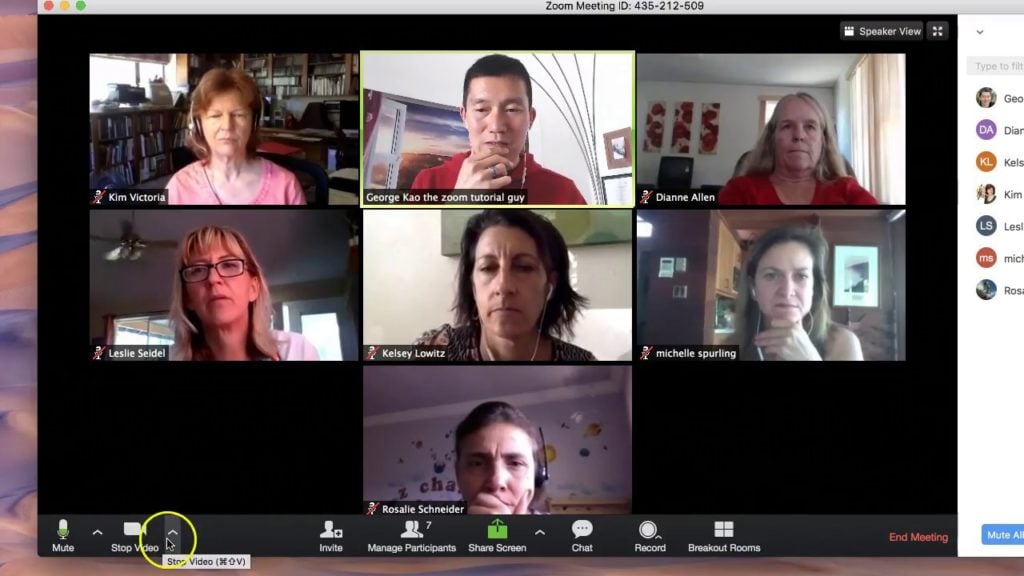
A remote meeting on Zoom Meetings.
Screenshot via YouTube.
Some of the coronavirus advice from art organizations applies
broadly, beyond the art world. If you feel sick, stay home, and
seek medical treatment if symptoms are serious. If you or someone
you are close with has traveled to affected countries—China, Iran,
South Korea, Italy, Japan, and Hong Kong—get tested for the
virus.
“I do know that members are closely watching the travel advisory
reports from the State Department related to the spread of the
Coronavirus and making decisions based on those reports,” Anagnos
added.
Of course, art professionals need to be adhering to the same
common sense practices that apply to everyone to prevent the
spread of disease. This includes properly washing your hands, not
touching your face, and respecting respiratory etiquette. Most
importantly, self-quarantine if you come into contact with a known
case of the virus.
As the number of cases in the US continues to rise, art
organizations around the country—and the world—need to be prepared
for potential outbreaks. Here are the biggest takeaways about what
they can do to preserve public health and mitigate the spread of
disease.
Good Housekeeping
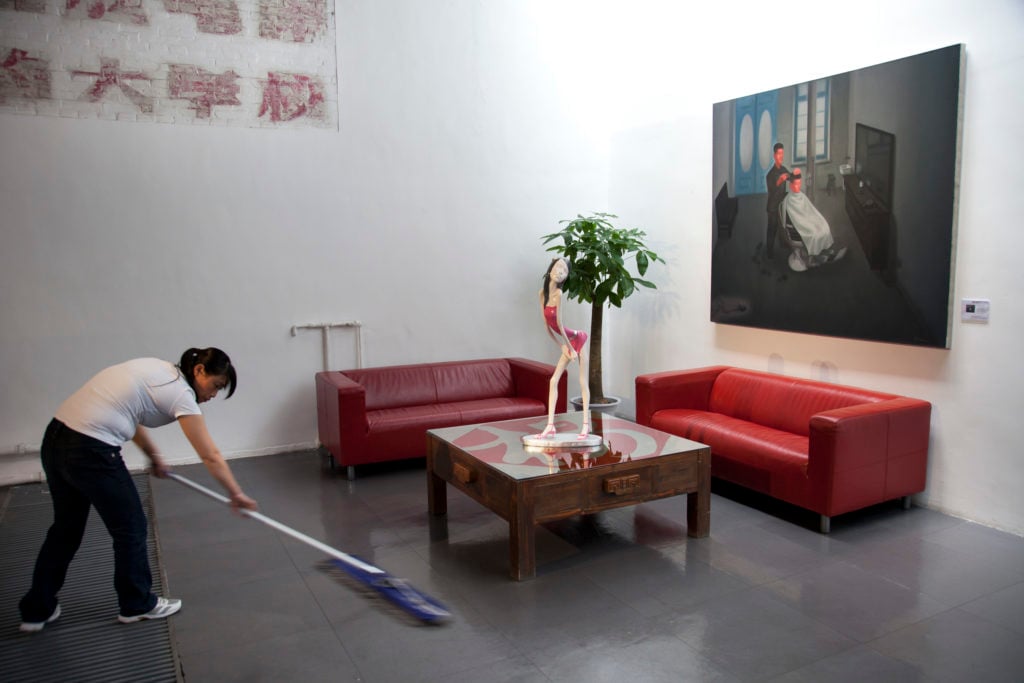
A cleaner washing the floor at 798 Art
Zone or Dashanzi Art District in Beijing. Photo by In Pictures
Ltd./Corbis via Getty Images.
Carry out routine environmental cleaning, including sanitizing
those less obvious surfaces that are frequently touched, such as
door handles, handrails, and audio guides. A Smithsonian
spokesperson assured Artnet News that “we have added hand
sanitizers throughout our museums, and our maintenance staff is
disinfecting surfaces regularly throughout the day.”
Consider changing out the filters in the institution’s HVAC
system if there is one. Make sure a trained conservator, who will
use cleaning products that will not harm the artwork, is taking
care of the collection.
Spread Information, Not Germs
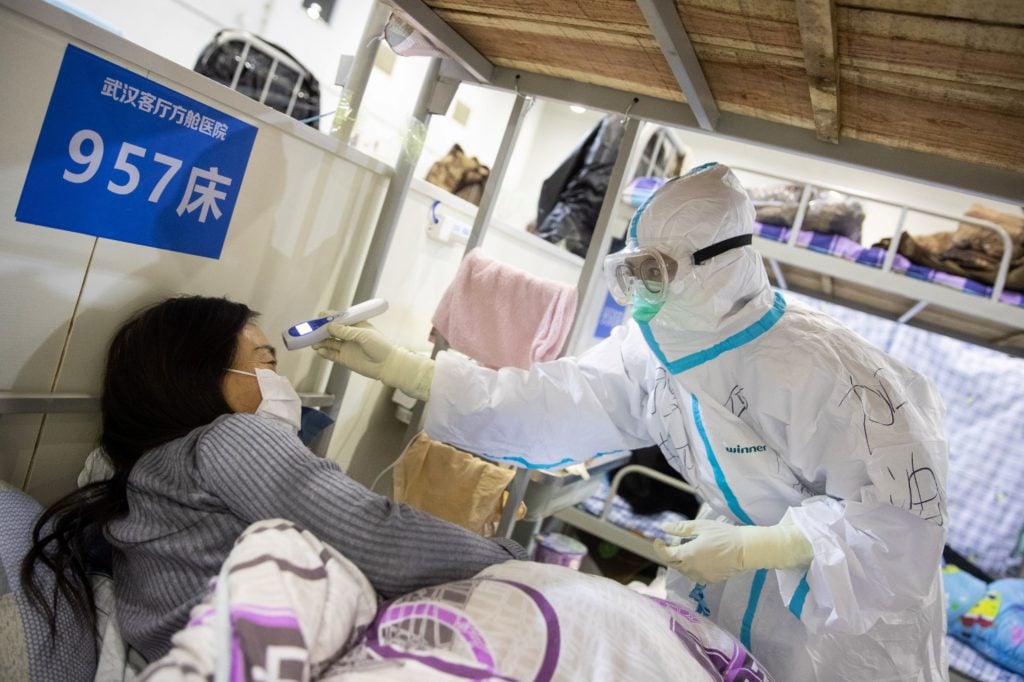
A medical staffer in China checking the
body temperature of a patient who has displayed mild symptoms of
the COVID-19 coronavirus, at an exhibition center converted into a
hospital in Wuhan. Photo by STR/AFP/China OUT via Getty Images.
As a trusted source of information, museums have a
responsibility to educate the public about the virus. The American
Alliance of Museums advises institutions that “it is better to
repeat facts and preventative measures than remain quiet.” So put
up signs advising people on how to avoid spreading the virus.
Where it makes sense, some museums might consider incorporating
coronavirus education into their programming. To counter the spread
of fake news about the disease, the Smithsonian is currently
staging an exhibition at the National Museum of Natural History,
“Outbreak: Epidemics in a
Connected World,” that aims to combat misinformation about
outbreaks.
Prepare to Be Shut Down
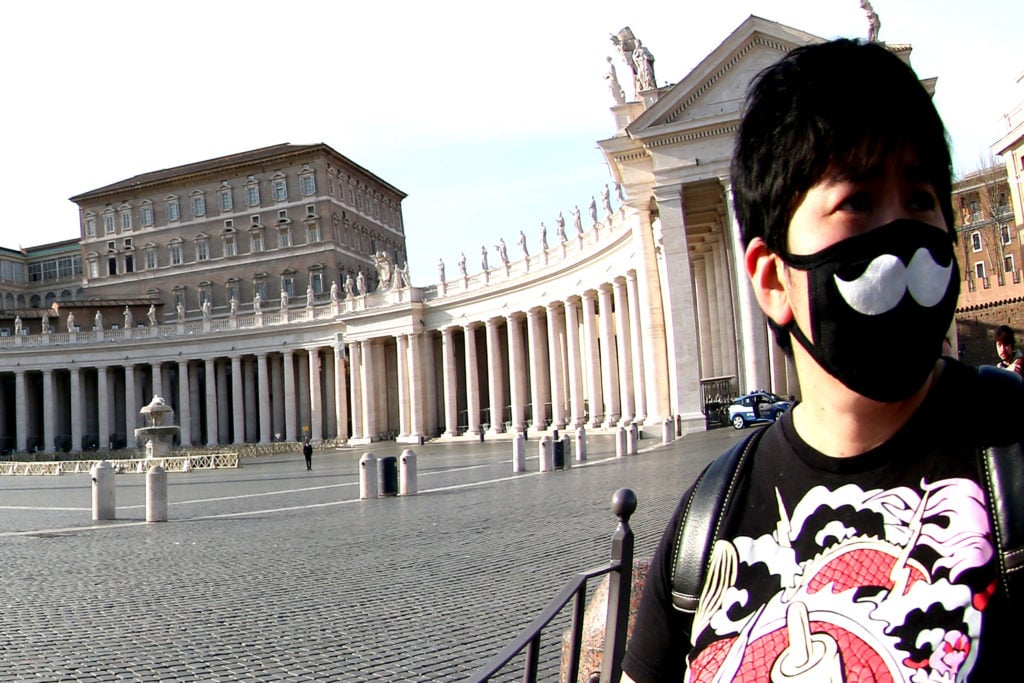
Tourists arrive at an empty and closed
St. Peter’s Square due to the Vatican authority decision of today
to close the Square to the all visitors on March 9, 2020. Photo by
Franco Origlia/Getty Images.
The virus has caused museums across China, South Korea, Japan,
and Italy to close their doors in the interest of public health. At
least one US institution, Seattle’s Henry Museum of Art,
has announced plans to close for three weeks, effective March 10,
and it seems inevitable that others will soon follow suit.
This is where it befits an institution to have an emergency
disaster plan in place that accounts for security and continued
employee compensation.
Expect to Take a Financial Hit

Zoë Buckman, Champ. Photo
courtesy of the artist.
Ahead of a forced closure, the American Alliance of Museums
suggests that museums draw up and look into expanding their
insurance policy. With event cancellation insurance policies, for
instance, you can buy an endorsement that covers communicable
diseases. (Hopefully something that Art Basel, Paris Photo New
York, and other cancelled fairs have fully explored.)
Nevertheless, for many art museums and galleries, closing
because of coronavirus could mean a substantial financial hit. The
Association of Women Art Directors suggests galleries consider what
revenue streams might dry up, and what resources a dealer has on
hand to get them through a lean time: “Facing this head-on and
making decisions now about where to prioritize (think: spending and
saving) is paramount.”
The Show Must Go On(Line)
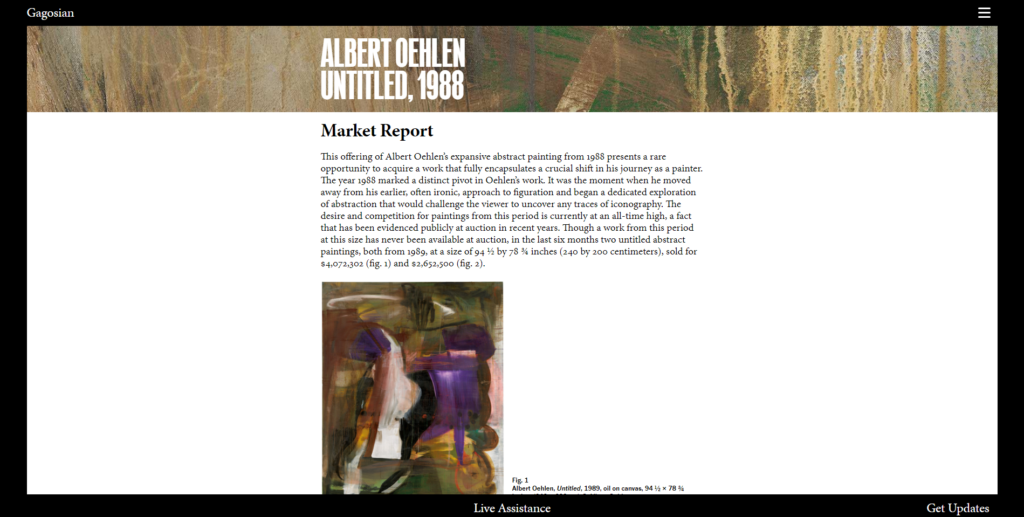
Screen capture of Gagosian’s third
online viewing room, devoted entirely to a single Albert Oehlen
painting.
Think of some creative ways to continue programming remotely. In
Italy, where the entire population of 60 million is on lockdown,
museums are rushing to
digitize their collections. In Hong Kong, the art world is coming
together to livestream gallery visits and artist talks, and
make content that is available online.
This doesn’t just apply to non-commercial endeavors: Art Basel has launched new
online “viewing rooms” in lieu of its Hong Kong fair, and
commercial galleries might think about doing the same. (David
Zwirner and Gagosian have been pioneers in this
space.)
Curators who are stuck working from home could be using this
time to research the landscape of digital art that is already out
there and educate visitors on it remotely. And even if the doors
are closed, you can still welcome audiences on social media, making
daily updates to share fun facts about the collection or building,
or engaging with the public in other ways.
The post 5 Things Art Businesses Should Do to Survive the
Coronavirus Pandemic, According to the Field’s Top Professional
Organizations appeared first on artnet News.
Further reading


Leave a comment