
7 Lessons From Art Dealers Who Survived Past Recessions on How to Navigate a Financial Downturn
The art world is bracing itself.
For weeks now, the speedy spread of the coronavirus has
exhausted health-care workers, forced people indoors, and killed
more than 45,000 people around the world. It’s also having its way
with the economy, with financial experts warning that the looming
recession may only just be beginning.
“I have never faced this sort of
challenge,” Los Angeles
dealer Nino Mier told Artnet News. “There are ups and downs
in any economy and after a pretty great run, one thing or another
would have derailed the momentum eventually.”
Although the current crisis doesn’t have a perfect precedent,
there have been economic headwinds in the recent past, most
notably during the 2008–09 Great Recession that battered industries
worldwide. We asked dealers around the world to reflect on that
crisis and others to offer their advice on how to survive what may
be a long and potentially painful period to come.
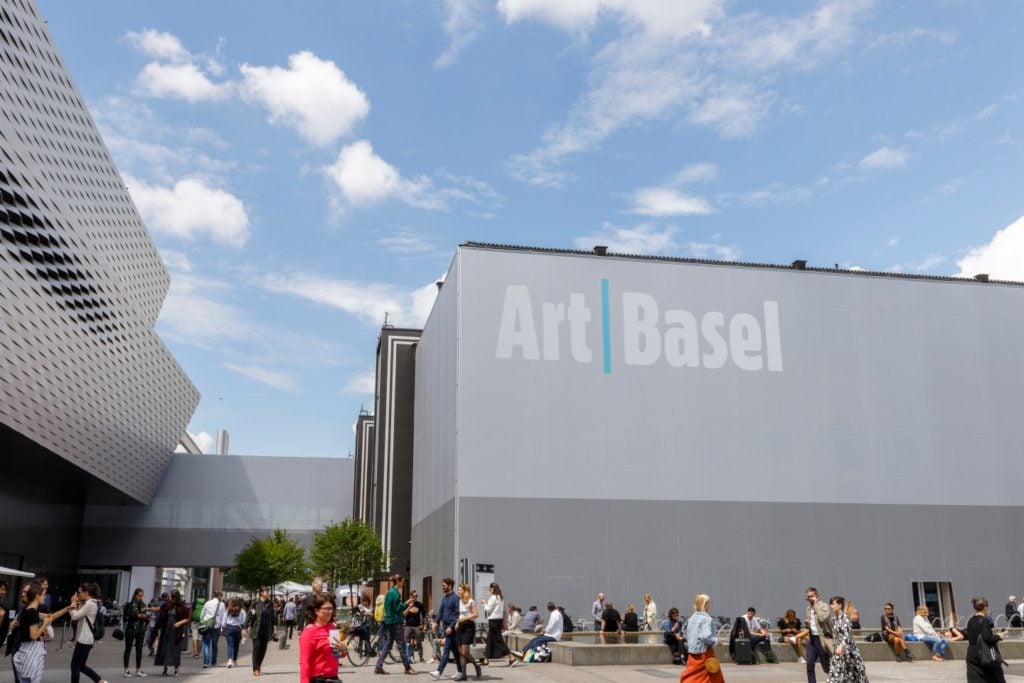
Crowds at Art Basel 2019. © Art
Basel.
Don’t Forget Your Community
One major lesson of the Great Recession? That the art market
isn’t just a cold economy.
“That moment taught me that we are not just an
industry, but a community,” says New York dealer Cristin Tierney.
“Deep connections are better than broad networks.”
Already in the past few weeks,
those at the top of the market have extended a helping
hand. David
Zwirner announced this week that he will be sharing his online
viewing rooms with a dozen smaller New York galleries.
(Hauser & Wirth, meanwhile,
will donate 10 percent of the profits from its online sales to the
World Health Organization’s efforts to fight the
coronavirus.)
But even dealers who are not in
a position to help others should keep lines of communications
open, Tierney says.
“Stay in close contact with your colleagues and
fellow professionals—dealers, gallerists, advisors, auction
specialists,” she says. “They are the ones who will get you through
this. They understand you, they will work with you to craft deals,
to creatively troubleshoot and share inventory. With longtime
colleagues you can share resources in every way.”
And more than ever, now is the time to get in touch with people
who have ideas unlike your own.
“One extraordinary quality that I think every good gallerist
possesses is the ability to connect with diverse groups of
people—artists, collectors, writers, curators, thinkers,
funders—from different places in the world, and with different
ideas about art,” says Candice Madey, who runs Stellar Projects in
New York.
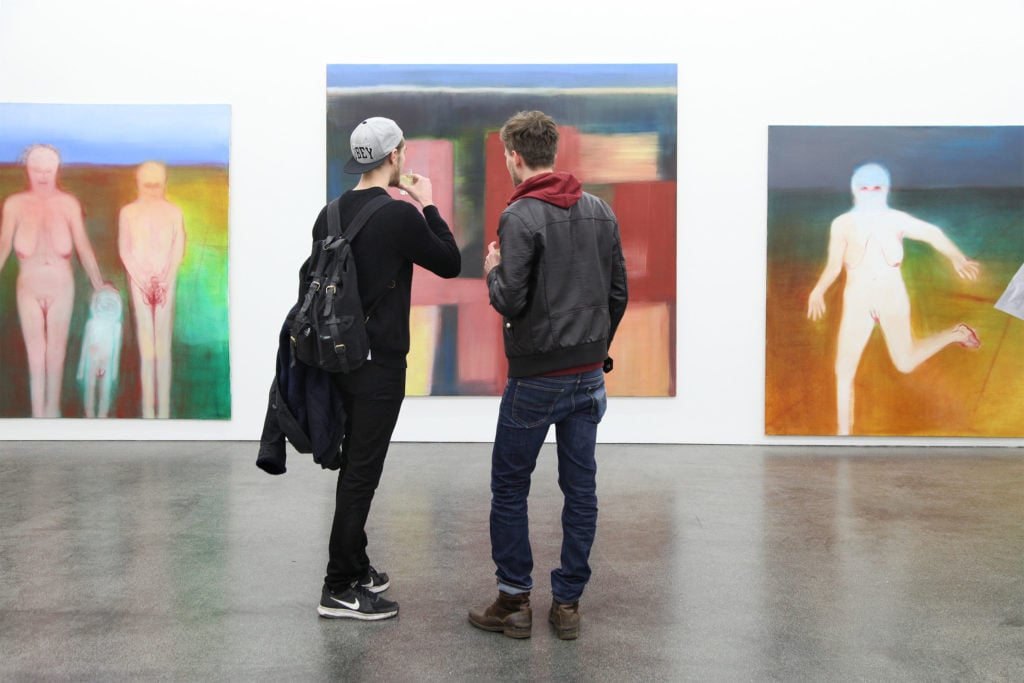
Visitors looking at works by Miriam Cahn
at Meyer Riegger Gallery at Berlin Gallery Weekend 2016. Photo
courtesy Berlin Gallery Weekend.
Focus on the Small Stuff
While New York dealer Joel
Mesler says he has “definitely heard of a lot of cancelled
invoices,” he says that real buyers are still going to
buy.
Collectors of artworks at lower price points (around $30,000 or
less) will still be willing to gamble “if dealers are set up
properly” with good online exhibitions and well-designed viewing
rooms. Mesler says he just
purchased two works from an exhibition that was about to open
online.
The same could prove true for
even more affordable sections of the market. Around the world,
emerging artists have pledged to buy works from one
another during the coronavirus crisis, suggesting that
online sales are ramping up at all levels of the art
market.
Know What Your Clients Want
In an economic downturn, it’s important for dealers to know
exactly what their clients want, and to offer works
accordingly.
“One needs to focus on offering
a substantial work by an artist to a collector with a known
interest,” says the German art dealer Barbara Gross.
“Right now, it is all about
matching the right client to the right artwork,” Tierney adds. “In
this climate, it often requires collaboration.”
Joel Mesler says that, with auctions around the world now being
postponed, these sales could set the tone in a way that public
sales will not be able to. “A
lot of collectors use the auction market as a kind of barometer of
a healthy market,” he says. Emerging sections of the market may now
fill that void.
"background:#FFF; border:0; border-radius:3px; box-shadow:0 0 1px 0 rgba(0,0,0,0.5),0 1px 10px 0 rgba(0,0,0,0.15); margin: 1px; max-width:500px; min-width:326px; padding:0; width:99.375%; width:-webkit-calc(100% - 2px); width:calc(100% - 2px);">
View this post on Instagram
Embrace Technology—But Be Creative
Selling from a JPEG is nothing
new. But almost overnight, online viewing rooms and sound social
media strategies have become essential for almost any art
business. Several collectors contacted by Artnet News
say they have collected works by new artists after being introduced
to them on Instagram, and the emergence of the virtual edition of Art Basel Hong
Kong and David Zwirner’s new
online platform are
indications that this is the new normal.
Other dealers are going a step further.
In Germany, dealer Johann
König has been offering live Instagram studio visits with some of
his most sought-after artists, including Alicja Kwade and Claudia
Comte, while fielding questions from the public.
“Interactivity is really
important,” he tells Artnet News. “I really believe that asking
people to come into a virtual gallery space will not get you as
far.”
He has even used the new platform to connect with new
artists.
“I met with an interesting
street artist and a South Korean artist recently,” he says. “There
are so many great artists out there and in times like this, we need
to open up. People buy art because they want to participate in
something and they want to live it.”
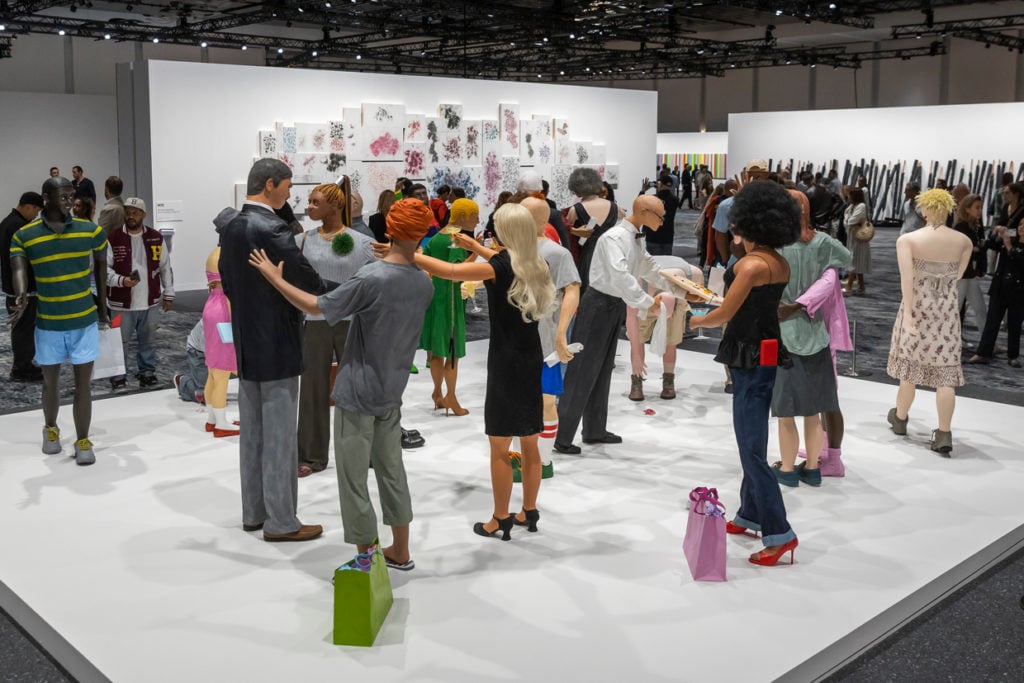
A view of Tom Friedman’s installation in
Art Basel Miami Beach’s Meridians sector, presented by Stephen
Friedman Gallery and Luhring Augustine. Photo: Courtesy of Art
Basel.
Don’t Be Afraid to Seek Assistance
In some countries—and in Germany especially—governments
have been rushing in to help
dealers and artists endure the fallout.
In the US, meanwhile, certain small businesses will benefit from
the government’s recently passed $2 trillion stimulus bill, which
includes loans packages.
“Presuming businesses are
willing to take on more debt to move forward, galleries will be
able to benefit from many of the programs being rolled out by the
federal and state government,” says New York dealer Rob
Dimin.
But Canice Madey says it’s
time for established collectors to organize a separate fund to
supply smaller dealers with other low-interest loan
options.
“There are so many things people
can and should do,” she says. “Even modest amounts of money will go
far for a small business.”
Still, consolidation—and
the closing of certain galleries—is likely inevitable.
“I do think a handful of
galleries will decide to close or merge or come up with a new
identity,” Dimin says.
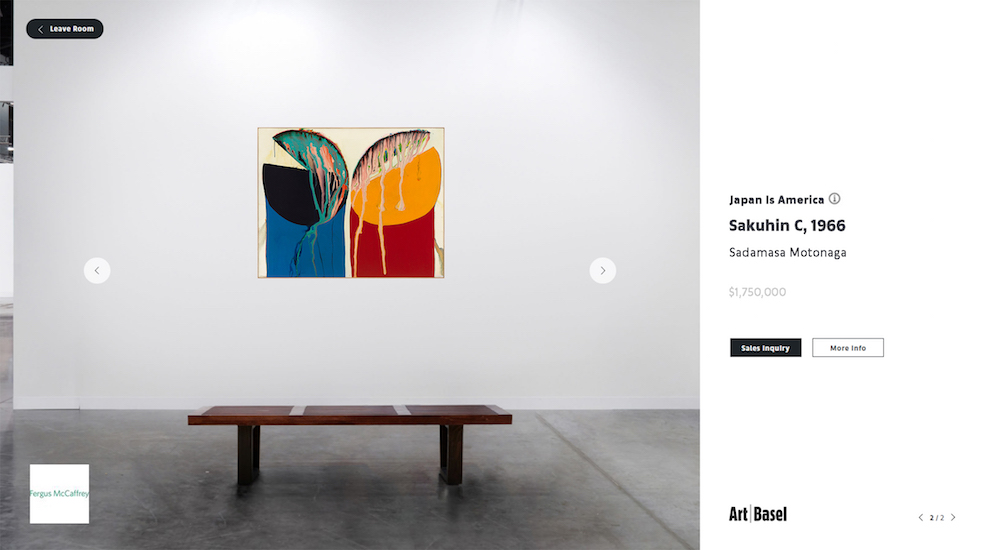
Art Basel’s online viewing rooms: Fergus
McCaffrey. Courtesy of the gallery.
Always Watch Your Overhead
Sure, it sounds obvious. But all
too often, business owners get distracted and forget to always keep
an eye on the bottom line, and to keep costs down as much as
possible.
“Nobody yet knows how the
current situation will further unfold,” the Berlin- and
Cologne-based dealers Saskia Nagel and Christian Draxler tell
Artnet News. “Take a
look at your bank account to see how long you can survive. Good
accountants are very helpful in difficult times.”
The dealers, who have run their gallery for more than 30 years,
say that advice helped them through financial crises in 1987, 2001, and 2008. They say they are
aiming to endure the current crisis without reducing
staff.
One way to keep down costs? Sharing space.
Candice Madey says her rent is
relatively low due to a rent-sharing program with the
architect Buro Koray Duman and the Metropolis Ensemble
orchestra.
“It’s a very different
scenario than if we were all galleries,” Madey says. “Our needs and
usages are different.”
But Remember: This Is Not 2008
The Great Recession that swept over the world economy a decade
ago impacted nearly every industry. But the blueprint to solving
that crisis doesn’t help us in every way today.
“I think the immediate shock of
everything halting at once is a fundamental difference from 2008,”
says Rob Dimin. “The crash in 2008 was a breakdown of the
financial system, and this is not that.”
And remember: it could always be worse. A representative from
the Tokyo-based Misako + Rosen
gallery, which was founded in 2006, says the gallery survived not
only the Great Recession, but also the 2011 Tōhoku earthquake
and tsunami.
“We are able to deal in times of
crisis.”
The post 7 Lessons From Art Dealers Who Survived Past
Recessions on How to Navigate a Financial Downturn appeared
first on artnet News.
Read more https://news.artnet.com/market/art-market-recession-lessons-1821945
Further reading


Leave a comment