
UCCA Director Philip Tinari on Why 2019 Was the Perfect Time to Bring the First Major Picasso Exhibition to China
If this year’s escalating trade war between China and
the United States is cause for pessimism about the outlook for
East-West relations, some hope can be found in the fact that
steadily growing avenues of cultural interchange are continuing to
knit our societies closer together, even if the pace can seem
glacially slow. Case in point: this summer, the first major museum
survey of Pablo Picasso to come to China has been taking place at
Beijing’s UCCA Center for Contemporary Art.
The show—now entering its final week—has been a
staggering success. Titled “Picasso – Birth of a Genius,” it has
welcomed more than 260,000 visitors since opening in June, making
it the most popular exhibition in UCCA’s 12-year history. It has
also served to inaugurate a new chapter in Beijing’s museum
culture. Organized in partnership with France’s Musée national
Picasso-Paris, the state-owned museum that lent both the works and
the curatorial services of its head of collections, Emilia
Philippot, the show flexes the muscles of UCCA’s newly upgraded
building, which was renovated earlier this year by Rem
Koolhaas’s OMA firm into a world-class exhibition space.
All of this, both the show and the makeover, are owed
to the vision of UCCA director Philip Tinari. Having led the
institution through a period of turmoil following Swiss collectors
Guy and Myriam Ullens’s decision to put the museum they
founded up for sale in 2016, Tinari—the Philadelphia-born
former editor of Leap magazine who is known for his
exceptional Mandarin and deft politesse alike—is making a bold
declaration about UCCA’s future ambition with the survey. It will
be hard to follow, but he will have to.
To better understand the significance of presenting
the biggest Picasso show in China’s history—the last one, timed to
a visit by Franćois Mitterrand in 1938, was a mere quarter of the
size—artnet News’s Andrew Goldstein spoke to Tinari about why he
decided to do the show, what it means, and why it almost didn’t
happen. This is the first part of a two-part interview.
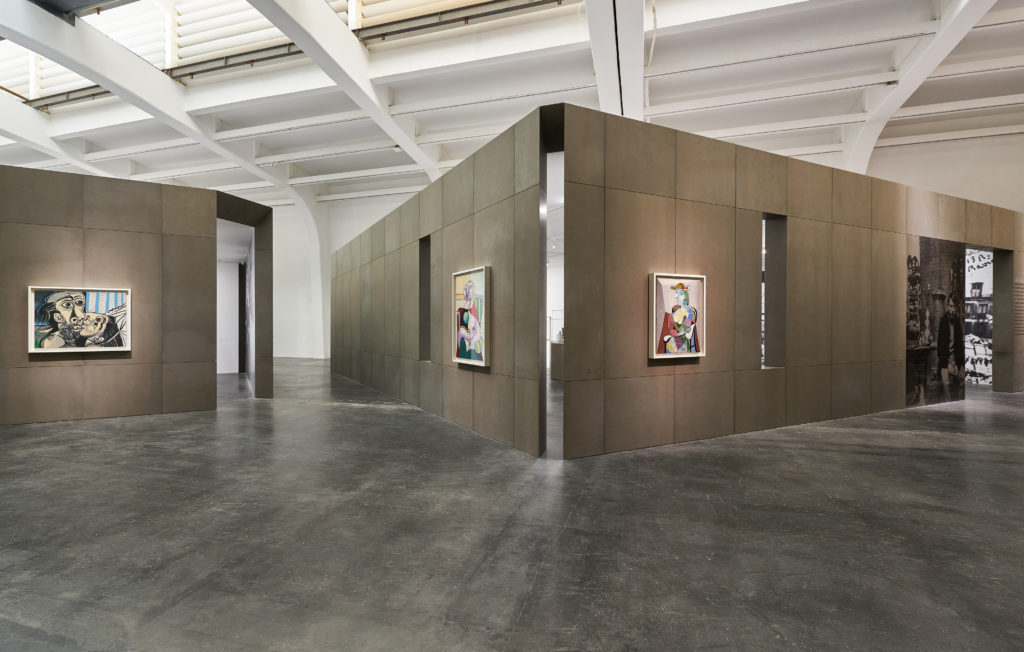
An installation view of the UCCA’s
Picasso exhibition. Photo courtesy of the UCCA.
Why did you find it important to bring Picasso to
China in the first major exhibition in the country?
There are very few figures art-historical figures who
are household names in China, and he’s definitely one of them. So
part of what drew me to the show is the historical project of
presenting the work with integrity and a compelling narrative
that’s educational and enlightening for people. Another part of it
was to make a statement about who we are as an institution, and the
growth that has happened over these last few years since our
restructuring. It seemed like an emblematic project to announce a
new era at UCCA, allowing us to unveil our internal development and
upgrades and also to engage whole new kinds of audiences who
previously didn’t really what UCCA was about.
So you saw the show as a way to reintroduce UCCA
to people, and to declare what kind of institution it will
be.
Yes, exactly. The renovation was building up to this
show, in a way. In terms of leading this organization, I find it
useful to have key milestones to aim for that help chart the
course, and this was definitely one of those—it’s something very
easy for the public and also for our stakeholders and colleagues to
understand, since we hadn’t really been engaged in Modern art
before. I had only done a small Duchamp show in 2013, called
“Duchamp and/or/in China,” which basically revolved around the
Boite-en-valise and other multiples, but that was it.
We had always been much more of a non-collecting
institution of living artists, so to go in this direction is a big
change. Whenever I talk to the Chinese media about the show, this
is always the first question: “You guys are contemporary art, but
this is Modern art.” The thing you have to realize, though, is that
it’s not like there’s a surfeit of institutions doing great Modern
programming in China. There just aren’t. Also, it’s interesting to
be able to do a show of an artist like Picasso in a space like
ours—a kind of cavernous post-industrial hall—as opposed to, say,
the Musée d’Orsay or the Fondation Beyeler. It’s a very different
kind of experience, and it brings something different to the
work.
Well, they say that a classic is news that stays
news.
It’s true. We have about 10 of the same pieces that
were in the d’Orsay show and the Beyeler show, and then into our
show, and Laurent Le Bon, the director of the Picasso Museum, was
saying how if you put the work in the d’Orsay then Picasso looks
like a 19th-century artist, but if you put him in a space like ours
he starts to look very contemporary. In any case, this has been an
amazing learning experience for us to see how well people have
responded, and how
excited they are about having a show like this brought to their
doorstep.
Funny enough, the exhibition almost didn’t reach
their doorstep. Why was it so difficult to get the show’s artworks
through customs to enter China?
Well, the policy is that anytime you temporarily
import works of art, you’re supposed to basically guarantee the
tariffs [that you would have to pay were you to sell the work] by
leaving enough money to cover the import taxes with customs for the
duration that the work is in the country. For normal shows that’s
not really an issue, because it’s based on insurance value and, in
the end, shippers essentially have these financial products that
cover this—they have money with customs constantly, so just pay the
interest on that money for the period you need to guarantee. So for
more straightforward shows with contemporary artists, it’s usually
easy—but this was a whole other level in terms of valuation.
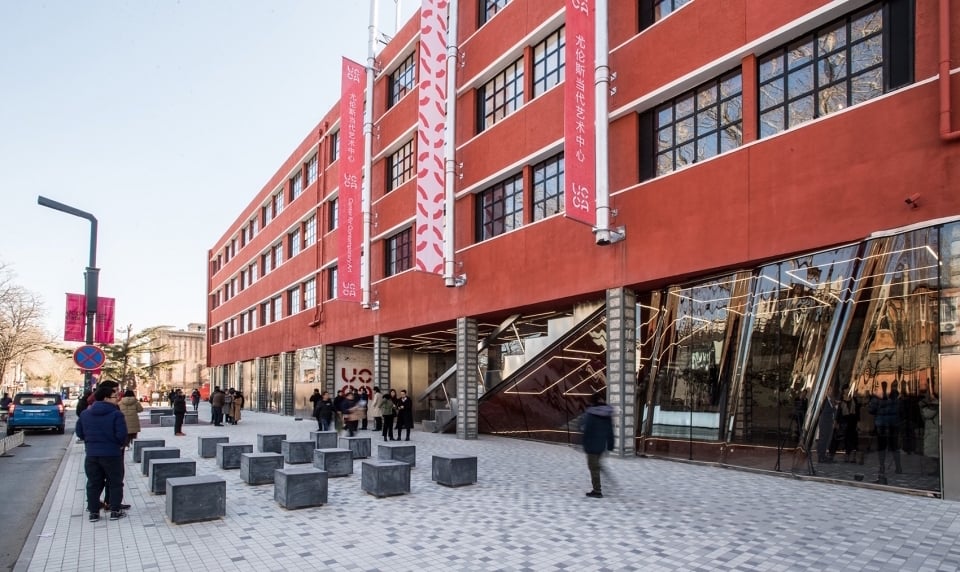
The new facade of UCCA Center for
Contemporary Art in Beijing. Image courtesy of Office for
Metropolitan Architecture, photo by Bian Jie.
How much did customs want you to
guarantee?
They wanted €200 million for the deposit, and you
can’t really borrow that amount of money—it’s just not a
comprehensible figure for us. So we needed to get it waived, and
fortunately the Chinese and the French state were able come to
terms on this, basically because the French ambassador raised the
issue in meetings with his Chinese counterparts. The complexity was
that although the works belong to a state collection, we are not a
state museum, even though we’re an accredited museum. So it just
required people in the Chinese bureaucracy to go out on a bit of a
limb, which they did.
So it’s not as if the Chinese state was trying to
block the show—in fact, they had to take political action to make
it possible.
Exactly.
So, in a Western context, it’s likely that your
average person walking into a Picasso show will know a few things
about him: that he was a genius who painted people’s noses in funny
places, that his artworks have become incredibly expensive, that he
was a domineering womanizer, and that he was a squat, bald man who
wore a striped white-and-blue shirt. They would know these things
just from being immersed in mainstream culture. What kind of
familiarity with Picasso does your average Chinese museum-goer
bring to the show?
There are a couple layers to that, going back to when
Picasso was alive and news of his work was being transmitted to
China via Chinese artists who were studying in Paris. We forget
that oil painting in China only has 100-plus years of history,
beginning when a generation of artists was going to Japan and Paris
to study painting in the early 20th century, and the knowledge they
gathered was being disseminated through a thriving culture of art
publications, specifically in Shanghai at the time. News of Cubism
was also reaching China, where it led to the same kinds of confused
parodies that you had in America and even in France, where you
would people joking, “What is this Cubism? It doesn’t make any
sense!”
Picasso’s reputation in China changed after he joined
the French Communist Party in 1944 and then painted a dove that
became a kind of logo for an international peace summit in Paris in
1949. The People’s Republic of China very much sees itself as part
of this post-World War II anti-fascist new world order, so whenever
he painted one of these doves—and there were several editions—the
People’s Daily always ran them on the front page. He was embraced
as comrade Picasso, and the China government even sent a delegation
to visit him and present him with a gift. That changed again during
the Cultural Revolution, when he was critiqued as being too
bourgeois, but then by 1983 he received his first exhibition in
China, and he definitely loomed large for all the artists in the
Stars and the groups of early contemporary artists in China.
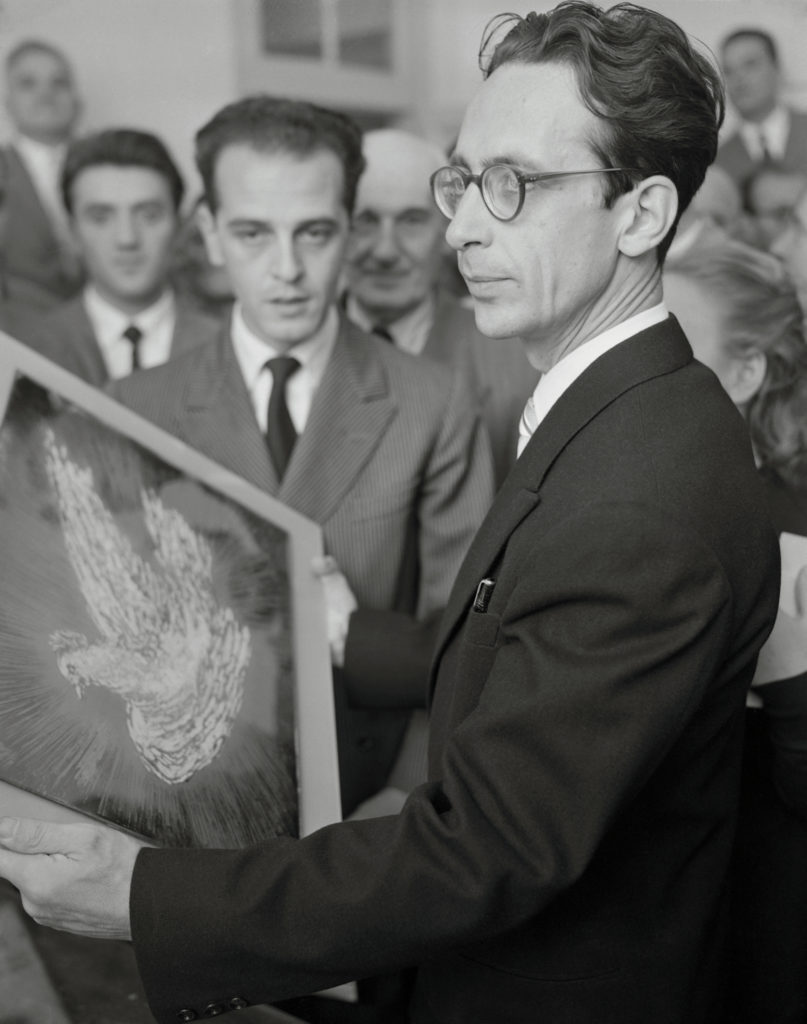
A panel with one of Picasso’s doves of
peace as seen during a presentation of the Stalin Peace Prize in
Rome’s Partisans of Peace Headquarters. (Courtesy of Getty
Image/Bettmann/Contributor)
What specifically made his work fall out of favor
during the Cultural Revolution?
Well, in the Cultural Revolution all foreign culture
was off the table. But even before that there were some issues with
him. At the time, all these Chinese artists were trying to square
the circle of how to understand Picasso. They knew he was a member
of the Communist party, but where in his work was there a basis for
seeing him as truly a friend of the people? They came down to the
one piece, The Frugal Repast, which you could read in this
almost socialist-realist vein of depicting the suffering of the
poor. But it was pretty hard for them to make this case
compellingly, because very little of Picasso’s other work has
socialist themes. None of it has socialist themes, really.
Even so, at least a few Chinese artists seemed to
pick up the cubist style, as I was surprised to see in your show’s
fascinating catalog. Was that a brief experimental moment, or did
the seeds of cubism actually take root in China in a meaningful
way?
I don’t think it was that meaningful. Fifteen years
ago a Japanese scholar did a show called “Cubism in Asia” that
looked at the parallel trajectories of cubism’s influence in Japan
and Korea and China. But compared to Fluxus, which later on became
first global art movement, the contexts were still too disparate.
What you definitely had was Zhang Daqian, one of the key Chinese
painters of the 20th century, Qi Baishi, another major figure in
the Modern market, taking inspiration from Picasso on a very
personal level, partly because of his actual work but more just in
terms of his persona of the greatest living artist. They both saw
themselves as Picasso of the East. There are some great pictures of
Zhang Daqian, in his robes and his beard, going to visit Picasso in
the South of France.
In the catalogue, you write that “Picasso’s
evolution, like that of China itself, compares to ’crossing the
river by feeling the stones’”—which was Deng Xiaoping’s famous
metaphor for China’s development. Elsewhere in the catalogue, it
says of Picasso that “among all Western artists, his trajectory in
China hewed closest to the radical changes that the country
underwent.” How so?
Well, it’s like I was saying—because he was so famous
and so well documented in China across these different historical
moments, you can tell a story about Picasso and China that actually
ends up being a story about China in the 20th century, from the
initial moment of openness in the ‘20s and ‘30s when people
discovered him to the time of the Cultural Revolution when people
forgot to the kind of re-engagement that happened after the country
opened up again in a time of reform.
So it’s interesting and yet it’s also kind of
axiomatic, in a way. We decided not to tell that story in the show,
to instead let the art speak for itself and address these themes in
the catalog and exhibition programming.
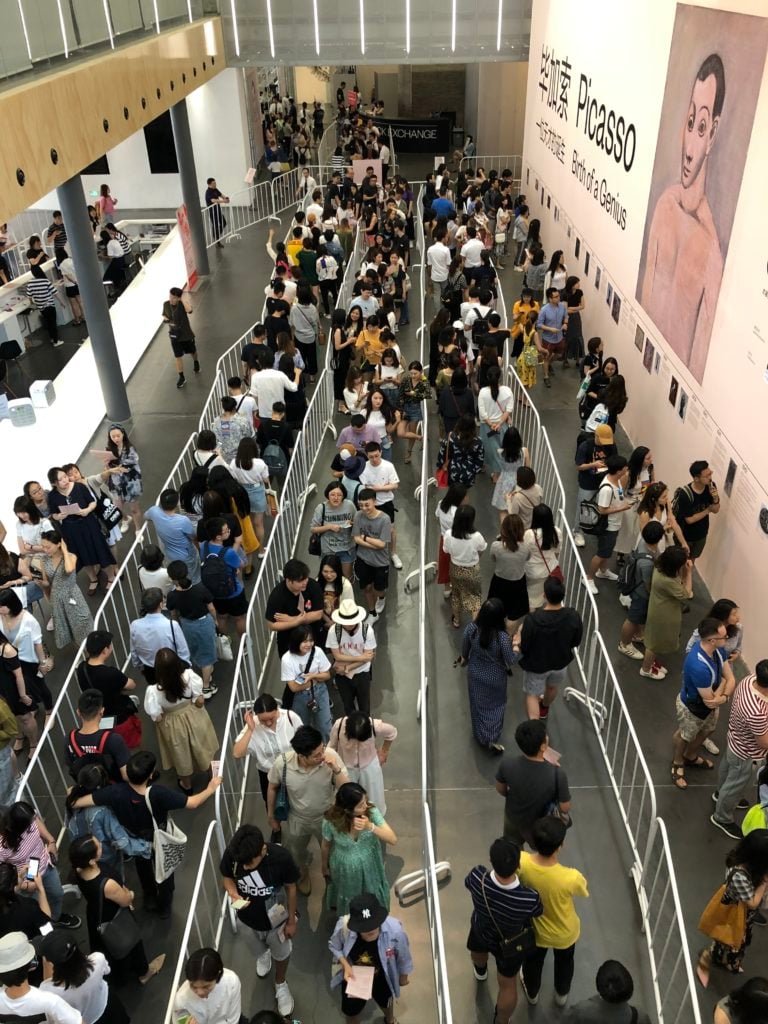
Crowds waiting in line for the UCCA’s
Picasso survey. Courtesy UCCA.
You also wrote that this exhibition was “curated
specifically for this context.” What does it mean to curate a
Picasso show specifically for a Chinese audience?
For example, I’m not sure “Picasso: Birth of a
Genius” is a title you would use in New York today. A lot of
people, of course, have raised questions about what genius is and
how genius is constructed and whether it contains biases of class,
race, gender, and other things. At the same time, it’s been very
useful to frame this show around how Picasso became Picasso, and
what made him who he was, a figure constantly full of new great
ideas. I think that has been really inspiring to our public,
because there’s such a focus in the public discourse on innovation,
creativity, and having new ideas as a way of maybe compensating for
a shortage of these things in the past.
We actually made these little lapel pins that say
“genius” in Chinese. It’s a funny word in Chinese, because it’s not
quite as loaded—the literal translation would essentially be “one
who has gifts from heaven,” who is naturally gifted. These pins
have especially been popular with parents and kids, because the
show starts with pieces from when Picasso is very young, only 12 or
so. It’s a way of talking about human potential and achievement and
these kinds of more educational themes that I think people really
respond well to.
Of course, Picasso received stringent academic
training when he was a kid—he could famously draw like Ingres when
he was a young teenager—before taking a more avant-garde
path.
Yes, and that whole idea that if you want to break
the rules you have to master them first kind resonates, because the
academic painting tradition is so very alive in China right now—you
have huge art academies that still run on that kind of pedagogy—so
to see someone coming to terms with it and then moving beyond it is
inspiring. In fact, it may be relevant here in a way that it isn’t
elsewhere anymore.
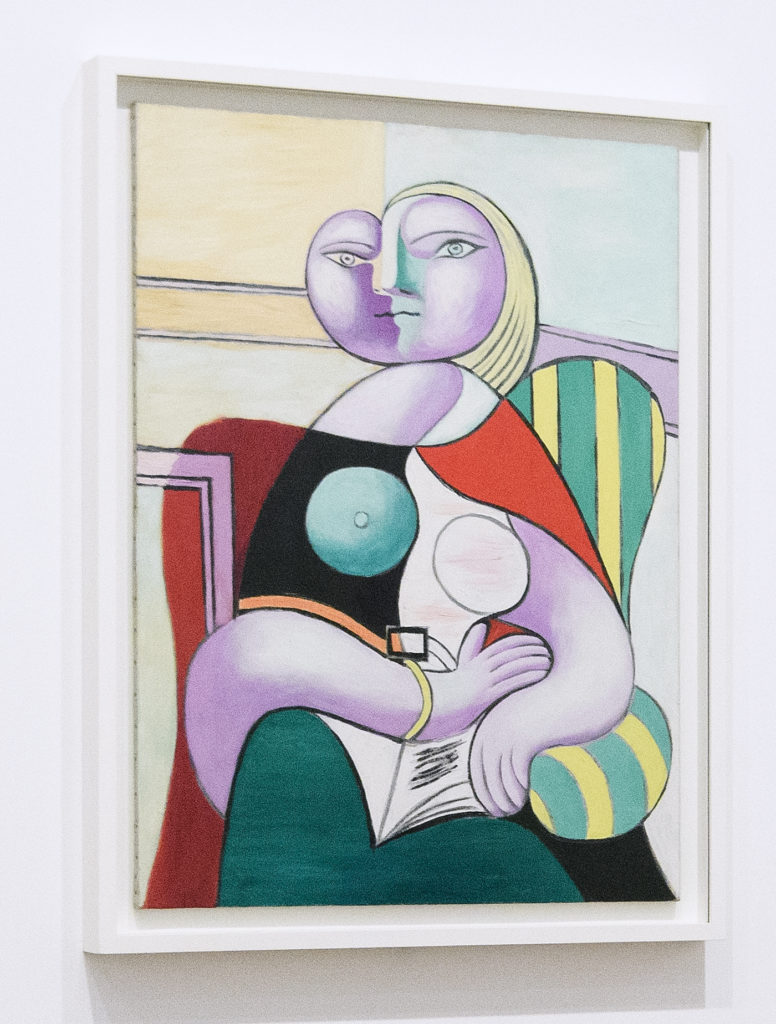
Pablo Picasso’s Reading, 1932.
(Photo by Leon Neal/Getty Images)
Going back to the idea it was hard to find
socialist themes in Picasso’s art, you could argue that the actual
predominant theme in Picasso’s work, aside from artistic genius, is
erotics. Despite that, it appears there’s only one slightly sexy
Picasso in the show, Reading from 1932, which shows
Marie-Therese Walter with a book suggestively open between her
legs. Are there sensitivities in China around showing this more
sexual side of Picasso, with his abundant nudes?
I think there is a version of that story that people
know in China as well. There are a lot of questions about his
romantic involvements, but this is where it’s good that the
curator, Emilia Philippot, who is the head of collections at the
Musée Picasso, knows the life and the work intimately. She’s fairly
resolutely in the anti-biographical camp, however, so she tried to
curate the show more around visual resonances and historical
references and these kinds of things.
There are tons of pictures of him in the show. That’s
always one funny reaction that international visitors have—it’s
like they’ve never been in a show with this many pictures of the
artist—but that was an exhibition-design decision as much as
anything else. Each section is a collection of work that kind of
covers a period, so the second section is about his early mature
style and first years in Paris, starting with his Blue Period
Self-Portrait, which is probably one of the most famous
pieces in the show, and ending with a bit about the summer of 1906
that he spent in Gosol, a town in the Pyrenees, that is the sequel
to a whole other section about also Les Demoiselles
d’Avignon and the beginning of Cubism. It evolves like that, so
even for Picasso aficionados I think it would be an interesting
show to explore. And the exhibition design is really wonderful—to
be in this big cavernous nave and then to have these five rooms
with sight lines and adjacencies and windows that create new sight
lines and adjacencies is a special thing.
I saw the show includes one of Picasso’s portraits
of his friend Casagemas, whose suicide after being spurned by a
woman prompted the Blue Period. When I saw the Picasso show at the
Beyeler in June, I noticed an extraordinary Casagemas painting I
had never seen before, an incredibly profane version of the
Assumption where his friend is seen to rise from his grave and
ascend to heaven, only instead of finding angels awaiting him he is
surrounded by beckoning naked women. Would that kind of painting be
hard to show in China? Did the sexual content of the exhibition
have to be toned down?
All I can say is our checklist of artworks was
prepared by the curator in line with her concept and vision, and it
came through totally unscathed. Granted, in the d’Orsay show there
is a whole section of really erotic work, which is not in this
show. It’s hard to speculate here, because we didn’t have any
issues, but, then again, that’s not to say that every single piece
would have been fine.
The second half of this interview, to be published tomorrow,
will delve into the extraordinary opportunities for art that the
success of “Picasso – Birth of a Genius” makes possible.
The post UCCA Director Philip Tinari on Why 2019 Was the
Perfect Time to Bring the First Major Picasso Exhibition to
China appeared first on artnet News.
Read more https://news.artnet.com/the-big-interview/philip-tinari-interview-on-picasso-in-china-part-1-1634590
Further reading


Leave a comment