
UCCA Director Philip Tinari on Why China’s First Big Picasso Show Could Inaugurate a New Era of Museum Blockbusters
Ever since “Treasures of Tutankhamun” became the
first blockbuster museum show, drawing mile-long lines when it
toured to the Metropolitan Museum of Art in 1978, museum directors
have been ravenous for exhibitions capable of replicating its
phenomenal success. Luckily for them, there is a tried-and-true
formula for begetting blockbusters: find an impressively
encompassing group of works relating to an artist or historical
figure with kitchen-table name recognition—and, ideally, an
operatic biography—and bring it to your institution from a distant
land. Oh, and make sure it has a modicum of novelty. There is a
refractory period that must be observed before trotting out yet
another Picasso show to the same audience.
Now imagine there was a land, full of people
interested in art, that hasn’t had a major Frida Kahlo show. Or a
Basquiat show. Or a Magritte show. Or even a Picasso show. That was
the situation in China, until Beijing’s UCCA Center for
Contemporary Art rolled out a sprawling Picasso survey this summer,
unleashing more than a hundred historic works by that paradigmatic
Western artist upon an audience that had never seen such an array
in their home city—and who, more or less predictably, lined up in
droves to buy tickets.
The success of “Picasso – Birth of a Genius,” which
UCCA director Philip Tinari brought to Beijing from France’s Musée
national Picasso-Paris, is a milestone in the history of Western
art in China, and suggests a heady future for exhibitions in the
country that are able to import significant work by the West’s
murderer’s row of famous and extraordinarily well-branded historic
artists. In the second half of a two-part
interview, artnet News’s Andrew Goldstein spoke to Tinari about
why his Picasso show worked out so well, and where things go from
here.
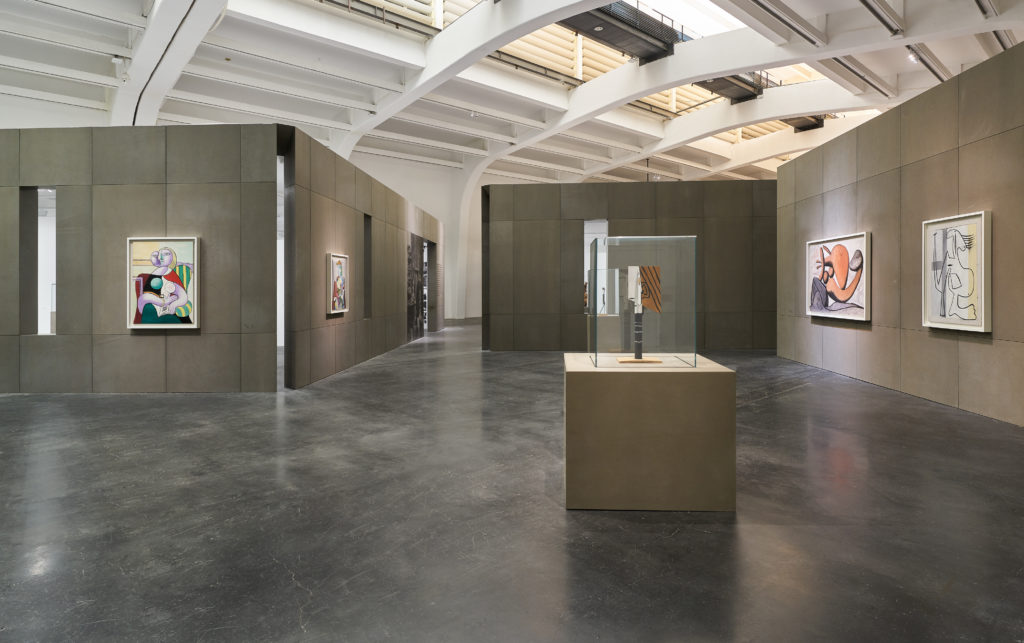
An installation view of the UCCA’s
Picasso exhibition. Photo courtesy of the UCCA.
What has the reception been like? Have there been
any pronouncements from critics or think pieces about what the show
means?
A little bit. One painter, Chen Danqing, wrote a
piece about his relationship to Picasso that was not really
critical, but asked a lot of questions about how we decide what is
valuable and so forth. We’ve been able to play it straight in a
way, because the biggest selling point of the show is that these
are real works of art—that they’re authentic Picassos, and that
there are so many of them. Most of our posters just say, like, “103
Real Works by Picasso.”
Is that so rare for a museum exhibition, to have
real artworks from abroad?
A little bit, because you have a lot of rather
unscrupulous exhibition-making where you have these multimedia
immersive extravaganzas—there’s a Van Gogh multimedia experience at
the National Museum of China at the same time as our show. For me,
and for us as an institution, we’re on the side of offering
something that’s more educational than pure spectacle. So a lot of
the reaction we’ve been getting centers on the joy of looking at
actual objects close up. We were careful to put few obstacles
between the viewers and the works. It can get crowded in there
sometimes, and of course there’s adequate security, but it gives
people a chance to really look. So many of the posts that people
have been putting on social media are just endless scrolls of
details—it’s really about visual pleasure.
Often in Chinese museums I’ve noticed signs all
over the place that say “do not touch.” Is that not
necessary?
It’s not really necessary. We have lines to get close
to the artworks, and there are beeping proximity sensors for some
pieces, but it’s mostly just manual security. A big burden for the
show was finding four or five times as much security as we normally
would have, but it makes for a fairly positive experience.
The other funny phenomenon that we never had before
is that unaffiliated tour guides have been selling their services
on travel websites and leading groups on their own. It’s not
something we anticipated, and, as much as people think of China as
sort of repressive, these ordinary consumers have plenty of rights.
It’s not really possible for us to suddenly say that you can’t give
a tour.
Speaking of tours, you engaged a Chinese pop star
to provide an audio tour for the show. Who is he, and how did that
come about?
We engaged a number of different celebrity-type
figures to promote the show. We have one movie actress who’s the
spokesperson for our family programming, because that’s a target
demographic for us. And then the pop star is KUN, or Cai Xukun. His
fan base is really young—they’re basically tweens and teens—but
he’s come to our shows before and wants to be seen as engaging more
with art. He’s not collecting yet, but who knows.
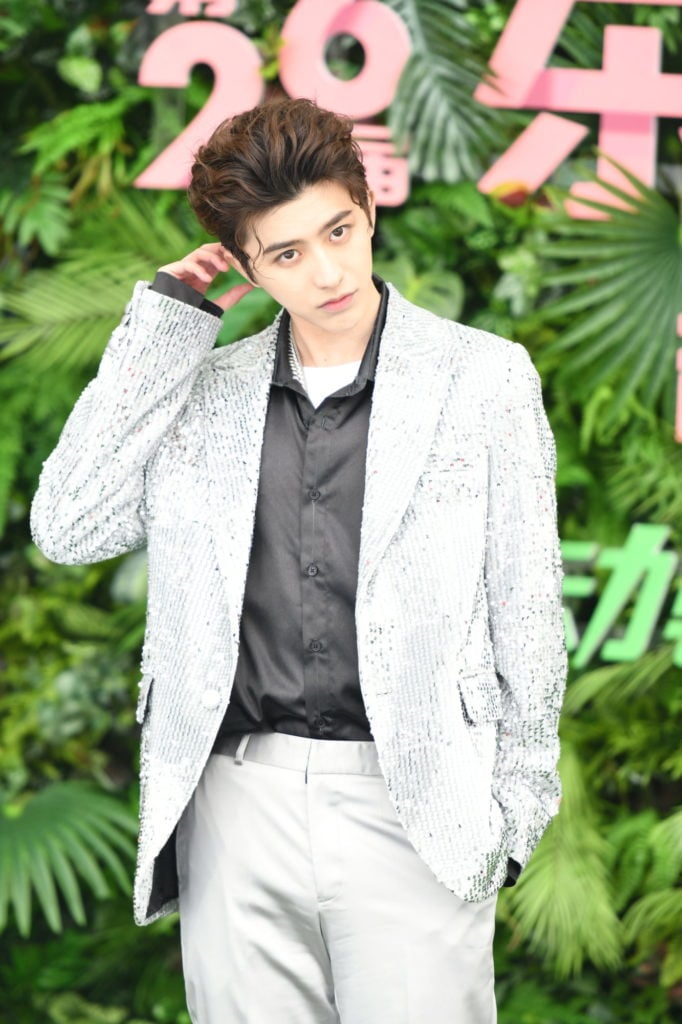
Singer Cai Xukun of boy group Nine
Percent poses on the red carpet of the 26th ERC Chinese Top Ten
Awards on March 25, 2019 in Shanghai. (Photo by Visual China Group
via Getty Images/Visual China Group via Getty Images)
How did he craft his tour?
We actually just had him read our script. I don’t
think he’s quite ready to engage on his own yet.
So the response has been really positive. You said
it’s rare to have a Modern show like this in China, but here in New
York, it’s pretty much the bread and butter of museums. Is that a
direction you want to venture into further?
I think there’s definitely space for Modern shows and
for other blockbuster exhibitions that have serious historical
content but also broad appeal. So I do see us doing more shows like
this, especially during the summer, when the school holidays are
abbreviated and the humidity levels are more consistent. I’ve been
running around trying to line some more up, though nothing is quite
public yet.
There was a major Cindy Sherman survey at the
Fosun Foundation in Shanghai a year ago, and I thought that was an
interesting choice because, while she is a famous and important
artist, her self-portraits essentially consist of images of a white
woman taking on various roles. There was a study recently by students a
Yale’s medical school that suggested that when people enter a space
filled with portraits that don’t look like them, they feel
unwelcome. Is this an issue for shows of Western art in China—the
fact that so much of it centers on white people? Picasso’s
portraits are obviously much more abstracted, but was that
something you considered?
With Picasso, it goes down to line, to mythology, and
to these scene-setting devices we created in the show. But we do
think about how not to make things too exotic or too foreign for
the audience.
It would seem, based on the success of your
exhibition, that these kinds of shows of classic Western art could
be fertile ground for future blockbusters. Where do you want to go
next?
I would love to do shows that tell the stories of the
collections of some great museums of the world. I think there’s a
lot of hunger for that right now, and that’s a way to represent
many different artists under one concept. They don’t all
necessarily have to be Modern. I think there are some great shows
to be done around Pop, around the ‘80s. You have to understand, so
many of the key figures have never really been shown in China.
There hasn’t been a real Matisse show. There hasn’t been a real
show of Magritte.
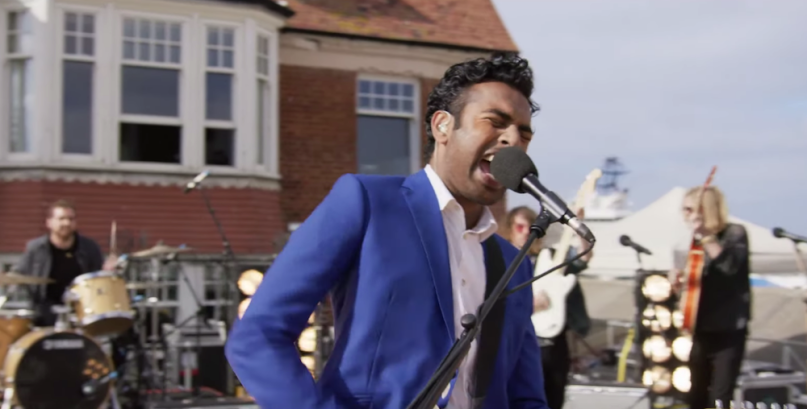
A scene from Danny Boyle’s movie
<emYesterday. Courtesy of Universal.
What you’re saying reminds me about this new
movie, Yesterday, where this guy gets into a car accident
during this freak lightening storm and, when he wakes up, everybody
in the world has forgotten about the Beatles except for him. So he
starts singing Beatles songs from memory, and everybody’s like,
“How are you such a genius? This is the greatest music I’ve ever
heard.” It’s amazing to think of China as a place where all the
obvious blockbusters haven’t been done before, where they wouldn’t
be boring or tired or old hat. I mean, a Magritte show? That would
just seem like a slam dunk.
Let’s not give everybody else the idea. I definitely
think it’s a compelling addition to our remit. To be totally
honest, these kinds of historical shows could go a long way in
terms of the financial sustainability of an institution. We’re
light enough that a show with a big ticketing draw actually can
help a lot. This Picasso show has basically made back its costs and
also can help us fund other things. You do have to be a little
careful about the way these kinds of shows can be addictive, but
there’s a lot to be done.
An interesting twist to this, too, comes down to the
role of private museums—even though I’ve never liked the term
“private museum” in relation to UCCA, because it sounds like a
place that displays someone’s private collection, which we are not.
We’re privately chartered, but we’re very much geared to function
as a public art institution in that we are centered on our public.
On the other hand, the international exhibitions that come to the
state museums tend to be organized more out of diplomatic
considerations, like the anniversary of the founding of relations
between China and country X.
The state institutions are not generally programming
with the viewers at the front of their thinking. When people come
to our shows, they get a show that was created for them. That’s
going to be our differentiating element.
How have contemporary artists in Beijing been
engaging with the show? Do you think all these Picasso works could
have an impact on art being made in China?
We’ve done a lot to engage the artist community, with
multiple artist nights where we invite them to see the show. But
I’m not sure we’ll know that right away. You have to hope that it’s
still possible to do the kind of programming that leaves a mark,
and that becomes part of the collective memory and the
art-historical narrative of a place—that when people look back in
30 years, maybe they’ll think of this show as one of the key
instances of artistic exchange of this period.
Has there been any resonance within the art
market?
I honestly don’t know, but I wouldn’t be
surprised.
How has the gift shop been doing?
Creating merchandise has probably been one of the
most complex workflows of the whole exhibition in terms of getting
approval from the French Museum Association and from the Picasso
Administration. They’re really good at managing their reputation.
If you go to The Hague you’ll find rubber duckies done as The
Girl With the Pearl Earring—that doesn’t really happen with
Picasso, because they’re very controlling over the images. You
can’t crop. You can’t run details. There’s also really strict
oversight of the quality of the products.
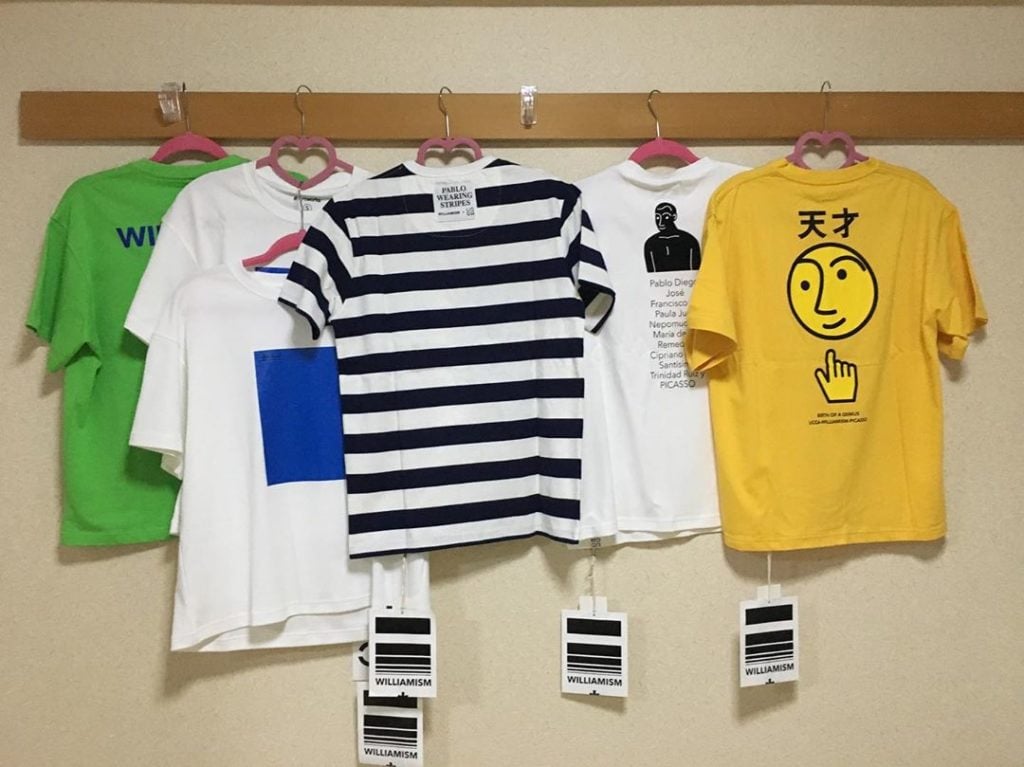
A photo of the Williamism X UCCA
T-shirts from William Chan’s Instagram, via Gramha. Courtesy of
Williamism.
What are the top-selling items in the
store?
Honestly, the catalogue. It’s crazy. We’ve also got
puzzles and notebooks, but we did some fun things too, like
collaborate with the brand Saint James, which is a maker of really
fancy striped shirts. They sort of appeared out of nowhere and
wanted to collaborate, and you’re not dealing with Picasso
rights—it’s just a striped shirt with a little UCCA logo, and it’s
been a big seller for us. We also did a collaboration with a guy
named William Chan, from Hong Kong, a kind of multi-platform
celebrity who has a streetwear brand called Williamism. He
developed a couple of shirts that have dropped through the course
of the show, and the first one just said “Williamism X UCCA” and
then had a big blue square that said “Blue Period.” I don’t get it,
but it sold out in under a second. Another one just said “genius”
with a smiley face design. Again, very Picasso-adjacent. I was
like, “Oh my god, what are is the Picasso Administration going to
say about this?” At the opening, [the Musée Picasso director]
Laurent Le Bon said, “I have one request: can you save us a few of
those T-shirts?”
The post UCCA Director Philip Tinari on Why China’s First
Big Picasso Show Could Inaugurate a New Era of Museum
Blockbusters appeared first on artnet News.
Read more https://news.artnet.com/the-big-interview/philip-tinari-interview-on-picasso-in-china-part-2-1634593
Further reading


Leave a comment