
A New Exhibition of Harper’s Bazaar’s Glory Days Quietly Suggests That Fashion Magazines’ Best Moments Are in the Past
A July 1958 cover of
Harper’s Bazaar
features a coquettish, red-lipped
model wearing white-rimmed sunglasses and a striped sun hat. She
peers out at the viewer through a cool blue lens, the corners of
her mouth pricking upward. “Easy Living,” the text beside her
croons. “Armchair Shopping. Summer Reading. New Beauty Box.” Then,
a little further down the page: “Lazybones Diet.”
The publication captures a
moment in time—and, since then, things have changed considerably.
Fronting Bazaar’s most recent issue, for example, is Gwyneth Paltrow posing in a
futuristic Tom Ford breastplate, surrounded by articles
promising to help readers recycle their wardrobes, wear suits, and
“ignore” diet trends. Some would go so far as to say that, in
recent years, women’s media has transformed into a different genre
altogether, with many titles cutting down their pages-long fashion
spreads to make room for features on the upcoming presidential
election, women’s rights, gun violence, and climate change.
Celebrity features like Paltrow’s, meanwhile, are now all about
getting raw, real, and, on occasion, downright weird: in her
Bazaar cover story, the wellness-company founder talks
about Goop enterprise’s experiments with new age-y fads like MDMA
therapy and “snowga,” a form of yoga that begins with bathing in
ice water for extended periods of time.
Yet despite these publications’
best efforts to keep up with their readers’ varied interests and
rapidly waning attention spans, the future of print media hangs
perpetually in the balance, with things looking especially grim for
the glossies. Simply put: it is no longer enough to just make
magazines. And it may prove not to be enough even with the bells
and whistles of their accompanying digital “extras.”
The question then becomes: when
is time to start preserving and exhibiting fashion magazines as
historical relics?
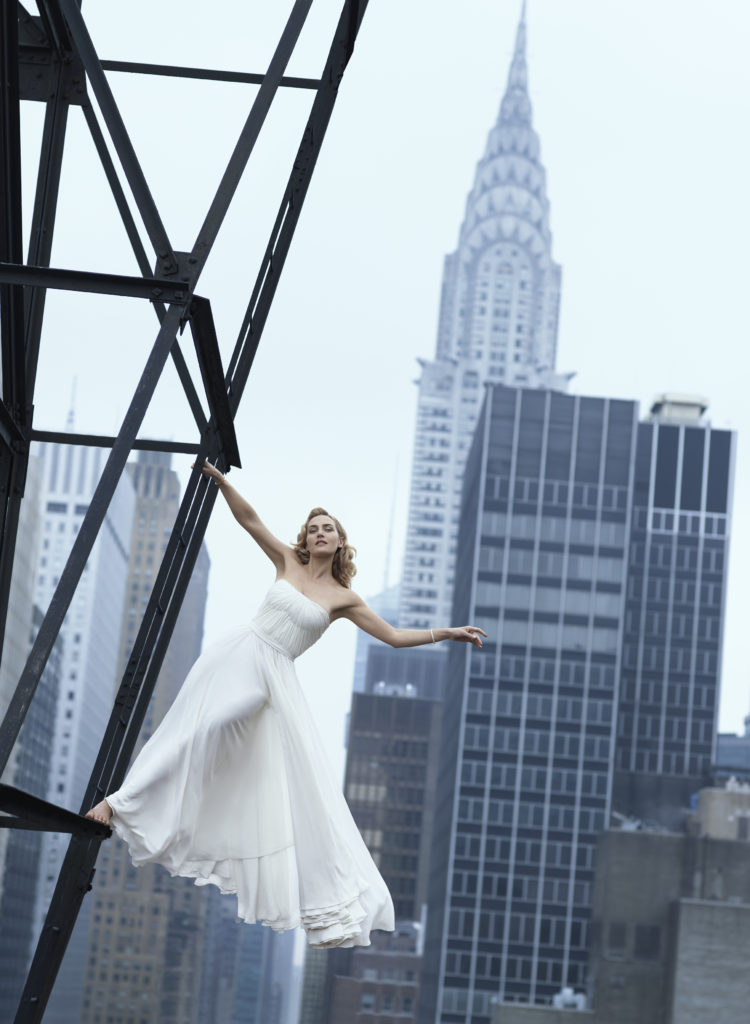
A scene from Harper’s Bazaar’s
August 2009 issue, shot by Peter Lindbergh. Image courtesy the
Musée des Arts Décoratifs.
As if in response to the
shifting sands, the Musée des Arts Décoratifs in Paris has decided
to celebrate the reopening of its fashion galleries with an
exhibition dedicated entirely to Harper’s Bazaar, opening on February 28th. Titled
“Harper’s Bazaar: First in Fashion”—a nod to the magazine’s place as the first
publication formed to cover the style world—the show chronicles the
major contributions of Bazaar to fashion over the course of its 152-year
history.
Sixty couture and ready-to-wear
looks from the museum’s collection will be displayed alongside
images of how they appeared in print, photographed and illustrated
by frequent Bazaar contributors including Andy Warhol, Man Ray,
Richard Avedon, Hiro, and Peter Lindbergh. There will additionally
be special tributes to three of the magazine’s most powerful
editors: Carmel Snow, the editor-in-chief who famously dubbed
Christian Dior’s revolutionary first couture collection the “New
Look”; art director Alexey Brodovitch, who commissioned artists
like Salvador Dalí, Jean Cocteau,
Marc Chagall, Leonor Fini, and famed French poster artist A.M.
Cassandre to create original work for the magazine; and editrix
Diana Vreeland, whose unprecedented tongue-in-cheek editorial
sensibility imbued the publication with more color and humor than
ever before, and whose work for the Metropolitan Museum of
Art’s Costume Institute long preceded Anna Wintour’s Met
Ball.
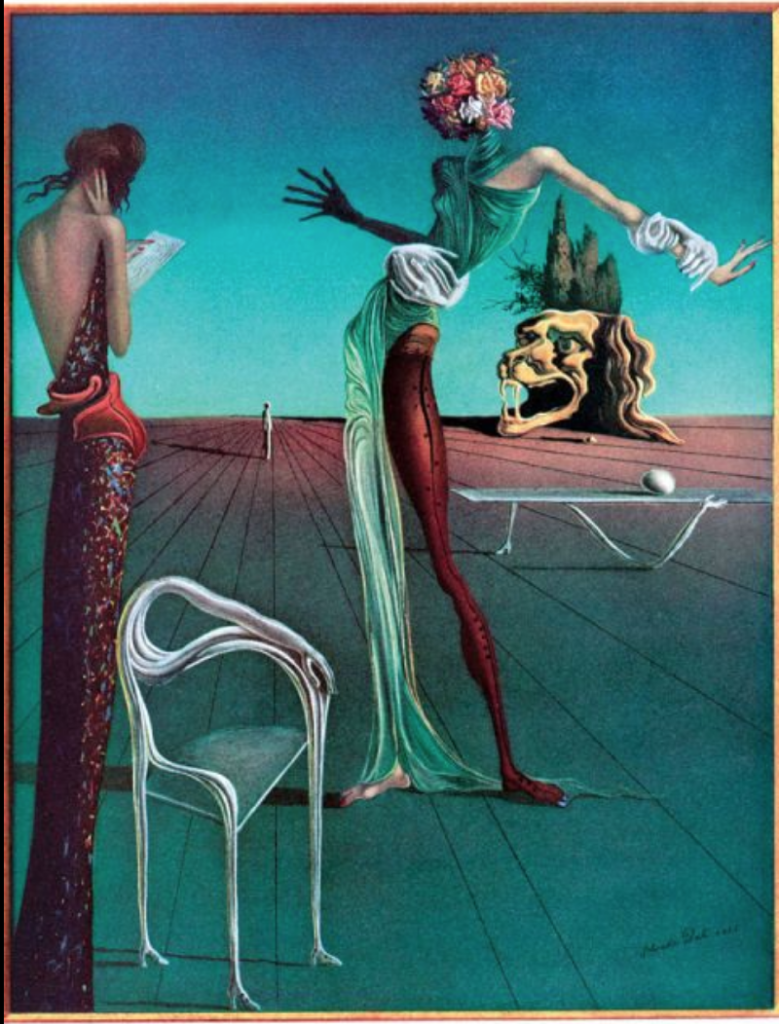
Salvador Dalí’s 1935 illustration for
Harper’s Bazaar. Image courtesy Getty Images.
Still, the exhibition—curated
chronically across two floors—does little to
frame Bazaar as a thriving present-day cultural barometer,
instead reflecting its curators’ admission that the future of
magazines is uncertain and that the time to begin archiving them
is, well, now. “The context of the media and magazines is slowly
changing with the arrival of the internet,” say Eric Pujalet-Plaa
and Marianne Le Gaillard, who co-organized the exhibit. “We do not
know what will come in 10 or 15 years. I think it’s important to
show now, at this moment of upheaval, that Harper’s Bazaar participated deeply in the visual history of
the 20th century, and that its innovations were—and still
are—highly related to human synergy.”
In many respects, that’s
true. Bazaar
was founded in 1867 by Harpers &
Brothers (the same publishing house behind Harper’s Magazine and the flagship imprint of HarperCollins
books) to focus not only on fashion but on society, the arts, and
literature as well. Its first editor was, interestingly, a
suffragist and abolitionist named Mary Louise Booth, who was a
fierce advocate for the Union cause during the American Civil War.
At the time, in addition to teaching the world about style,
Bazaar published stories on such leading American
artists as Frank Stella and
Jackson Pollock,
running them alongside literary contributions from writers such as
Colette, Simone de Beauvoir, Charles Dickens, Virginia Woolf,
Patricia Highsmith, and Truman Capote.
Despite all this,
Bazaar’s imagery is what really set the magazine apart,
providing a visual launching pad for designers like the great
Charles-Frederick Worth, widely considered to be the father of
couture; Paul Poiret; Jeanne Lanvin; Madeleine Vionnet; Elsa
Schiaparelli; Dior; and Cristóbal
Balenciaga, whose work, as seen in Bazaar, garnered major attention and support from the
well-heeled doyennes of American high society.
By the 1950s—during the
collective reign of Snow, Vreeland, and Brodovitch, who were known
together as the “Holy Trinity”—Harper’s Bazaar had become such a force in fashion that it
featured prominently in Audrey Hepburn’s Funny Face, with the film spoofing its particular
workplace culture (and its editors’ mercurial
temperaments) à
la The Devil Wears
Prada.
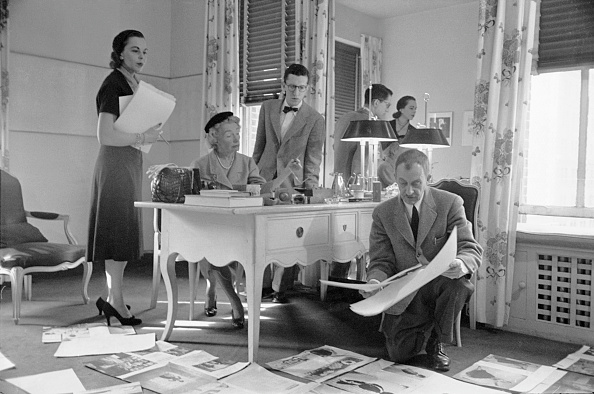
Editor-in-chief Carmel Snow and art
director Alexey Brodovitch at the Bazaar offices in New
York, December 1952. Photo by Walter Sanders/The LIFE Picture
Collection via Getty Images.
But transforming all this rich
history for a standalone exhibition has, understandably, proved
difficult in more ways than one, not least because there’s simply
too much available material. “To exhibit a magazine is particularly
challenging,” Pujalet-Plaa and Le Gaillard told Artnet News in an
email. “Nonetheless, it was very exciting to observe how the
graphic compositions and the editorial content of
Harper’s Bazaar
creates spectacular stagings for
clothes, all different and changing over time. It also helped us
understand how the museum’s fashion collection, often shaped by
private collectors’ choices, is highly dependent on
Bazaar. We hope the public will be as fascinated as
we are by its rich and innovative content, made for, in Snow’s
words, well-dressed women with well-dressed
minds.”
Per Pujalet-Plaa and Le
Gaillard, each vitrine in the show has been modeled as a time
capsule, linking the clothes to their reproductions on the page.
The pacing will move chronologically, centered on the clothes—which
means that the rollicking stories of Bazaar’s editors, models, and contributors and the
behind-the-scenes, human history of the magazine’s exploits (sadly)
won’t be a central focus of the show.
“The history of
Bazaar is of course full of charismatic personalities,
but we were afraid it would confuse the viewers,” Le Gaillard said.
“So we favored a chronological approach from 1867 to
present. Harper’s
Bazaar has always been
praised for its unity between fashion and the arts, so we wanted to
pay homage to that in the exhibition. We could have gone for a more
interdisciplinary display, with, for example, specific vitrines
devoted to particular relationships, but considering the complexity
of the subjects and the involvement of so many directors and
contributors, we felt this was the best way.”
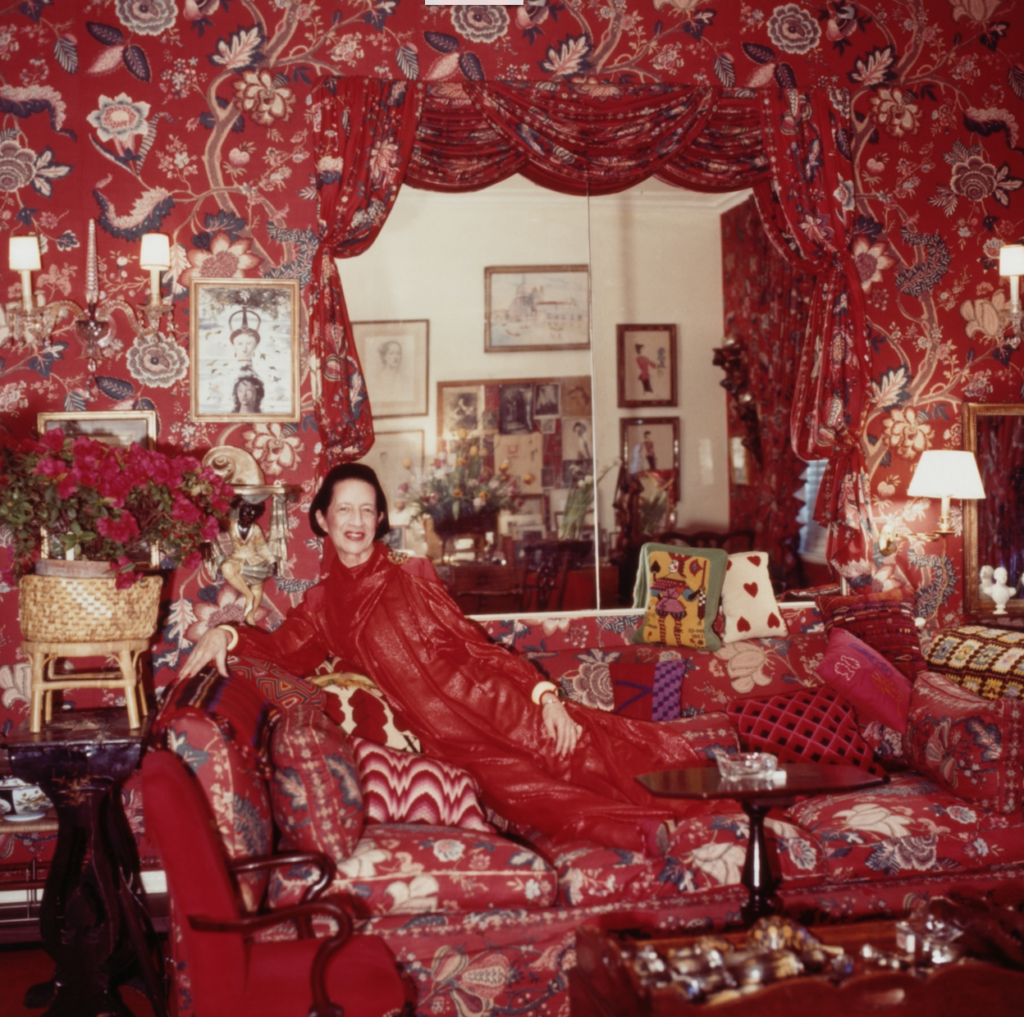
Diana Vreeland at home in her “garden in
hell” living room. Photo by Horst P. Horst/Conde Nast via Getty
Images.
A few weeks ago, it was
announced that Bazaar’s longtime editor-in-chief, Glenda
Bailey, would be stepping down at the end of February. For her
final act as editor, she’ll inaugurate the opening of
“First in
Fashion,” signaling the end
of her 19-year reign, the results of which will feature behind
glass vitrines as part of the magazine’s catalogued history. Fashion critic Vanessa
Friedman at the
New York Times
recently wrote
about the bittersweet nature of
Bailey’s swan song’s coinciding with the exhibition:
“In the contrast between what
will be on the wall and what is often on the page, it will
underscore just how much Bazaar changed during Ms.
Bailey’s tenure as she shepherded the magazine into the era of
Instagram and reflected its ethos. Which is to say, the era of
eroding authority of glossies, the rise of the armchair influencer, and the
commodification of creativity.”
Perhaps even more poignant is
the fact that Bailey’s replacement has not yet been named, and
still may not be by the time of the exhibition’s opening. On
February 29th, the second day of the show, it’s entirely possible
that Bazaar
will be without an editor, its
face—literally, figuratively—and future
unclear.
But one thing seems certain:
magazines will likely never again see an editorial regime with the
same resources to spend on an opulent creative vision as existed
under Bailey and her predecessors. With the departure of every
major editor-in-chief, traditional publishers are slashing salaries
and cutting costs more and more ruthlessly, bringing to a close the
era of fantastical images and boundary-pushing photography that
only massive photo budgets could allow. In all likelihood,
Bailey—who famously shot Rihanna swimming with
very real sharks in one issue, and placed Demi Moore atop a tall
stair to feed a giraffe in another—will be replaced by someone
younger, more affordable, with far less creative
leeway.
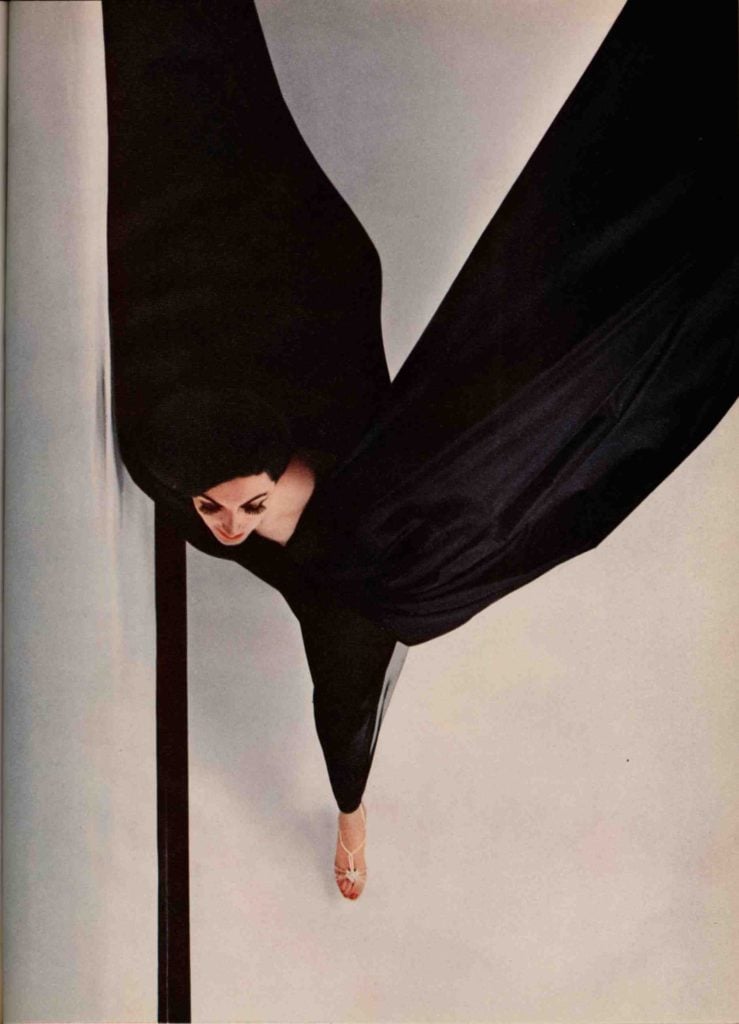
A shot from Harper’s Bazaar’s
October 1963 issue, shot by Hiro. Image courtesy the Musée des
Arts Décoratifs.
It’s perhaps all the more reason
to visit “First in Fashion,” if only to walk down Bazaar’s
star-studded memory lane, when the cash was flowing and editors
were encouraged to do things like fly to the snow-covered mountains
of Japan in December to photograph 26 pages’ worth of of luxurious
winter furs; to capture the languid bodies of suntanned models
melting into poolside recliners in order to perfectly illustrate
whatever the “Lazybones Diet” was; to run a column entirely
comprised of ridiculous questions that celebrate frivolity and
excess and silliness, asking, “Why don’t you rinse your blond
child’s hair in dead champagne to keep it gold, as they do in
France?” or “Why don’t you have the most beautiful necklaces in the
world made of huge pink spiky-coral with big Siberian
emeralds?”
These are Bazaar’s most
delicious moments, and all signs point to the notion that they will
remain that way.
“’Harper’s Bazaar:
First in Fashion’ is the first exhibition dedicated to a fashion
magazine that looks beyond the photographs to the impact of its
editorial and artistic direction, the design and the men and women
behind it all, as it explores how magazines have helped define what
fashion is and what we consider fashion,” the curators note. “It
became obvious that it was time to celebrate Bazaar. And
as Carmel Snow would say, ‘It is essential to have a finger on the
pulse of the times.’’
The post A New Exhibition of Harper’s Bazaar’s Glory Days Quietly
Suggests That Fashion Magazines’ Best Moments Are in the Past
appeared first on artnet News.
Read more https://news.artnet.com/exhibitions/bazaar-1766079
Further reading


Leave a comment