
‘It’s My Salvation’: At 80 Years Old, Ron Nagle Can’t Stop Making His Meticulously Weird, Ridiculously Beautiful Sculptures
“Diabolically beautiful.”
“Ridiculously seductive.” “Subversively beautiful.” Ron Nagle’s
tiny, abstract sculptures inspire his fans to reach for their most
expressive language to evoke their abundant appeal. (Those are
raves, respectively, from Dave Hickey, Ken Johnson, and Apsara
DiQuinzio.) His ceramic sculptures, only inches to a side, pack
colors and textures into packages that contain visual excitement
galore.
“Ron Nagle: Handsome Drifter,”
on view at the UC Berkeley Art Museum and Pacific Film Archive,
presents work mostly from the new millennium, capping five decades
of ceramics that are alluring and repellent, deeply weird, and
utterly bewitching. Nagle worked primarily in the medium for
decades, after honing his techniques in California in the ‘50s with
the legendary Peter Voulkos (one of Nagle’s great inspirations,
along with the painter Giorgio Morandi). He started off with shapes
that echoed cups—clay’s equivalent the the nude in painting, as
Peter Schjeldahl has put it—and vases, but soon moved into abstract
forms in tandem with his friend, inspiration, and fellow clay
artist, Ken Price.
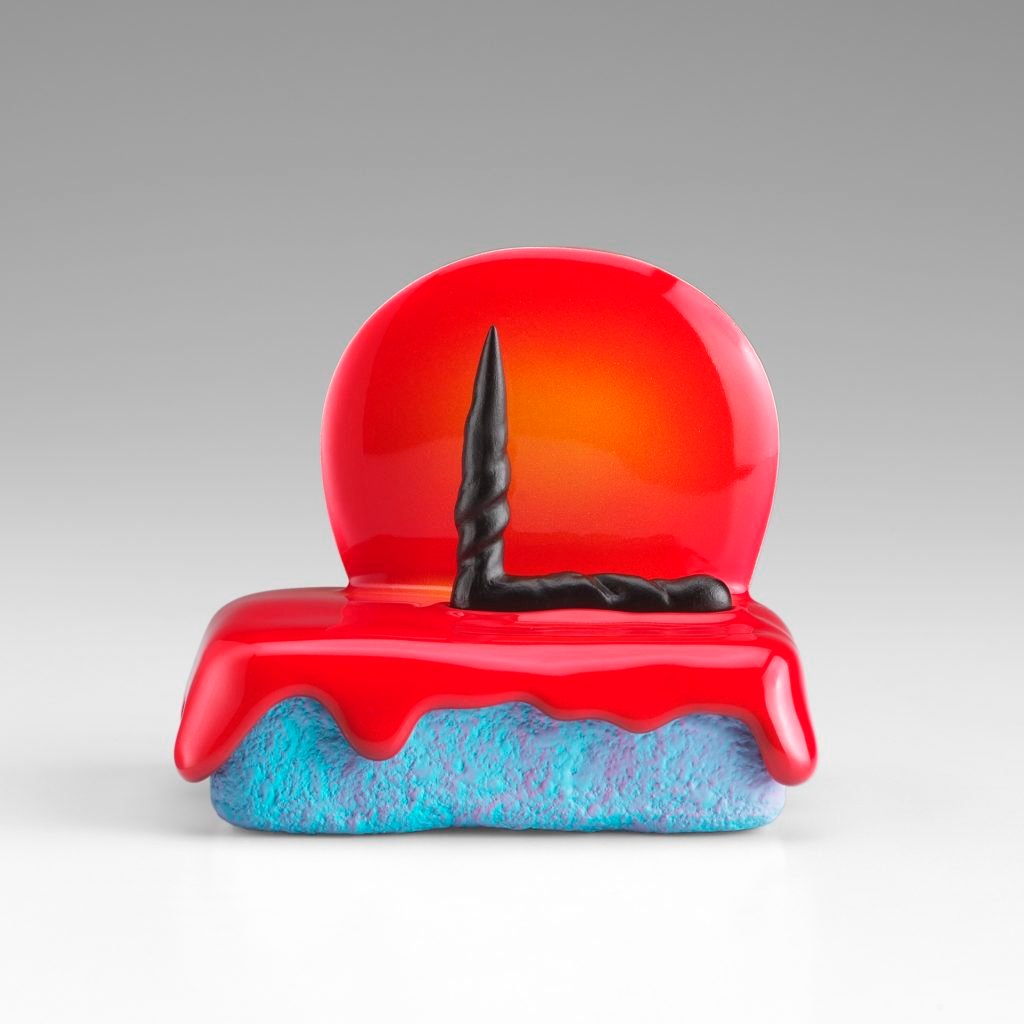
Ron Nagle, Handsome Drifter
(2015). Courtesy of UC Berkeley Art Museum & Pacific Film
Archive.
Nagle draws such variety out of
his chosen materials, and each small piece is so idiosyncratic,
that it’s surprising that he categorizes them into series, with
names like “Thin Fins,” “Smoove Wares,” “Snuff Bottles,” and
“Stillscapes” (the latter referring to a hybrid of still life and
landscape).
Compare Night of the Hunter (1998) with Fortgang (2002), both “Thin Fins.” Both consist of a
semicircular, headstone-like shape propped on a little piece of
turf, with an elongated, curving shape sitting in front of it; in
the former, the sinuous shape is like a cat’s tail, while in the
latter, it’s disturbingly fecal. Fortgang’s sunburst-orange and yellow color scheme
gives it a radiance completely apart from the
Night of the
Hunter, with its mellow
cobalt blue. The two do share a stucco-like surface, which the
artist has sprayed with contrasting colors from opposite
directions, creating a captivating 3D effect.
“It’s a cheap trick,” said the
artist during a conversation in the gallery, in keeping with his
self-effacing manner. “It’s like a fake highlight and a fake
shadow. It makes them look more magical…or something.”
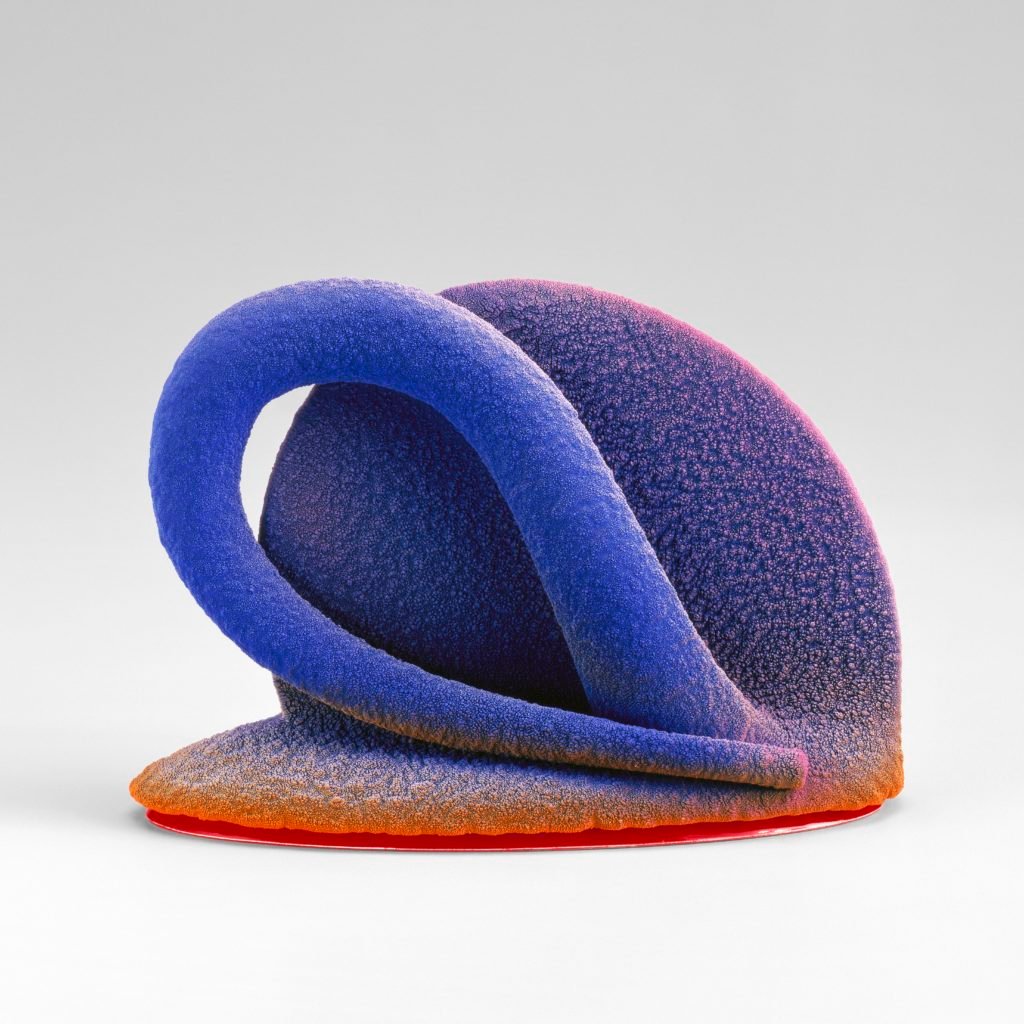
Ron Nagle, Night of the Hunter
(1998). Courtesy of UC Berkeley Art Museum & Pacific Film
Archive.
Despite his brilliance, Nagle
long found himself consigned to the margins of the art world, his
work classified as craft. Lately, ceramics have come into vogue,
with artists like Price, Arlene Schechet, and Betty Woodman getting
the spotlight and younger artists like Sterling Ruby and Zachary
Leener adopting the medium. Nagle notched a major lifetime
achievement when he was included in Massimilano Gioni’s Venice
Biennale in 2013. Since then, the blue-chip Matthew Marks Gallery
has mounted its own biannual shows of the artist. At the same time,
in the last decade or so, Nagle has introduced other materials from
the world of craft, like epoxy resin and polyurethane. Nagle seems
to be acting out what he calls his “contempt for purity in
ceramics”—just as the medium is having its moment in the sun. It’s
a characteristically perverse turn.
Nagle has also been a songwriter
and musician for as long as he’s been making sculptures; performers
like Jefferson Airplane, Sammy Hagar and Barbra Streisand have
recorded his compositions. Berlin-based critic Jan Verwoert, in a
stunning essay in the BAMPFA exhibition catalogue, draws out the
similarities between the two modes of creation; both in song and in
sculpture, the artist achieves poetry, flawless structures, and
surprise in compact formats. “This is the only guy so far who has
been able to kind of creep into my head,” said Nagle, approvingly,
of Verwoert’s take on his dual practices. (For anyone seeking the
aural equivalent of Nagle’s ceramic inventiveness: His newest
release is Introducing…The Many Moods of Ron
Nagle, while his 1970
solo album Bad
Rice has just been
re-released in expanded form by Omnivore Records.)
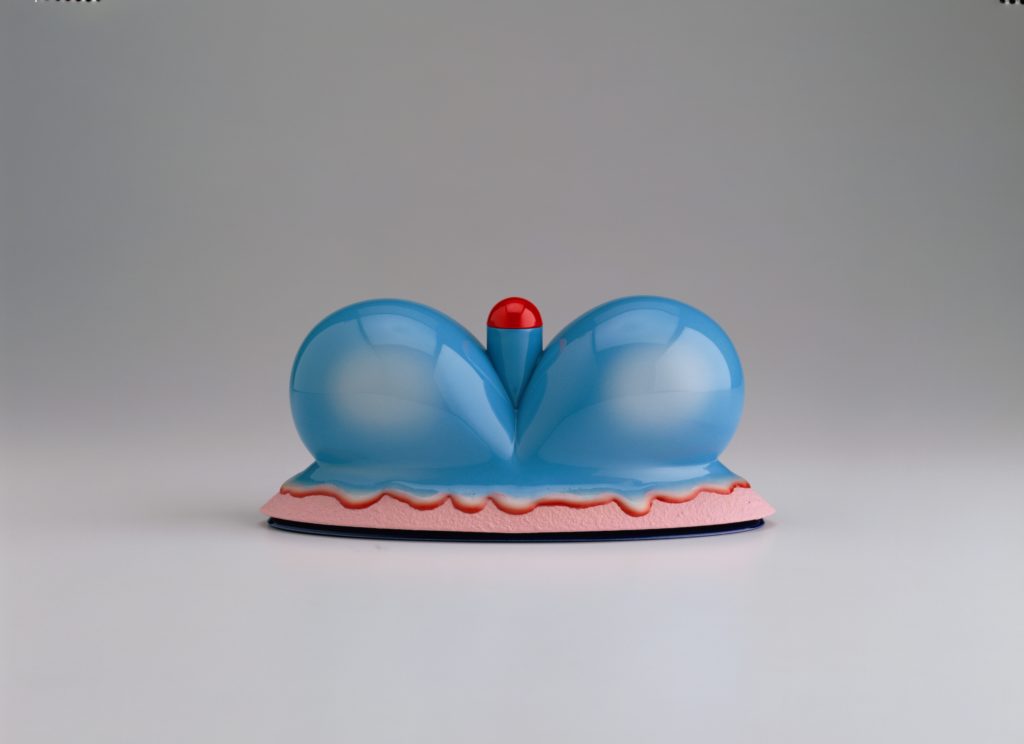
Ron Nagle, The Bad Clown (2003).
Courtesy of UC Berkeley Art Museum & Pacific Film Archive.
When our conversation turns to
deeper questions about the drive to create, Nagle quickly says,
“The main thing for me is, I love to work. It’s my salvation.” He
stopped using drink and drugs decades ago. “After I quit, I said,
‘Okay, man, I gotta do something. I’ve got a chance to do what I
want to do.’” He cites Lewis Hyde’s beloved book
The Gift: Imagination and the
Erotic Life of Property,
which everyone from Margaret Atwood to Hans Ulrich Obrist has
described as transformative, and which defines artistic ability as
a gift that must be repaid.
“Giving back boils down to being
inspired by something and believing that when you’re inspired, it’s
your responsibility to pay it back to someone,” he said. “It’s a
three-party deal. You see it, you do it; you do it, someone else
sees it. When you see someone else do it better than you, you
decide you want to do it as well as they do.”
As for his own work, he said,
his aim sounds simple but, in truth, is anything
but.
“The main thing I want is that
the work makes people feel something they haven’t felt before,” he
said. “And that’s seemed to happen. People at the opening said it
felt like wonderland. I like that.”
“Ron Nagle: Handsome Drifter”
is on view through June 4, 2020. See more works by the artist
below.
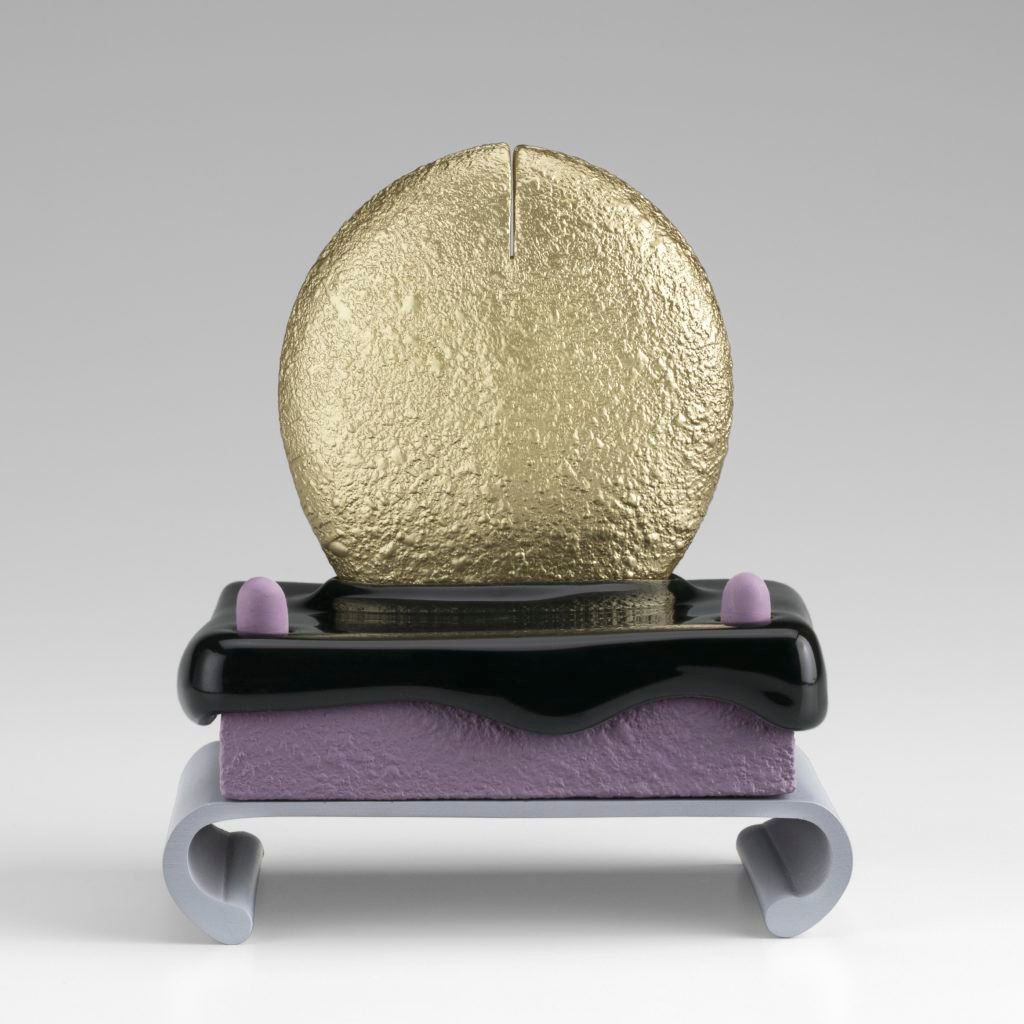
Ron Nagle, Sudoku Seppuku (2019).
Courtesy of the artist. Courtesy of UC Berkeley Art Museum &
Pacific Film Archive.
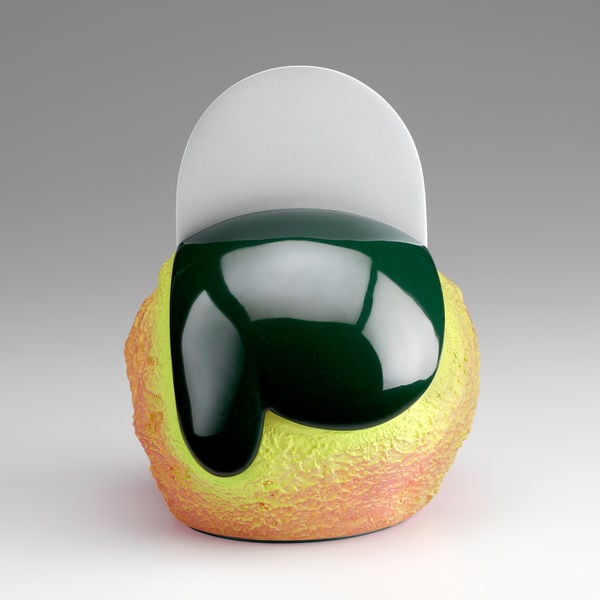
Ron Nagle, Lotta
Wattage (2012). Image courtesy Matthew Marks
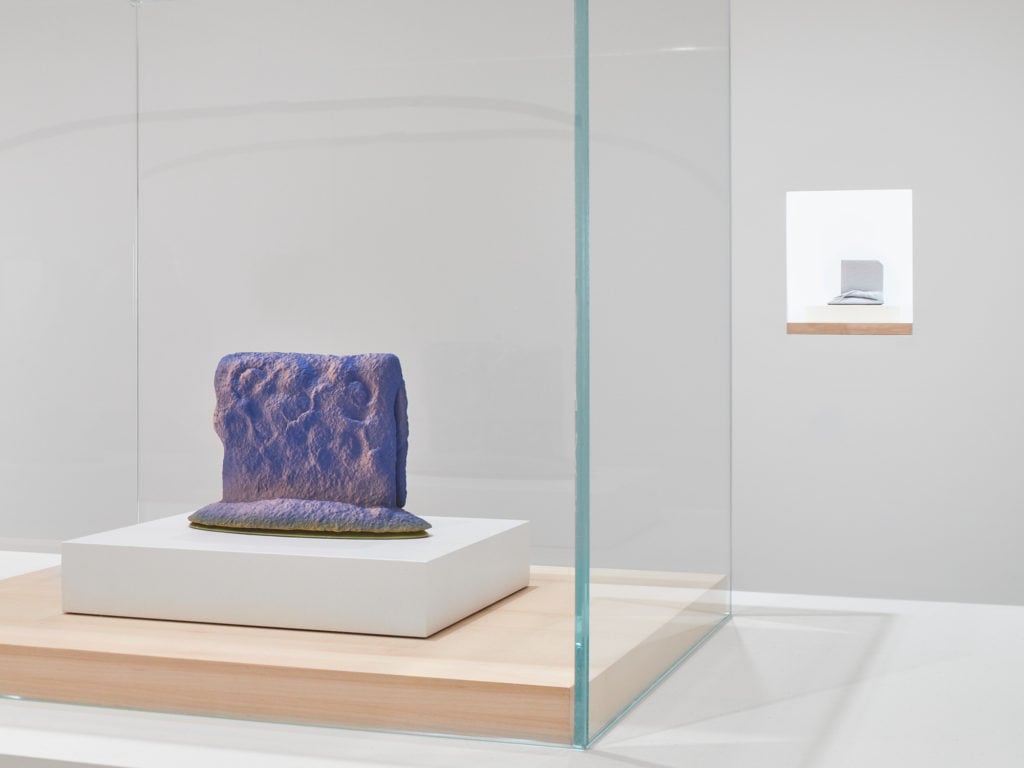
Installation view of “Ron Nagle:
Handsome Drifter” at BAMPFA. Photo: Johnna Arnold, courtesy of the
Berkely Art Museum & Pacific Film Archive.
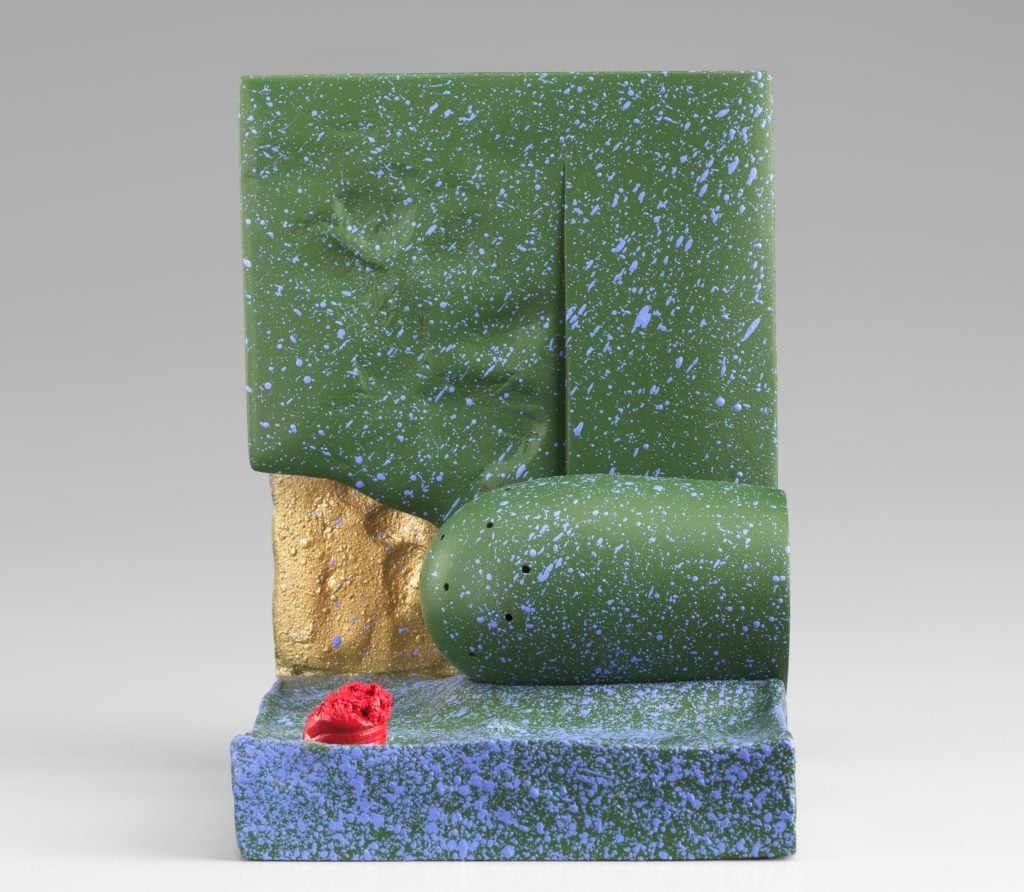
Ron Nagle, New Collusion (2018).
© Ron Nagle. Courtesy the artist and Matthew Marks Gallery.
Further reading


Leave a comment