
How Physician and Artist Sharon Madanes Turns the Seemingly Banal Act of Handwashing Into Urgent and Theatrical Paintings
Hand washing is on everyone’s
minds lately. From the silent singing of the birthday song (twice
over) to the sudden ubiquity of posters illustrating effective
scrubbing down (move over Heimlich maneuver), the public has never
given more credence to the everyday gesture.
But for the segment of the
population that works as doctors and nurses, the art of handwashing
is a choreography that’s drilled into their lives dozens of times a
day.
Artist and doctor Sharon Madanes
transforms that action and the other banalities of hospital life as
her subject matter, creating surprisingly beautiful, colorful
scenes that juxtapose the administrative side of her work with the
corresponding matters of life and death. Madanes, who completed her
MFA at Hunter College and attended medical school at Columbia
University, is currently a psychiatry resident at New York
University.
We recently spoke with Madanes
about how her experiences with art and medicine inform one another,
the symbolism of handwashing, and how the current news cycle is
informing her practice.

Sharon Madanes in her studio, 2019.
Photograph by Nicholas Calcott.
Medicine and art are demanding careers to pursue on their
own. How did you wind up following both paths?
I grew up in a family of
physicians. My father is a physician and my first job was working
at his surgical center, sterilizing surgical equipment, packaging
things and helping in the operating room. And growing up in
Chicago, I spent a ton of time at the Art Institute and took all
their early college programs. From the time I was very young, I
remember saying I was going to be an artist and a doctor, and it
never really changed.
There were definitely moments
where I wasn’t sure—I didn’t know if I’d get into art school and,
in that case, I’d go to medical school and continue to be a painter
in some other way, or vice versa. But I’ve always been very, very committed to my
art and I think of that as my primary identity. It percolates
through everything that I do.
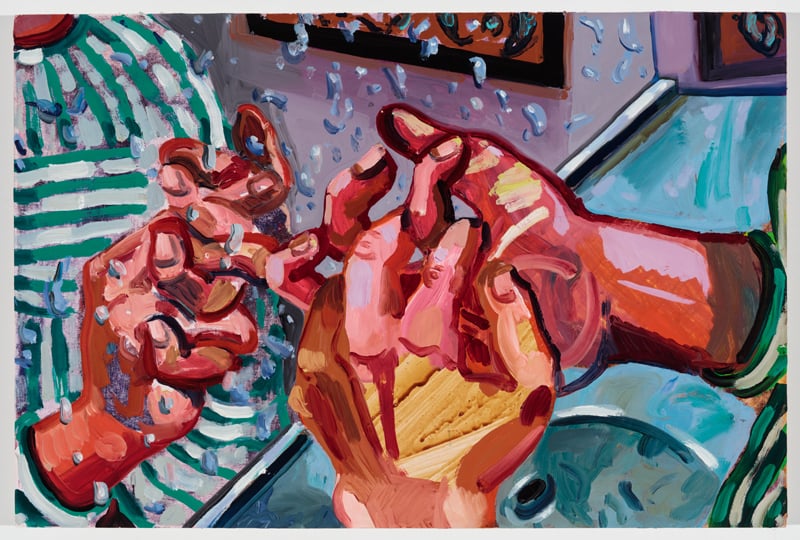
Sharon Madanes, Hand Hygiene
(striped shirt) (2016). Courtesy of the artist.
Why do you find the hospital to be interesting subject
matter for your paintings?
I’m interested in how the
hospital can be a very banal institutional setting with
administrative tasks paired with the deepest questions of life and
the most morbid things. For
instance, as an intern, one of your jobs is to wake up the patient
very early in the morning to see how they’re feeling, to do a
physical exam, and then report to your superiors.
Then you often visit the patient
again as a team and the nurses come in. Then the consultants that
you call come in. There is a rotating in and out with absolutely no
privacy. What does it mean to be a patient in that environment with
people coming in and out, like a train station, but you are lying
in bed in the most vulnerable positions?
The juxtaposition between life
and death and linoleum floor
tiles—that fascinates me.
When did you start making your handwashing paintings and what
interested you about that action?
I’m interested in the everyday,
but also what the implications of the everyday have to larger
societal and philosophical questions. Being in a new medical
environment created many opportunities and questions for
me.
I began the series of
handwashing paintings my first year of medical school and I’m still
making them now. The series started as something sort of humorous;
handwashing is this insanely repetitive thing that you do in
medicine. You go from room to room and you use hand sanitizer and
wash your hands about 30 times by the time you’ve finished with an
hour and a half of morning rounds. There are these long lines of
attending physicians, residents, and medical students just washing
their hands or getting some hand sanitizer.
Then I continued to make them
because they were so interesting and full of implications. For a
doctor, the action forms chapters of time within the day—it
structures and breaks up time. And, in another way, it separates
the seen from unseen. The gesture symbolically separates self from
other—the healthy from the sick, the doctor from the
patient.
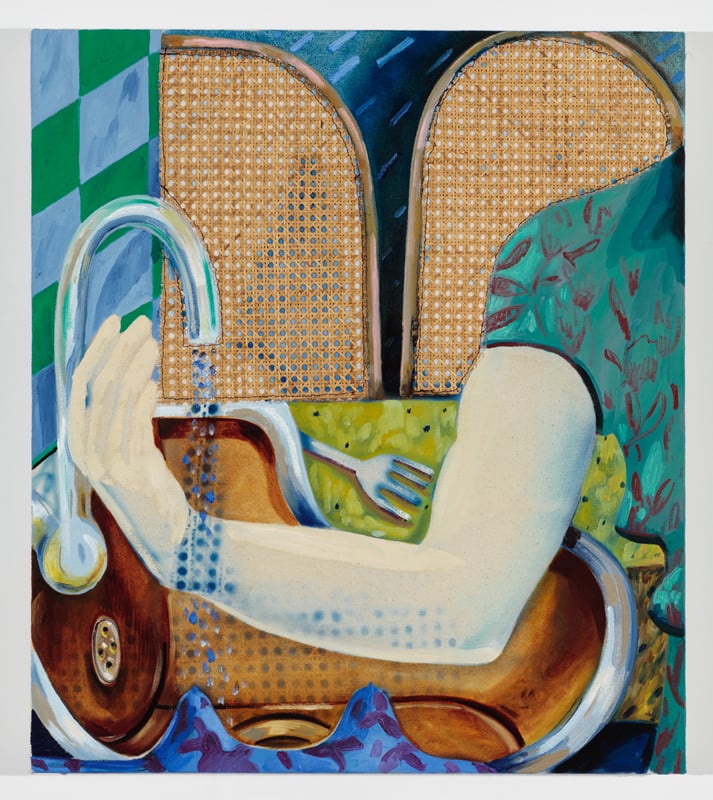
Sharon Madanes, One Hand on the
Other (2016). Courtesy of the artist.
Oftentimes, in your paintings, a set of hands or a limb
is presented isolated in unexpected ways. Do you think that your
experiences as a physician have changed the ways you portray the
body in your artwork?
From a medical viewpoint, the
way you look at the body is just a completely different
perspective. That perspective itself often is very fragmented. As a
doctor you specialize in one part of the body—you become an ear,
nose, and throat doctor or a breast surgeon. There are very few
specialties that look at the person as a whole, withstanding
primary care and internal medicine. And even then, there is a
mind-body divide, with medicine on one side and psychiatry on the
other.
The medical field is a field
where people become fragmented, where they become parts of the
body, and you never see the whole picture. That it can be a very
myopic way of seeing, but at the same time, as in painting, that is
the mystery—you pay attention to what’s left out. That’s the part
that becomes the most dramatic.
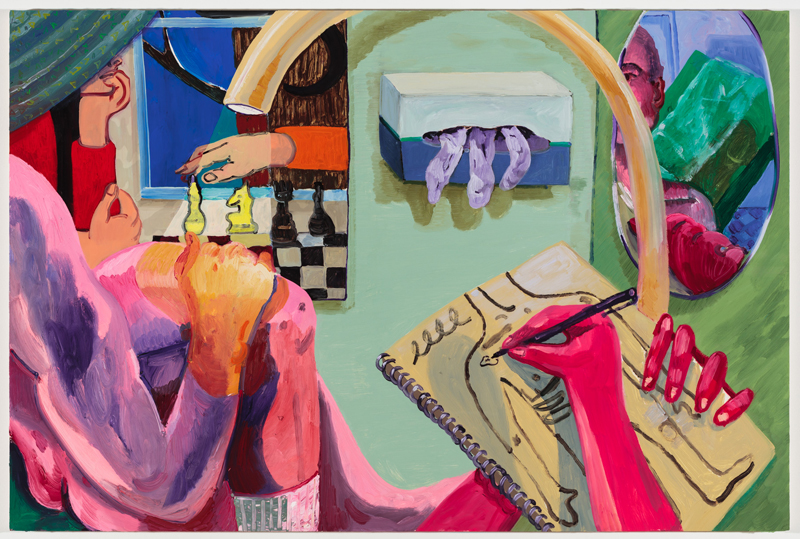
Sharon Madanes, Clinic Chess
(2018). Courtesy of the artist.
How would you say that being an artist has informed your
approach medicine?
I think that’s one of the
reasons I ended up going into psychiatry—thinking about how the
humanities can enter into treating a person, through stories and
visual thinking as well. For instance, the physical exam is
something that’s rooted in observation. And many medical schools
have art and art history classes. There is an appreciation of what
an arts and humanity training can do. Medicine is a field that’s
rooted in humanism—it’s a scientific field, but what makes someone
an excellent doctor is both scientific acumen and a shamanistic
side.
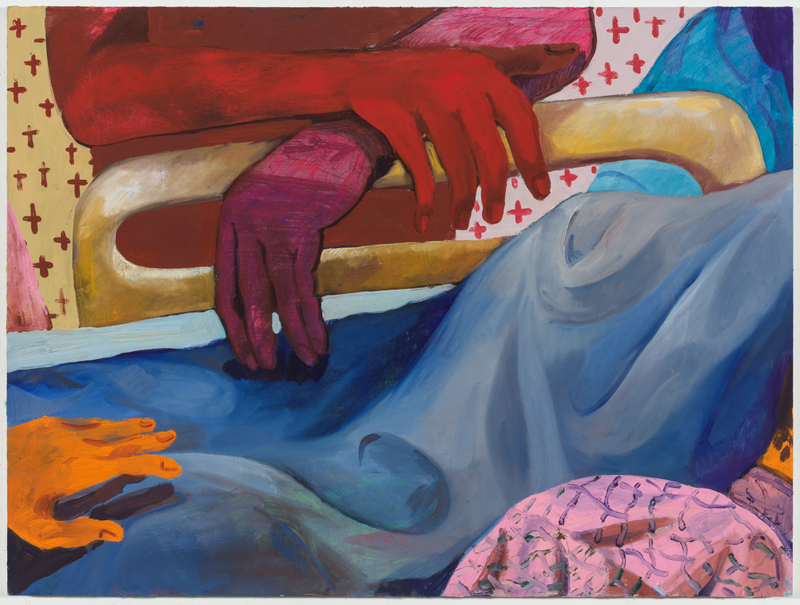
Sharon Madanes, Hover (2018).
Courtesy of the artist.
Your use of color is very bold, with a single figure often
composed of almost Fauvist color combinations. How do you choose
your colors and come to this palette?
I think a lot about the
symbolism of colors within the hospital. The color of the
scrubs—how and why are those chosen? So you see when your scrubs
are dirty with blood because blue or green is the opposite of the
colors of flesh? Or—when your scrubs are red, which they are
sometimes in the operating room—is that to conceal blood? The
pastel tones that are everywhere in the hospital building
itself—how are those chosen? I wonder about these aesthetic choices
a lot, even the posters that hang in hospital hallways,
and what the artwork choices say to the people seeing them
even fleetingly. I recently wrote something about a Bonnard poster that I
saw in an electroconvulsive therapy suite.
As for my own work, much of my
color choice is made intuitively. Later I think about it and
understand what I was doing. In my painting Clinical Vision, for instance, there are two kinds of light
and color. A group of doctors is crowded around a scan. There is
the light of the projection and then the light of the room itself,
which interact to cast different shadows. And in that painting, I was thinking about the
color of the light as a kind of thinking—of clinical vision—there
is the seeing of the thing itself but also how that can reflect
backward from the doctors’ minds and into the scan—a light
projected both ways.
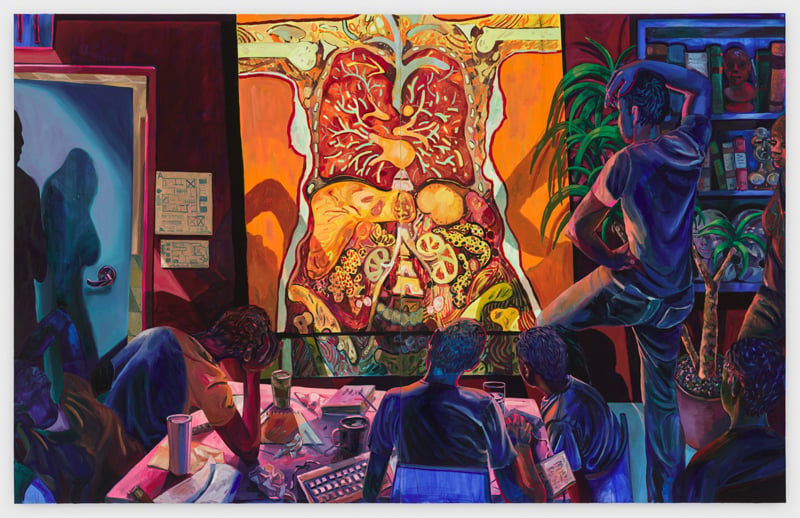
Sharon Madanes, Clinical Vision
(2018). Courtesy of the artist.
There is also a certain theatricality to some areas of
medicine—to surgery scenes, for instance—that can seem very
dramatic.
I spent a lot of
time in the operating room during my surgery rotation and it felt
like being in an art studio. You prepare everything. You treat all
your instruments. You select your fields of the body. That field is
cropped out with blue drapes to define that that is the area of interest. And then everybody
works together on that one area. If you’re doing plastic surgery,
people often step back to think about their work and to talk about
what needs to be changed. And so it is very interactive, it feels
like being in a sculpture studio or my experience working as an
artist assistant.
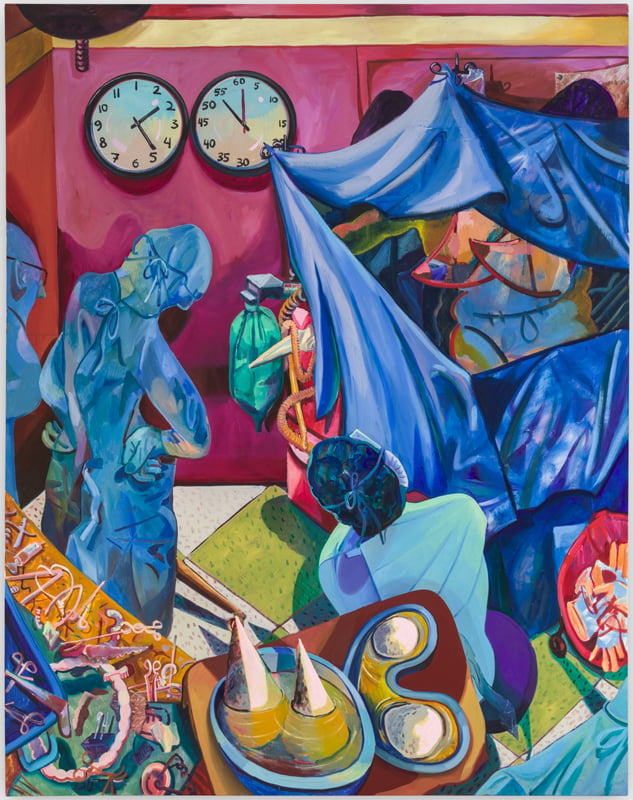
Sharon Madanes, Woman (2019).
Courtesy of the artist.
Do you think what’s going on right now in public health
is going to affect your work?
It’s affecting my work.
Sometimes it takes me a month or two to process what’s happening in
the hospital and that gets reflected in my paintings. I’ve already
been interested in the alienation of the self versus the other
through hand hygiene and in the sense of separating yourself from
patients. These mechanisms exist to separate the doctor from a
patient: gloves, masks, and physical protective barriers, but
they’re also psychological. Even the white coat is one of these
symbols. I think symbols of separation are becoming more
significant now. But at the same time, those guards are completely
eroded. My colleagues are sick and more are getting sick every
day.
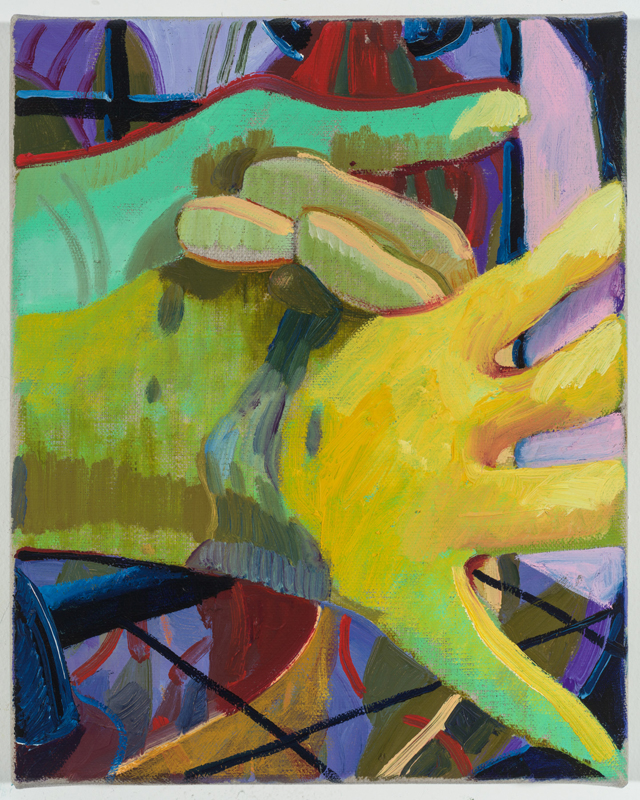
Sharon Madanes, Melting (2019).
Courtesy of the artist.
How is the breakdown of those physical and psychological
symbols affecting the medical community, do you think?
The stress and anxiety right now
are a little bit different than some other stresses you’re usually
exposed to in the hospital. There are always risks of being a
doctor—needle sticks where you have to take antiretroviral drugs.
You can get Hepatitis C. But these risks usually seem very
contained to the provider themselves. A lot of physicians are
completely selfless, but the situation is different right now
because I think people are afraid of coming home. Medical
professionals are having to balance that with the interests of
their own families and the people that they love around them at
home.
The post How Physician and Artist Sharon Madanes Turns the
Seemingly Banal Act of Handwashing Into Urgent and Theatrical
Paintings appeared first on artnet News.
Read more https://news.artnet.com/art-world/sharon-madanes-hand-washing-paintings-1816638
Further reading


Leave a comment