
Abandon the Idea That Bigger Is Always Better and 4 Other Ways That Art Institutions Can Address Climate Change
As we settle into a new decade,
the art world is increasingly sounding the alarm on the climate
emergency.
From panel discussions at art
fairs, to art projects and institutional commitments, the creative
sector has come around to actually walking the walk
after years of only
talking.
Organizations including
Extinction Rebellion and individuals like Greta
Thunberg have galvanized the sudden shift towards public
awareness of climate-change science, and more and more people now
recognize that we are on the precipice of an important historical
moment. The actions we take over the next decade could be the key
to avoiding climate disaster.
Last June, the UK became the
first major economy to commit to net zero emissions by 2050. At a
conference organized by the London-based charity Julie’s Bicycle
last week, Chris Stark, the chief executive of the committee on
climate change, the independent body that is advising the UK
government on the task, emphasized that “every single sector has a
job to do to get to net zero.”
This includes the
arts.
Not least because, as Julie’s
Bicycle founder Allison Tickell pointed out in her introductory
remarks, “disappearing nature is also disappearing culture.” At the
conference, titled “We Make Tomorrow,” artists, activists, and
institutional leaders gathered to discuss what the art world can do
to mitigate or indeed reverse the detrimental effects of climate
change.
“We realized that there was a
tipping point, that we could no longer just attend to our own
house,” Frances Morris, the director of Tate Modern, explained
at the conference, referring to the ambitious sustainability plan
that Tate announced last summer. The institution is now en route to net
zero emissions by 2030.
“There was a moment when we had
to offer some companionship, leadership, and understanding, and to
create a context for the visual arts sector to begin to move
forward,” she said.
Similarly, Lucia Pietroiusti,
the curator of “general ecology” at the Serpentine Galleries,
explained that she founded the initiative a few years ago as a way
“to infect other art institutions with the ecological bug.” The
program aims to model what an ecologically friendly institution
could look like.
Here are five key insights from
the conference into how arts institutions can tackle the climate
crisis.

An online calculator that enables people
to work out their carbon footprints using Government-recognized
data and calculations. Photo by Johnny Green – PA Images/PA Images
via Getty Images.
Start Collecting
Data
Institutions can measure their
own carbon footprints, much in the way that anyone trying to lose
weight might count his or her calories.
To take stock of the extent of
pollution and to get a handle on how much needs to be cut down,
Julie’s Bicycle, among other organizations, offers a free online carbon and environmental calculator to
record and understand an institution’s impact.

Photo courtesy Wikicommons.
Cut Down Emissions
Once an institution understands
how much and where it is polluting, it can take steps to reduce its
carbon footprint. Organizations can think about transportation, for
example: Is it possible to cut down on air travel? What about
taking public transportation instead of using a private vehicle?
When transporting artworks, can it arrange to “car pool” with
another group?
Institutions are advised look to
the three Rs: reduce, reuse, recycle. Organizations should also try
to eliminate all landfill waste by using reusable crates and
sourcing alternatives to bubble wrap (and plastic cups).
When it comes to buildings,
institutions should look to invest in eco-friendly infrastructure
and find green sources of energy to power the building’s electrical
and heating systems. Traditional incandescent lights can be swapped
out for eco-friendly options like LEDs (which will save the
organization money too).
They are encouraged to get
creative in thinking about other ways to reduce waste. For example,
the Tate uses England’s abundance of rainwater to flush its
toilets.
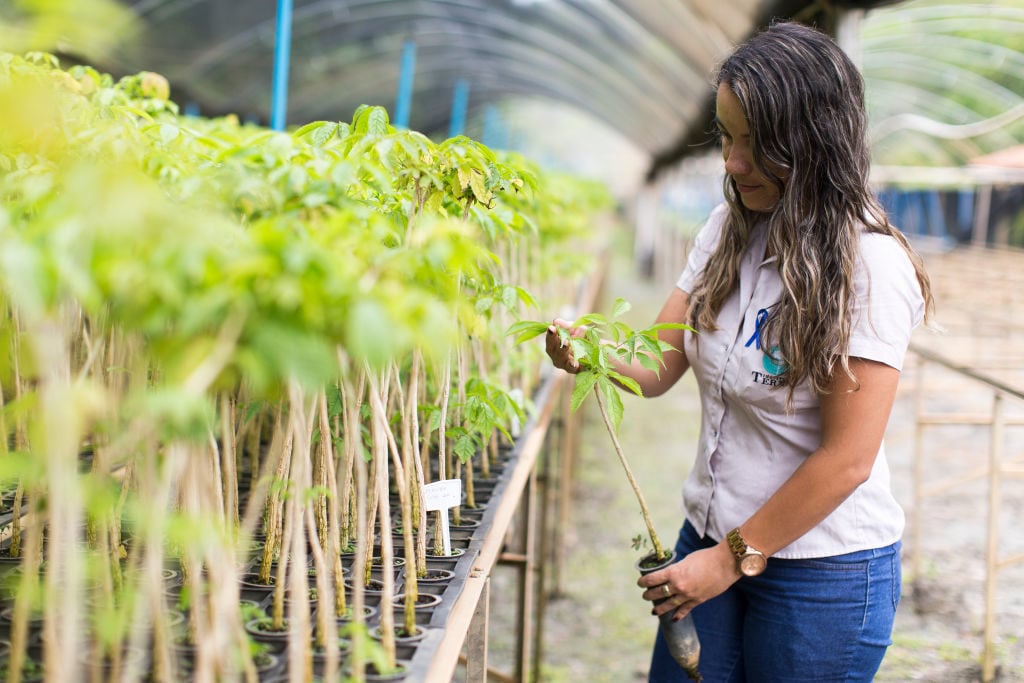
A reforestation project at Instituto
Terra in Brazil. Photo by Christian Ender/Getty Images.
Offset Carbon Emissions
In places where emissions cannot
be reduced, organizations can offset their carbon footprints
as a secondary aim.
This means funding emissions-reduction initiatives in an effort
to “balance out” one’s own carbon impact. Money can be given to
tree-planting initiatives, projects to protect forests, or to fund
renewable-energy programs.
Luckily, as we found out, it is very, very inexpensive to
do this.
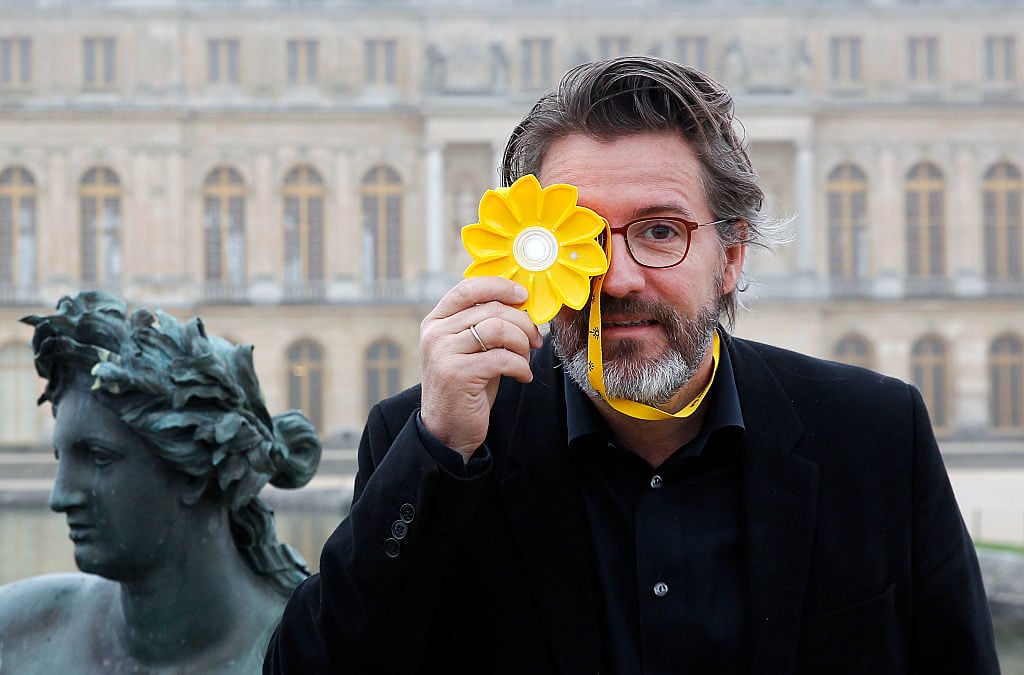
Danish-Icelandic artist Olafur Eliasson
poses with a little sun in front of the Chateau de Versailles.
Photo by Chesnot/Getty Images.
Stage Environmentally Themed Exhibitions
While science plays a key role
in conveying the urgency of the climate emergency, artists can also
play an important part.
Art has a way of getting ahead
of the general discourse because it can convey information in novel
ways. Lucia Pietroiusti even suggests a radical
redefinition of what constitutes an artwork.
Part of the ethos of the Serpentine’s General Ecology program is
to expand the definition of art to include environmental
campaigns.
“By calling something an artwork, you are allowing an
institution to support it,” she explains, adding that this is just
one of her “tricks” to allows arts institutions to support
environmental projects.
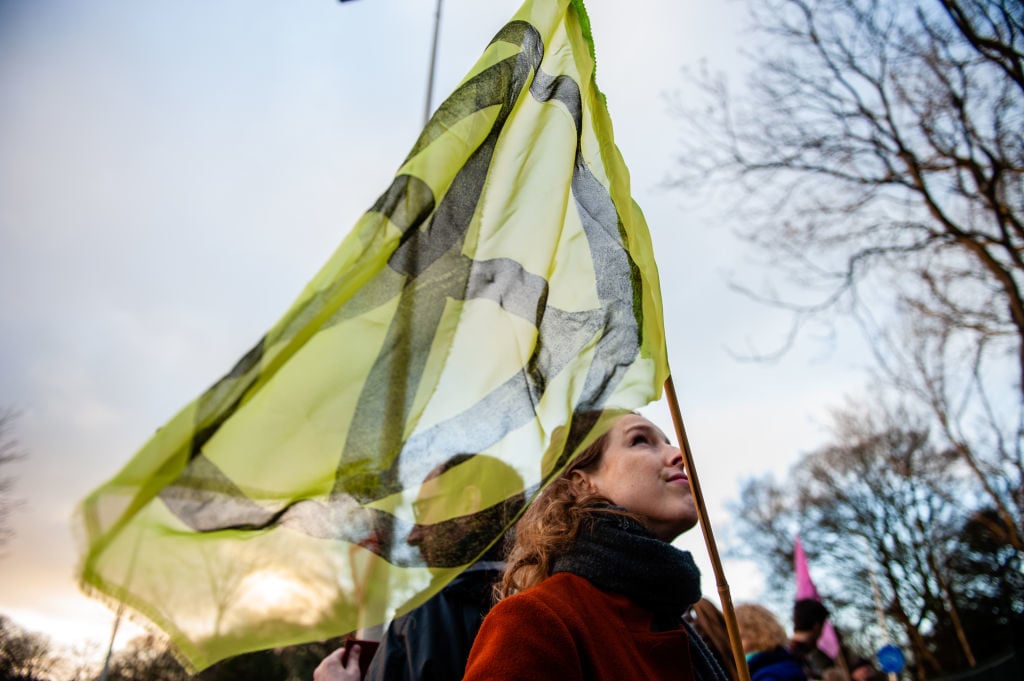
An activist from Extinction Rebellion.
Photo by Romy Arroyo Fernandez/NurPhoto via Getty Images.
Radically Rethink the Status Quo
As time goes on, it is becoming
increasingly evident that the art world needs to rethink its
existing structures to become sustainable.
“Business as usual is not
possible,” Frances Morris says. “The growth model is deeply
damaged. My whole career has been spent pushing at that growth
model, celebrating increasing activity, increasing numbers,
unstoppable acquisitions, accumulation of tangible heritage. All
that is up for grabs.”
So, instead of always pushing
for bigger and better productions, organizations need to think
about decreasing the size of their buildings and prioritizing
collections that don’t require enormous space. And instead of being
seduced by sponsorships from deep-pocketed organizations invested
in the fossil-fuel industry, institutions should look for new
funding models.
The post Abandon the Idea That Bigger Is Always Better and 4
Other Ways That Art Institutions Can Address Climate Change
appeared first on artnet News.
Read more https://news.artnet.com/art-world/climate-change-5-sustainability-tips-1791375
Further reading


Leave a comment