
After 450 Years in Storage, a Female Renaissance Master’s ‘Last Supper’ Is Finally Unveiled in Florence
A large-scale painting of the Last Supper by the female
Renaissance artist Plautilla Nelli has been hung on permanent
display in Florence. The work’s powerful subject matter and
expertise execution are finally being highlighted in an
art-historical canon dominated by men.
Nelli’s Last Supper had languished in storage
before it was pulled out four years ago to undergo restoration,
funded with private money and crowdsourcing. The fruits of the
conservation effort were revealed today as the 21-foot painting
went on permanent display at the Santa Maria Novella Museum
refectory in Florence. It stands opposite The Last Supper
by Alessandro Allori, a male contemporary of Nelli.
Often described as Florence’s first female artist, the
unveiling has be seen by some as poetic justice for anonymous
women artists everywhere, particularly amid the flurry of hype
around male artists from her epoch. European museums are currently
marking the 500-year anniversary of the death of Leonardo da Vinci.
During his time and Nelli’s, female artists were barred from going
to school and could not study anatomy or the male figure. If female
artists still managed work, their art, in many cases, was devalued
and fell into disrepair.
The organization Advancing Women Artists, which played a major
role in Nelli’s rediscovery and the restoration of her work, has
been attempting to uncover other pre-modern woman artists—though
Nelli seems to remain the undisputed star. “One will never get
closer to an artist than in the restoration studio,” says the head
conservator of the project, Rossella Lari. (The entire restoration
was spearheaded and carried out by women who are at the helm of the
restoration scene in Florence.)
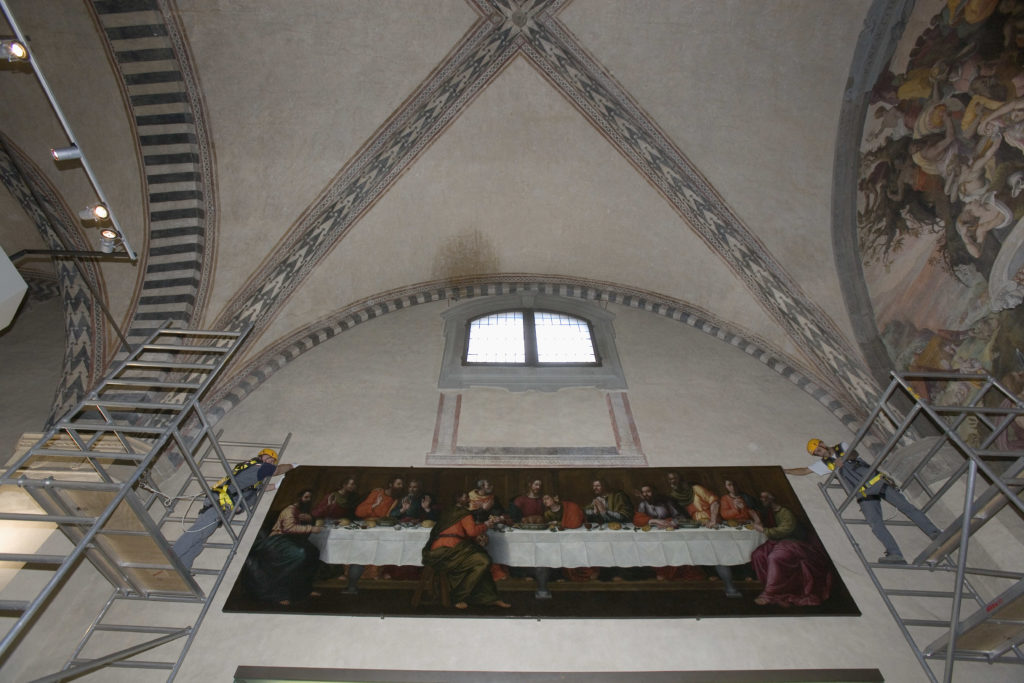
Nelli’s Last Supper on public
display. Photo: Rabatti & Domingie.
“We restored the canvas and, while doing so, rediscovered
Nelli’s story and her personality. She had powerful brushstrokes
and loaded her brushes with paint,” says Lari. “Plautilla knew what
she wanted and had control enough of her craft to achieve it.”
Born in 1524, Nelli became a nun and eventually established an
all-woman painter workshop at her convent, Santa Caterina di
Cafaggio. The nuns sold works to members of the Florentine nobility
and, as a result, established economic self-sufficiency.
The oil painting, stored away for 450 years, is the only known
work on the penultimate religious scene to be made by a female
artist from the Renaissance. It is also one of the largest
works by an early female artist. Italian Renaissance biographer
Giorgio Vasari, who wrote at length about Leonardo da Vinci,
mentioned Nelli in the second edition of his Lives of the
Artists in 1568. “She would have done wonderful things if
she had only studied as men do,” he wrote.
The signature on the painting reads: “Sister Plautilla – Pray
for the Paintress.”
See the work and its restoration, below.
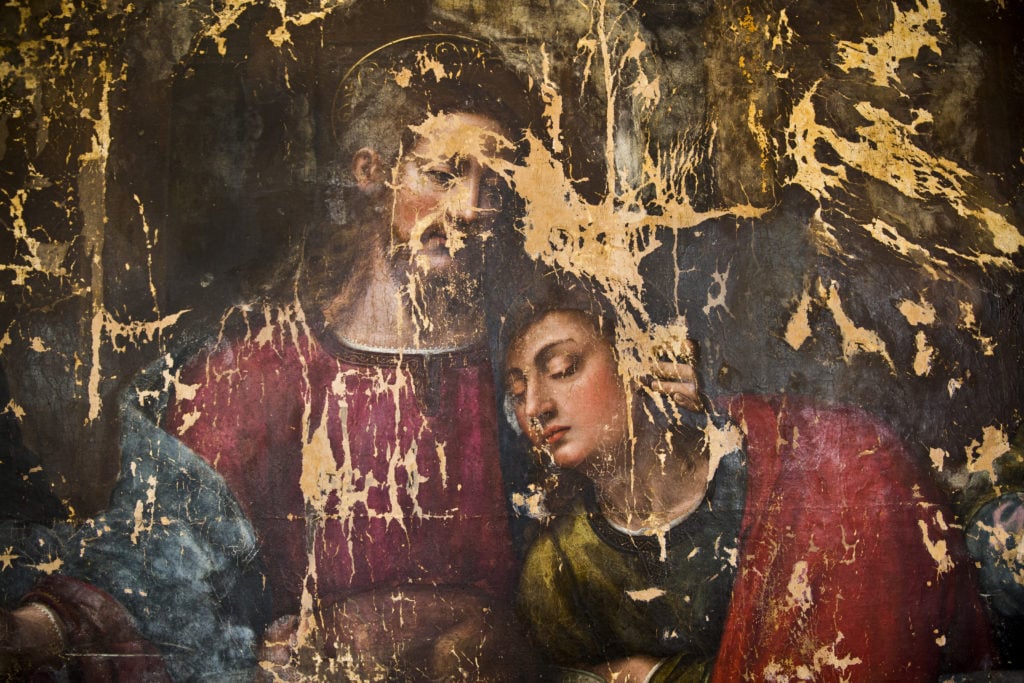
Christ and Saint John, pre-restoration.
Photo: Rabatti&Domingie.
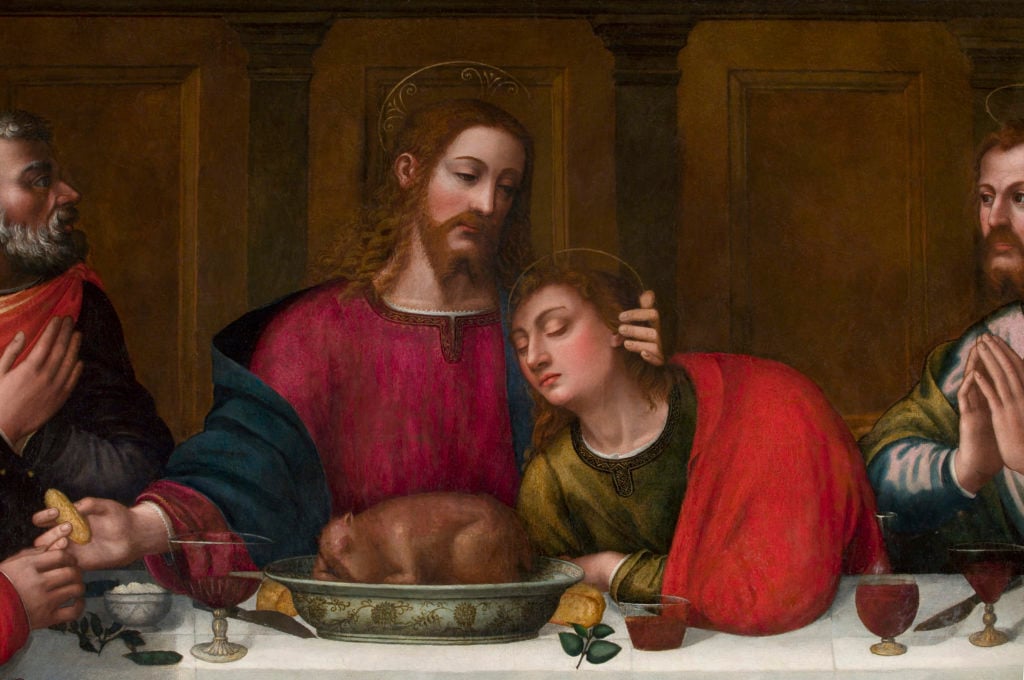
Christ and Saint John, pre-restoration.
Photo: Rabatti&Domingie.
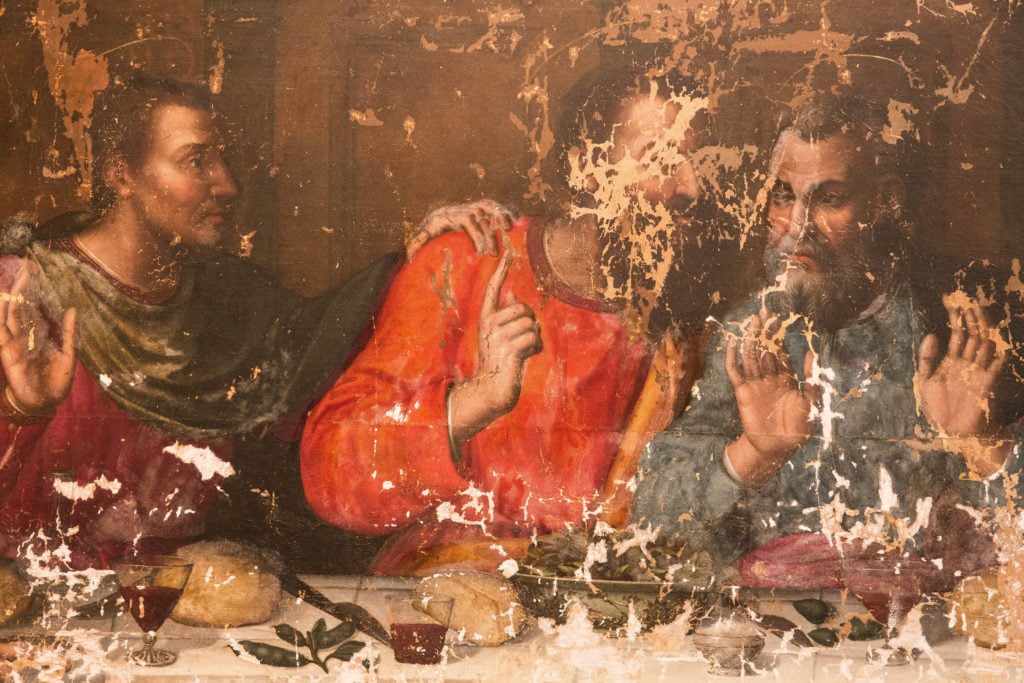
Nelli’s apostles, possibly Thomas and
Peter, pre-restoration. Photo: Francesco Cacchiani.
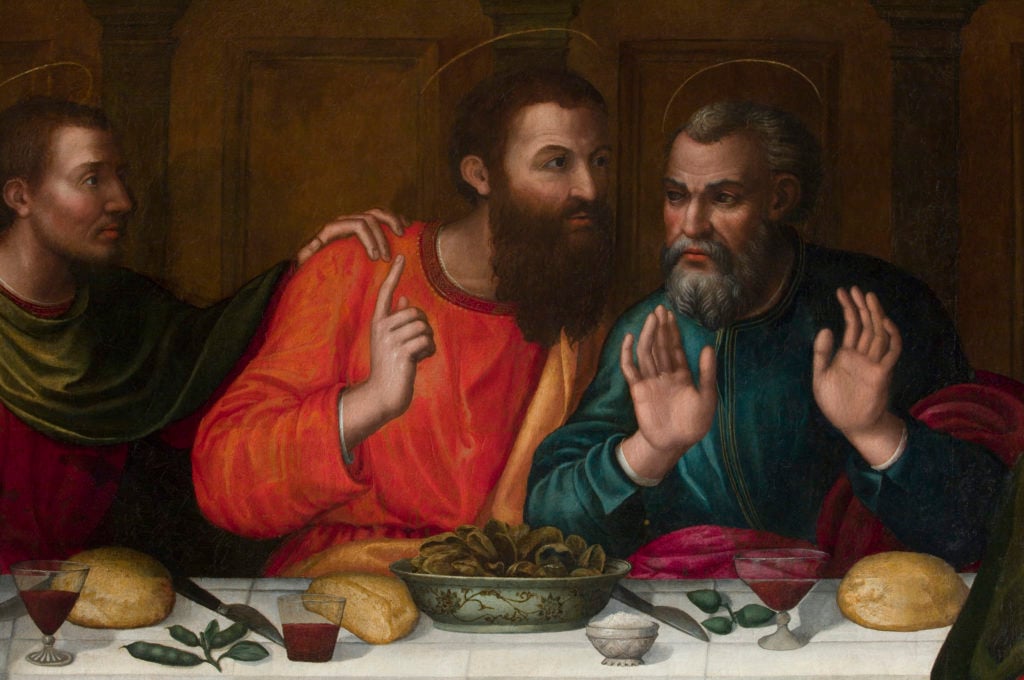
Nelli’s apostles, possibly Thomas and
Peter, post-restoration. Photo: Rabatti&Domingie.
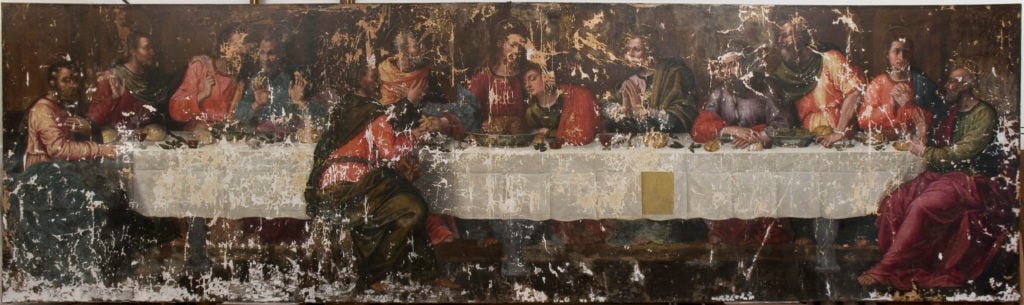
Full view of Plautilla Nelli’s The
Last Supper, pre-restoration. Photo: Rabatti&Domingie.
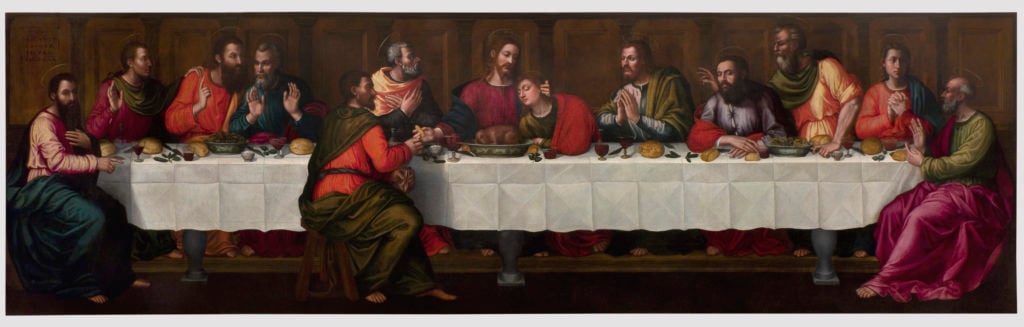
Full view of Plautilla Nelli’s The
Last Supper, post-restoration. Photo: Rabatti&Domingie.
The post After 450 Years in Storage, a Female Renaissance
Master’s ‘Last Supper’ Is Finally Unveiled in Florence appeared
first on artnet News.
Read more https://news.artnet.com/exhibitions/plautilla-nelli-last-supper-1681627
Further reading


Leave a comment