
After a Van Gogh Heist Rattled Museums and Collectors, Experts Weigh in on How to Protect Your Art During a Lockdown
It was only a matter of
time.
As art galleries and museums
around the world began shuttering for an indefinite period in the
name of public health, nefarious actors were gearing up to exploit
the unprecedented situation.
One museum director’s worst fear
was realized when opportunistic thieves made
off with a prized Van Gogh painting from a small institution in
the Netherlands. The theft was the first high-profile example of a
lockdown-related art heist, and threw into stark relief the fact
that collections everywhere need to brace themselves against
further attempts.
Smaller institutions and empty
private homes with museum-caliber collections are particularly
vulnerable, but larger institutions are not infallible and should
also take time to review their security measures.
With limited physical staff on the
ground, and preoccupied emergency services slower to react, the
chances of thieves escaping with irreplaceable treasures is a real
risk, even for the most sophisticated institutions.
We consulted leading security
experts on their tips for how museums can guard themselves against
theft during lockdown.
Update Your Insurance Policies
“I am concerned that in the rush
to make their collections digitally accessible to the public during
the lockdown, some museums ‘forgot to lock the door,’” Christopher
Marinello, chief executive at Art Recovery International, LLC,
tells Artnet News. “By this, of course, I mean take extra measures
to secure the collection. CCTV and alarms do very little when law
enforcement is occupied with health issues and unable to respond to
the call as they would normally.”
In the first instance, Marinello
advises that institutions and private collectors take time to
review and update their insurance policies. “Make sure files are
updated with provenance information, receipts and images,” he says.
“Institutions and collectors always claim that there is never
enough time for these critical exercises. Now, there is plenty of
time.”
Additionally, Marinello
recommends that owners review their existing security measures to
ensure that all systems are functioning properly. Will the alarms
go off at the right time? Are the CCTV cameras working and
delivering quality footage? With law enforcement possibly slower to
respond, owners could even “consider moving vulnerable collections
to specialist fine art storage facilities.”
But museums need to be looking
further than just battening down their own hatches. After all, the
stolen Van Gogh was on loan to the Singer Laren museum from another
Dutch museum. Marinello’s company represents a number of fine art
insurance firms, brokers, and loss adjusters, and he says that some
of these clients are now asking for the return of artworks on loan
to museums or on consignment to other dealers.
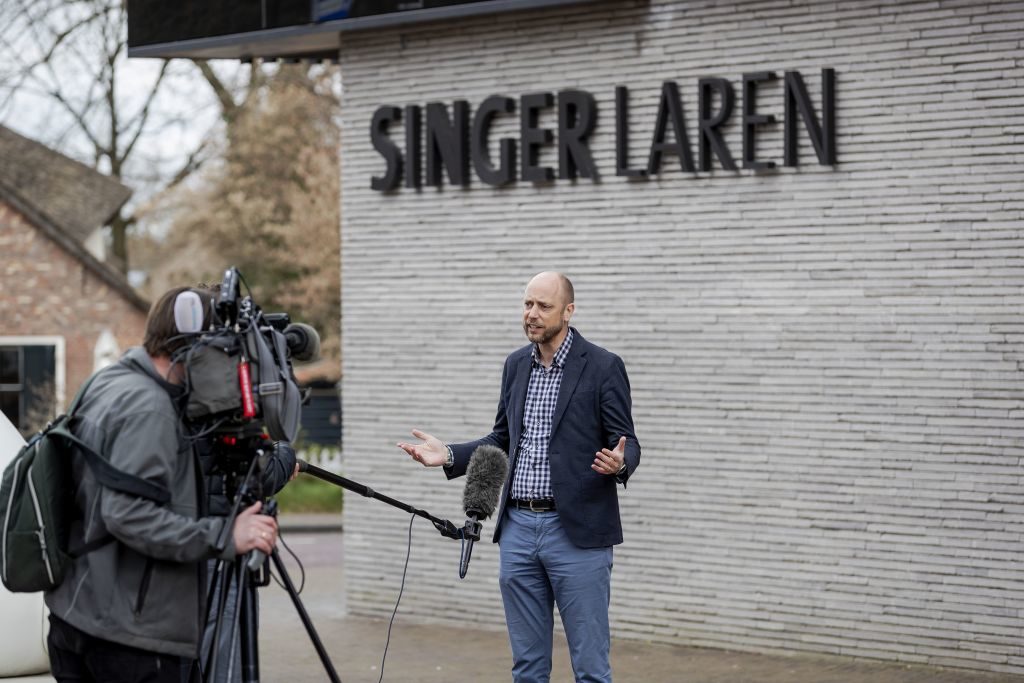
The Singer Laren Museum’s general
director Evert van Os speaks to the press after the theft of a Van
Gogh painting. Photo by Robin Van Lonkhuijsen/ANP/AFP via Getty
Images.
Brace for Cyber Attacks
The physical security of museums
and galleries is not the only thing at risk right now, as more
galleries have rapidly transferred their day-to-day business
operations to the digital marketplace. There has been an uptick in cybercrime across
all industries and the often less than tech-savvy art world
particularly needs to guard itself against attacks.
“Digital security measures must
be put in place,” Marinello says. “While some idiot art thieves are still outside
scoping out museums and galleries, others are plying their illicit
trade by hacking into gallery websites, using phishing scams to
gain access to invoice records, even hacking into Zoom (and other)
online conference sites.”
Jordan Arnold, the head of private client services and
strategic risk and security at K2 Intelligence FIN, a cyber
defense firm, also points this out. While an in-person heist is
limited to what a thief can carry out, it is easier to attack at
any scale online. Businesses should be wary of emails with links
or attachments—some are being sent out disguised as safety
guidelines and prevention tips, or even government bailout
programs—that turn out to be ransomware or other
cyberattacks.
Arnold warns that cyber
criminals may also set up hoax donation pages for major
institutions, small galleries, and even artists, to try to exploit
fundraising efforts for relief for lost staff wages or declining
revenue.
“The public must be extra
diligent about where they are clicking and where they are entering
their sensitive information, such as credit card details,” Arnold
says, adding that if an institution learns of a scam that
impersonates it, “they should make every effort to put out a public
disclosure about the scam to inform those donors or patrons who
might be inclined to contribute under false pretenses.”
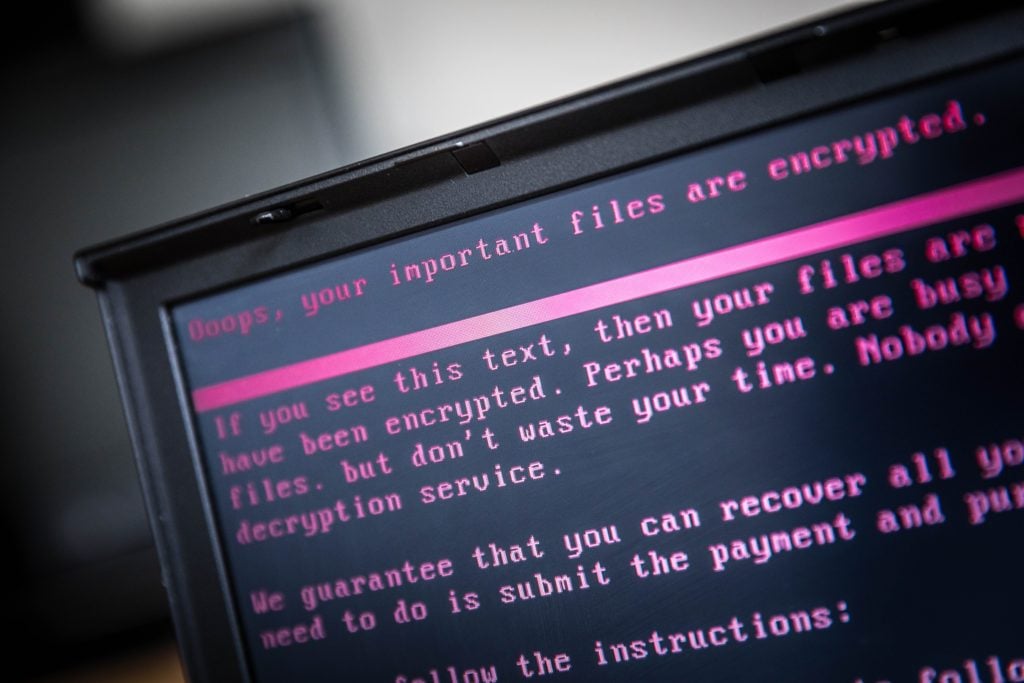
A laptop displays a message after being
infected by a ransomware as part of a worldwide cyberattack that
hit more than 200,000 victims in more than 150 countries in 2017.
Photo: AFP PHOTO/ANP/Rob Engelaar/Netherlands/Getty Images.
Deterrents and Physical Barriers
In terms of the physical threats
collections face, Arnold emphasizes the importance of deterrents.
Visible security cameras and signage indicating the presence of
cameras can be powerful enough to put a criminal off, as can basic
interventions such as bright lighting.
Arnold says that institutions
should also consider installing temporary barriers to entry. A
temporary metal barrier affixed to the structure of the building at
entry points could help block illicit entry. “In the event of a
theft, this kind of barrier can also slow a criminal down from
exiting the building with a piece of art or artifact, allowing
first responders more time to arrive on the scene,” Arnold says.
Other measures include glass security film to prevent smash and
grab heists such as that which happened at the Singer Laren.
“Instead of the glass shattering upon impact, it will spider and
make it more difficult and time consuming to break in,” Arnold
says.
Finally, private collectors,
galleries, and museums should all be taking regular inventory of
their collections. “One of the key determinative factors in whether
a theft gets solved is how much time passes between the theft and
the realization that the piece is missing: the bigger that window,
the less likely it is to be solved,” Arnold says.
A Silver Lining
These guidelines are good rules
of thumb in any time. As special agent Chris McKeogh from the FBI’s art
crime team in New York tells Artnet News, “museums are always at
risk of theft carried out by those who are well prepared and
determined to steal, regardless of the circumstances.”
But there might be a bright side
to the lockdown. While it makes sense to take preventative
measures, some experts, like McKeogh, believe that despite the
incident in the Netherlands, museums could actually prove to be
more secure during this period. “Most museums are closed to
visitors but are still staffed by security,” McKeogh says. “A
reduced number of outsiders in the museums cuts down on the risk of
crimes of opportunity.”
Erin Bast, senior underwriter for the art insurance firm
Huntington T. Block, agrees. “Now that it’s no longer business as
usual, we’re actually seeing some risks to physical collections
decrease. Museum visitors no longer pose a risk to the pieces, and
transit (the top art claim) isn’t a concern because art is staying
in place.” But Bast highlights another possible issue for
collections, one that is not linked to theft.
“It’s important for museums and galleries to be extra vigilant
when it comes to factors that can damage art like shifts in
temperature or humidity in rooms storing art, pests, and open doors
and windows,” Bast says. When museums are vacated in a hurry,
common sense conservation practices might fall to the wayside. She
suggests that it would be worthwhile to have someone on the ground
monitoring temperature and humidity.
Situations like we’re in now “provide learning opportunities and
new chances to improve future plans,” Bast says. “If you aren’t
sure what to do, reach out to others around you and don’t be afraid
to ask questions.”
The post After a Van Gogh Heist Rattled Museums and
Collectors, Experts Weigh in on How to Protect Your Art During a
Lockdown appeared first on artnet News.
Read more https://news.artnet.com/art-world/collection-security-during-a-lockdown-1821780
Further reading


Leave a comment