
As a Nationalist Fervor Takes Hold in Italy, Foreign Museum Directors Could Be on the Way Out
In 2015, Italy unveiled a
series of reforms that
had the potential to transform the country’s storied museums. For
the first time, foreign museum directors
took the helm at major institutions across the country and all
national museum directors were granted more independence than they
had had in the past. Now, however, those measures have been rolled
back. Under new regulations, approved in
June and signed into law last
week, some of that autonomy has been restored to the state
culture ministry.
Such changes have been anticipated for months, with culture
minister Alberto Bonisoli stating his preference for native
Italian museum leadership back in January. The new rules will
chip away at the reforms introduced four years ago, when Italy
expanded eligibility to foreign candidates, ran job ads in
the Economist magazine, and hired 20 new museum
directors, seven of whom were not Italian. Now, their contracts are
up for renewal this fall, but many are already on the way out.
Most dramatically, reports Monopol,
German-born art expert Cecile Hollberg was informed earlier
this month that her contract at the Galleria Dell’Accademia in
Florence would come to an abrupt end on August 22, rather than at
the end of November as planned. Controversially, the
counter-reforms would also merge the museum, home to
Michelangelo’s David, with the bigger Uffizi
Museum.
The Uffizi is also led by a German, Eike Schmidt, but he
announced in 2017 that he would take over as leader at
the Kunsthistorisches Museum in Vienna following his term at Italy’s
most-visited museum. During his tenure, visitors have increased
to 2.2 million people a year and the galleries have been revamped
to make it easier to see masterpieces by the likes of Raphael,
Sandro Botticelli, and Leonardo da Vinci.
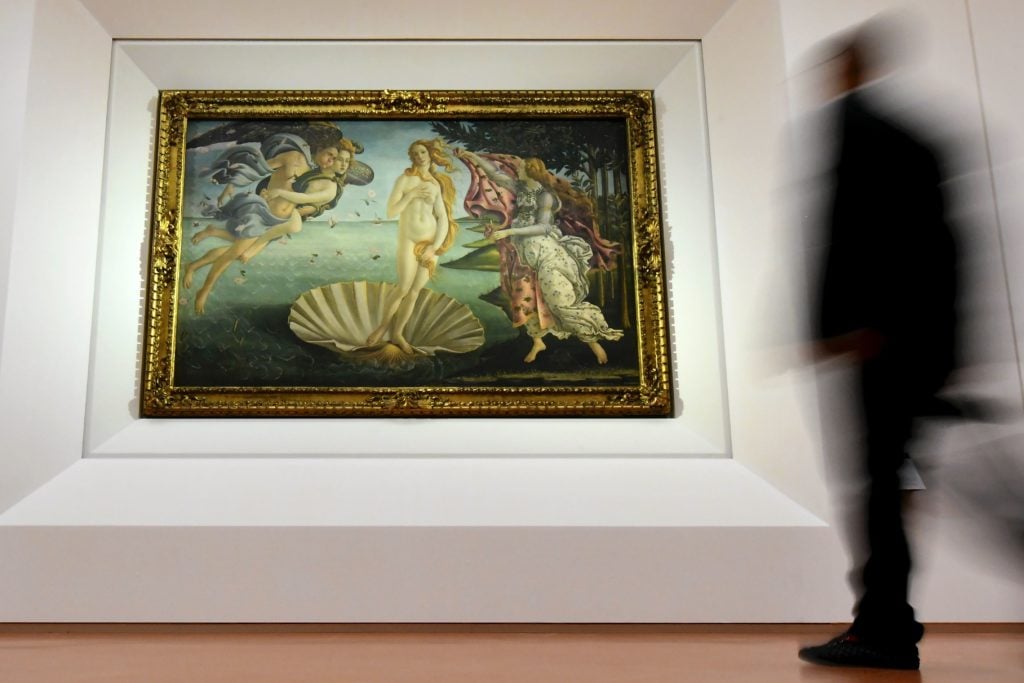
Sandro Botticelli, The Birth of
Venus (1485) at the Uffizi Gallery in Florence. Photo by
Alberto Pizzoli/AFP/Getty Images.
Meanwhile, two Austrians, Peter Assmann and Peter Aufreiter,
have decided to take jobs in their home countries following the
conclusion of their terms as directors of the Ducal Palace in
Mantua and the Galleria Nazionale delle Marche in Urbino,
respectively, according to the Associated
Press. Auferiter will lead the Technical Museum in
Vienna; Assmann, the Austrian National Museum.
Finally, James Bradburne, a British Canadian, doesn’t yet know
if he’ll be asked to stay on as director of the
Pinacoteca di Brera in Milan. “With the current
turbulence in Italian politics, it is hard to know what will happen
next, so we just have to wait and see,” he told the Telegraph.
Also unknown are the fates of French art historian Sylvain
Bellenger at the Capodimonte Museum in Naples and Germany’s Gabriel
Zuchtriegel at the Paestum Archaeology Park.
Beyond leadership changes, the government is also stripping
museums of much of their power by restoring its right to veto
museum spending and to control exhibitions and international
loans—of note given Italy’s recent
reluctance to loan works by
Leonardo to the Louvre in Paris for an exhibition for the
artist’s 500th death anniversary. Museums’ independent boards of
trustees will also be abolished.
In a press release, the
Italian culture ministry insisted that the changes would actually
strengthen museums’ autonomy, and clarified that dissolving the
museum boards was a way to “simplify, as their opinions were
already approved by central management.”
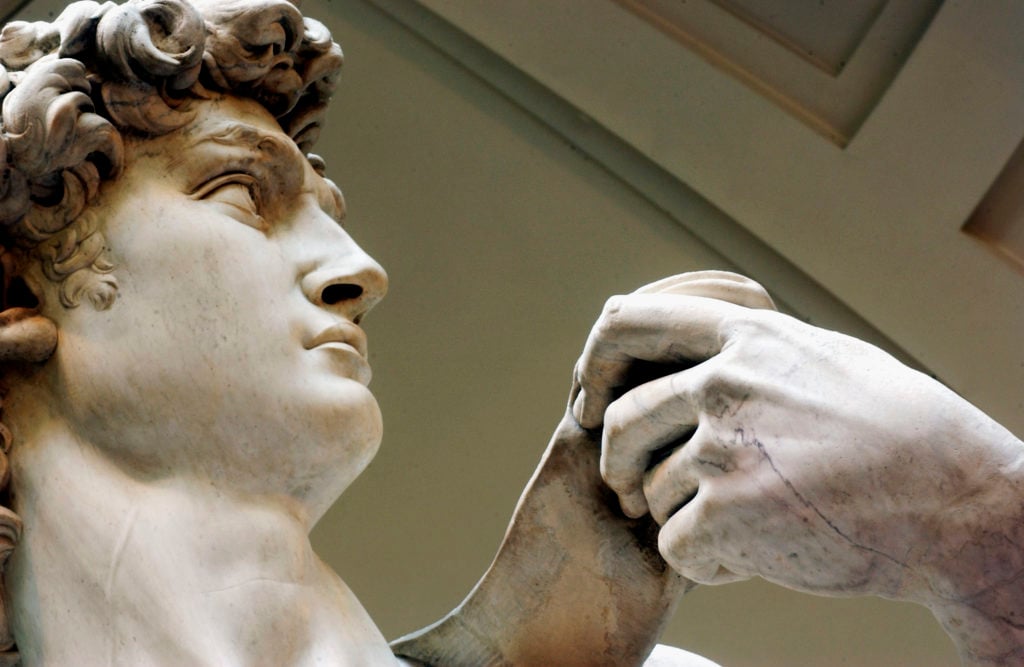
Michelangelo’s masterpiece David at the
Galleria dell’Accademia in Florence. Photo by Franco Origlia/Getty
Images.
But many see cause for concern. “With the centralization
involved in this latest reform, we can see that it goes
hand-in-hand with the politicization of the museum system,”
Schmidt told the Financial Times.
“I do not think there is a country in the free and western world
with such a centralized politics of culture as it is being set out
in Italy now.”
The counter-reforms were pushed through by the country’s
populist, right-wing government at a time of political turmoil for
the nation, which saw its parliament collapse this week.
For the past 14 months, the country has been led by a
nationalist-populist coalition between the anti-establishment
Five Star Movement, which took 33 percent of the vote in the 2018 election, and
the anti-migrant League party, under Prime Minister Giuseppe Conte.
But that arrangement crumbled after League leader Matteo Salvini
withdrew from the coalition and Conte tendered his resignation on
Tuesday. If a new majority government is not formed, the country
will hold snap elections.
The post As a Nationalist Fervor Takes Hold in Italy,
Foreign Museum Directors Could Be on the Way Out appeared first
on artnet News.
Further reading


Leave a comment