
As an Older Generation of Major Museum Philanthropists Recedes From View, Will Younger Patrons Step in to Fill Their Enormous Shoes?
Last year was likely a sorrowful one in some museum
development offices, for it was a year that mega-donors across the
nation—including Stefan Edlis, who gave hundreds of millions of
dollars to Chicago art institutions; longstanding Metropolitan
Museum trustees Jayne Wrightsman and David Koch; and Mary Margaret
“Moo” Anderson, who established an art museum at Stanford
University—died.
Now, as the remaining members of this class of super
philanthropists grow older, some museums are wondering whether
a younger generation will step in to fill their shoes—especially as
priorities are changing in an age of climate change, mass
incarceration, income inequality, and other societal
injustices.
“Cultural institutions are going to have to work very hard to
make the case that we’re a critical part of the mix that makes life
worth living,” says Christopher Stevens, chief of advancement at
the Walker Art Center in Minneapolis.
Some observers expect that the changing of the guard will happen
naturally in time. “I’m not seeing a gap, but perhaps a moment of
transition, or a pause,” says Madeleine Grynsztejn, director of the
Museum of Contemporary Art Chicago. “We have seen a growing
generation of younger donors. And whereas they might not be able to
give their incredible collections away tomorrow, they are on track
toward executing them in a way Stefan [Edlis] and [his wife] Gael
did.”
A Dwindling Pool of Donors
While the aging of a generation of leading museum donors is
“something about which people express anecdotal perspectives,”
according to Christine Anagnos, executive director of the American
Association of Museum Directors, “the data we do have does not
necessarily point in that direction.”
The amount of money that museums receive from individual donors
hasn’t declined much in recent years—hovering at around 10 percent
of museums’ total revenues, according to a 2018 report from
the association.
But the number of donors pledging those gifts has decreased,
even while the sums of their gifts have gone up. “Essentially, the
growing inequality of wealth is reflected in philanthropy,” says
Elizabeth Merritt, vice president of strategic foresight at
the American Alliance of Museums. Today, 20 to 30 percent of
all individual giving in the US comes from the “ultra wealthy”:
people with a net worth of $30 million or more, according to a 2019
report from the financial intelligence firm Wealth-X.
This could pose a big problem for museums in the future.
“Even if you’re fine now, you’re concentrating your risk,”
Merritt says. “If you had 50 major donors and you lose three, it’s
not as big of a deal as if you have five huge donors and you lose
one.”
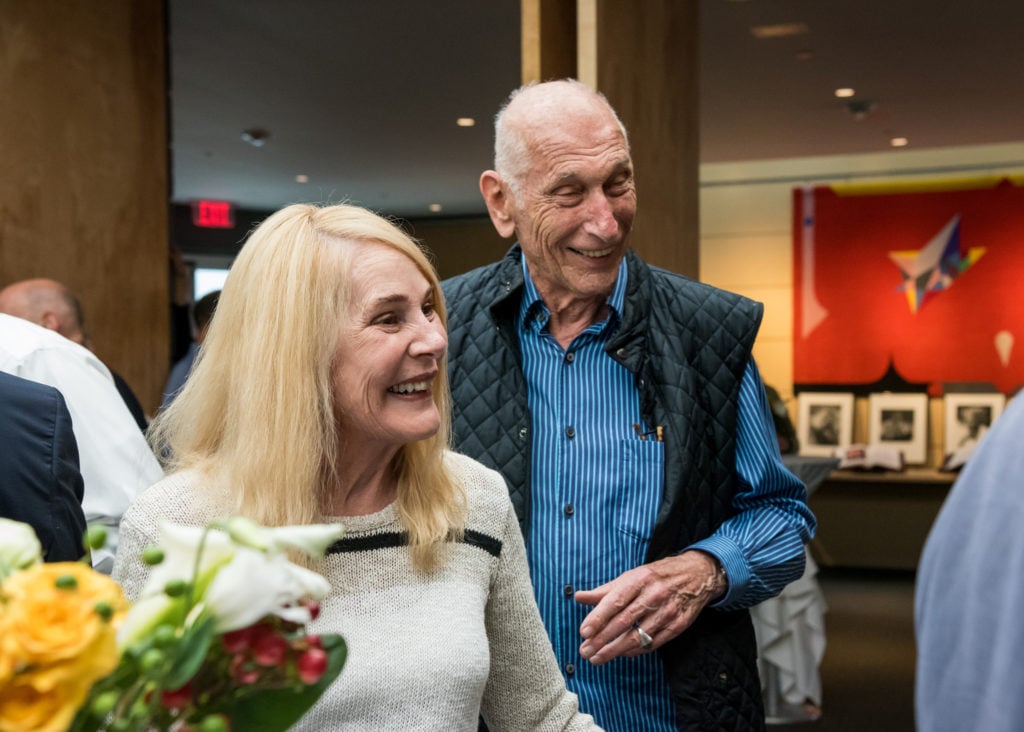
Stefan Edlis and Gael Neeson. Photo
courtesy of the Aspen Institute via Flickr.
Broadening the Base
Some museums are addressing the new reality of dwindling donor
pools by diversifying their bases to include lower-net-worth
patrons. “People are advocating that museums have to realize anyone
can be a donor,” Merritt says. “A volunteer might give and be
a donor.”
The Walker Art Center, for example, has changed the nature of
its fundraising events to attract more people at lower ticket
prices. Instead of an annual gala dinner with celebrity chefs like
Wolfgang Puck, which used to draw 200 guests at around $1,250 a
head (and brought in a net profit of $160,000 at its final
edition in 2010), it now hosts the “Avant Garden” party, where
tickets start as low as $125 and draws 1,500 guests. Its September
2019 event raised $1 million.
The Walker has also introduced sustaining memberships, long a
staple of public-radio fundraising, that auto-renew annually at
rates as low as $5.42 a month.
The Minneapolis Institute of Art, meanwhile, has established an
in-house analytics team to study the engagement and philanthropic
habits of its four main categories of visitors in an effort to
increase giving across all segments, not just the top, according to
Merritt. “They’ve created strategies so that once they know where
you’re coming in, they can move you to the next level,” she
says.
Despite these efforts, many development administrators are
doubtful that they’ll ever be able to rely on small donations
alone.
“Of course everyone’s goal is to broaden their base of support
but I still think it’s going to be really important that museums
are able to attract people who are making major substantial gifts,”
Stevens says. “I don’t think that’s going away.”
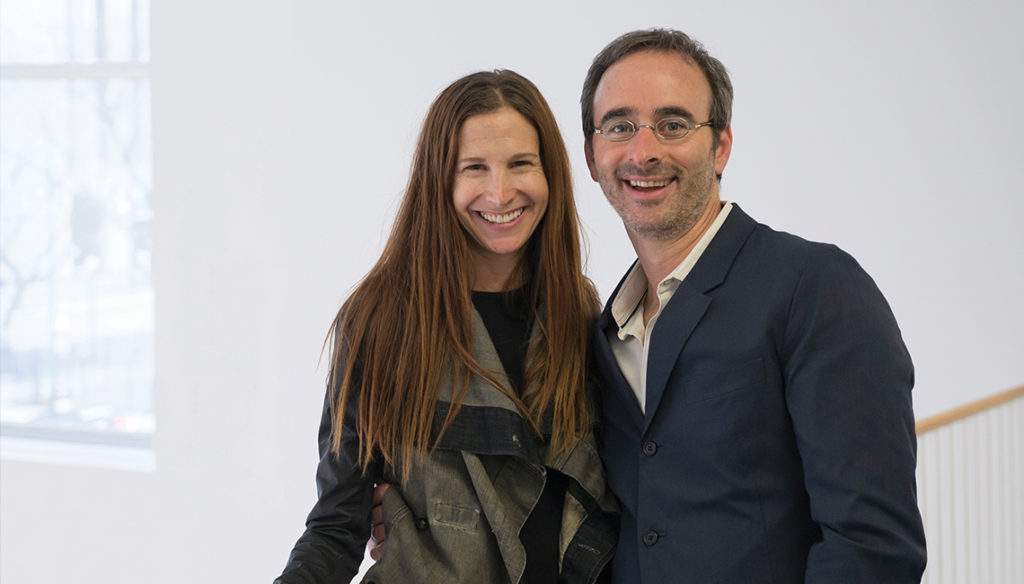
Elizabeth and Eric Lefkofsky, courtesy
of the Lefkofsky Family Foundation.
Accommodating Younger Patrons
Compared to their older counterparts, millennial donors
overwhelmingly prefer to commit their dollars to causes rather than
to individual institutions.
Nearly 90 percent of millennial philanthropists said that a
“compelling mission” was what motivated them to give, “not an
organization,” according to a 2018 study from the
Millennial Impact Project.
“Younger donors want to support museums in different ways, not
just collecting and donating works of art,” Grynsztejn says. “They
want to underwrite free admission”—as Groupon founder Eric
Lefkofsky and his wife Liz did for the MCA Chicago in 2017—”or
underwrite paid internships. They’re interested in making the
museum an environment of great inclusion as well as art. They have
a beautiful purview of bettering society.”
Now, the MCA is entering a fiscal year where all of its
internships will be paid. “This is very much our trustees’ and
donors’ response to the recognition that the most powerful lever
you can pull to diversify the art profession pipeline is paid
internships,” Grynsztejn says.
The Walker, too, responded last year to the growing demand for
opportunities to focus on social issues by establishing an
education council to operate alongside its existing patron circles,
such as the producers’ and collectors’ councils. The education
council now gives donors the chance to directly fund initiatives
that improve accessibility for visitors who gave Alzheimer’s,
autism, or other special needs.
So far, “people are responding positively,” Stevens says.
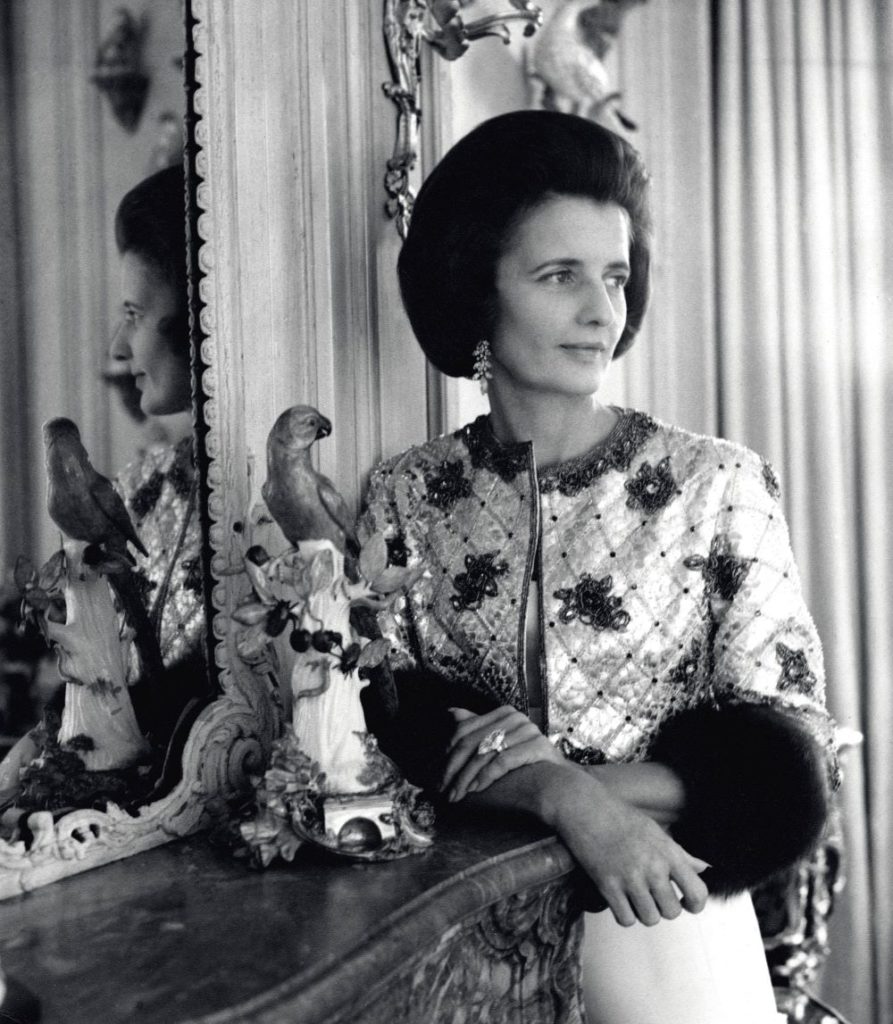
Jayne Wrightsman. Image courtesy of
Christie’s.
Unintended Consequences
As museums look beyond traditional sources of support to meet
their fundraising needs, they are encountering pleasant surprises
and unforeseen challenges.
On the plus side, a more diverse base of donors will likely lead
to more diverse art donations in the future. The MCA Chicago has
been courting international patrons such as Dimitris Daskalopoulos
from Greece and Robert Defares from Amsterdam (who donated to the
museum the largest collection of works by Arthur Jafa in the
US).
“If you internationalize your board and your staff you will
eventually internationalize your collection, which is very
important,” Grynsztejn says.
But others are wary of younger philanthropists’ greater tendency
to get personally involved in the causes they support.
“The nature of trustees today is a little bit more people who
are used to being actively involved, not people who inherited money
or married money as it often was in the past,” says George Goldner,
a former curator at the Metropolitan Museum of Art. “They’re people
who made money. That’s a good thing in a way, but they’re not used
to laying back and letting other people decide for them.”
That could lead them to potentially push their own agendas at
the expense of museum leaders’ expertise. “In the old days you had
someone like Jayne Wrightsman, a wonderful trustee at the Met,
and when I started collecting Dutch drawings she had no real
personal interest in that yet at one point she said, ‘George, I’m
really happy you’re buying all those drawings because we didn’t
have any of those.’”
“New donors or trustees want to feel like they’re participating
in a lot of decisions and the money is used in a way that pleases
them and sometimes it goes beyond what I think is appropriate,”
Goldner added.
Even if there are no young collectors who emerge in the mold of
Wrightsman or Edlis again, Grynsztejn is optimistic that
younger generations will bring the change we most need now. “There
are not many donors historically who have approached the level of
giving, donating, and gathering major masterworks as Edlis in the
history of art,” she says. But Edlis also collected blue-chip art,
primarily by white Western men like Jeff Koons, Andy Warhol, and
Damien Hirst. Now, diverse donors likely will bring diverse
giving.
“It’s not only the generational shift that has
changed,” Grynsztejn says. “The environment has changed the
idea of what might be recognized as a world-class collection.”
The post As an Older Generation of Major Museum
Philanthropists Recedes From View, Will Younger Patrons Step in to
Fill Their Enormous Shoes? appeared first on artnet
News.
Read more https://news.artnet.com/art-world/aging-generation-museum-patrons-1791402
Further reading


Leave a comment