
Before He Died, Ulay Established an International Foundation in His Name. Here’s How It Plans to Promote the Artist’s Complex Legacy
It’s often said that the true
dawning of an artist’s legacy begins only after his or her death.
But when it comes to Ulay, the celebrated performance artist,
photographer, and ex-romantic partner of Marina Abramović, his
legacy was well established during his pioneering and, at times,
scandal-ridden career.
But in the wake of Ulay’s death,
on March 2, after a long battle with cancer, the people he left
behind are beginning to reimagine his legacy. Ulay, born Frank
Uwe Laysiepen, had spent the better part of the last year launching
a project space-cum-archive between the two cities he called home:
Ljubljana, Slovenia, and Amsterdam.
In his last televised
interview, Ulay described his bespoke space as a
“connecting point,” saying that it meant “almost everything” to
him. He officially launched the Ulay Foundation and Project Space
late last year in Ljubljana, though it did not quite have the
chance to fully lift off before the artist’s health began to
decline. Now, the multi-faceted project is dedicated to
re-evaluating the artistic trajectories he helped
shape—most notably performance art and photography,
but also socially and politically engaged art—as it plans mentorships, creative
collaborations, as well as a
major retrospective at the Stedelijk museum in Amsterdam, the
artist’s largest to date.
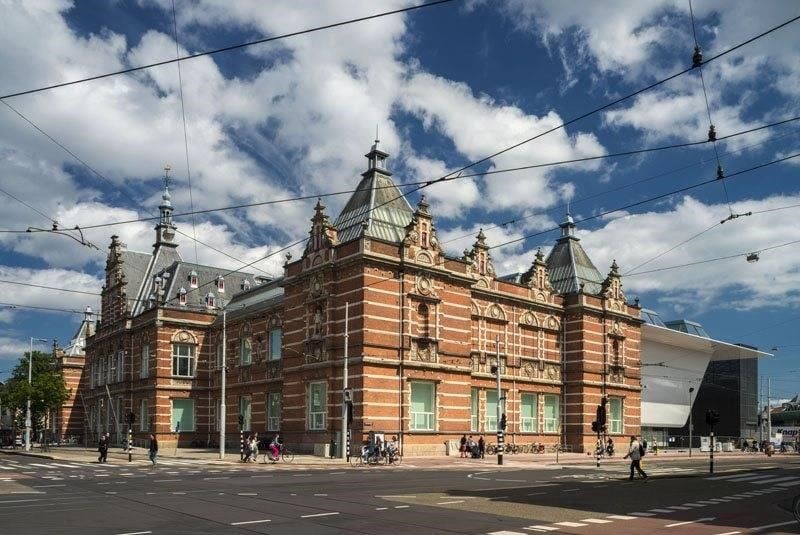
The Stedelijk Museum. Image courtesy of
the museum.
A
Posthumous Retrospective
For Hana Ostan Ožbolt, the
managing director of the foundation and project space, a big part
of her job now involves thinking about how to preserve the legacy
and archive of an artist who defied easy categorization. “It’s hard
to grasp the variety of his oeuvre, much less the complexity of his
artistic expression, which is not solely photographic or
performative, but is at the intersection of both, and much more,”
she says. Considering Ulay’s legacy becomes about manifesting
an archive that runs counter to every rule in the book.
That challenge is at the
forefront of Ožbolt’s mind as she helps organize Ulay’s work for
his hometown retrospective at the Stedelijk in November.
Amsterdam is deeply rooted in
Ulay’s practice, and is probably the city where he had his
strongest network after he first emerged on the European art scene
in the 1960s.
Many artists were drawn to
Amsterdam at the time for its freewheeling spirit, as ongoing
student protests rocked the city and the values of democracy and
social justice were hotly debated.
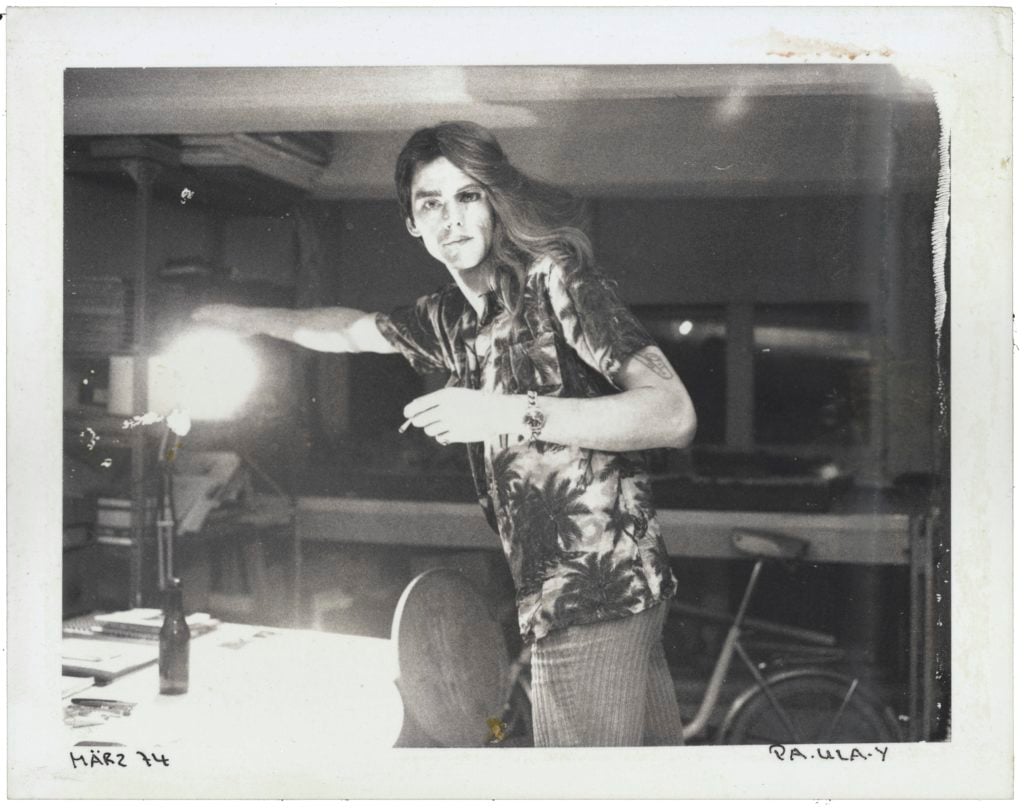
Ulay, She (1973-74).
Courtesy of the Ulay Foundation and Project Space.
In the latter half of the 1970s,
Ulay, together with Abramović, began to frequent the art center De
Appel, and for many years it served as the couple’s permanent
mailing address in Europe. During that time, Ulay also started to
engage with the Stedelijk Museum, designing various posters and
working with the institution on projects and group shows. So it is
only fitting that the Stedelijk is now set to host Ulay’s largest
and most comprehensive retrospective to date.
According to the museum’s
director, Rein Wolfs, the retrospective is borne from an
art-historical responsibility not only to Ulay, but also to the
city of Amsterdam more broadly. “Ulay left an indelible mark on the
city,” he says. “Already in the 1960s and ’70s, he was working on
subjects that were very important, though not necessarily
widespread at the time, topics like gender, performance, and how
one works with body awareness.”
Ulay was also a “chronicler of
the social and cultural revolutions taking place in Amsterdam at
that time,” Wolfs says. “Part of what we want to highlight are some
of Ulay’s lesser known works that are linked to Amsterdam
specifically, with the exhibition ultimately focusing on both the
strong artistic positions of Ulay, be they documentary or
performative, but also how they intersected with the evolving
cultural and social milieu of the times.”
Until now, Ulay is perhaps best
known for his artistic and romantic liaison with Abramović, which
lasted from 1976 to 1988, and ended with one of the best-known
breakups in art history: when the pair walked toward each other
across almost 3,700 miles of the Great Wall of China and then
parted ways. It is worth considering now, posthumously, how Ulay’s
legacy looks outside of Abramović’s overwhelming specter, which is
part of the exhibition’s aim. So while the Stedelijk will show
precious documentary footage of their collaboration, it will not
reenact their celebrated performances.
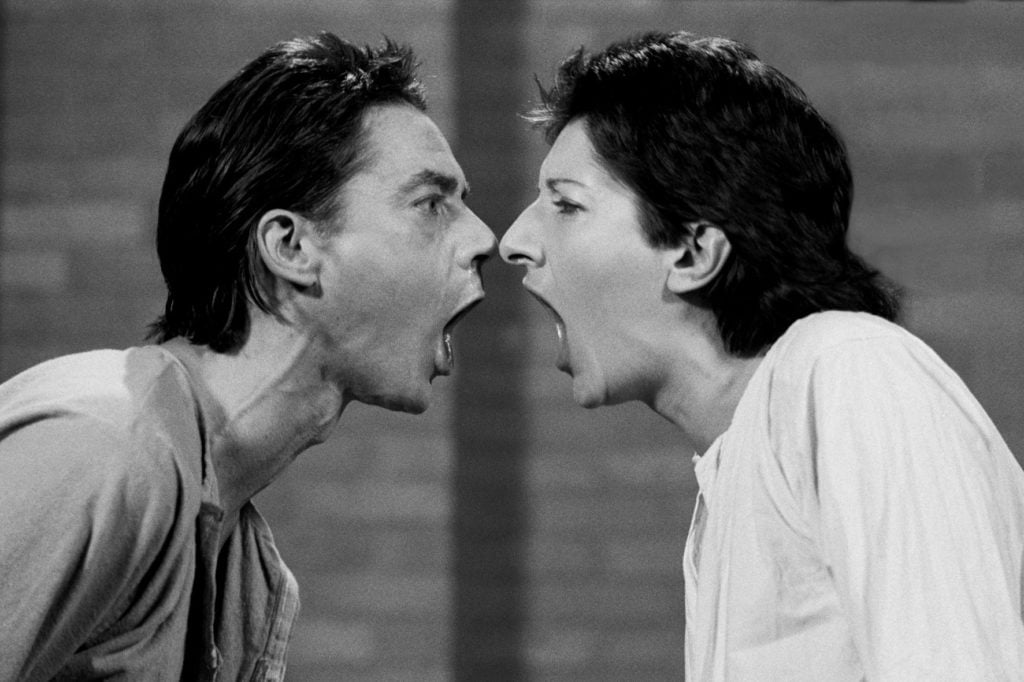
Ulay and Marina Abramović,
AAA-AAA(1978). Photo courtesy of the Marina Abramović
Archives VG Bild-Kunst, Bonn (2017), ©Ulay/Marina Abramović.
‘Ulay Lives’
A few blocks from the project
space in Slovenia, graffiti appeared in the days after his death
that read: “Ulay Lives.” His death caused waves in the eastern
European nation and it was where his community was planning to host
his funeral before it was called off due to the global lockdown.
The project space is also more or less on hold, much of its
programming moving online or planned for the summer and
fall.
Before he died, Ulay was clear
that he did not want the physical space to be confused with a
gallery. Rather, the artist intended it to be an unhinged,
multi-discipline platform. It was, in other words, a reflection of
Ulay’s nomadic and spirited way of living and working.
His partner of the last 11
years, Slovenia-born designer Lena Pislak, co-founded the project
and says that Ulay’s founding concepts for the space will live on.
“Our idea is and remains to keep the spirit of Ulay alive,” Pislak
tells Artnet News. “But [our purpose now] is also to broaden an
understanding of his work not only for art specialists—curators,
artists, and art historians—but also to introduce his incredibly
unique way of living and working to young artists and
students.”
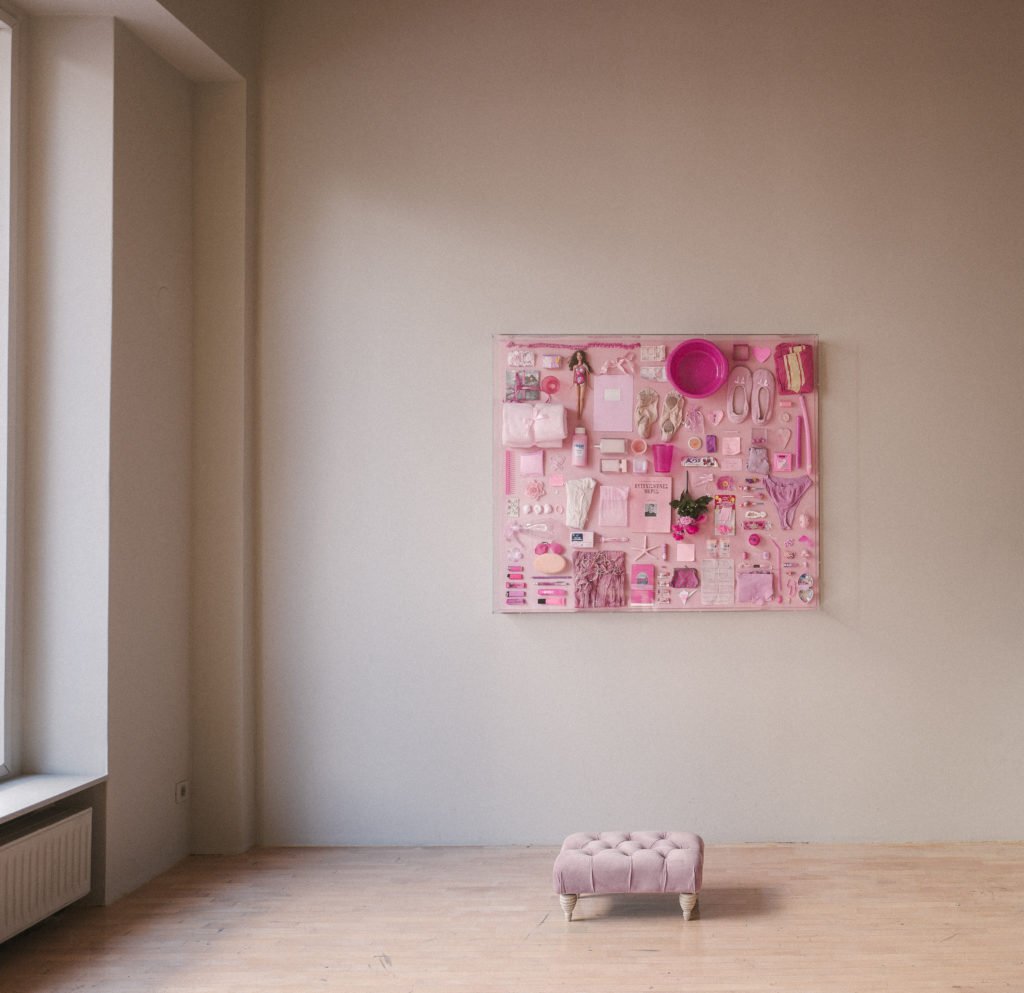
ULAY Foundation Project Space. Photo:
Rosa Lux.
Unpacking Ulay
One of the foundation’s
principal aims is to educate young people via its para-academic
program called “Academia Nuts.” Workshops will be carried out in
collaboration with one of Slovenia’s oldest and most respected art
festivals, Fotopub, to offer out-of-the-box education targeted at
cultural practitioners from different disciplines. The lecturers
and mentors for the first edition, which began earlier this year
but is now taking place online, includes respected artists and
thinkers like curator Saskia Bos and activist group Extinction
Rebellion, among others.
Prior to his death, Ulay also
created another mentorship program that comes in the form of a
suitcase, packed with objects he personally selected. Artists will
be given funds for a nomadic residency as well as a bag, which
contains a Polaroid camera, a laptop, a scarf, and other items
relating to the artist’s practice—almost like a message. The
project is spearheaded together with ZOO Magazine, and the aim is to support travel to a
different city each year while creating a dialogue between selected
artists and Ulay’s archive. Artists can keep the items in the
suitcase after the residency.
“I’m not a linear, consistently
producing artist,” Ulay had once said of his work. As such, the
plan to disperse pieces of it was a way of providing nourishment
for a future generation.
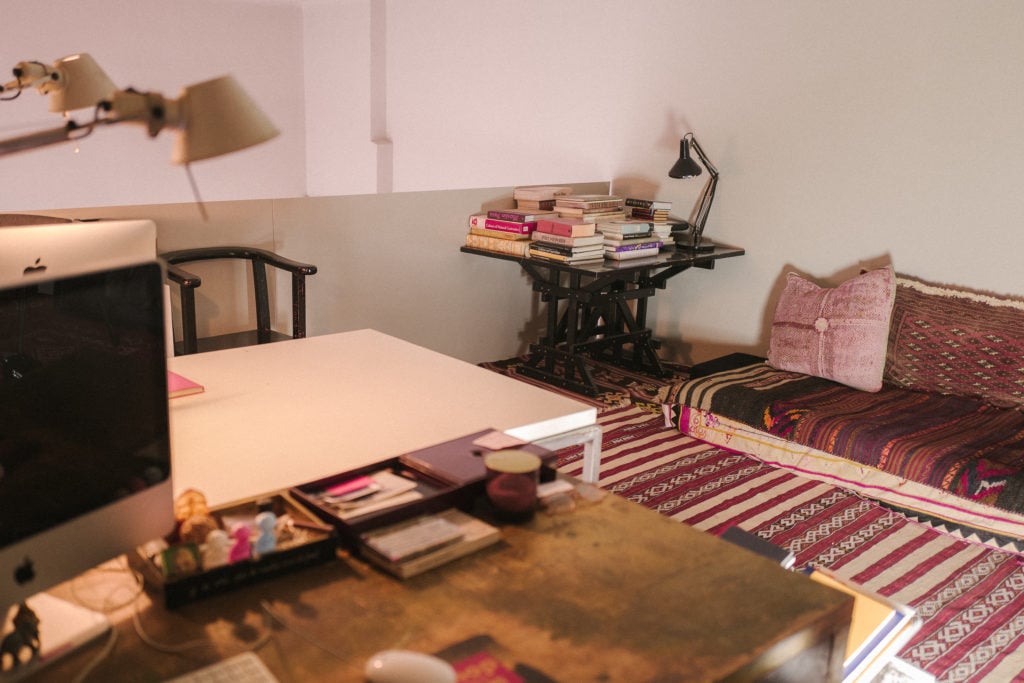
ULAY Foundation Project Space. Photo:
Rosa Lux.
The bulk of Ulay’s estate and
archive will remain intact, and it is presently being managed by
Pislak, who is the executor of the late artist’s estate. It
includes thousands of never-before-seen Polaroid photos, negatives,
and ephemera from past performances. The Ulay Foundation and
Project Space is also forging ahead with the difficult and
sometimes chaotic task of organizing and cataloguing the objects
and artworks. The goal is not only to categorize things for
posterity, but also to reimagine how an archive can function and
open up questions about continuity and rupture—themes that were
central to Ulay’s practice.
One of the most incisive
iterations of this is a project called Code of Conduct, which brings together 121 “partners in
performance,” as Ulay called them, and was first realized in Thessaloniki,
Greece, in 2015, at a time when the country was struggling to come
to terms with both the financial and refugee crises. The
undocumented performance was preserved in the form of various pink
objects that had been gifted to Ulay over the span of four days by
121 people who were invited to ask him any question they wanted in
exchange for bringing him a pink gift. “Pink,” Ulay said at the
time, “is the color of my soul; it contains the most
light.”
He also associated the color
with pain, loss of trust, and with the vulnerability that
characterizes this period of his life. “Why feeling blue in blue, I
am feeling blue in pink,” he said. The end result, an ornately
decorated work mounted to the wall of the foundation and project
space in Ljubljana, stands as a testament to Ulay’s life, one that
was permanently in flux, ephemeral, transitory, a
gesamtkunstwerk of huge relational and social
proportions.
The post Before He Died, Ulay Established an International
Foundation in His Name. Here’s How It Plans to Promote the Artist’s
Complex Legacy appeared first on artnet News.
Read more https://news.artnet.com/art-world/ulay-foundation-project-space-1829595
Further reading


Leave a comment