
Berlin’s Most Notorious Bouncer on His Day Job as a Photographer, and What It’s Like to Be a Symbol of a Vanishing Club Scene
Sven Marquardt is probably the most famous doorman in the world.
As the stone-faced gatekeeper of the Berlin nightclub Berghain, he
admits or denies the hordes of people who hope to attend the
venue’s coveted parties. His criteria for entry is undisclosed,
mysterious, and the source of tired speculation. Marquardt is known
for glancing over at shivering tourists for a brief moment and,
with the slightest shake of his head, sending them off into the
night, clueless as to what went wrong.
Marquardt stands on another threshold too: The door is his
weekend gig and, by weekday, he is a photographer, a pursuit he
picked up in the late 1980s while roaming around East Berlin before
the Wall fell. Today, he is represented by Berlin’s DJ label Ostgut—the only
artist on its list who is not a DJ. Before the crisis, Marquardt
was teaching photography seminars in Florence and Berlin and, last fall,
his collaborative installation with German DJ Marcel Dettman, an
influential figure in contemporary techno, appeared in a group show at C/O Berlin
about the arts and culture of clubs.
More recently too, his own image has started to proliferate
widely in memes, appearing as a stand-in for the city’s frustration
at the shutdown of clubs, which are in many ways the beating soul
of the German capital. Even before the pandemic came crashing down
on the city’s nightlife workers in mid-March, important debates
were taking place in Berlin about how to better preserve East
Germany’s cultural identity, and how to protect club culture from a
rush of speculative real-estate developers, the same ones pushing
out the city’s artists.
We spoke to Marquardt about his photography, the future of
Berlin clubs, and his role as the memetic symbol of Berghain and
its carefully preserved mythos.
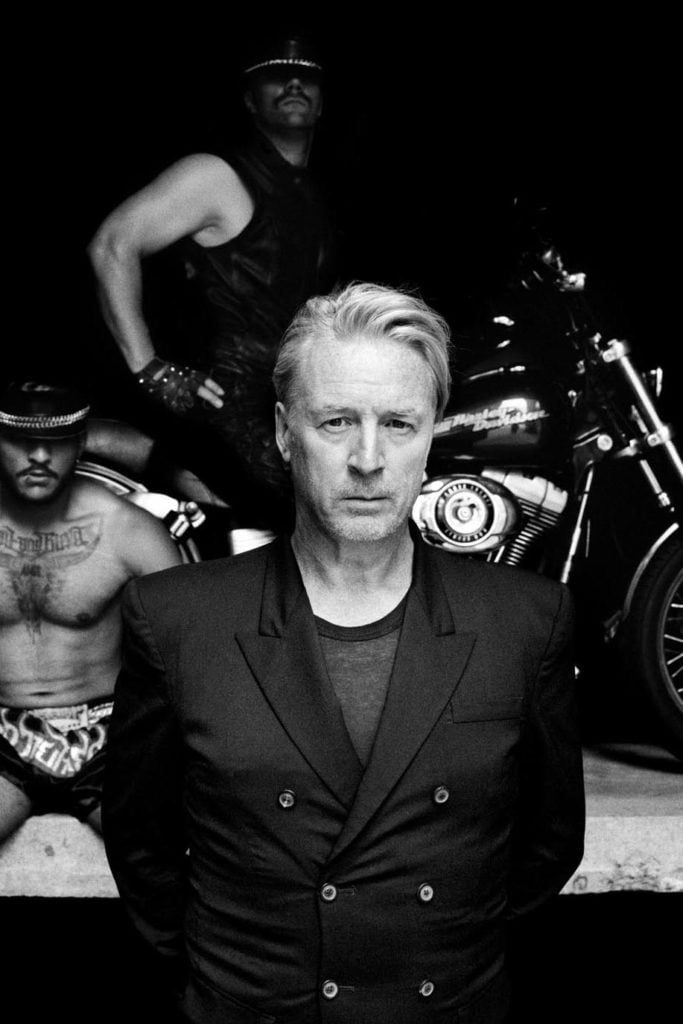
DJ Hell. Courtesy of Sven Marquardt.
Just weeks before the lockdown took effect, there was a
discussion happening in the Berlin parliament about the
vulnerability of clubs as independent cultural spaces, which is now
compounded by the fact they may not be able to open in 2020 at all.
It’s estimated that 100 clubs have closed in the past 10 years in
Berlin—and that was before the crisis. How do you see the situation
evolving?
Club culture and the situation of clubs in Berlin has always
been in flux and a constant state of zeitgeist. As long as there
are people who have visions and are brave, there will hopefully
always be places like these. The news in the last weeks makes me
hopeful that the Berlin senate will help, despite the economic
timeout. It gives me the feeling that the city has long understood
how important these spaces are.
This is a particularly difficult time for clubs, where the
whole point is the free movement of people, porous spaces,
strangers in proximity. It’s also a difficult time to be a
photographer, especially if you focus on portraiture, as you do.
How has the shutdown affected your work at the club, and your
studio practice?
Since the early 1990s, club
culture has been my foundation and, in that time, there has been at
least two generations of change in the scene. Similarly, I have
also dedicated myself to new photography projects while a different
and younger generation has been presenting itself in the club
scene.
Due to international travel for
shows and residencies since 2014, as well as my guest lecturing
position at Ostkreuzschule in Berlin and POLIMODA in Florence, I
have been retreating bit by bit from working the door. I am in my
late 50s now, and there are already great young colleagues. But I
like to return frequently to the post because the work there is
also an inspiration for my photography. However, for the time
being, many of my photography projects have to rest, and the club
doors are closed. We all hope for a new beginning.
You are a legendary figure in Berlin, a part of the city’s
cultural lore. I am curious how you kept busy during the lockdown.
Many creatives have found it a good time to get to work and turn
inwards.
To me, creativity means a
commitment to life and all of its impulses. However, I don’t need a
lonely hut near a golden lake and nightclub doors to close in order
to finally take the camera in my hand again or to think about new
projects. But from the first moment of the pandemic, I saw my
situation as not at all detached from world events, so, without
panicking, I felt and understood that the situation is very serious
and that we must take it seriously.
But would I call it a “good
time?” No, I would not subscribe to this kind of mindset under any
circumstances. Everyone may process this time differently, but I
certainly hope this has been a time for us all to learn a lesson in
humility. All of a sudden, nothing is the way it was
before.
What do you miss most right now?
What I miss most is going to the
airport, preparing for my seminar in Florence, and seeing my
Italian friends. I miss driving home through the city in the early
morning after a club night. I miss the great guests, DJs, and the
energy of the whole house. But Berlin is also now truly home, a
place of security, family, and friends. Then again, at the same
time, I am homesick for my other world.
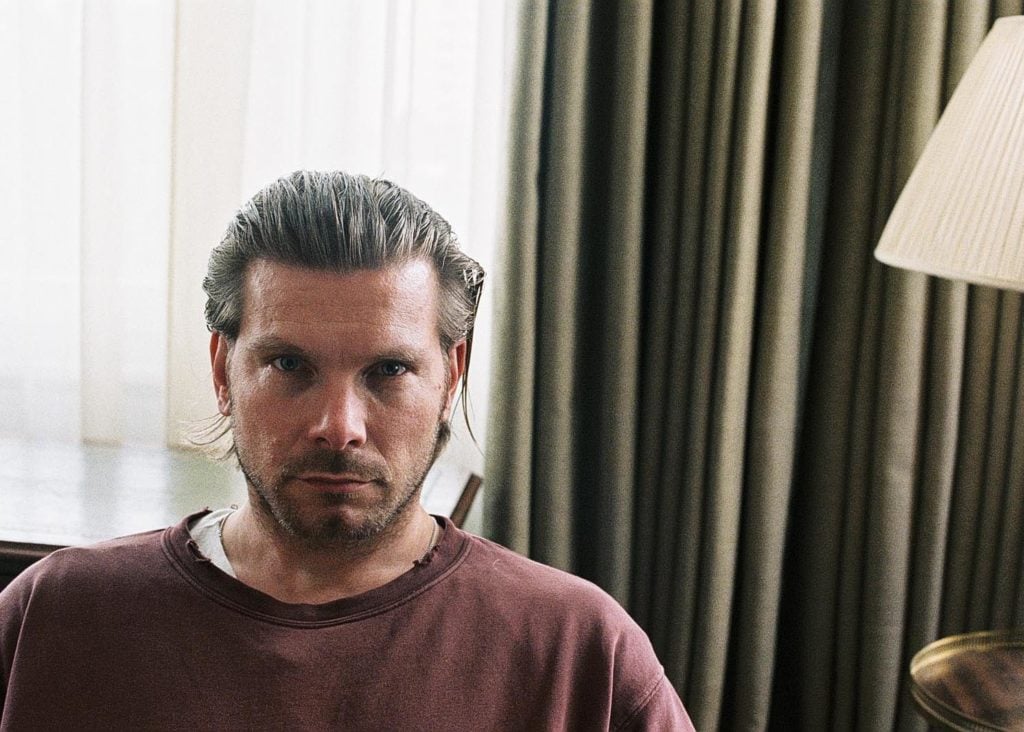
Marcel Dettman. Courtesy of Sven
Marquardt.
As someone from East Berlin, what were the motivations behind
your short film ISOLATION, which came out month. Does the
quiet of the streets at all remind you of a time before all the
party tourists arrived here, or a freer time before the rampant
gentrification of the city? Is it at all a relief to see the
streets emptied out?
Berlin was on the way to
becoming a metropolis. This lockdown was a hopefully temporary
emergency stop for all of us to reflect on that. I had started to
film daily recurring rituals in short videos with my iPhone: the
ticking of the clock, flowers that fade, candles that burn down,
the full moon in the night sky, as well as taking photos. Time
documents beauty and decay in a real way, but the situation on
Berlin’s streets was surreal at the same time. We are now returning
to a bit of normalcy. But the changes in this city will linger with
me over the decades.
How do your photography and your work as a doorman inform
each other?
Both are interdependent and
separate in some ways. The club’s in-house agency Ostgut represents
99 percent DJs and musicians, and then there is me as a
photographer. My work as a photographer is of course inspired by
club culture and my work at the door, but it is also inspired by my
travels abroad and my own photography interests.
Due to Ostgut, many inquiries
for my work come from other clubs around the world and, through
cooperation with musicians or unconventional presentations, I try
to connect art and club culture.
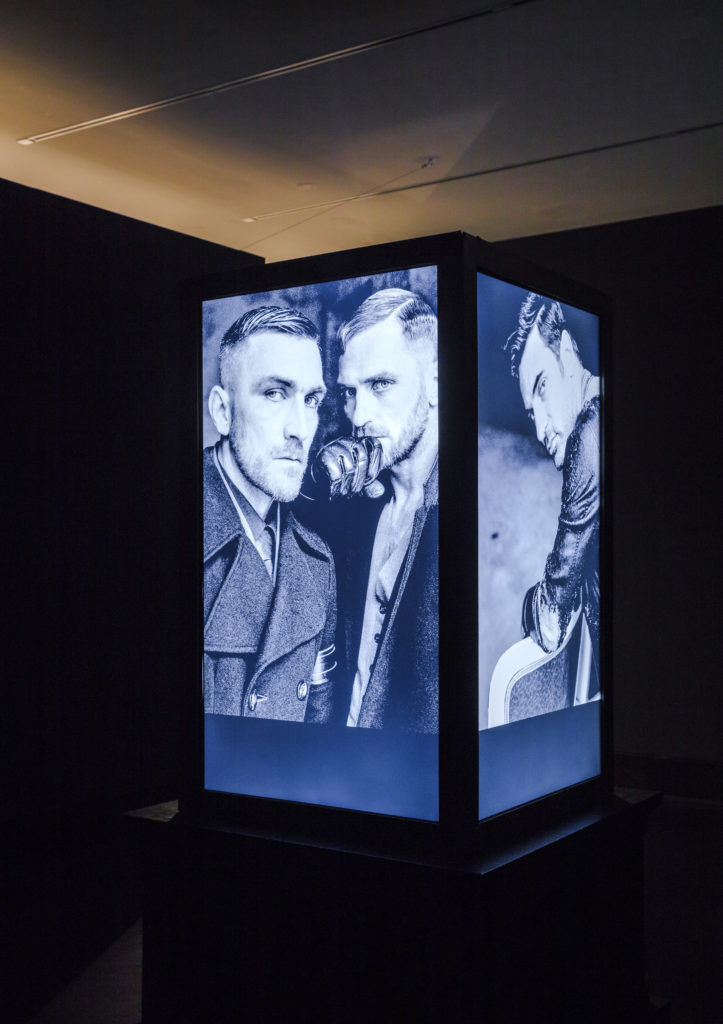
Installation view of “No Photos on the
Dance Floor!” Berlin 1989–Today.” Photo: David von Becker.
How has this affected your view on showing in a white cube
versus other public spaces?
I love exhibitions in the white
cube as much as I love my pictures on house walls, in pedestrian
zones, or other public places. Virtual animation and visuals of my
pictures are also part of my work since 2016 and connect my
analogue process to the digital world.
One of the more talked-about shows last fall was at the
photography foundation C/O
Berlin. The exhibition, “No Photos on the Dancefloor,” captured
the evolution of club culture and included your work. Can you tell
me what you thought of the exhibition and what you and DJ Marcel
Dettmann presented there?
It was a great success, and I
love the catalogue, which summarizes these 25 years of club culture
in a wonderful way. As a contributor to the exhibition and
protagonist of this scene, my view of the rooms was probably a bit
different and more critical than most. It also felt a bit like a
local history. And does it really work to exhibit club flyers and
brands in glass cases? The Black Box, my project with Marcel Dettmann is actually
from 2016. It shows a fictional room that is filled with Dettmann’s
sounds and my pictures on four screens. We wanted to leave
how the visitors in the room associate and perceive the
elements up to each individual.
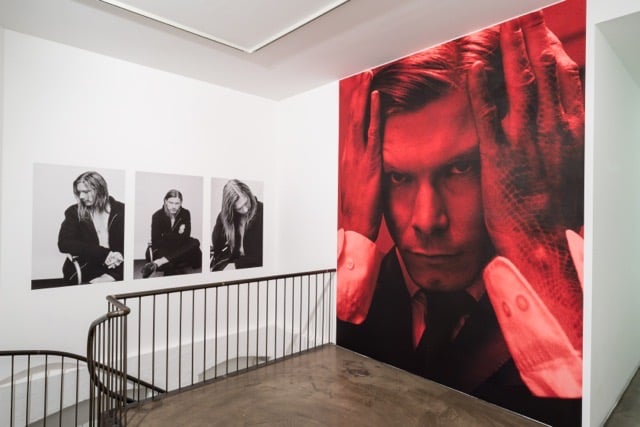
Installation view from “PACK” by Sven
Marquardt. Courtesy Sven Marquardt.
As a photographer you are behind the camera, yet you are
a most enduring image of German club culture and Berghain to many
people, and very often represented as a symbol of it. Surely you
have seen the memes. I wonder what you make of this strange
scenario.
My colleagues forwarded me an email one day while I was in
Vietnam that said: “Back to the hotel. Marquardt rejected me
again.” And there I was, about 14 flying hours away from Berlin.
Some things are just the way they are. To be polarizing is not the
worst. We don’t work at the club to get be liked or get a lot of
likes, but rather for the idea of a place where a lot of people are
involved and where there are happy guests.
Let’s talk about the late 1980s and early ’90s. You were
an active photographer, and then you stopped after the fall of the
Berlin Wall. Why?
For millions of East Germans, the fall of the Berlin Wall meant
the partial loss of our own identity. Suddenly, we had a migration
background in our country, within a nation. So I put the camera
away and went dancing, maybe because the dance floor of the
numerous new clubs in East and West Berlin were the first reunited
places in the city at that time. I finally got a tattoo, I let
myself drift. I did not miss taking pictures at that time and
thought maybe working with a camera had just been a phase. The
passion had temporarily left me, and then one day it was just there
again. I think today that the early 1990s were an equally important
time for me, but also for this city, and for this country. Now
there is hardly a day that goes by where I am not
somehow working on pictures.
The post Berlin’s Most Notorious Bouncer on His Day Job as a
Photographer, and What It’s Like to Be a Symbol of a Vanishing Club
Scene appeared first on artnet News.
Read more https://news.artnet.com/art-world/sven-marquardt-berghain-1866267
Further reading


Leave a comment