
Collectors Flock to the 1-54 Art Fair in Marrakesh as the Demand for African Art Soars—But Concerns Grow That Most of It Will Leave the Continent
As Western museums seek to diversify their collections, and art
collectors clamor to discover the next big thing, the market for
contemporary African art has never been so hot.
Factor in the ritzy
backdrop of the Mamounia Hotel in Marrakesh, and it is unsurprising
that the third edition of
the 1-54 Contemporary African Art Fair this past weekend was a
roaring success. But with increased sales comes growing concern
that the majority of the works snapped up by collectors are heading
to Europe and North America, with few staying in the
continent.
Several dealers reported better
sales than last year’s edition. For a boutique fair, there was an
unusually high number of VIPs representing major institutions,
including the Tate Modern in London, Centre Pompidou in Paris, and
from the US the Brooklyn Museum, New Museum,
and Smithsonian.
The Moroccan iteration of the
fair, which gives a platform for artists from Africa and its
diaspora, welcomed 20 galleries and some 6,000 collectors from
February 20 through February 23. This year, it had the
biggest ratio of galleries from Africa to date, with 14 of the 20
participating galleries based on the continent.
Director Touria El Glaoui, who
launched the fair seven years ago in London and then in New York,
brought it to Marrakesh in 2018. Speaking on the preview day, she
told Artnet News: “It
is unbelievable to see the progress since 2013 in terms of the
visibility of artists from the African continent. We still have a
long way to go but this is night and day compared to when we
originally started 1-54.”
After name checking several of
the major museums represented on the guest list, El Glaoui name
dropped an international gallerist. “I just saw Jay Jopling with
White Cube. This was completely unimaginable when I started,” she
said. Now, everyone is “trying to discover new artists, get into
the game, and make sure they are part of this discourse,” she
added.
Hot on the heels of London’s
February auctions, the name of the up-and-coming Ghanaian artist
Amoako Boafo was being murmured around the fair. One of his
paintings sold at Phillips in the artist’s auction debut for
$881,432, more than ten times its high estimate.
As with any artist who becomes a
market darling overnight, there is a risk that speculators can
enter the fray, which can lead to ballooning prices that can damage
artists’ careers when they pop. To fuel anxiety, the collector and
dealer Stefan Simchowitz, who is notorious for his role at the eye
of the Zombie Formalism boom (and bust), was reportedly behind
Boafo’s memorable auction debut.
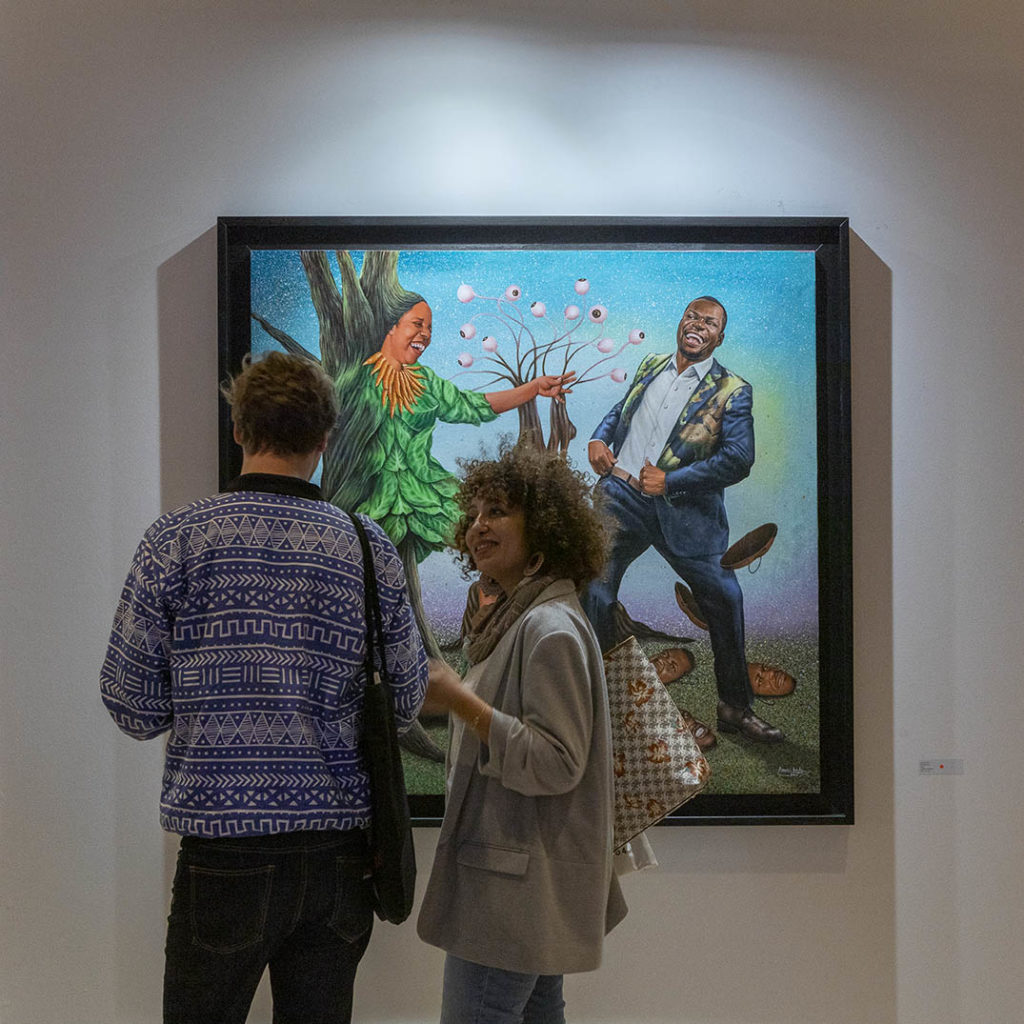
Installation view of 1-54 Marrakech.
©Nicolas Brasseur.
But El Glaoui is not worried.
She credits the spectacular
rise in Boafo’s market in part to the the patronage of the
Miami-based art collecting family, the Rubells. Last year Boafo
became the first artist-in-residence at their new private museum,
which opened to coincide with Art Basel in Miami Beach.
This kind of exposure can be a
game-changer for an artist.
With this in mind, El Glaoui
announced that 1-54 has launched a number of partnerships to create
artists’ residencies. The Nigerian photographer Lakin
Ogunbanwo was selected for a 2021 residency at the Thami Mnyele
Foundation in Amsterdam, and the MACAAL museum in Marrakesh will
choose another artist showing in the fair’s London edition in
October.
Exports or Exploitation?
For Jean David Nkot, a
29-year-old Cameroonian artist with a solo presentation at the
young French gallery Afikaris, the surge in foreign interest in
African art is a source of concern.
“Right now we are having this
conversation about restitution, about how all of our heritage is
outside the continent,” Nkot said. “If I want to see a sculpture of
my ancestor I have to get a visa, leave my country, and pay
entrance to a foreign museum.” He fears that in a few years “we
could find ourselves in a similar situation where all the best
works by Africans will be in Europe.” He added that there is
something exploitative about the secondary market interest, when
works bought on the primary market for low prices are resold for
the profit of foreign collector-speculators.
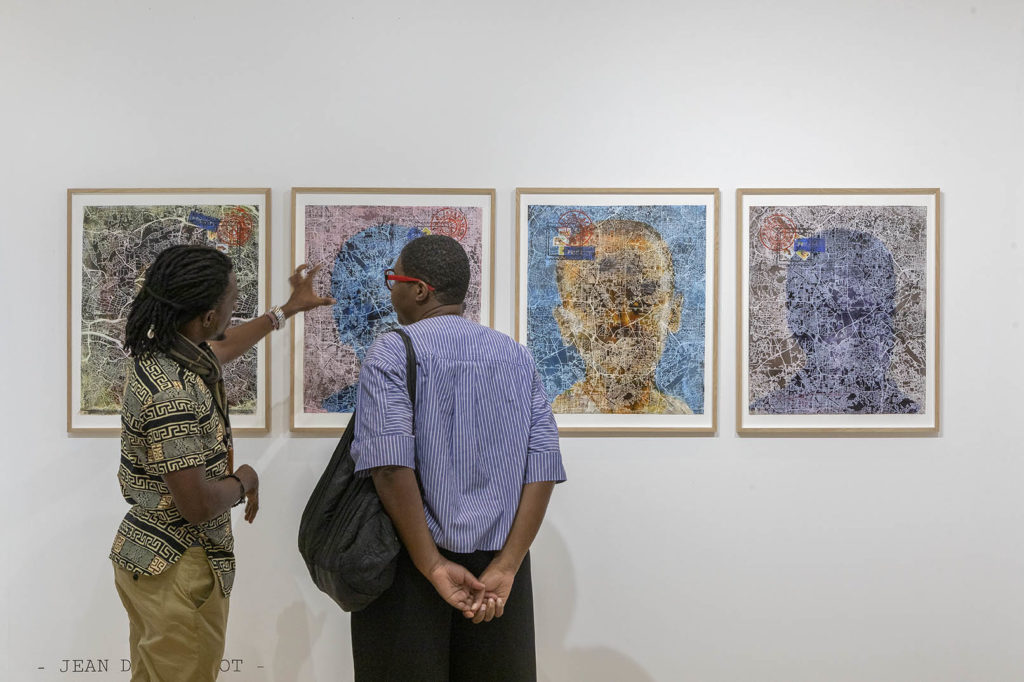
Installation view of 1-54 Marrakech.
©Nicolas Brasseur.
Nkot hopes to see more African
collectors engaging in the market, who can offer up opportunities
to showcase new works in Africa. On opening day of the fair, two of
Nkot’s works had sold to European collectors for €3,300 ($3,500).
“Of course, it is great to have outside interest in African
artists, but it is a point of pride for me to be collected by
African collectors,” he said.
While the market for African art
is growing in Europe and the US, 1-54 is aware of the need to grow
interest at home. “Moroccans are now super interested in buying
pan-African art where before they were just buying Moroccan art,”
El Glaoui said.
1-54 is also trying to educate
collectors who have traditionally dealt directly with artists about
the benefits of working with galleries. “Buying through galleries
and at art fairs is a very Western market model, so it has been
very hard for us to get collectors to come over and to see the
potential of this space,” El Glaoui explained. “Their number is
growing, even if it is not as fast as I would like it to grow,” she
admitted.
Growing the Market in Africa
Dealers are also increasingly
recognizing their role in helping to develop local markets. “When I
am selling an art piece one of the things I look for is for it to
stay on the continent,” gallerist Cécile Fakhoury said. She founded
her eponymous gallery in Abidjan, Ivory Coast, in 2012. “If we keep
going as we are, in ten or 20 years we will see all the major
pieces in foreign countries.”
In 2018 Fakhoury launched a
second gallery space in Dakar, Senegal. “Opening in Dakar was a
statement. I wanted to be clear that I am going to develop on this
continent,” Fakhoury said. “I could have opened in France or in
Belgium, both places I have connections with, but I feel this
imbalance of selling 80 percent of art outside of the continent is
crazy. This is why I’m going to fairs on the continent, and
building a network of collectors from places like Morocco, Nigeria,
and South Africa.”
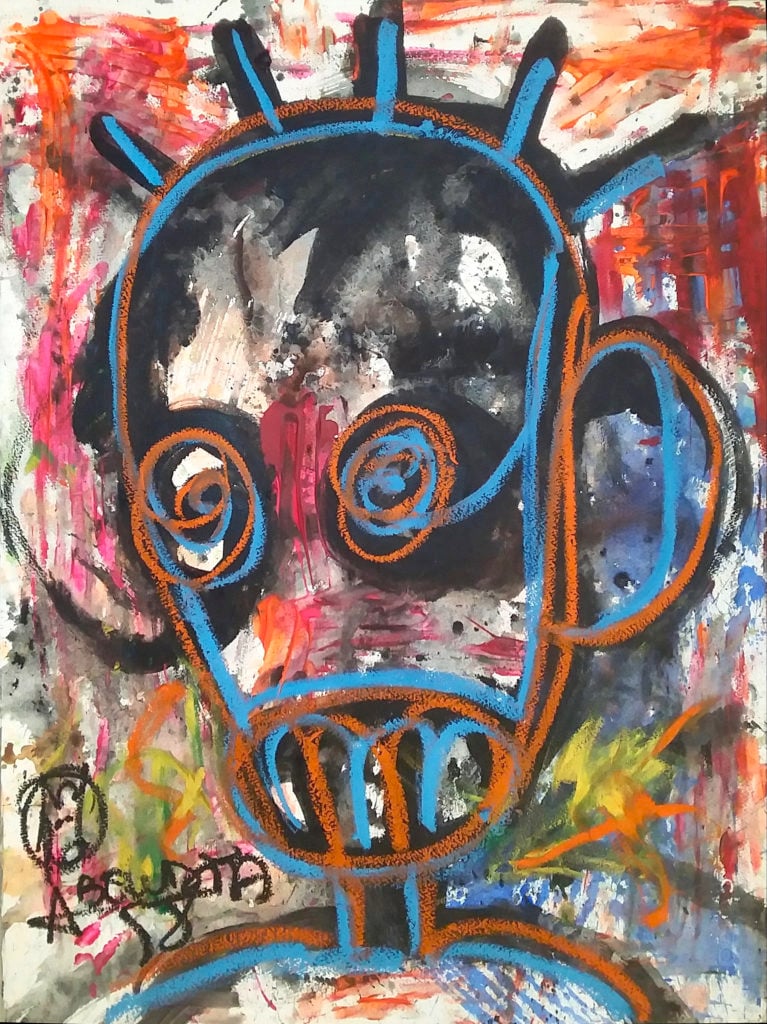
Aboudia, Môgô Dakar #1, 201.
Courtesy Galerie Cécile Fakhoury (Abidjan, Dakar).
Fakhoury said it is important to
resist the seduction of the secondary market. “While we have been
trying to build a primary market the secondary market already
joined the dance,” she says. “Auctioneers are calling me all the
time, but we are about growing slowly, it is not just about putting
stuff in sales.” She believes that African collectors
are starting to understand the importance of keeping artworks on
the continent.
Collector Othman Lazraq, who
founded the MACAAL museum in Marrakesh to house his family’s
collection of African contemporary art, is a committed believer in
culture as a lever for greater development.
“We have to support our art
before anything else,” Lazraq said. He stresses the importance of a
collector opening a museum in order to educate audiences about the
creativity that is happening all across the continent. “The
collector’s role is not just to buy stock but to show it, and I
would be glad if exhibiting our collection in the museum is
inspiring other collectors to do the same.”
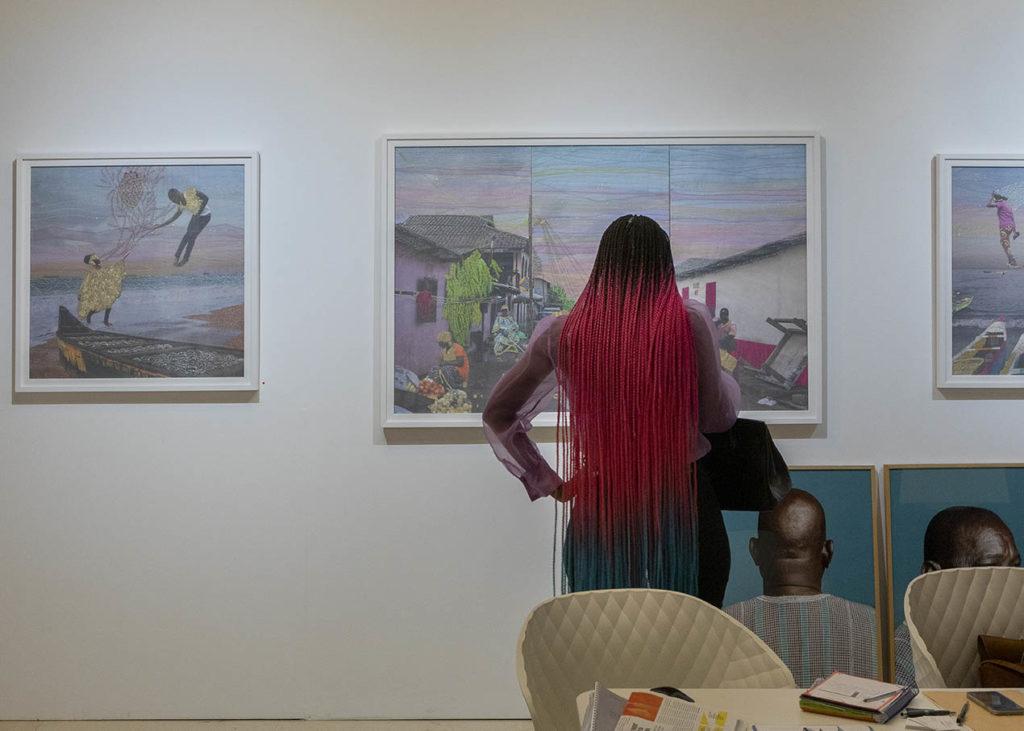
Installation view of 1-54 Marrakech.
©Nicolas Brasseur.
The Senegalese art collector
Amadou Diaw described this is an “incredibly positive” moment for
African art. “There are plenty of collectors in Africa, and there
are now more and more platforms for art,” he said. Diaw founded the
Musée de la Photographie de Saint-Louis Senegal to share his
collection. He namechecked the Dakar Biennale, and the city’s
Museum of Black Civilizations, as well as the Fondation Zinsou in
Cotonou.
“You have to understand we are
seeing these more where there has been faster economic growth, such
as in Nigeria, and the Anglophone countries, but it is happening
across the continent.”
Diaw plays down concerns that
Western countries are plundering African contemporary
art. “It doesn’t worry
me that works are being globally exported,” Diaw said. “It means
that African culture is going global, and I support
that.”
The post Collectors Flock to the 1-54 Art Fair in Marrakesh
as the Demand for African Art Soars—But Concerns Grow That Most of
It Will Leave the Continent appeared first on artnet
News.
Read more https://news.artnet.com/market/1-54-marrakesh-2020-1784178
Further reading


Leave a comment