
For One Week Only Raphael’s Great Tapestries Have Returned to the Sistine Chapel—See Them Here
Raphael created exquisite tapestries for the Sistine Chapel but
unless you are in Rome this weekend, the chances of seeing them
reunited where they original hung is practically nil.
That is because a one-week exhibition of Raphael’s 10 surviving
tapestries ends this Sunday, February 23. It is only the third time
in the past 50 years they have been reunited in the Sistine Chapel.
The enormous tapestries left their usual home in the Vatican
Museums to return to the chapel to mark the anniversary of the
Renaissance artist’s death.
“We wanted for the celebration of 500 years of Raphael’s death to
give the opportunity to share the beauty that is represented by the
tapestries together in this beautiful, universal place that is the
Sistine Chapel,” the director of the Vatican Museums, Barbara
Jatta, said in a statement. She described it as an “important
moment.”
Thomas Campbell, the director of the Fine Arts Museums of San
Francisco, who is a tapestry expert, was in the chapel on Tuesday
morning to see them unveiled. “You just wanted to woop and sing,”
he wrote on Instagram, resisting the temptation to do either
because of the chapel’s rule of silence.
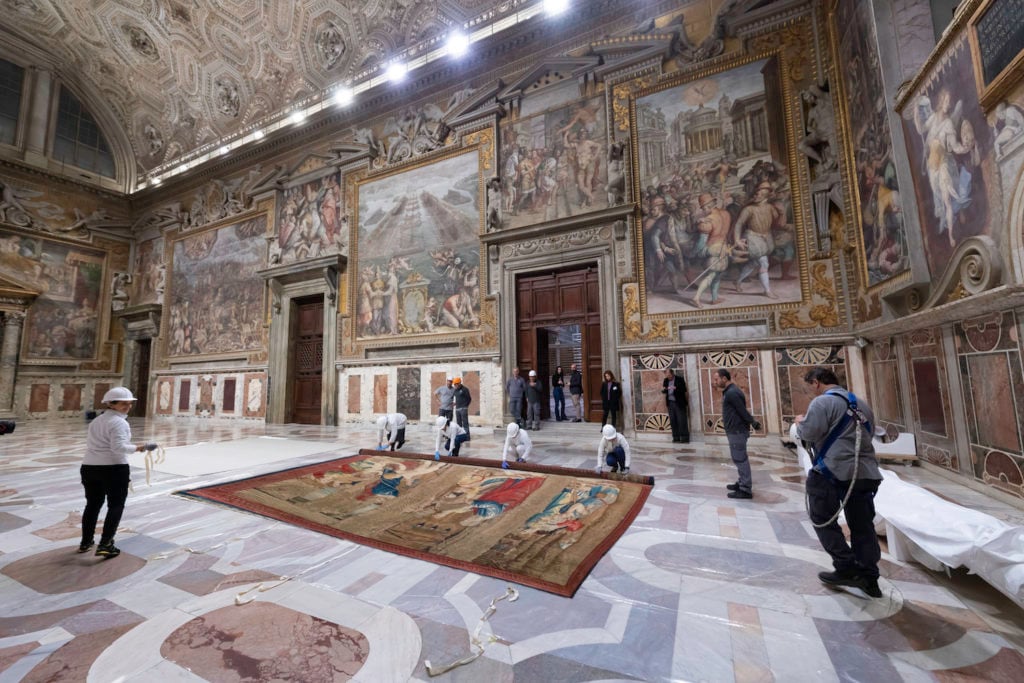
Installation at the Sistine Chapel.
Courtesy Vatican Museums.
While it is rare for the tapestries to return to the Sistine Chapel
at all, it is just as unusual to see them side by side as they are
typically on rotating display at the Vatican Museums protected by
glass. Now, hanging once again on their original 16th-century
hooks, visitors can admire the tapestries alongside frescoes and
paintings by Botticelli, Perugino, Ghirlandaio and Signorelli,
and, of course, Michelangelo. (The older artist was not a fan of
his younger rival, Raphael.)
Pope Leo X commissioned Raphael to create 16 tapestries in 1514
but several have been lost over time. They were completed for St.
Stephen’s Feast Day, December 26, in 1519. It is possible that
Raphael did not get to see the works installed as he died six
months later on April 6, 1520, aged 37.
"background:#FFF; border:0; border-radius:3px; box-shadow:0 0 1px 0 rgba(0,0,0,0.5),0 1px 10px 0 rgba(0,0,0,0.15); margin: 1px; max-width:500px; min-width:326px; padding:0; width:99.375%; width:-webkit-calc(100% - 2px); width:calc(100% - 2px);">
View this post on Instagram
The tapestries were woven in the workshop of Pieter van Aelst in
Brussels, which worked with Raphael’s painted designs, known as
cartoons. Each tapestry is made of silk and wool thread, and weighs
between 110 to 130 pounds. They measure about 35 square yards.
They cost five times Michelangelo’s ceiling because of the cost of
gold thread and the labor required to weave them. Seven of the
original cartoons are in the Victoria and Albert Museum in London,
hence the presence at the unveiling of its director, Tristram
Hunt.
The tapestries have survived many close calls, ranging from the
being stolen in the Sack of Rome in 1527, and seized by Napoleon in
1798.
See the some of Raphael’s exquisite “Acts of the Apostles”
tapestries below.
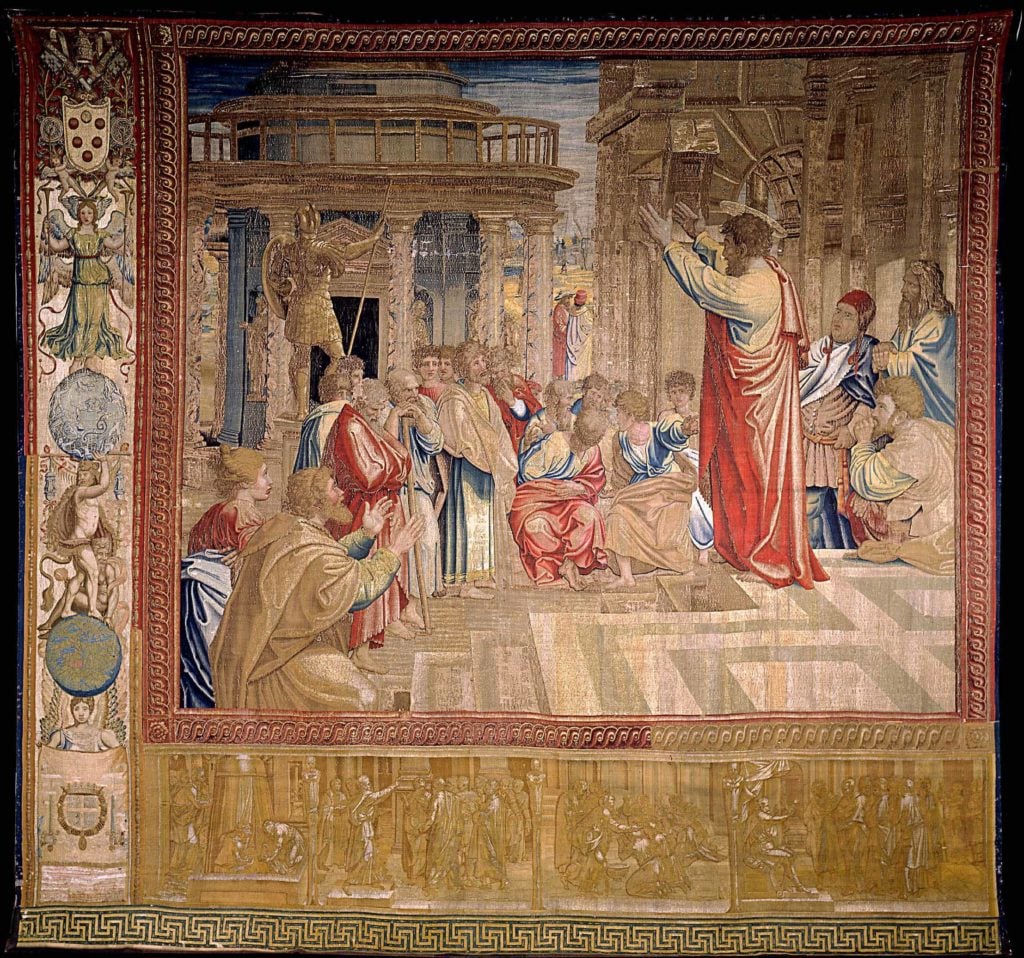
Paul Preaching at Athens.
Courtesy the Vatican Museums.
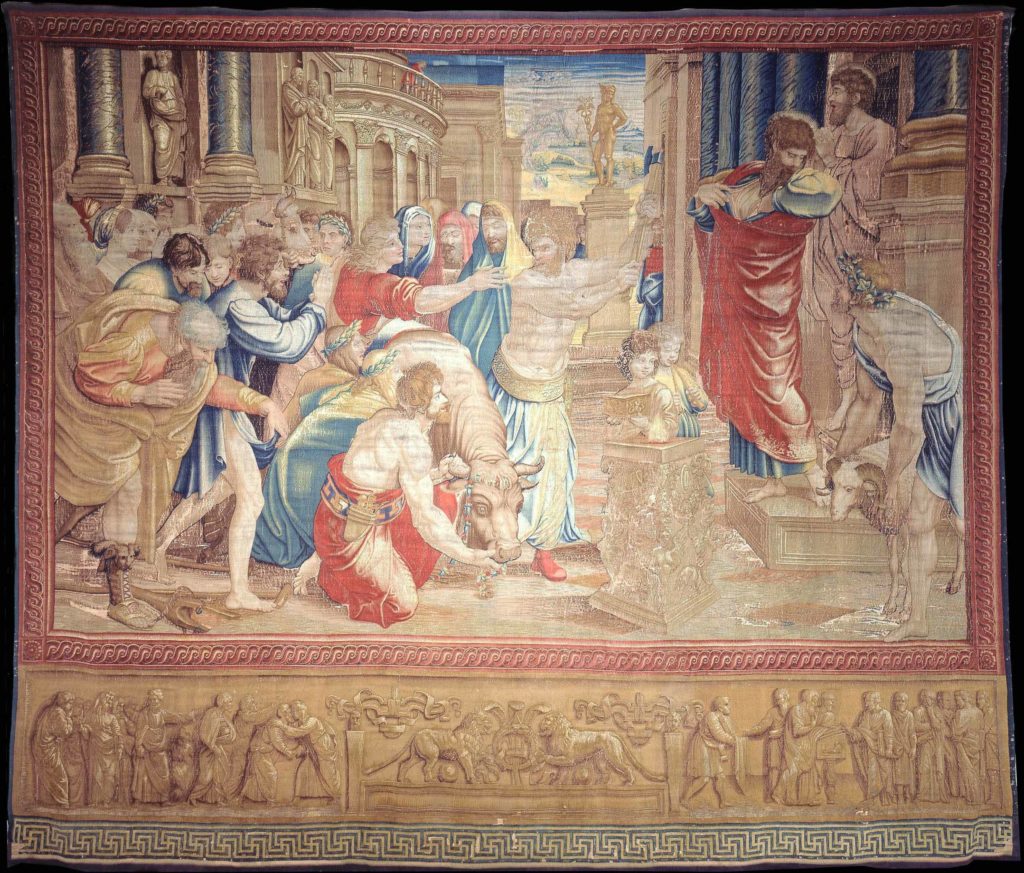
The Sacrifice at Lystra..
Courtesy the Vatican Museums.
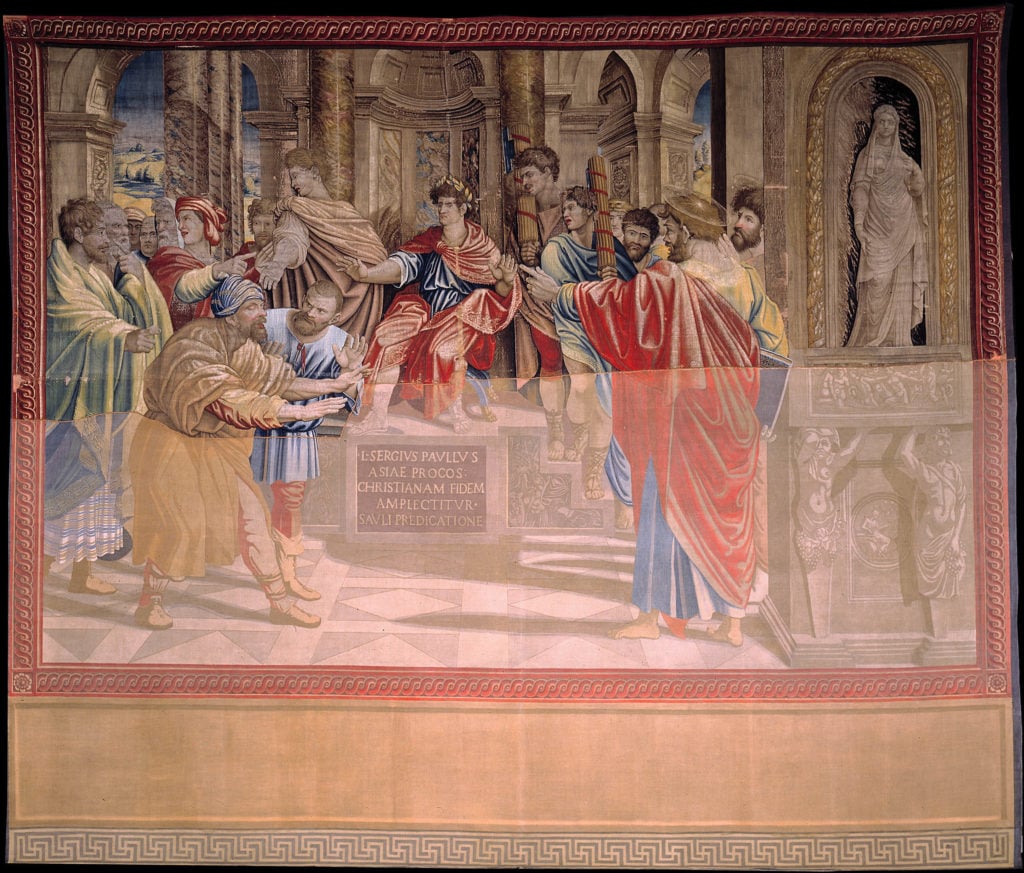
The Blindness of Elymas. Courtesy
the Vatican Museums.
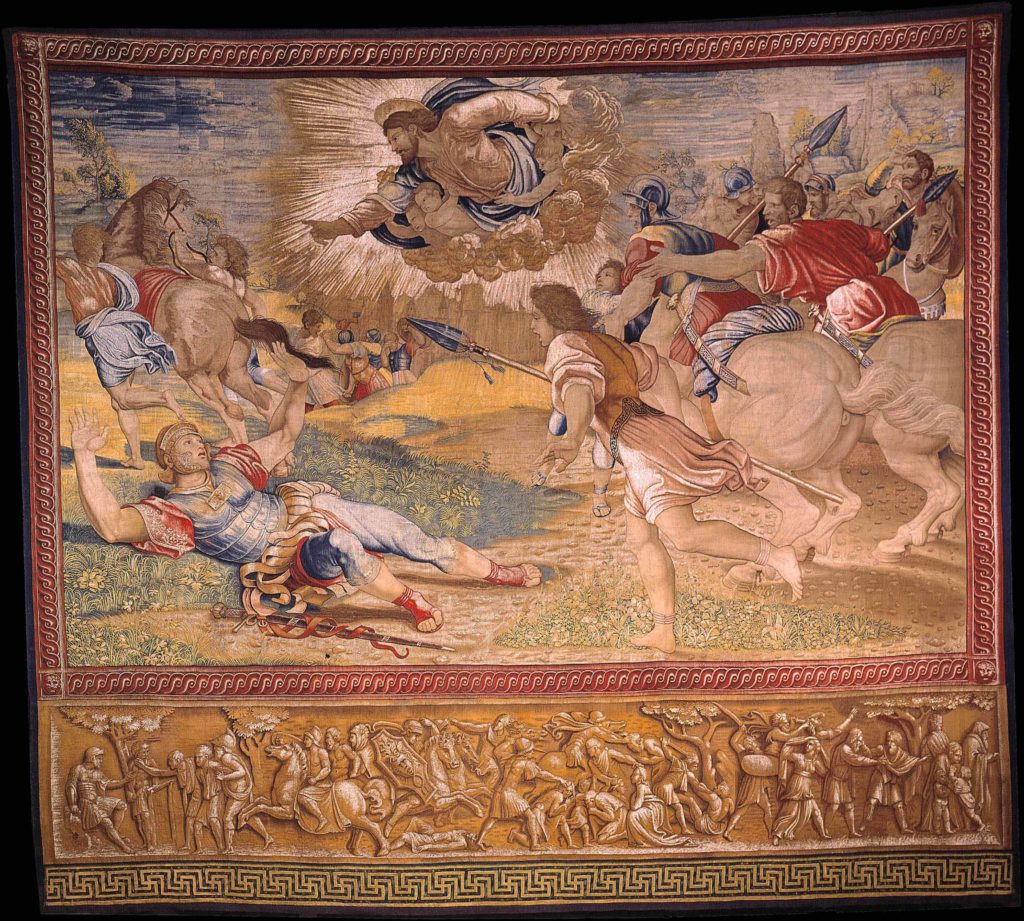
The conversion of Saint Paul.
Courtesy the Vatican Museums.
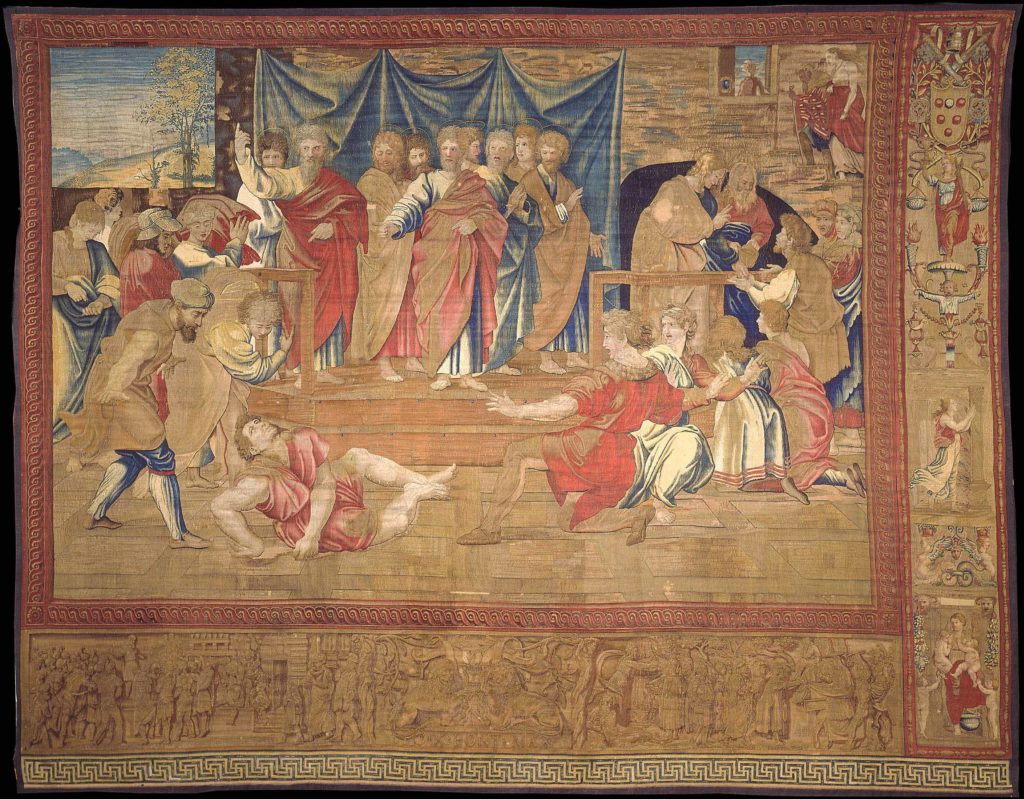
The Death of Ananias. Courtesy
the Vatican Museums.
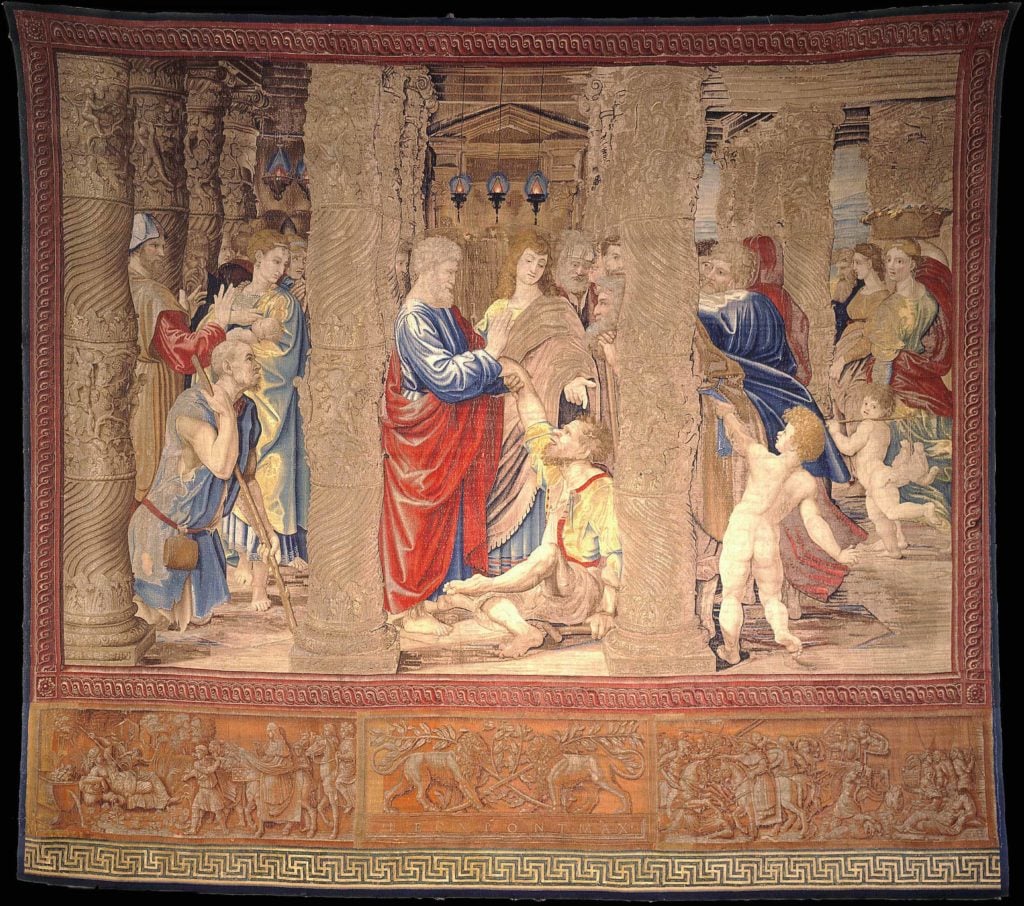
The Healing the Lame Man.
Courtesy the Vatican Museums.
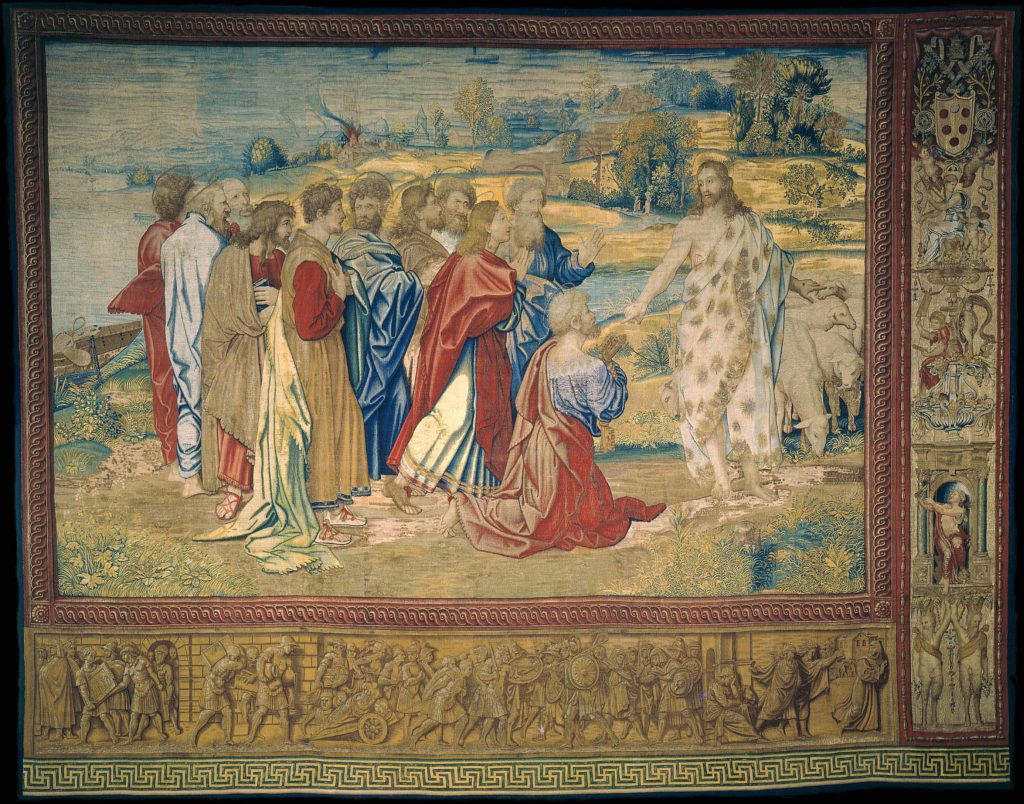
Christ Giving the Keys to St.
Peter. Courtesy the Vatican Museums.
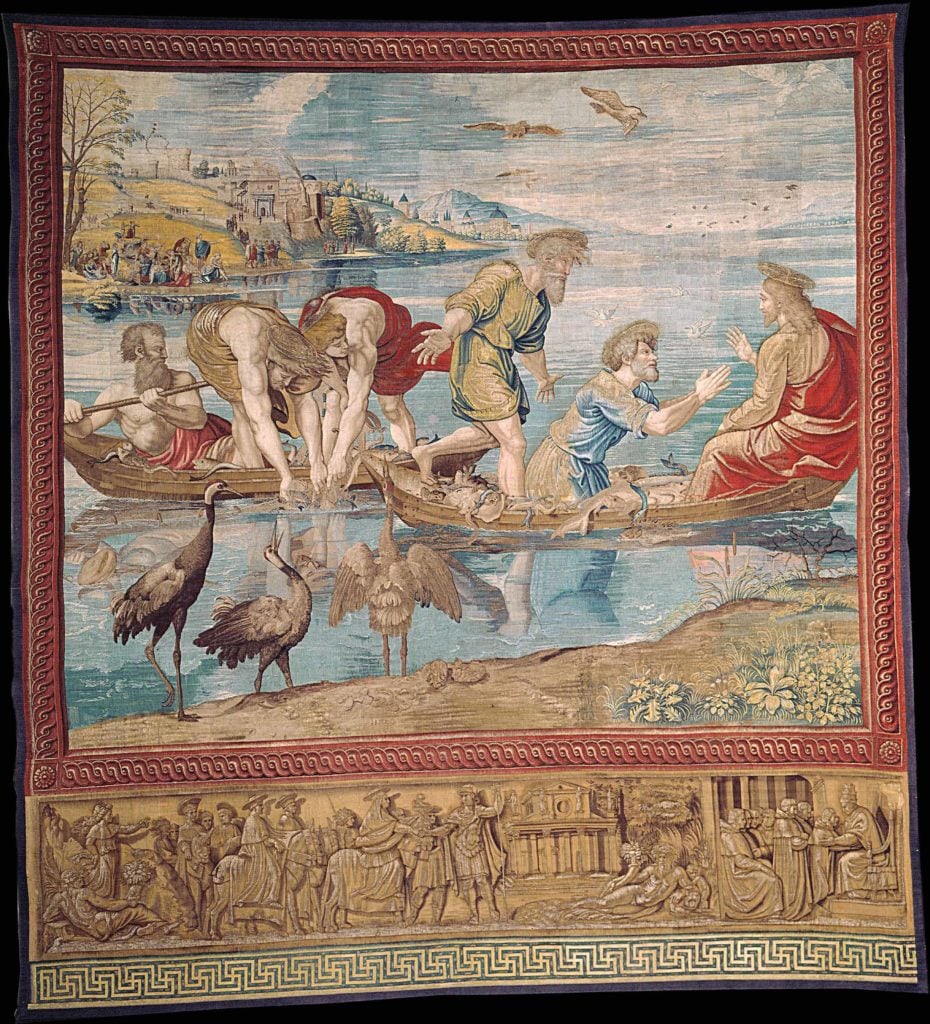
The Miraculous Draught of Fishes.
Courtesy the Vatican Museums.
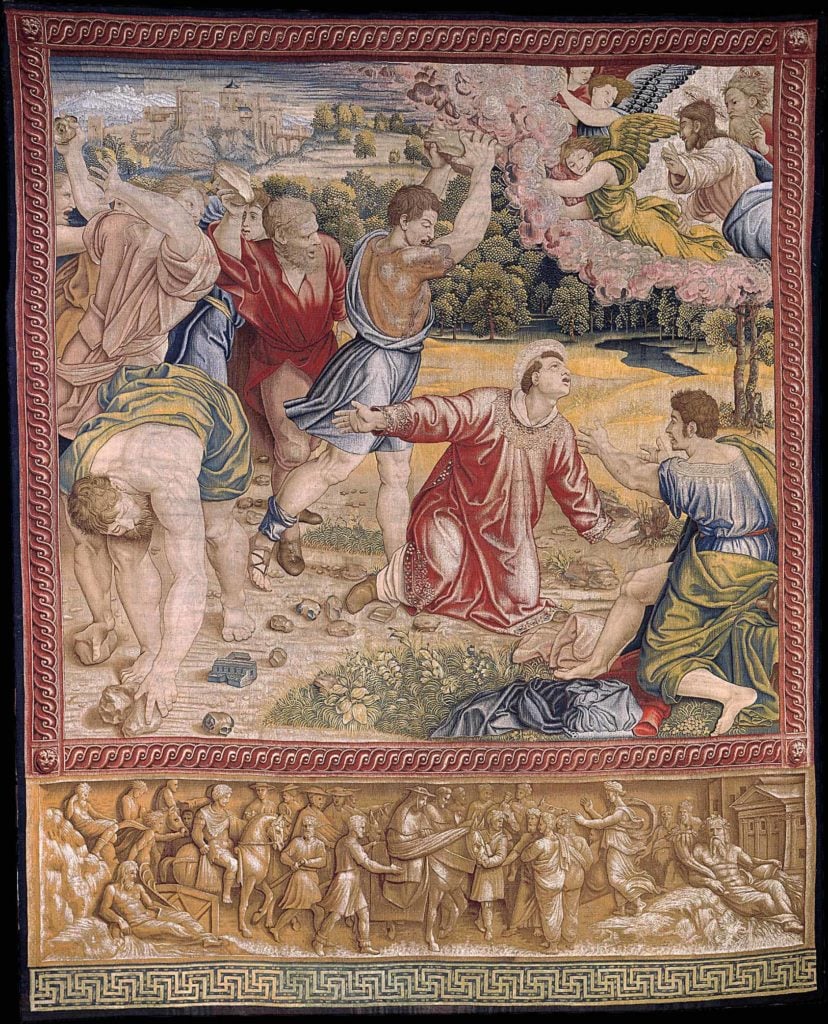
The Stoning of Saint Stephen.
Courtesy the Vatican Museums.
The post For One Week Only Raphael’s Great Tapestries Have
Returned to the Sistine Chapel—See Them Here appeared first on
artnet News.
Read more https://news.artnet.com/exhibitions/the-sistine-chapel-raphael-tapestries-1783185
Further reading


Leave a comment