
How a Dutch Artist and Engineer Created an Otherworldly New Holocaust Memorial Using 104,000 Glowing Stones
When he was asked to create a
memorial to the 104,000 Jewish, Roma, and Sinti people from the
Netherlands who were killed during the Holocaust, Daan Roosegaarde
hesitated. The Dutch artist, engineer, and master of light-based
art and design was not sure at first whether to accept such a
delicate and complicated assignment.
“It was a big discussion in my
studio,” he tells Artnet News of the commission, which commemorates
the 75th anniversary of the liberation of Auschwitz this year.
“It’s such a big topic and it’s very sensitive, of course. We were
thinking, ‘Should we do this or not?’”
But then, as he always does,
Roosegaarde delved into the research. He read about the World War
II-era persecution, mass deportation, and murder of Dutch
residents, and he spoke to survivors and the families of victims.
He looked at other memorial sites, including Amsterdam’s planned
Dutch Holocaust Memorial of Names, which is being helmed by the
Polish-American architect Daniel Libeskind.
One of the stories he says he
heard a few times was about passengers on a train to Westerbork, a
concentration camp in the northeast of the country. The wooden door
to their train compartment did not fully close, and light leaked
through a small gap at the top. Everyone was looking at that
slanting light, he learned. “Because there was light, there was
hope,” says Roosegaarde. “And that’s my vocabulary.” With that, the
so-called master of light confirmed his participation in the
project. (Scholar David Barnouw points out that
deportations by cattle train to Westerbok were infrequent, but
rather occurred from the concentration camps to the death camps
farther east.)
Next week, the fruits of his
labor, the Holocaust memorial project “Levenslicht,” will be
unveiled to the public on January 16 in Rotterdam. Some 104,000
glowing stones, small enough to hold in your hand, will be seen
together as a monumental installation before individual groups of
500 are disseminated to 256 municipalities, where they will
continue to glow at night in memory of the lives lost across the
country.
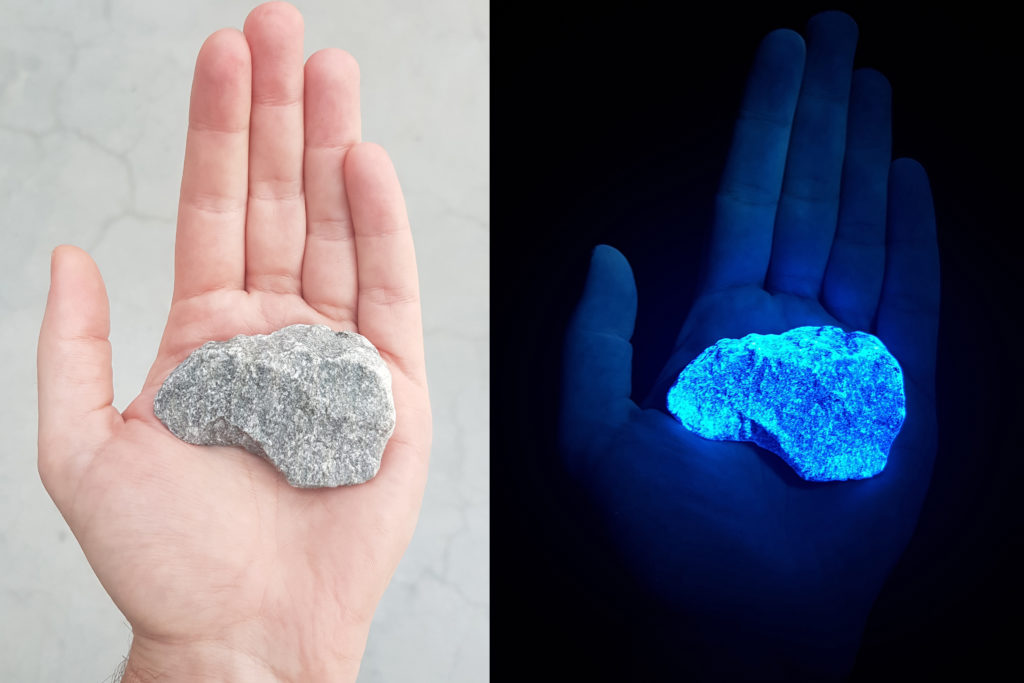
Levenlicht stones. Courtesy Studio
Roosegaarde.
Sculpting With Light
Be it digital, natural, or
phosphorescent, illumination is Roosegaarde’s medium of choice.
Although he’s working with brand new technologies, the 41-year-old
says that he connects his work to the hallowed Dutch tradition of
working with light, which was established in the 17th century by
landscape painters like Jan van Goyen and Salomon von Ruysdael, his
personal hero.
“They used paint and canvas and
I use microchips and LEDs,” Roosegaarde says. “It’s the same
message, but just a different language. They were obsessed with
skies, with [natural] light, and they ran their painting workshops
as collectives. I feel very much connected to the Dutch landscape
tradition, how they think, how they work, and how they
dream.”
The multi-talented creative is
as acclaimed for urban design projects, such as his sustainable
glow-in-the dark Smart Highways
and his “starry night” Van
Gogh-inspired bike path, as he is for his wildly popular museum
exhibitions that plunge viewers into baths of light.
An exhibition of his work at
the Groninger Museum, titled
“Presence” and on view until January 12, features a phosphorescent
landscape that changes color and shape as visitors move around it;
bodies are cast into lingering shadows on walls and floors,
outlines of hands are mapped onto movable globes, and children make
snow angels in dustings of glowing beads. It’s very
Instagram-ready.
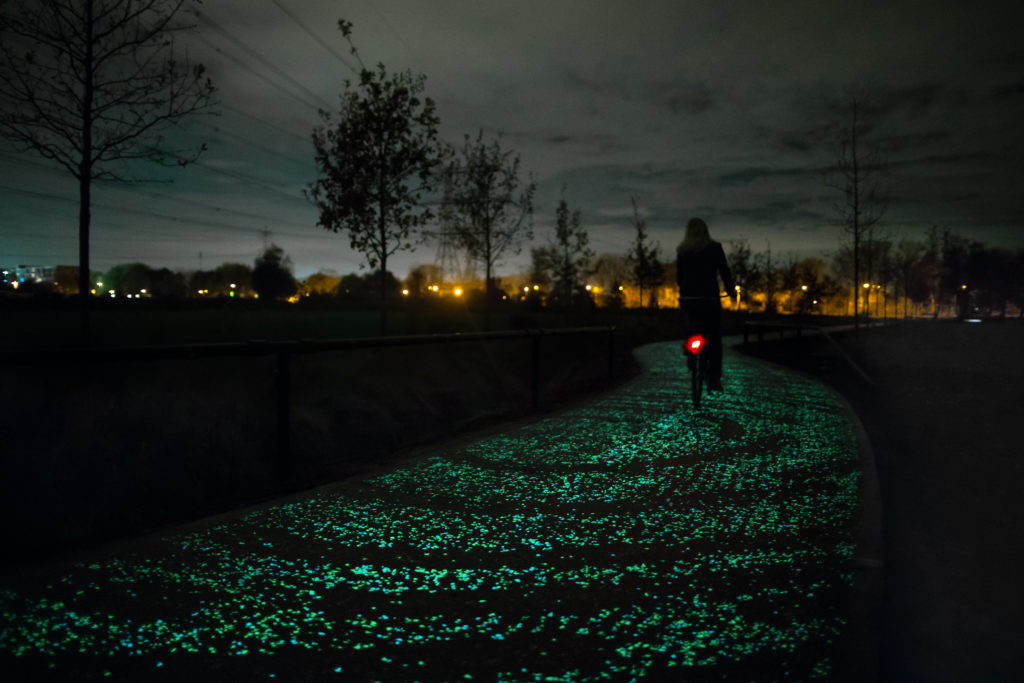
Van Gogh Bikepath is a light
emitting bicycle path which charges at day-time and glows at night.
It won the Best Future Concept, Dutch Design Award, Accenture
Innovation Award, and INDEX Award Denmark. Courtesy Studio
Roosengaarde.
Roosegaarde sees his work not as
merely playful uses of new technologies, but as a way to address
societal and environmental concerns. “I think of us as living not
in a utopia, but in a protopia—a term [American writer and editor]
Kevin Kelly coined,” he says. “Step-by-step, we’re trying to
improve things. We do not know what the future looks like, so we
need to invest in new ideas to survive and to evolve.”
Roosegaarde’s studio, which is
located in a former glass factory in the port city of Rotterdam,
has been focusing its efforts on imagining new landscapes that
value clean air, clean water, and clean energy. “[B]ut there is
something beyond those values, [which is] humanity, and that’s why
[the memorial project] ‘Levenslicht’ is connected,” he
adds.
The upcoming monument takes its
name from the Dutch words for “living light” or “the light of
life.” Each of the 104,000 luminous stones, which represents a
Dutch victim of the Holocaust, emits an ethereal, bluish glow in
the dark. Roosegaarde says the concept is based on the idea of
creating light in darkness as a metaphor for hope in a time when
nationalism, xenophobia, and acts of hate are on the rise
throughout the Western world.
“We’ll have one big statement,
where you see the madness, the killing machine,” he says. “Then
you’ll see how it spread.” After the stones’ reveal, groups will be
distributed at various outdoor locations in participating
towns.
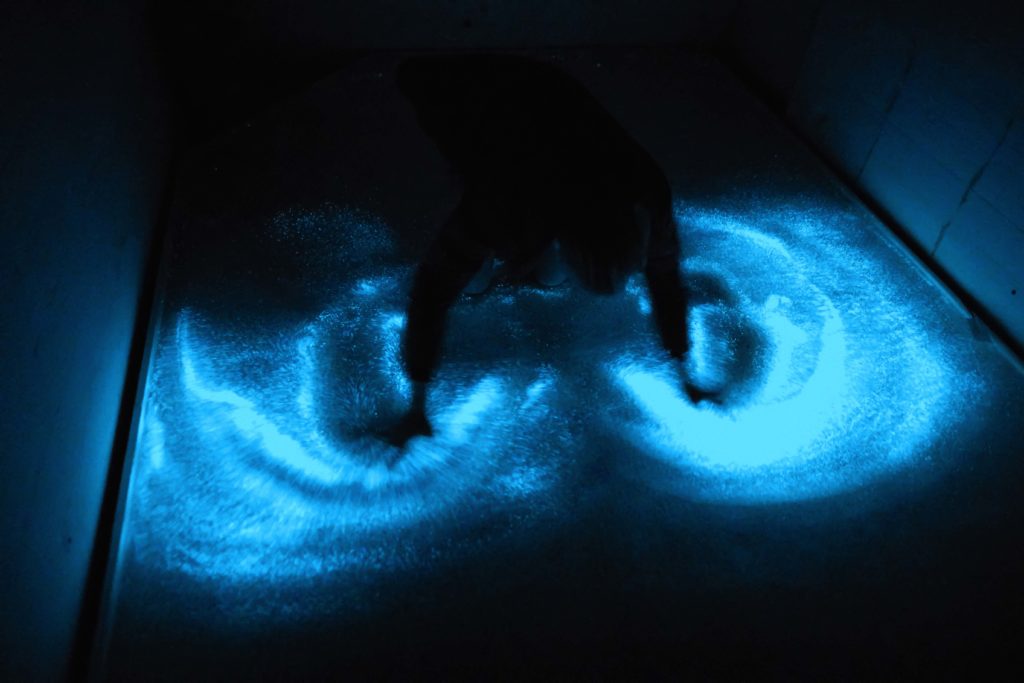
Glowing Nature is an interactive
installation with light emitting algae. Courtesy Studio
Roosengaarde.
Roosegaarde said he was shocked
to learn that the victims came from all over the Netherlands,
hailing from almost every town or city. About 80 percent of the
Dutch-Jewish population was killed in the World War II genocide,
the largest proportion in Western Europe, second only to Poland.
The idea for the small stones stemmed from Roosegaarde learning
that Jewish mourners do not leave flowers at Jewish cemeteries, but
instead place stones or pebbles on the gravestones of the dead.
Each of his stones, which can fit in the palm of a hand, is
unique.
“It’s something new but it’s
something old, it’s history but it’s also the future,” he says of
the project. “It’s also a place where we can come together, where
we don’t use words or logos or political ideas or conversation, but
we just look and wonder. I hope it will create the kind of
experience of remembering and thinking about what we want the
future to look like.”
Levenslicht will be on view in Rotterdam beginning January
16 at Stieltjesstraat/ Eva Cohen-Hartogkade.
The post How a Dutch Artist and Engineer Created an
Otherworldly New Holocaust Memorial Using 104,000 Glowing
Stones appeared first on artnet News.
Read more https://news.artnet.com/art-world/daan-roosegaarde-levenslicht-1743846
Further reading


Leave a comment