
In the Face of Sanctions, Supporting Artists in Iran is Difficult. One Ambitious Collector Is Trying to Change That
In the winter of 2017, an
exhibition of contemporary Iranian
art opened at the Aga
Khan Museum in Toronto,
drawing special attention because it coincided with President
Trump’s then-recent travel ban targeting Muslim-majority countries.
The show would travel
to the Museum of Fine Arts, Houston that same year, playing an
important role as cultural ambassador
during a time of heightened tensions.
Now the acclaimed show, “Rebel,
Jester, Mystic, Poet: Contemporary Persians,” which was comprised
of works from the holdings of Iranian-born art collector Mohammed
Afkhami, is being revived for its East Coast debut at New York’s
Asia Society Museum in October. And again, it will arrive at a time
of political turmoil: tensions between the US and Iran are as
strained as they’ve been in decades and sanctions have sapped the
latter nation’s arts economy.
For Afkhami, this context isn’t
an obstacle, but an opportunity.
“I think the timing of the show,
coming within a month of the UN meetings, provides a great
opportunity to use culture to soften the tone between the two
countries,” says the collector. “It’s a non-political way to find
common ground. That’s what I think art can do.”
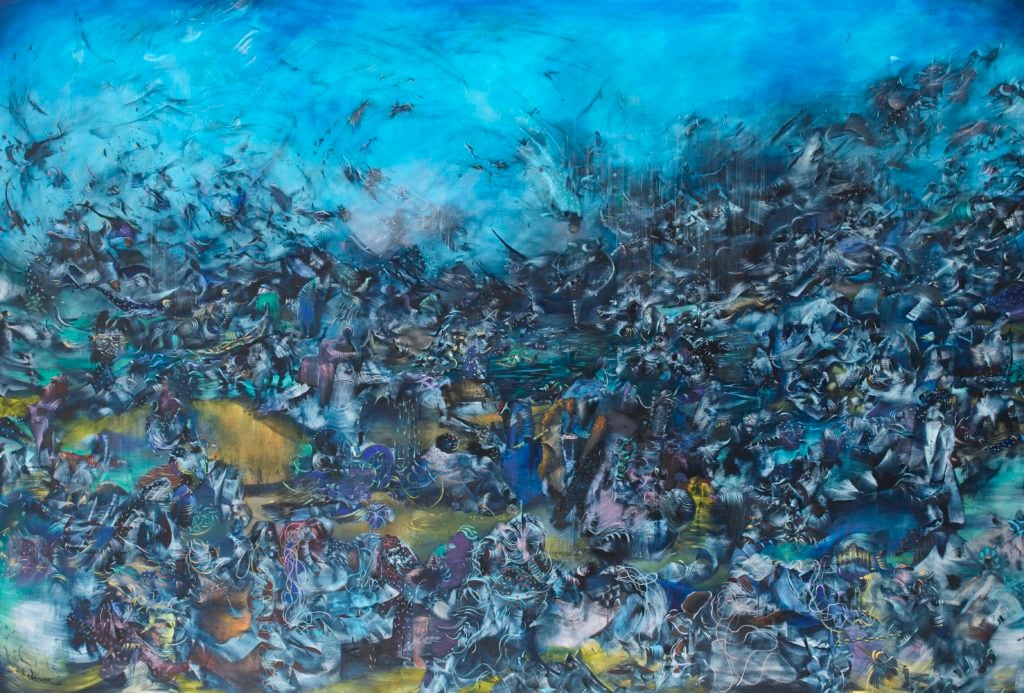
Ali Banisadr, We Haven’t Landed on
Earth Yet (2012). © Ali
Banisadr. Courtesy Mohammed Afkhami Foundation.
The exhibition brings together
the work of more than 22 Iranian-born artists across three
generations, from established names like Shirazeh Houshiary, Shirin
Neshat, and Monir Shahroudy Farmanfarmaian, to younger figures like
Mahmoud Bakhshi and Ali Banisadr.
It’s underwritten by Afkhami’s
foundation, which oversees his personal collection of 600-some
works—roughly 450 of which are Iranian—and aims to spread Iranian
art at a time when local artists themselves don’t have the means to
do so.
SWIFT, the organization that
oversees all international financial transactions, has cut off wire
transfers to Iranian banks since 2018. This sanction has affected
the country’s artists, who often rely on the sale of their work
through global channels.
“It makes it very difficult for
a foreign-based buyer to support the local Iranian market because
there’s just no way to pay,” says Afkhami. “And these people need
the money now. They’re starving.”
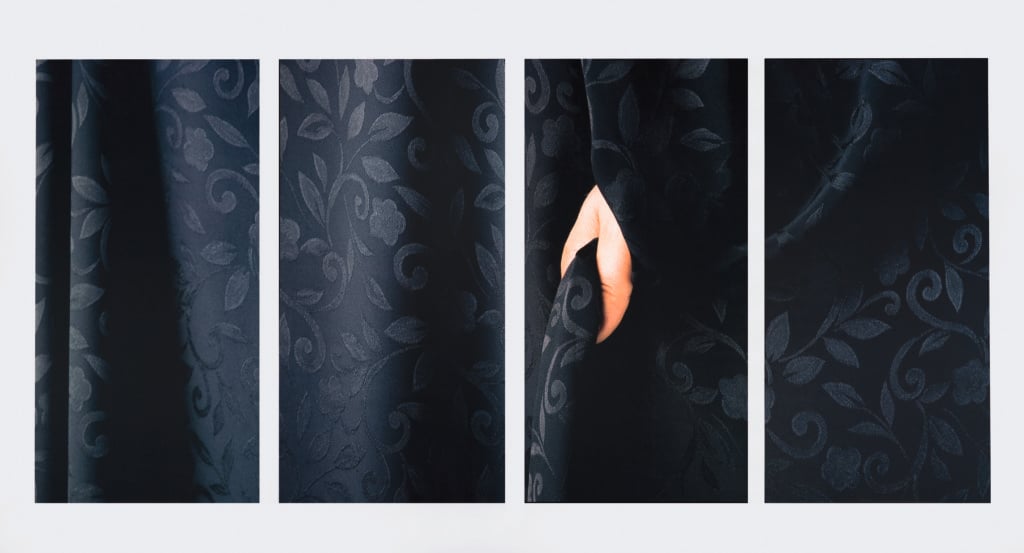
Parastou Forouhar, Friday (2003).
Courtesy of the Mohammed Afkhami Foundation.
Now, the collector is increasing
his efforts. He’s in the process of acquiring 50 more works from
more than 30 artists, mainly under 40. The group spans numerous
styles and disciplines. He plans to double that number within the
upcoming months.
The buying spree started last
summer when Dastan’s Basement, a central gallery in Tehran,
approached Afkhami with an idea.
“They came to me last summer and
said, ‘Look, with this tightening of sanctions, some of these
artists are going to struggle,’ he recalls. “I said, ‘What can I do?’”
The gallery worked with
Afkhami to develop a list of dozens
of emerging and under-appreciated veteran artists throughout Iran
to, then helped facilitate sales with other galleries and arts
organizations.
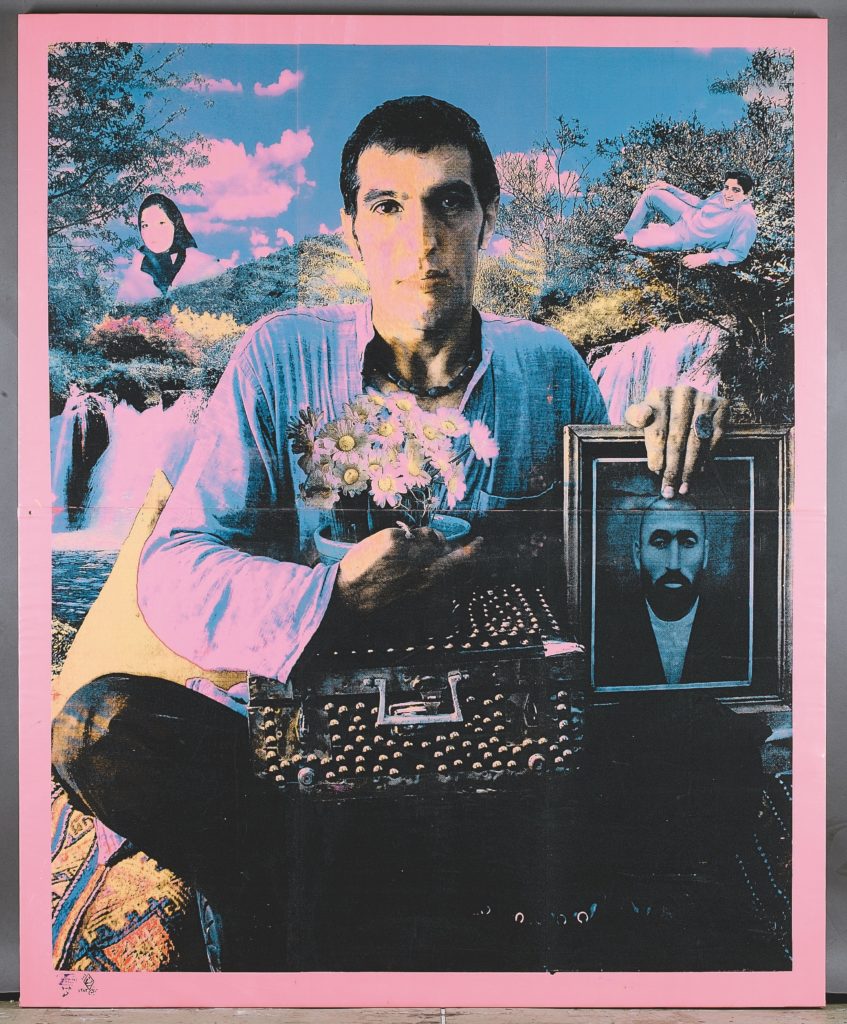
Khosrow Hassanzadeh, Terrorist:
Khosrow (2004). Courtesy of the Mohammed Afkhami
Foundation.
Dastan’s efforts are emblematic
of the community-first attitude pervasive in the Iranian art world,
which continues to grow despite the economic downturn, Afkhami
explains.
“This country is suffering under
a kind of duress that’s almost impossible to imagine, yet the art
world is continuing to grow,” he says. “When I started collecting
in 2005, there were maybe half a dozen modern and contemporary art
galleries in Tehran. Today, there are over 90, and the number of
Iranian artists swelling too.”
“Even when people almost have
nothing in their pocket, they’re still willing to shell out a few
dollars to buy a work so that an artist has enough money for his
paintbrush and his canvas.”
“Rebel, Jester, Mystic, Poet:
Contemporary Persians” will be on view October 20, 2020 – January
17, 2021 at the Asia Society Museum in New York.
The post In the Face of Sanctions, Supporting Artists in
Iran is Difficult. One Ambitious Collector Is Trying to Change
That appeared first on artnet News.
Read more https://news.artnet.com/exhibitions/mohammed-afkhami-rebel-jester-mystic-poet-asia-society-1802433
Further reading


Leave a comment