
It’s Not Too Late to Create the Art World We Want. Here Are 4 Ways to Do It
Let’s start with some good news
for a change: The world—and, by extension, the art world—will
survive the COVID-19 pandemic.
Sadly, many of us have already
lost friends and loved ones to the virus, and more losses may come.
Far too many of our fellow citizens—particularly those with the
least ability to protect themselves and those who are subject to
the systemic racism that has sparked protests in recent days—will
bear the brunt of this brutal pandemic and the economic disaster it
has wrought. Many businesses, including galleries, will permanently
close as a result.
Whether this period lasts six
months or three years, the health of the world and the health of
our economy will eventually recover. So, too, will the business of
selling art. The question at hand, though, is when the market fully
returns, what will we have learned from this forced
hiatus?
Will we be smart enough to view
this interregnum not solely as a negative experience, but as an
opportunity to reflect, take stock, assess the way we functioned
before, and look to a future that is more conscious, sustainable,
and kind?
For too long, the world’s major
economies, including the art world, have subscribed to a
flawed, Keynesian
economic model that has mutated into the dominant worldview: that
more is more, greed is good, and success is defined by how much
more of everything, especially money, one has than others. This
model is neither healthy nor sustainable.
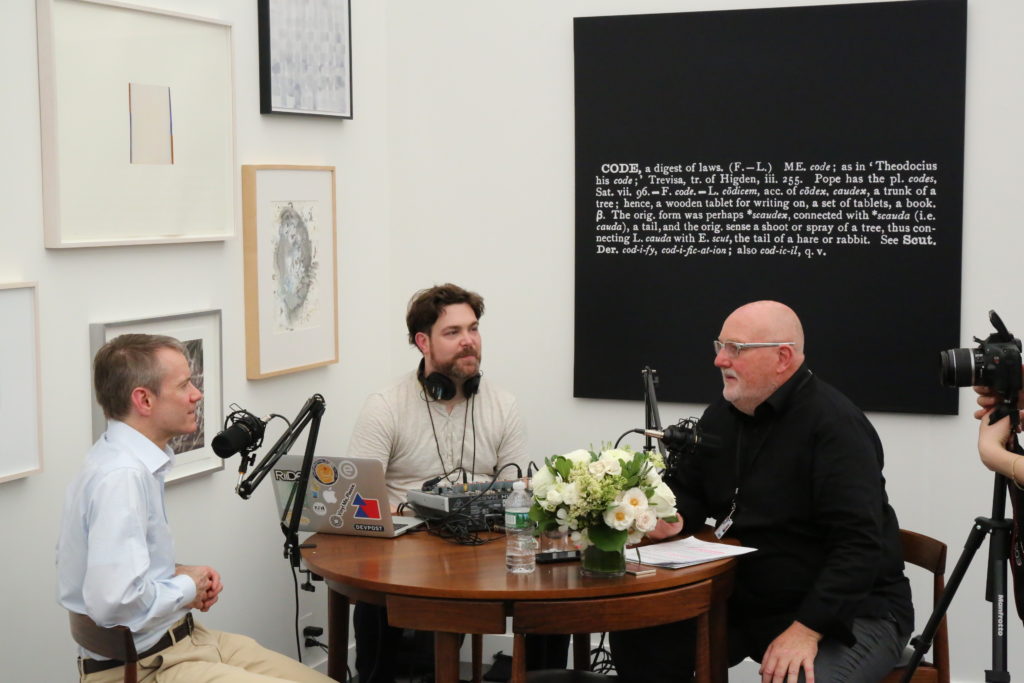
Sean Kelly recording his “Collect
Wisely” podcast. Photo: Henri Neuendorf.
Galleries, many of which
historically were sources of knowledge and connoisseurship, have
morphed into global supermarkets, employing teams of salespeople on
commission that function like incentivized call centers, inundating
collectors with hundreds of scattershot and largely unwanted emails
every day.
The growth of the global art
world’s infrastructure—including art fairs, biennales, triennales,
and the like—has created a class of professional artists, rather
than those driven by passion and vision. Money—and lots of it—spent
by professional art investors armed with an arbitrage mentality has
turned the high end of the art market into a blood sport, replete
with trophies affixed to well-appointed walls.
In some fundamental respects, we
have lost our way. Perhaps in this moment, painful as it
is, we have an
opportunity to assess our core moral values and think anew about
our place in the world.
We should not lament the exponential growth of interest in
contemporary art. That is a good thing. But nor should we accept some of
the now commonplace practices linked to
this growth without
serious critical consideration.
It was uplifting to hear Dr.
Clare McAndrew, founder of Arts Economics, reflect in a recent
Art Basel/UBS panel
upon a study she conducted of
high-net-worth collectors. From the study, she concluded that
even before the pandemic put the world on lockdown, there
was “a shift towards more
content and knowledge” and what these collectors increasingly value
is “the importance of personal relationships, not just through
social media.”
The art world is currently beset
by legions of fortune tellers predicting what our shared post-COVID
art world will resemble in the future, so I will refrain from
adding to the throng.
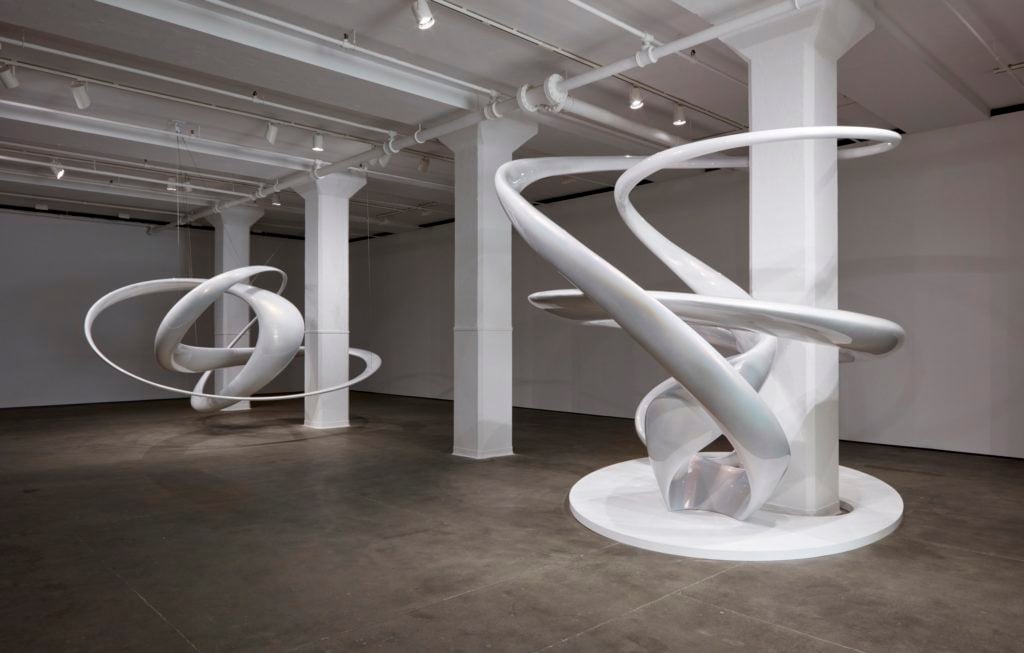
Installation view of Mariko Mori:
“Invisible Dimension” at Sean Kelly, New York. Photography: Jason
Wyche, New York
Courtesy: Sean Kelly, New York.
However, what I will propose is
that we think about some of the values we can use to guide us
towards a better future and a healthier art world. Here are a few
that come to mind:
1. The future is bespoke.
Instead of legions of staff
sending PDFs around the world in preparation for the next art fair,
we can be more selective and targeted in our conversations with
collectors, understanding their desires and aspirations. We can
confer more closely with our artists about their ideas, future
plans, and dream projects. No longer running through airports or
spending weeks on end in convention centers around the globe, we
can have deeper conversations with a broad range of collectors and
develop thoughtful, meaningful strategies to both service existing
clients and attract new art enthusiasts to our galleries who will
become the next generation of collectors.
2. The future is carbon neutral or negative.
Now that we know it is possible
to conceive of a different, more flexible working structure, with
virtual meetings and presentations, let’s seriously consider the
carbon footprint, ecological impact, and sustainability of our
working lifestyle. Is every additional gallery outpost, art fair,
flight, and international gathering essential to our core business
practice?
3. The future is virtual.
One thing this moment has taught
us is that current technology does not yet allow for particularly
convincing or meaningful virtual presentations. Human ingenuity is
extraordinary and there is no question these issues will be solved
in time and we will be able to use these tools to help collectors
imagine artworks in their homes, thereby cutting down on travel and
the need for superfluous art-world gatherings. It is, however, also
worth remembering that while the internet and technology can be
useful tools for research, communication, and data- and
information-gathering, they do not present a substitute for being
in the presence, the aura of an artwork. We need to invest in
technologies that will support virtual experiences that can also
encourage real-world encounters.
4. The future of the art world is Gen Z and Y.
Gen Z and Y have grown up around
the new technological revolutions and have been shaped by them.
They think differently, work more collaboratively, and are
conceptually flexible and open to new approaches to
problem-solving. They are also the next generation of collectors
who will sustain and expand the art world. They will inherit the
ecology and economies we have bequeathed them. We need to
understand their interests, concerns, and priorities and, like
them, be prepared to adapt to survive. We also need to make sure to
price them into the art market, not out of it. The good news is
that understanding the previous three principles—that the future is
virtual, carbon neutral, and bespoke—will prepare us for this new
audience: one that is not only digitally native, but also
passionate about
supporting businesses that are socially responsible
and those with which they can
develop a meaningful personal relationship.
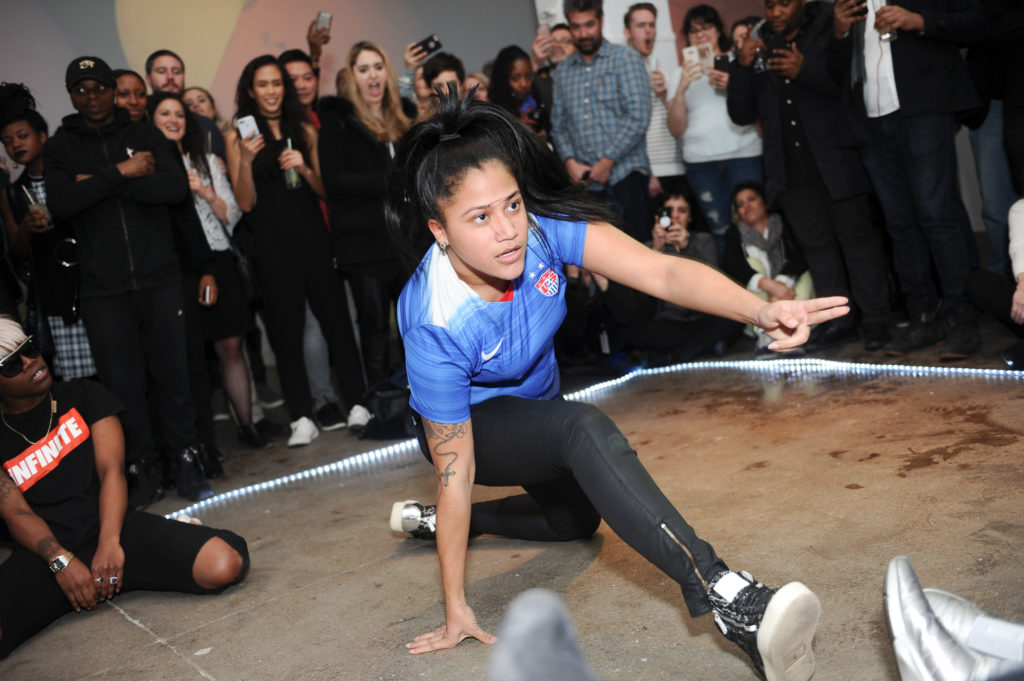
A competitor in In Flex We Trust at Sean
Kelly Gallery. Courtesy of BFA.
It’s not too soon, nor too late,
to think about what comes next. We need not mirror what preceded
this moment—we can reimagine the art world as more sustainable,
thoughtful, and generous. In the current moment, we should
reconsider some basic foundational principles. This is not a
retrograde view, but rather an optimistic projection.
Right now, we have the time to
think, consider, and dream about what we love most: art. Our
collective stasis can remind us that less can, indeed, be more in
certain instances, including the quality of our shared cultural
experience.
I sincerely hope we have the
collective foresight and courage to adapt and embrace the
future.
Sean Kelly is the founder of
Sean Kelly Gallery.
The post It’s Not Too Late to Create the Art World We Want.
Here Are 4 Ways to Do It appeared first on artnet
News.
Read more https://news.artnet.com/opinion/sean-kelly-opinion-1874976
Further reading


Leave a comment