
‘Nothing Prepares You for This’: Top UK Museum Directors Reveal What It’s Like to Put an Art Institution on Lockdown
The
directors of London’s biggest art museums, like many of their
colleagues across Europe and North America before them, were faced
with little choice but to abruptly close their institutions last
week as the global health crisis deepened. But unlike their peers
in several European countries and American states, who were told to
shutter by their governments, the UK’s arts institutions had to
make that tough call themselves. After a manic week, in which one
institution after another closed its doors, directors shared their
thoughts with Artnet News about the role of museums in this
emergency, the challenges ahead, and their hopes and fears about
what the world will look like on the other side. The director of
the British Museum, Hartwig Fischer, summed up the feelings of
many when he called the crisis “the biggest challenge we’ve
faced since the war.”
Hartwig
Fisher, director of the British Museum
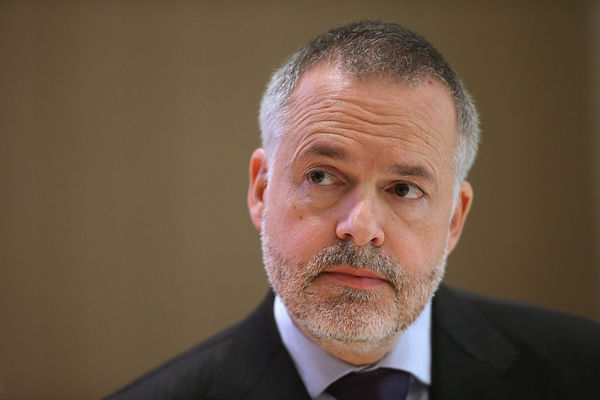
Hartwig Fischer, director of London’s
British Museum. Photo: Sean Gallup/Getty Images.
Closing the museum is difficult and very
emotional, of course. But we went fast. There was absolutely no
alternative. We have all sorts of scenarios that we have developed
over the years, but something of this magnitude is a different
dimension. We have a crisis plan that kicks in, and priorities in
front of us—staff, visitors, security—but a pandemic as it is
evolving right now is a new experience.
We
must make sure that those who do fall ill have the care that they
need. But I think that it is very important that our museums are
capable of shaping something in the face of this immense adversity.
I think that is what we will focus on, offering opportunities to
think about humanity in a deep historical dimension and look at how
people have faced challenges, how they have got on top of them, and
how they managed to heal. My hunch would be that in moments of deep
crisis and insecurity, cultural institutions will play an important
role in recalibrating how we think, how we feel, and how we live
our global human community.
Maria Balshaw,
director of the Tate
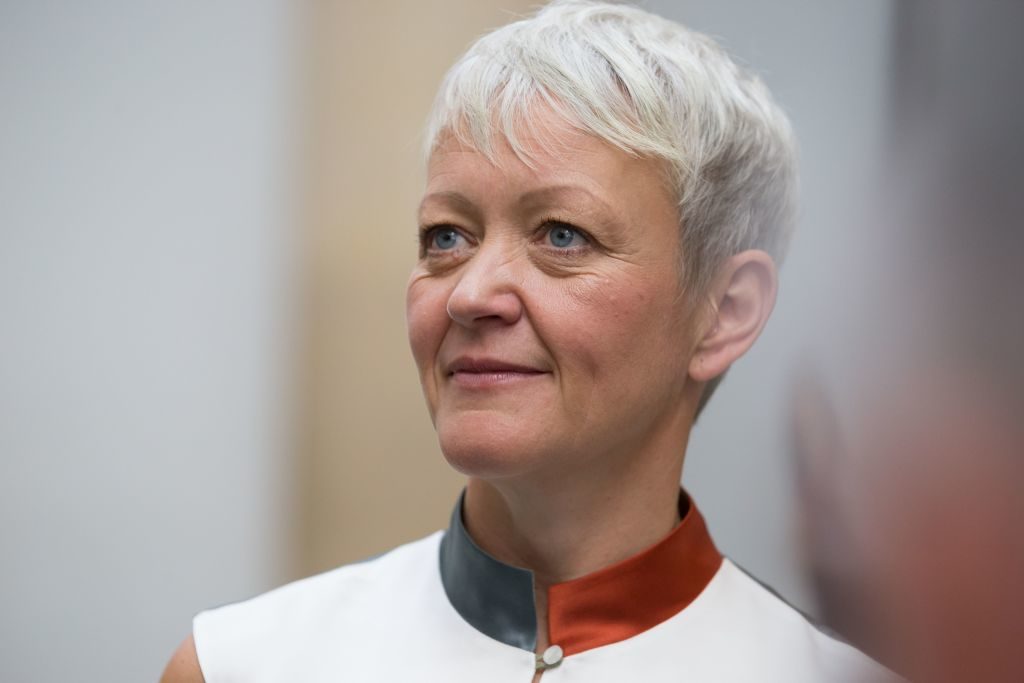
Tate Director Maria Balshaw at Tate
Britain in London on June 1, 2017. Photo by Daniel
Leal-Olivas/AFP/Getty Images.
Every
director is sharing how they are managing. A Whatsapp group is now
alive in a way that it wasn’t a week ago. They are all paying their
staff, dealing with them properly. They are sharing ideas, and
protecting the ecology of galleries across the UK. It seems to me
an inspirational response.
It is
the time to be looking after people and the creative spirit of the
nation. We are focusing our efforts on that. All of last week, the
digital team and the curators who feed into it have been working
around the clock. Because we closed, the BMW Live performances were
not able to happen last Thursday [as planned], but one of them,
by Faustin
Linyekula, was
performed for the camera. It feels like an amazing piece to be
sharing. We will definitely be showing Andy Warhol remotely for
people who cannot come to the exhibition. While we cannot have our
doors open, we will learn to do some new things. We’ll be able to
have a different kind of dialogue with our publics. We’ll have
expanded by the time we open.
Axel Rüger,
chief executive of the Royal Academy of Arts
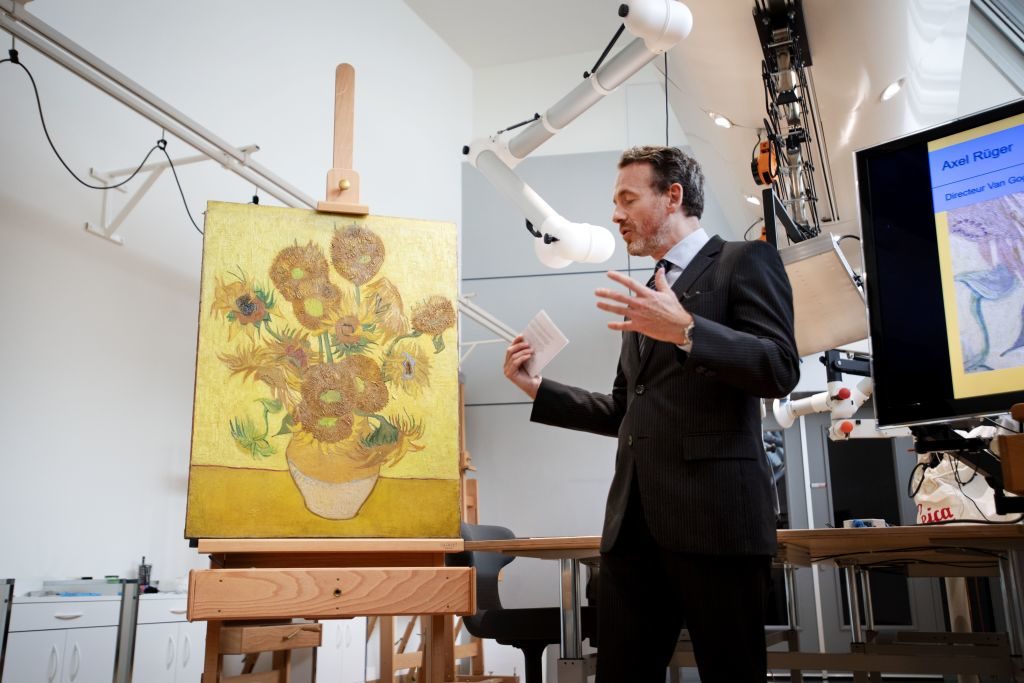
Axel Rüger, the former director of the
Van Gogh Museum and now director of the Royal Academy, on January
24, 2019, in Amsterdam. Photo by Olaf Kraak/AFP/Getty Images.
We
decided on Tuesday morning to close by the end of the day. For such
a large organization, that’s like a screeching halt. Nothing
prepares you for this. It is new for even the old hands in the
business. We are all feeling our way through. No one really knows
when we might be allowed to open, or in what fashion. There may be
a gradual introduction of public life rather than a sudden throwing
open the doors and rushing outside. At the moment, we cannot really
say much. We are working very hard to assess the whole program. The
Royal Academy relies on [revenue from tickets for] its exhibition
program, probably more than our peers, so we need to think very
carefully about this. We are very mindful of our Academicians. The
Summer Exhibition, which is the main vehicle through which the RAs
sell their work, has never, ever been cancelled.
We
want to remain in touch with our audiences through our digital
channels. We hope to involve our community of artists in this. That
is a great strength. It is all about online engagement these
days.
Tristram Hunt,
director of the Victoria & Albert Museum
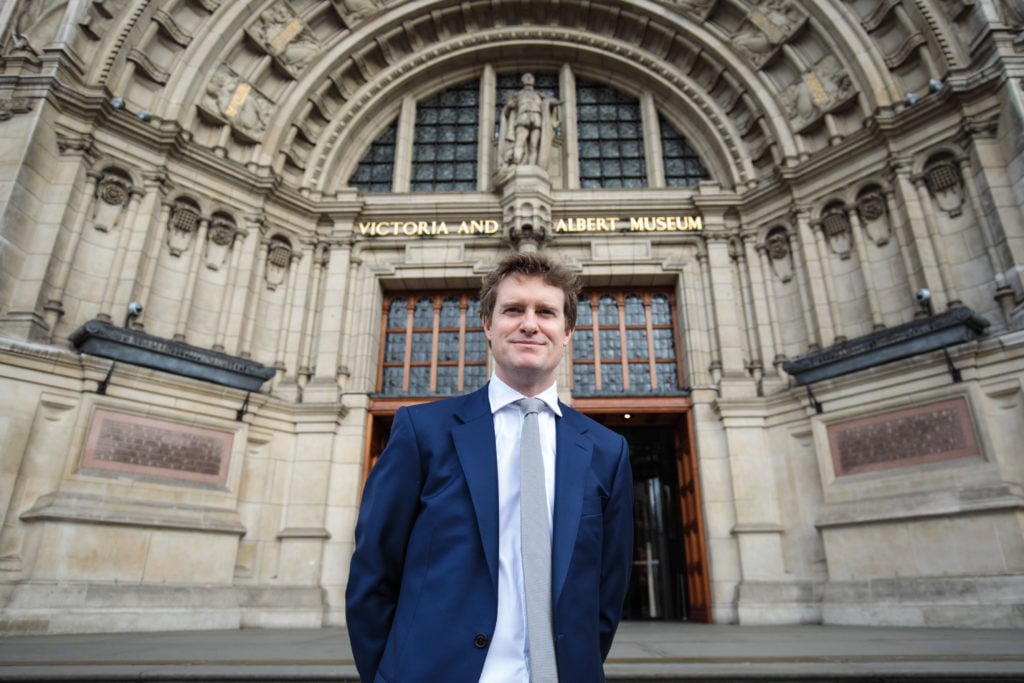
Tristram Hunt, the director of the
V&A in London. (Photo by Jack Taylor/Getty Images)
A
situation like this exposes all sorts of unexpected and terrifying
things. Like everyone, we thought this was an Asian challenge. In
fairness, the level of lockdown in China meant we thought that it
would be contained very effectively. But looking back, clearly
international travel should have been curtailed much
earlier.
It is
hard to be optimistic about reopening by May. The notion that they
will be playing [professional] football by April seems bizarre.
Could we get back to some notion of normality by the fall? That is
what we have to be thinking about, but the consequences are going
to be long-lasting. The doors will reopen, but the legacy costs
will be much harder to shift. We understand that critical care beds
in the NHS are top of the hierarchy of needs, but we will be losing
millions and millions of pounds. It will be incredibly difficult to
do what we seek to do without government support.
I
think people will want us to be vibrant institutions in the
aftermath of this. People will be desperate for sociability. They
will be desperate for a sense of the authentic, and the original,
having been stuck to their screens for possibly three months. There
will be a thirst for the human instincts from which museums flow,
for identity, materiality, and interconnectedness.
Iwona
Blazwick, director of the Whitechapel Art Gallery
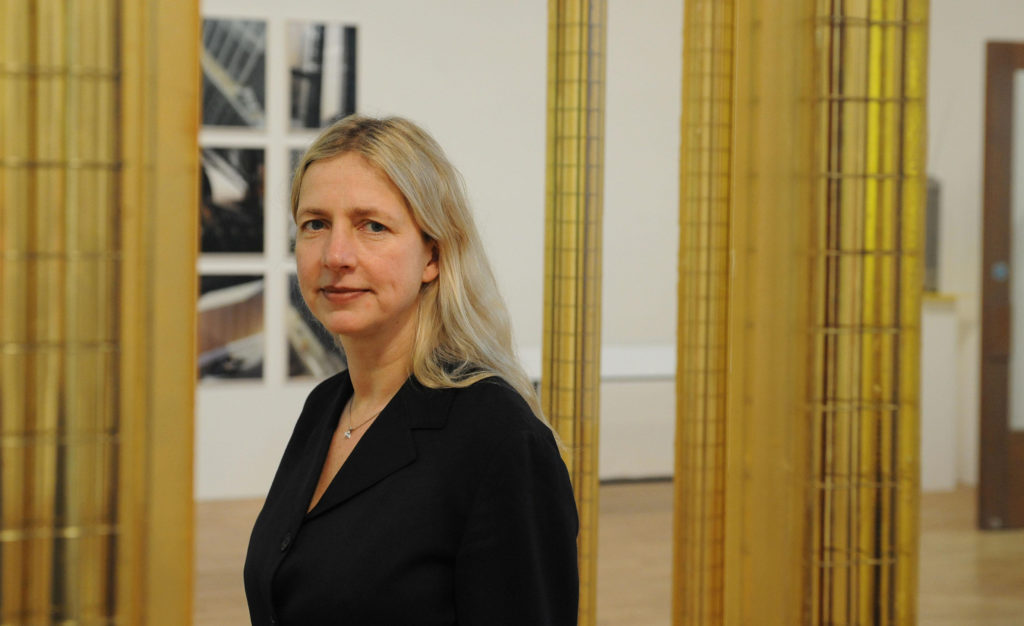
Iwona Blazwick OBE, director of the
Whitechapel Art Gallery in London. (Photo by Ian West – PA
Images/PA Images via Getty Images)
As a
community, we are pretty resourceful. People are being really
inventive to find other ways to connect to our publics and our
artists. We have 22 partners around the world in the Artists’ Film
International, a consortium that nominates films from their
regions. We can present them online. That has been a fantastic
thing. We can go back over all our artists’ talks and podcasts and
make them available. It has made us aware what an incredible sound
archive we have. We had just opened a new restaurant, but they have
risen to the challenge and said, “Right, we’ll do takeaways.” It is
like movies on demand with great food. We are trying to keep
everybody’s minds and souls fed. I hope all of us can offer some
solace, some transcendence, and some thoughts about the
future.
It
feels like nature is saying “enough” somehow. It is also as if the
tables have been turned on the Global North. It is suffering the
most now from the effects of mass globalization. That is something
that we need to reflect upon as we survive, which I’m sure we
will.
The post ‘Nothing Prepares You for This’: Top UK Museum
Directors Reveal What It’s Like to Put an Art Institution on
Lockdown appeared first on artnet News.
Read more https://news.artnet.com/art-world/nmuseum-directors-art-institution-on-lockdown-1818333
Further reading


Leave a comment