
The Gray Market: How My 9 Highly Specific Art-Industry Predictions for 2018 Worked Out (and Other Insights)
It’s that time of year again:
the week when I look back at my art-market predictions for
2019 to see where I was right, where I went wrong, and what we
might be able to learn from both. Let’s jump right into
it…
1. The US federal government will establish no new
regulations for the art market.
On Review: Bingo.
As a reminder, I didn’t take a
stance on this just to troll the law-and-order crowd. Roughly a
year ago, the Art Newspaper
reported on credible chatter from Washington that the House of
Representatives, in the wake of the fifth Anti-Money Laundering
Directive hammered out by the European Parliament,
could resurrect a dormant
bill that would force art
dealers to adopt some of the same fiscal-compliance,
customer-due-diligence, and transaction-monitoring
measures as banks and
other financial institutions. If so, selling art privately would
become a completely different business almost overnight.
Spoiler alert: it’s still the
same business 12 months later. Congress took no meaningful action
on the bill during that time, and now its members won’t return to
work until 2020. Let’s see if the bill lurches out of the grave and
back onto the House floor in the new year.
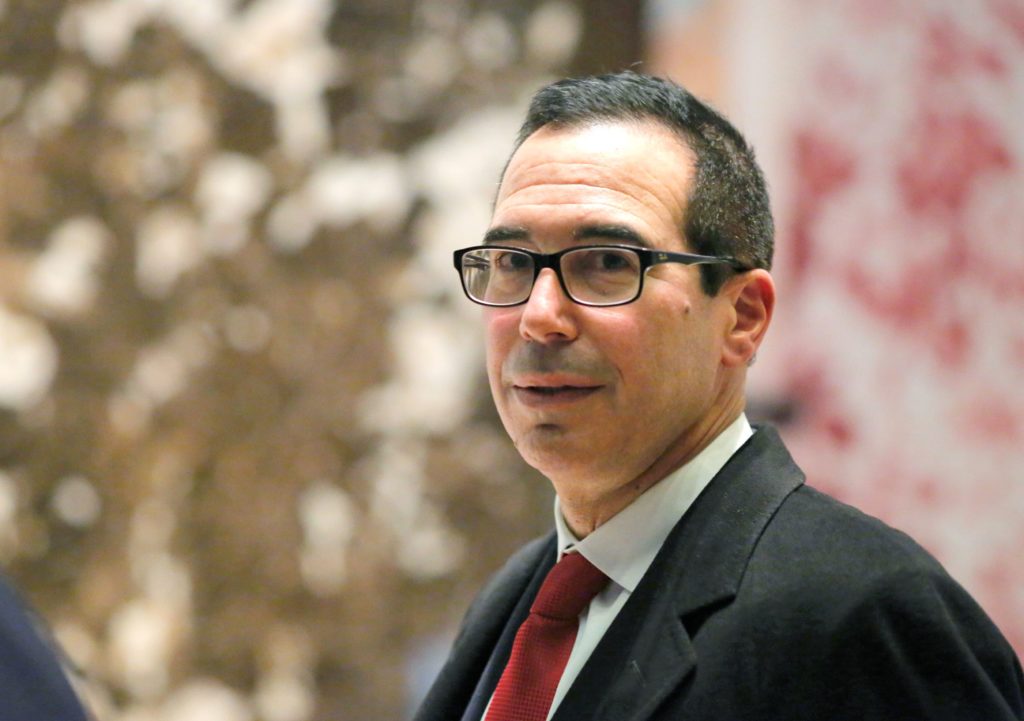
President Trump’s Treasury Secretary
Steven Mnuchin, leaving Trump Tower in New York in 2016. Photo
credit KENA BETANCUR/AFP/Getty Images.
2. A lobbying effort will be launched to try to make
artworks eligible for 1031 exchanges again.
On Review: Nope.
For the uninitiated, a 1031 or
“like-kind” exchange is the name for a type of transaction that
allows certified investors in the US to avoid capital-gains tax
when flipping certain physical assets. The key is that said
investors have to funnel the sales proceeds from one such asset
into the purchase of one or more similar assets within 180
days.
Artworks used to qualify for
1031 swaps,
and it was damn good for the art
business. The reason? The loophole incentivized deep-pocketed
collectors—many,
if not most, of whom are happy to sell almost anything once the
value proposition gets juicy enough—to buy
big again as soon as they decided to sell big.
But ever since the Trump tax
cuts eliminated 1031
exchanges for all assets but (ahem) real estate
in January 2018, the gears powering
the top of the art market have gotten awful
gummy. By fall 2018,
dealers and auction houses were cursing Congress in private for the
missile the new legislation blasted into their bottom line. It
seemed plausible that this group might band together to start
formally advocating to reverse the old order, especially while
their lobbyists could whisper into the (theoretically) sympathetic
ear of Treasury Secretary and collector Steven Mnuchin.
I was wrong. To my knowledge,
art-market dealmakers have not launched a lobbying effort on this
issue. But it isn’t because they’ve stopped losing money from the
1031’s disappearance. The fall 2019
Artnet Intelligence Report found that sales of works priced at $10 million
and above plummeted 35 percent worldwide in the first half of the
year, and New York’s fall
auctions included only
five works with estimates of $20 million or more—down from 22 such lots the previous
year.
My guess is that everyone with
skin in this game came to the conclusion that their constituency
was too small to overturn the entrenched thinking on the 1031
exchange. So why blow money on a losing cause? Instead, they have
turned their attention to a
potential substitute, the Opportunity Zone. But so far, that
has not proven to be a particularly viable solution
either.
3. One of the art-world figures canceled by misconduct
allegations since the start of the #MeToo era will be hired or
given a show at an otherwise-reputable institution.
On Review: Ugh, yes.
In mid-January 2018, Tate and
the National Galleries of Scotland severed ties with
Anthony d’Offay, the
legendary dealer and ex officio curator of the 1,600-work Artists
Rooms collection donated to the institutions by d’Offay himself,
after three women accused him of sexual harassment and a fourth
brought allegations of malicious communication. D’Offay denied all
charges… and within three months, Tate and the
National Galleries of Scotland renewed their relationship with
him. The institutions
justified the move by stating that investigations into the matter
“produced no firm
evidence” of
wrongdoing.
On the market side, as my
colleague Nate Freeman reported in Wet
Paint last month,
curator Jens Hoffmann has quietly reappeared on the industry’s
periphery roughly two years after being dismissed by the
Jewish Museum following an investigation into allegations of sexual
harassment. Along with
launching his own nebulous project in New York and a space
in Bogotá,
Colombia, Hoffmann landed at
least two external gigs this year: curating a group sculpture
exhibition at Cristina Guerra Contemporary Art in Lisbon,
and penning an
essay for a solo
exhibition of Anna Weyant’s subtly surreal paintings at
Lower East Side gallery 56
Henry.
I hate to say it, but expect
more where this came from in the years ahead.
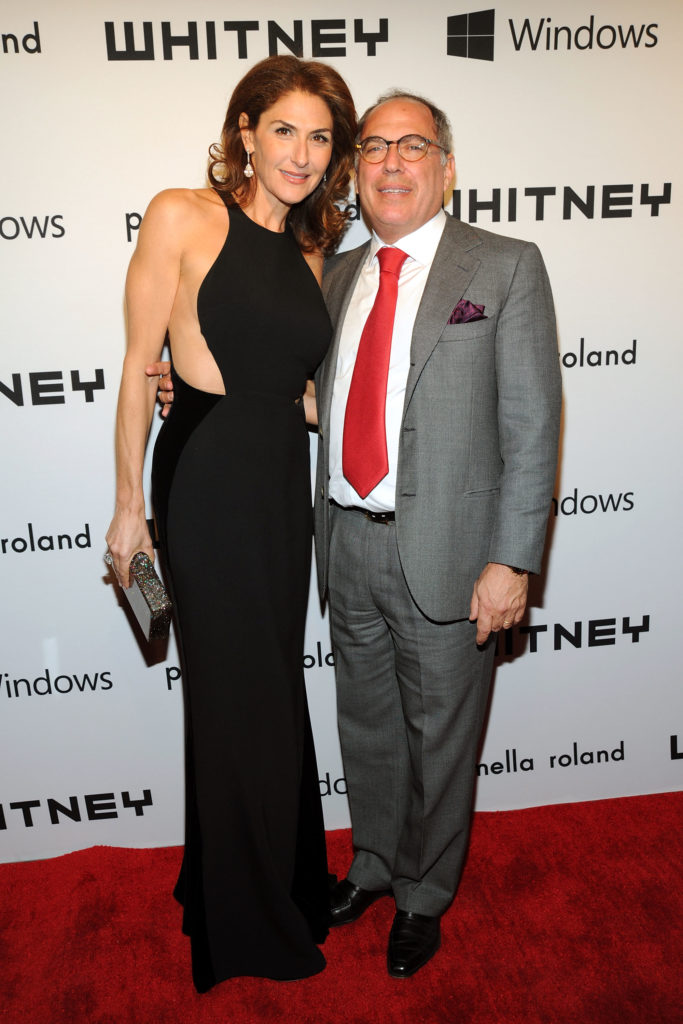
NEW YORK, NY – DECEMBER 11: Allison
Kanders and Warren Kanders attend 2012 Whitney Gala at The Whitney
Museum of American Art on December 11, 2012 in New York City.
(Photo by Ben Gabbe/Getty Images)
4. Despite mounting public pressure, problematic
sociopolitical affiliations will not force a single trustee at a
major American museum to depart their role.
On Review: One is the loneliest number.
Honestly, I’m still nearly as
stunned by Warren Kanders’s
resignation from the board of the Whitney as I would be if I suddenly woke up tomorrow
with the ability to breathe underwater. It took seven months of
coordinated protests,
open letters from museum
staff as well as
a coalition of
artists and scholars, a virtuosic and
consciousness-shifting Artforum essay, the publicly announced withdrawal of eight
participating artists from the Whitney Biennial midway through its
run, and perhaps some behind-the-scenes lobbying from other board
members, but the pressure over Kanders’s ownership (first reported
by Hyperallergic) of Safariland, a manufacturer of tear gas and
other defense products, finally forced him out.
It’s undeniable that Kanders’s
exit shifted the
paradigm in the fiery
debate over the need for strictly ethical patronage of the arts.
But whether it opens the floodgates to more boardroom dismissals,
or becomes a historical exception, will depend on time, activism,
and—perhaps most importantly—powerful people’s tolerance for
controversy. The only thing we can be sure of for now is that this
isn’t over.
5. The world auction record for a living African American
artist will be broken for the second consecutive year.
On Review: Not close.
The most weathered cliche in the
auction business is that “quality wins out,” meaning that truly
great works perform well under the hammer regardless of the
surrounding context or mood. Which is
true… but only to an
extent. There’s a big difference between a particular work selling,
or even selling for a healthy price, and the same work exploding
through the atmosphere into the cosmos. To get a truly historic
result, you don’t just need the right work. You need the right
work at the right
time, i.e. one in which
multiple buyers are ravenous for the exact thing on offer, and
preferably while a booming global economy reassures them that
chasing a trophy is a fine idea.
Those ingredients blended
together perfectly in May 2018, when Kerry James Marshall’s
monumental canvas Past
Times (1997) set a new
high mark for a living African American artist’s work by changing
hands for a premium-inclusive
$21.2 million at Sotheby’s New York. But even though plenty of pieces by such
artists sold for handsome sums at auction in 2019, the year saw
neither a great enough piece consigned, nor a sufficiently large
pool of buyers clamoring for it, to top Marshall. Which makes this
prediction a textbook example of how trying to ride momentum in a
simplistic way can crash you straight into a garbage
truck.
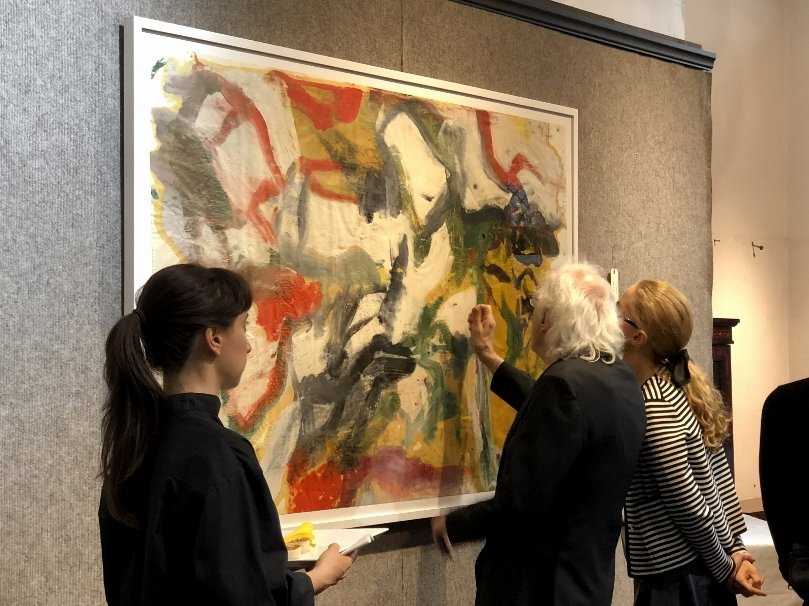
Willem de Kooning Untitled II
(ca. 1970). Photo: courtesy of David Killen Gallery.
6. One or more of the possible Willem de Kooning works
discovered in a New Jersey storage locker in 2018 will receive
serious scholarly backing for the attribution.
On Review: Should have known better.
If you’re wondering what time I
made this prediction, the answer is apparently “amateur
hour.”
I stand by my underlying
reasoning (which I unpacked at length here, under the header “Making a
Killen”): When something
can’t be definitively proven, rich people with skin in the game can
usually bankroll their preferred outcome into being. This is
especially true in cases like art attributions, where, as long as
the work in question doesn’t fall into the Beast
Jesus zone of execution,
literally no one is worse off for the change. Even the scholars who
disagree can get speaking gigs, media appearances, and even published articles out of their
dissent!
Instead, my problem was the
timeline. It normally takes years to marshal enough scholarly
consensus to transform a work of once-dubious authorship into a
bona fide masterwork… and juice the resale price in the process. To
take the most famous case, Salvator Mundi needed eight years of
wrangling to evolve from
being a $10,000 work attributed to Boltraffio to a $75 million to
$80 million work by Leonardo.
In other words, I still think
“properly incentivized” experts will one day attach Willem de
Kooning’s name to the works on paper that dealer David Killen
bought from among the contents of a random Garden State storage
locker. But it was never going to happen within 12 months, and
thinking otherwise was naive on my part.
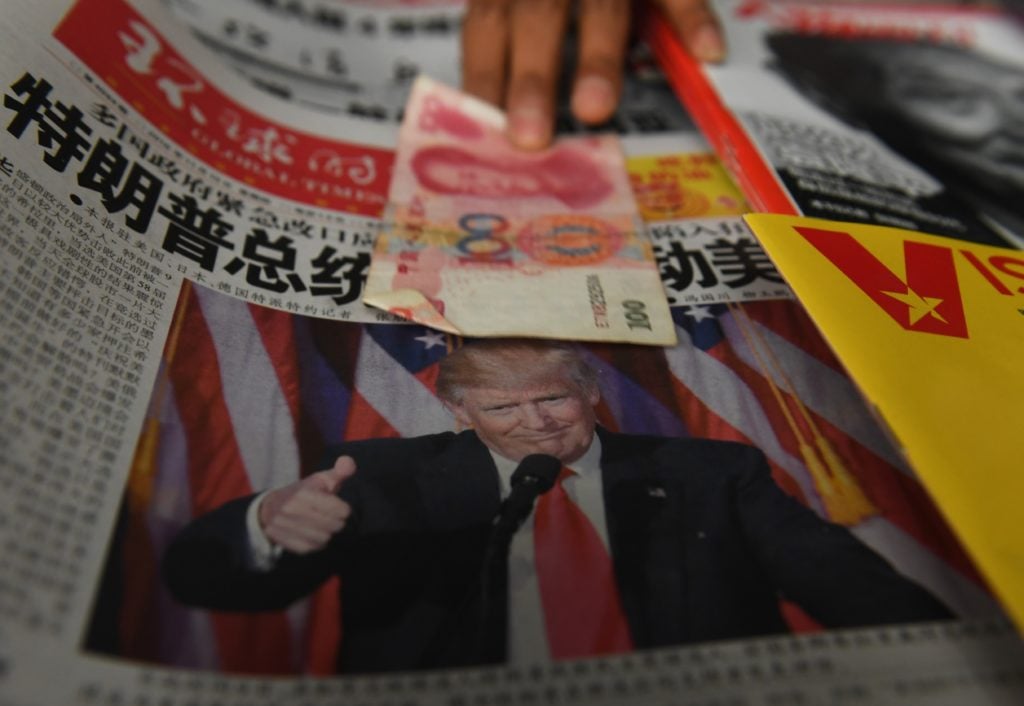
A vendor picks at a news stand in
Beijing on November 10, 2016. Photo: Greg Baker/AFP/Getty
Images.
7. As part of a re-escalation in the US-China trade war,
artwork and antiquities will land on the list of items slapped with
punitive tariffs.
On Review: Yessir.
This month marked the 19th in
the US’s self-defeating trade war with China, and the
Trump administration’s haphazard strategy has put Chinese art and
antiquities through more back and forth than a mattress at an
hourly-rate motel. The Art
Newspaper reported
that, last July, officials placed those goods on a list of imports
slated to receive a 10 percent tariff in September 2018. The
administration then ratcheted up the pain by increasing the
proposed tariff to 25
percent the following
month, until an eleventh-hour lobbying campaign by dealers and
their allies earned art and antiquities of Chinese origin an
exemption
before the
deadline.
The reprieve didn’t last. This
May, Team Trump stuck Chinese art and antiquities back inside the 25
percent tariff cannon set to fire at the People’s Republic in
September 2019, before adjusting the applicable duty twice in
August—first, down to 10
percent (while
simultaneously refusing to include art and antiquities among the
goods whose tariffs would be delayed until mid-December), then up
to 15 percent two
weeks later.
That last tariff came into force
as planned in September. And to close the loop on this tangled
narrative, the trade
deal struck between the
two superpowers earlier this month only cuts the import tax on
Chinese art and antiquities in half, to 7.5 percent, rather than
eliminating it. Which means dealers in these categories undoubtedly
join a list of people who have responded to being squeezed by Trump
with the thought, “Can’t this just be over with
already?”
8. A pavilion at the Venice Biennale will be vandalized,
likely by members of the political far right.
On Review: Negative.
This is a case where I’m happy
to be wrong. Although Venice wasn’t exactly a drama-free zone
during the latest biennale, the real threats to the exhibition’s
stakeholders were runaway cruise
ships and perilous
floods, not right-wing
vandals. (The only thing that came close was the delayed opening of the
Venezuela Pavilion, pushed back by unrest at home.)
Fortunately, not even those dangers seem to have damaged any of the
work in the show, making it a welcome deviation from the negative
trend established by criminal mischief
at last year’s Skulptur Projekte Münster and the politically driven
banishment of an installation from documenta
14.
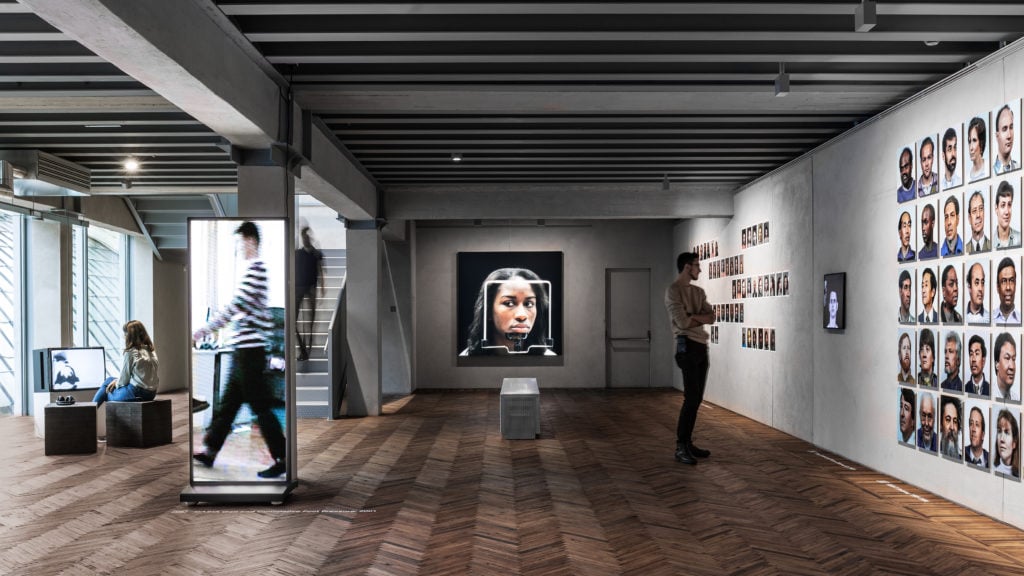
Exhibition view of “Kate Crawford,
Trevor Paglen: Training Humans” Osservatorio Fondazione Prada,
through Februrary 24, 2020. Photo by Marco Cappelletti, courtesy
Fondazione Prada.
9. Artificial intelligence will replace blockchain as the
one tech issue per year that the legacy art world can manage to pay
sustained attention to.
On Review: Correctamundo.
Hey, remember those 10 months or
so when blockchain was
going to revolutionize the art industry, before people started realizing that it’s
largely bad technology that reinforces most of
the problems it proposes to solve? That was fun, huh?
Although blockchain was arguably
at peak visibility when I made this prediction, the pivot toward
artificial intelligence had begun—albeit in the worst possible way, courtesy of
the frenzy that ensued after someone paid an absolutely stupid
price for an algorithmically generated gimmick
by French design collective Obvious
in October 2018. But by
mid-February 2019, the Metropolitan Museum of Art unveiled multiple A.I. projects wrung from a joint
partnership with Microsoft and MIT. Shortly after, machine
learning was the subject of a panel
discussion at the
inaugural Frieze Los Angeles and played a role in a solo talk by artist
Tishan Hsu at Art Basel
Hong Kong.
The wave only intensified as the
year carried on. Christie’s annual daylong Art + Tech Summit,
arguably the for-profit art industry’s most ambitious tech event,
took “The A.I.
Revolution” as its
subject in June. (The previous year’s focus? You guessed it:
“Exploring
Blockchain.”) A few
weeks earlier, the House of Electronic Arts in Basel, one of the
world’s premier institutions for new media, opened “Entangled
Realities: Living With Artificial
Intelligence” in its
coveted programming slot coinciding with Art Basel, and San
Francisco’s de Young Museum announced a forthcoming show titled
“Uncanny Valley:
Being Human in the Age of A.I.”
The art world’s engagement with
machine learning even sparked real change in the wider world. In
September, the researchers behind ImageNet, the colossal online
database used to “train” the software in many machine-learning
ventures, agreed to prune more than half of the 1.2 million images
in its “people” category after artist Trevor Paglen and A.I.
researcher Kate Crawford exposed embedded algorithmic
biases—see: photos depicting
people of color disproportionately tagged with terms like
“wrongdoer”—rampant within them via their collaborative
app, ImageNet
Roulette (which, by the way, was on view in
another A.I.-centric institutional show: their own, at
the Fondazione Prada’s Milan Osservatorio).
Meanwhile, gone are the dedicated blockchain conferences by major players
held during Miami Art Week, the bidding wars for Cryptokitties at charity
auctions, the daily avalanche of pitches in my inbox from
blockchain x art startups… and almost any other sign that this was
once a technology that credible members of the art industry saw as
a potential game-changer. As far as I can tell, the most
consequential blockchain-based art story in the fourth quarter of
2019 was a modest announcement that the Winston Art Group would
offer free vetting
services for artworks
whose owners agree to list them on Artory’s blockchain title
registry. The gold rush is over, folks.
All told, the whiplash from
blockchain obsession to A.I. fever embodies just how fast, and how
abruptly, trends change in the art world. Let’s see if I can do a
better job of anticipating the next ones when I make my 2020
predictions in another week.
2019 Scorecard: Four wins, five fails.
The post The Gray Market: How My 9 Highly Specific
Art-Industry Predictions for 2018 Worked Out (and Other
Insights) appeared first on artnet News.
Read more https://news.artnet.com/opinion/gray-market-2019-predictions-evaluation-1738275
Further reading


Leave a comment