
The Pentagon Has Rejected Trump’s Threat to Bomb Iran’s Heritage Sites. Here’s What May Have Been Saved
Senior officials at the Pentagon
have rowed back on the possibility of carrying out US President
Trump’s threat to bomb cultural sites in Iran. The US defense
secretary acknowledged that carrying out the commander-in-chief’s
threats, which have sparked worldwide condemnation, would
contravene “the laws of armed conflict.”
Trump provoked
international outrage from museum directors, academics, and
artists after he tweeted
on Saturday that the US would strike Iranian cultural sites “very
fast and very hard” should the country kill any Americans or attack
American assets in retaliation for the US-ordered killing of an
Iranian general on Friday.
But in a news briefing at the
Pentagon on Monday, January 6, Secretary of Defense Mark T. Esper
appeared to contradict the president, telling reporters: “We will
follow the laws of armed conflict.” He had been asked whether
striking Iran’s cultural sites would constitute a war
crime.
Another White House official
told the New York
Times that of the 52
sites in Iran that Trump tweeted were potential targets, none
qualified as cultural sites.
The news that officials are
distancing the US government from Trump’s threats will be met with
a measure of relief from heritage professionals. In the wake of his
provocative tweets and a statement to reporters, leading members of
the international museum community condemned the president’s words.
Responses included an unusually outspoken comment aimed at the White
House from the director of the Metropolitan Museum of Art, Max
Hollein, as well as a post on Instagram by its former director,
Thomas Campbell. The
director of Boston’s Museum of Fine Arts, Matthew Teitelbaum, also
expressed his outrage, tweeting: “The preservation of antiquities
and cultural sites should not be endangered by any US
administration.”
Since Monday, more organizations
have condemned intentional acts of destruction of culture,
including the World Monuments Fund, which described Trump’s threats
as “absolutely unacceptable,” and called on “people and governments
everywhere to stand up for the protection of our shared
heritage.”
The Association of Art Museum
Directors, which represents the heads of 225 art museums in the US, Canada, and Mexico,
also issued a
statement urging the
protection of Iran’s cultural heritage. The AAMD noted that “the
United States has a long and important history of safeguarding art
and artifacts during conflict, such as with the Monuments Men
during World War II.”
James Cuno, the president of the
J. Paul Getty Trust, weighed in as well: “It is tragic,” he wrote, “that today there
would be any contemplation or rhetorical threat of further
destruction of cultural heritage, particularly when what precious
little remains in the world is already suffering from wanton
destruction, looting, neglect, reckless overdevelopment, and
climate change.”
Iran has 22 cultural sites
listed on the UNESCO World Heritage List. Here are five of the
irreplaceable treasures that have—in all likelihood—been spared
thanks to the backlash against Trump’s threat, and some cooler
heads in the Pentagon.
Persepolis
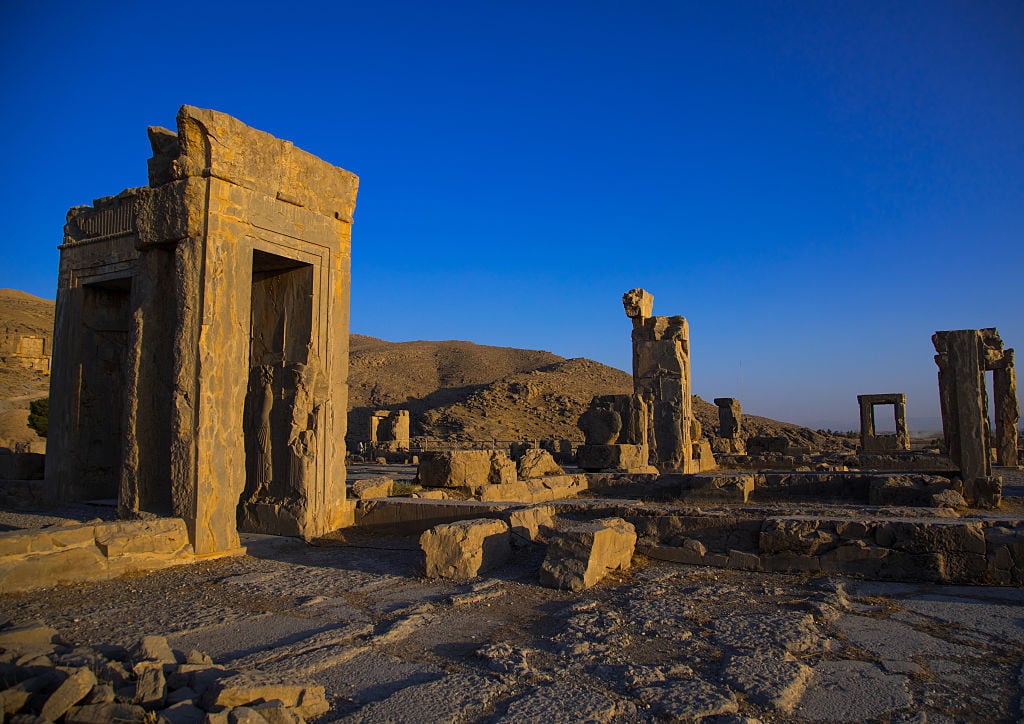
The Tachara palace of Darius the Great
in Persepolis. Photo by Eric Lafforgue/Art in All of Us/Corbis via
Getty Images.
The royal city founded by Darius
I was the political and religious center of the Achaemenid Empire
in the 5th century BC. Now a spectacular ruin, it is Iran’s most
important ancient heritage site. Every summer between 1967 and 1977, Persepolis and the
nearby city of Shiraz served as the setting of a groundbreaking
international cultural festival bringing together leading artists
from the West, Asia, and Africa.
The Friday
Mosque
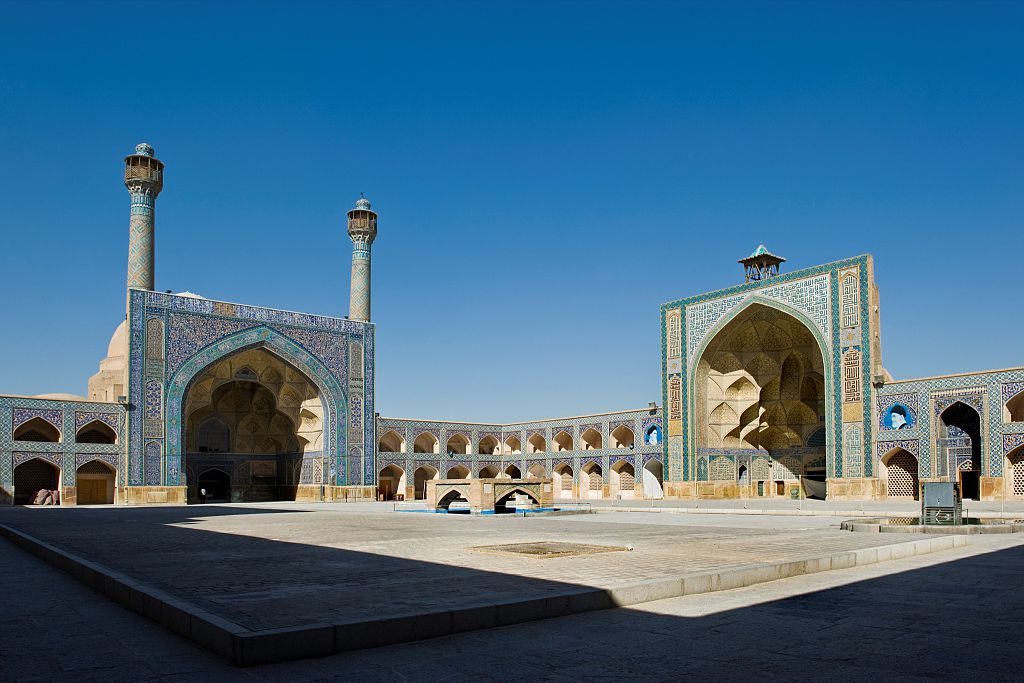
The Friday Mosque. Photo by
Marka/Universal Images Group via Getty Images.
The Masjed-e Jāme’ in Isfahan is
the oldest Friday mosque in Iran, which inspired the design of
mosques across the region. Begun in the 8th century, its
magnificent architecture is the result of 12 centuries of
construction, incorporating the different styles of the Abbasid,
Buyid, Seljuq, Ilkhanid, Muzzafarid, Timurid and Safavid
eras.
Tabriz Historic Bazaar
Complex
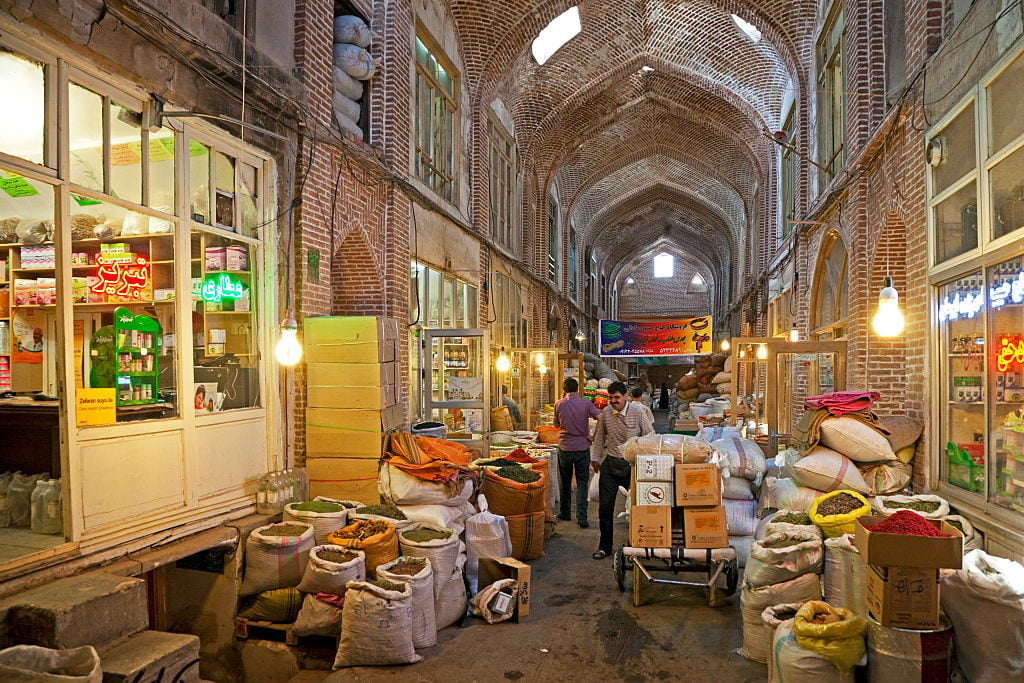
The old historic bazaar of the city
Tabriz, East Azerbaijan, Iran. Photo by Arterra/Universal Images
Group via Getty Images.
A crossroads on the Silk Road
linking the East with the West, Tabriz’s vast bazaar has been
famous since the 13th century. Rebuilt under a brick-vaulted roof
in the 18th century, its magnificence reflects the market’s
importance on the ancient trade route.
Golestan
Palace
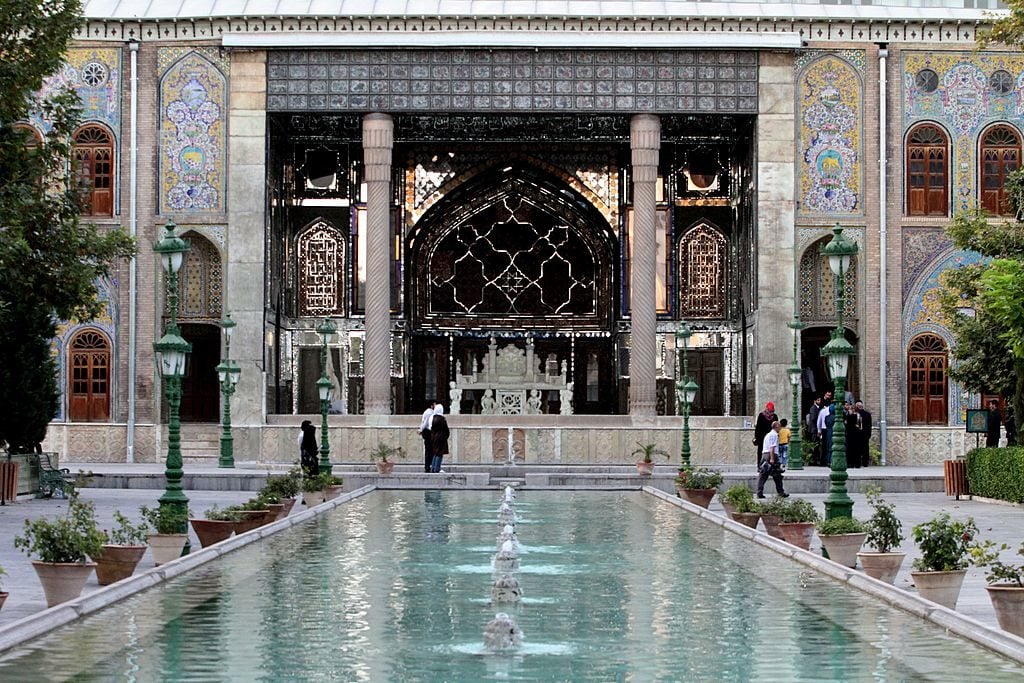
Tehran’s Golestan Palace. Photo by Atta
Kenare/AFP via Getty Images.
The
walled palace is in the heart of historic Tehran.
Built by the ruling Qajar family in
the late 18th century, Golestan Palace was further embellished in
the 19th century in a style that combines traditional Persian
designs with European influences.
Shushtar Historical
Hydraulic System
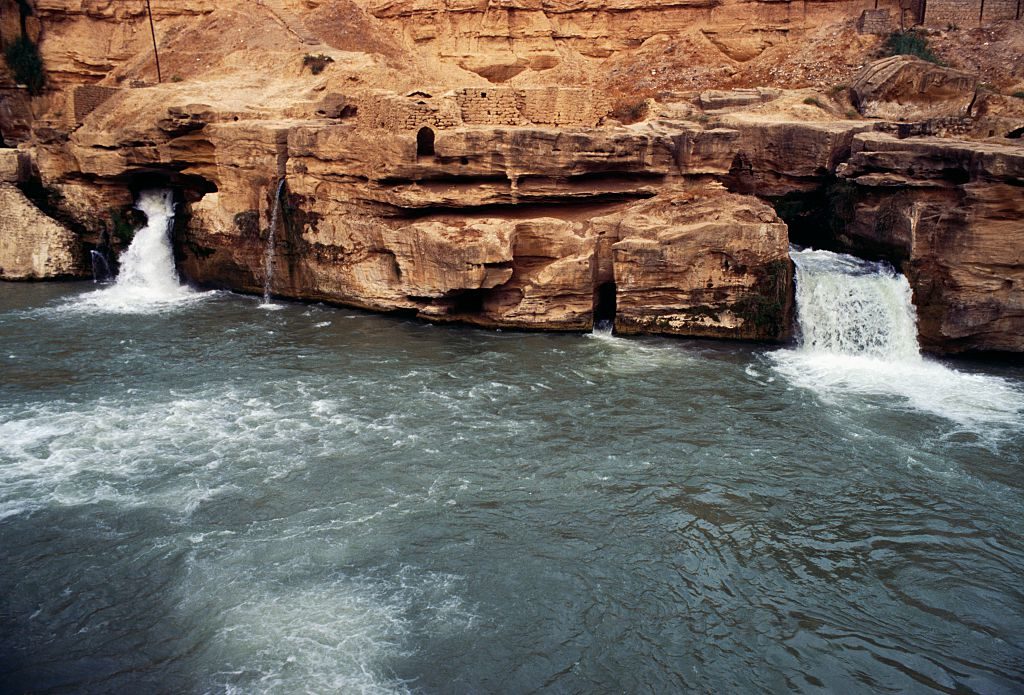
Canals and waterfalls of the Shushtar
historical hydraulic system. Photo by DeAgostini/Getty Images.
A triumph of 3rd-century civil engineering, the canals and
waterfalls that form the Shushtar hydraulic complex
powered mills, irrigated a vast plain and provided river
transport as well as a defensive system for the fortified city.
The post The Pentagon Has Rejected Trump’s Threat to Bomb
Iran’s Heritage Sites. Here’s What May Have Been Saved appeared
first on artnet News.
Read more https://news.artnet.com/art-world/pentagon-trump-iran-cultural-sites-1747071
Further reading


Leave a comment