
The UAE Is Emerging From Lockdown, But Some Say Its International, Cosmopolitan Art Scene Will Never Be the Same
The sand-filled, dusty streets of Alserkal Avenue, Dubai’s
leading art district, were deserted. At the back entrance to the
industrial compound, guards wearing face masks took the
temperatures of the few visitors who were trickling in. But because
of the Gulf’s hot weather, which had hit around 104 degrees
Fahrenheit (40 Celsius), several visitors had to spend a few
minutes in a cool waiting area and then have their temperature
taken again for an accurate reading before being allowed entry.
Once inside, artwork spray-painted on the street with messages such
as “It’s not you, it’s COVID-19” and “A Two-Metre Distance Makes
the Heart Grow Fonder,” reminded all of what they had just been
through: weeks of stringent 24-hour lockdown.
The signs of life at Alserkal marked a new beginning. Galleries
were finally re-opening their doors (if only by appointment). But
some wonder whether this slow revival of activity will be enough to
support a cultural sector that was ailing even before the onset of
coronavirus.
High Hopes
The year 2020 was one Dubai’s leaders had long awaited. After
two years of economic recession and slow growth, a spirit of
optimism was in the air as the UAE prepared to host Expo 2020, a
world fair that was expected to draw around 25 million visitors and
renew Dubai’s glittering image on the world’s stage. But those
plans were derailed when Dubai recorded its first cases of
coronavirus on January 29.
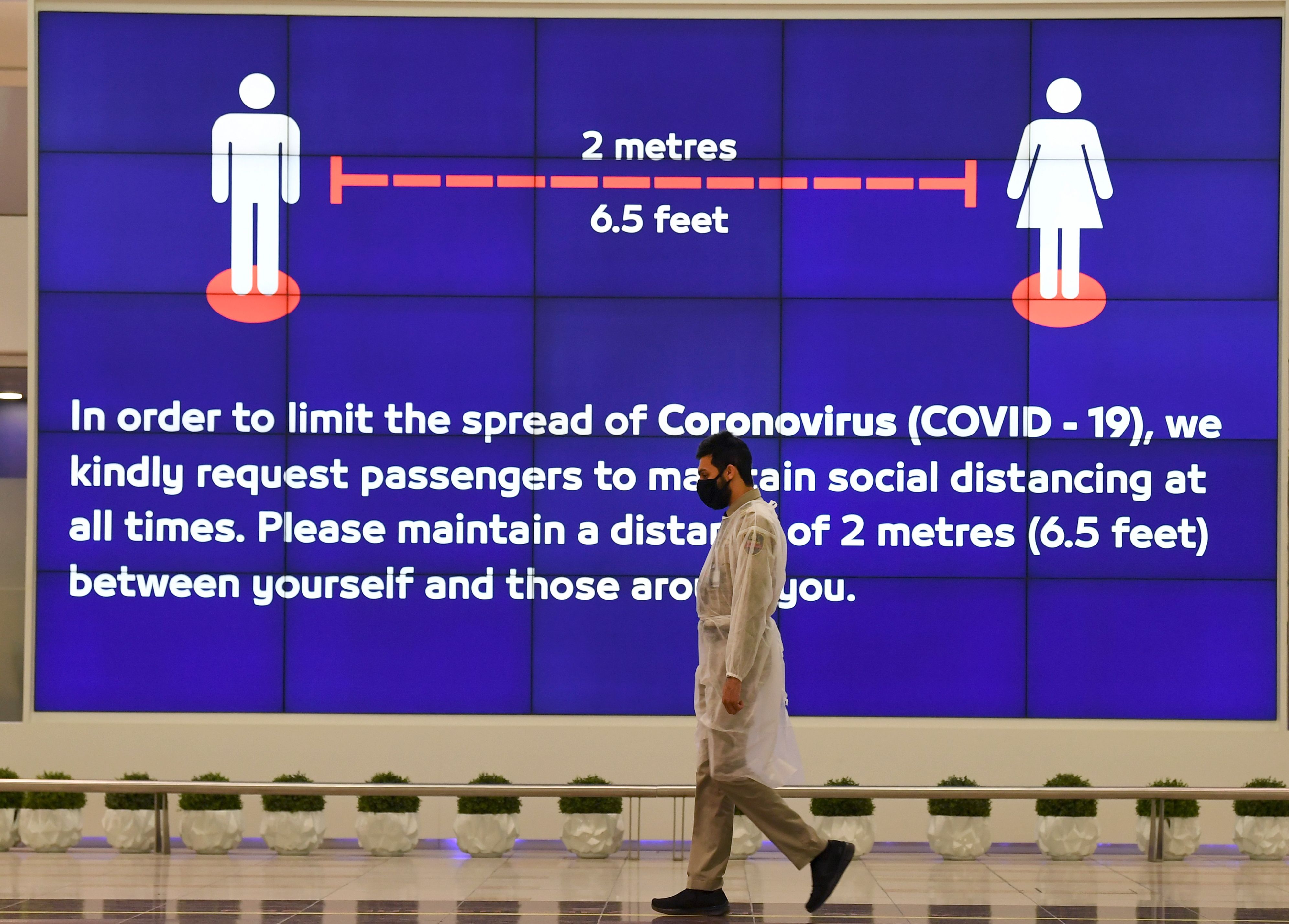
An employee at Dubai International
Airport. (Photo by KARIM SAHIB/AFP via Getty Images)
Dubai’s open economy, which relies on trade, tourism,
transportation, and retail, was hit hard not only by the emirate’s
24-hour curfew at the height of the crisis in April, but by the
spectacular collapse of crude oil prices caused by a price war and
a lack of demand. Oil is now $30 a barrel, down from an average of
$65 last year. As a result, finance ministers across the oil-rich
Gulf have dramatically cut spending.
The much-anticipated Expo 2020 has been postponed to fall
2021—and the UAE, even as it rushes to reopen businesses, is
bracing itself for a tough few months, if not years, ahead.
The very strengths that have allowed Dubai to shine have now
exposed its weaknesses. Hospitality and tourism—two vital sectors
to the emirate’s economy—are also crucial to the wellbeing of the
UAE’s art market. In the midst of closed borders and a lack of
foreign visitors to the UAE, these sectors have taken a severe
hit.
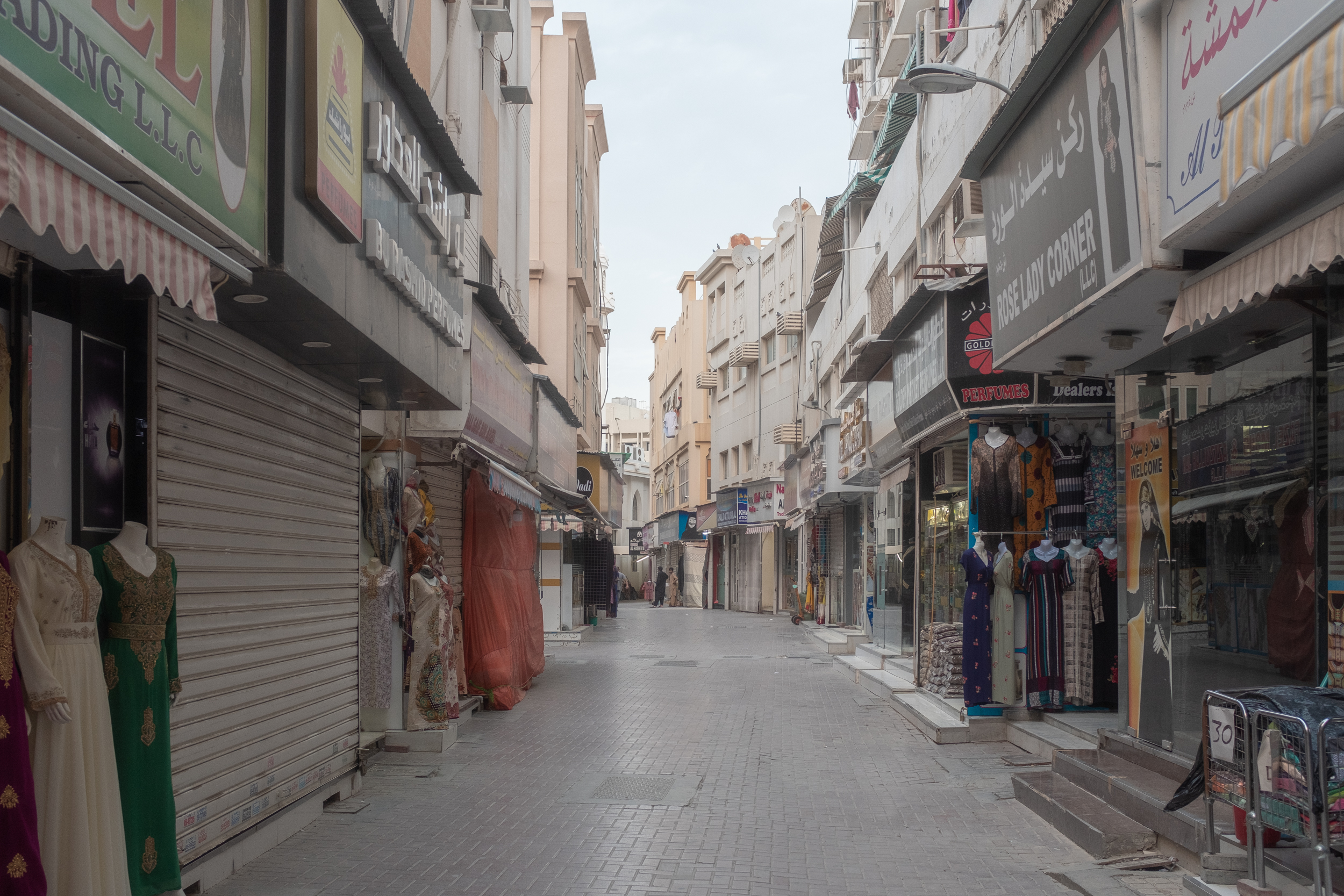
Courtesy of Seeing Things Photography &
Film.
An Economic Quake
Even before the onset of coronavirus, as property values slumped
30 percent from a 2014, “we all knew that we were going into a
recession,” said Charles Pocock, managing partner and director of
Meem Gallery.
But coronavirus has thrown fuel on the fire. In late April,
during the city’s most stringent lockdown period, the Dubai Chamber
of Commerce surveyed 1,228 CEOs across a range of sectors; they
concluded that around 70 percent of Dubai companies were expected
to go out of business within six months.
For galleries, the urgency is similar. “I am not very hopeful; I
don’t know what the galleries will do,” said a gallerist who wished
to remain anonymous. “By November, there will be a very different
art scene here.”
Over the past two years, some gallerists and other art
professionals were already whispering about their desire to move
elsewhere—or, at the very least, to find a way to split their
operations between Dubai and another location in order to attract
more international buyers. That desire has accelerated now,
although it has also become logistically more difficult.
“It has never been a purely local art market,” said Asmaa Al
Shabibi, co-founder of Lawrie Shabibi. “It’s really a global market
that Dubai caters to. We were always going to have a foot in Dubai
and a foot in London, so the crisis has definitely sped this
up.”
Both Lawrie Shabibi and The Third Line—another gallery in
Alserkal Avenue—planned to open UK outposts in Cromwell Place, a
new co-working art complex in London, this fall; the facility’s
opening has since been delayed.
“Even before Covid-19 I had been started to realize that most of
our collectors are not here,” said Sunny Rahbar, co-founder of The
Third Line. “Doing shows just in Dubai wasn’t making enough
money.”
Most of what is selling now, dealers say, is editions, works
priced at less than $10,000, or more expensive works by established
artists. But many local galleries lost their biggest money-making
opportunities of the year with the cancellation of Art Basel Hong
Kong and Art Dubai. During the shutdown, Shabibi estimated that the
gallery made around 30 percent of the sales it would make during a
normal year. “The middle market here… is flat,” said
Pocock.
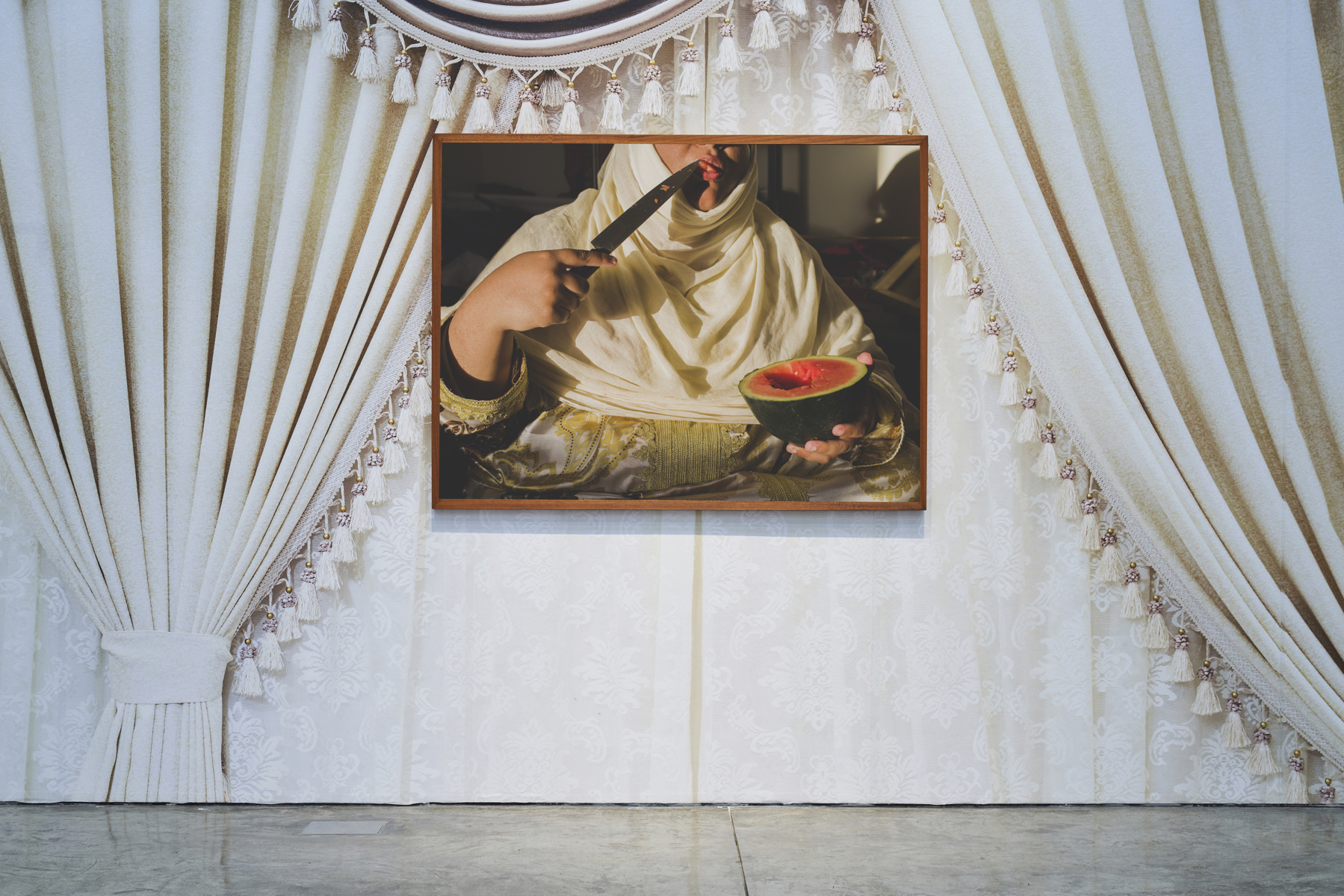
Farah Al Qasimi, Arrival (2019)
installation view. Courtesy of the artist and The Third Line,
Dubai.
Surviving, which for many galleries is month to month, is only
going to get harder and harder. “The crisis also hit just before
Ramadan and summertime which is already a dead time
here,” said Rahbar. “What we have to recuperate now is
huge.”
A Renewed Local Art Scene?
To address the shortfall, the government is pushing locals to
invest in culture. “I believe the creative sector of our economy is
of vital importance,” said His Excellency Zaki Nusseibeh, the UAE’s
Minister of State, during a Zoom discussion last month on Sheikh
Zayed’s cultural legacy. “I believe there is a duty on all of us,
patrons of arts, critics of art and lovers of art to go out and
actually buy art now.
Some longtime collectors are embracing the moment. “I
haven’t stopped collecting but the focus of my collecting has
changed,” said UAE-based lawyer and collector Nassib Abou-Khalil.
“It’s of utmost importance to me now to support local artists and
galleries.”
If this spirit became more widespread, it would mark a
considerable shift for the scene. “The local UAE art market has
never been supported by the local collector base,” Mohamed
Somji, founder of Gulf Photo Plus, a photography center in Dubai.
“This moment of crisis can be seen as an opportunity to… get a new
crowd in.”
But in the UAE, the distinction between local and international
isn’t always so clear. The emirate has long lured young
entrepreneurs to its sandy beaches and glittering skylines with the
promise of a good life and new business opportunities—so long as
the cash keeps coming. As job loses mount and new opportunities are
hard to come by, many expats are packing their bags and going back
home.
“Some people speculate that Dubai may go backwards to the small
city it was in 2004 and 2005,” said one gallerist. “If the supposed
exodus comes then that will be a big wake up call for the
government.”
The current impasse also reveals just how much the UAE has built
up its cultural capital by bringing in outside artists, curators,
and speakers, said Hanan Sayed Worrell, an Abu Dhabi-based cultural
advisor. Even as the emirate has become “a refuge for many artists
and creatives from the region… it’s a scene that has depended on an
international audience.”
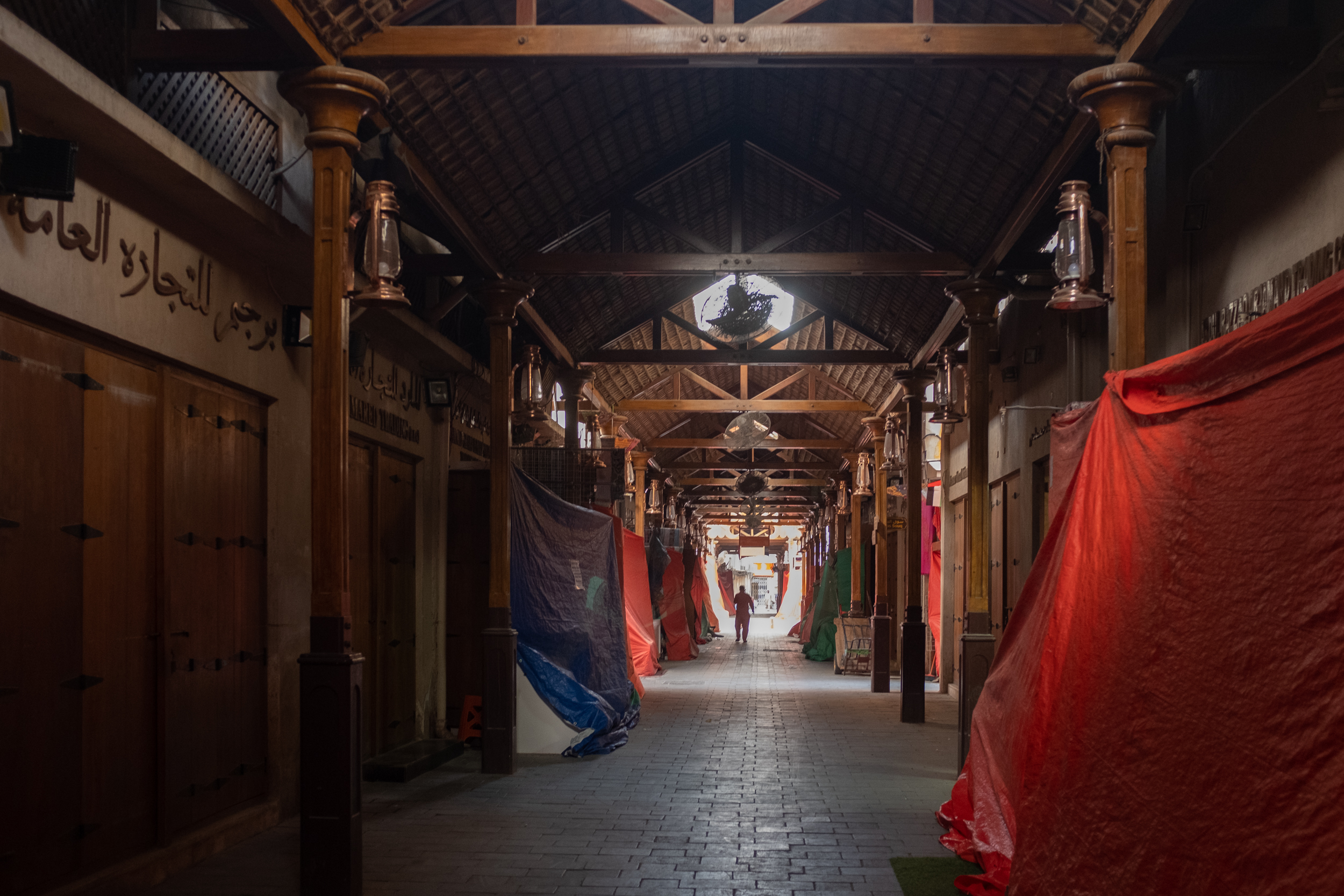
Courtesy of Seeing Things Photography &
Film.
Are Private and Public Subsidies Enough?
Can a local market—even a reinvigorated one—alone can keep the
art scene afloat? As job losses, furloughs, and redundancies
mount, Dubai’s private sector has proposed a series of government
interventions, which include state-subsidized loans as well as help
covering salaries, rent, and lower taxes. The Ministry of Culture
and Knowledge Development also launched the National Creative
Relief Program to offer grants to creative freelancers in the range
of Dhs15,000–50,000 ($4,000–13,600).
“Creative and cultural sectors aid in diversifying the UAE
economy,” said Noura Al Kaabi, Minister of Culture and Knowledge
Development for the UAE, during a recent online gathering of
leaders from the Middle Eastern art scene. “If there are
freelancers or businesses struggling, let us know.”
But some say the government should be doing even more to help
the cultural sector directly. “Look at what the governments of
France and Germany did for their cultural sectors. Why hasn’t that
happened here?” said the anonymous gallerist.
Meanwhile, a host of other private and public-private
initiatives have popped up to help the creative industry survive.
These include Lateral Avenue’s Pay It Forward Program, which
invites the Alserkal Avenue community members to apply for a
subsidy to support their lease commitment for one quarter in return
for a commitment to give back and support other businesses in the
community.
On May 10, Warehouse421 launched its Project Revival Fund, open
to all creatives from the MENASA region and offering monetary
packages up to $2,000. Art Jameel also redirected its budget
to offer is micro-grants to regional artists and curators of up to
$3,000—and has already received more than 400 applications from 17
countries.
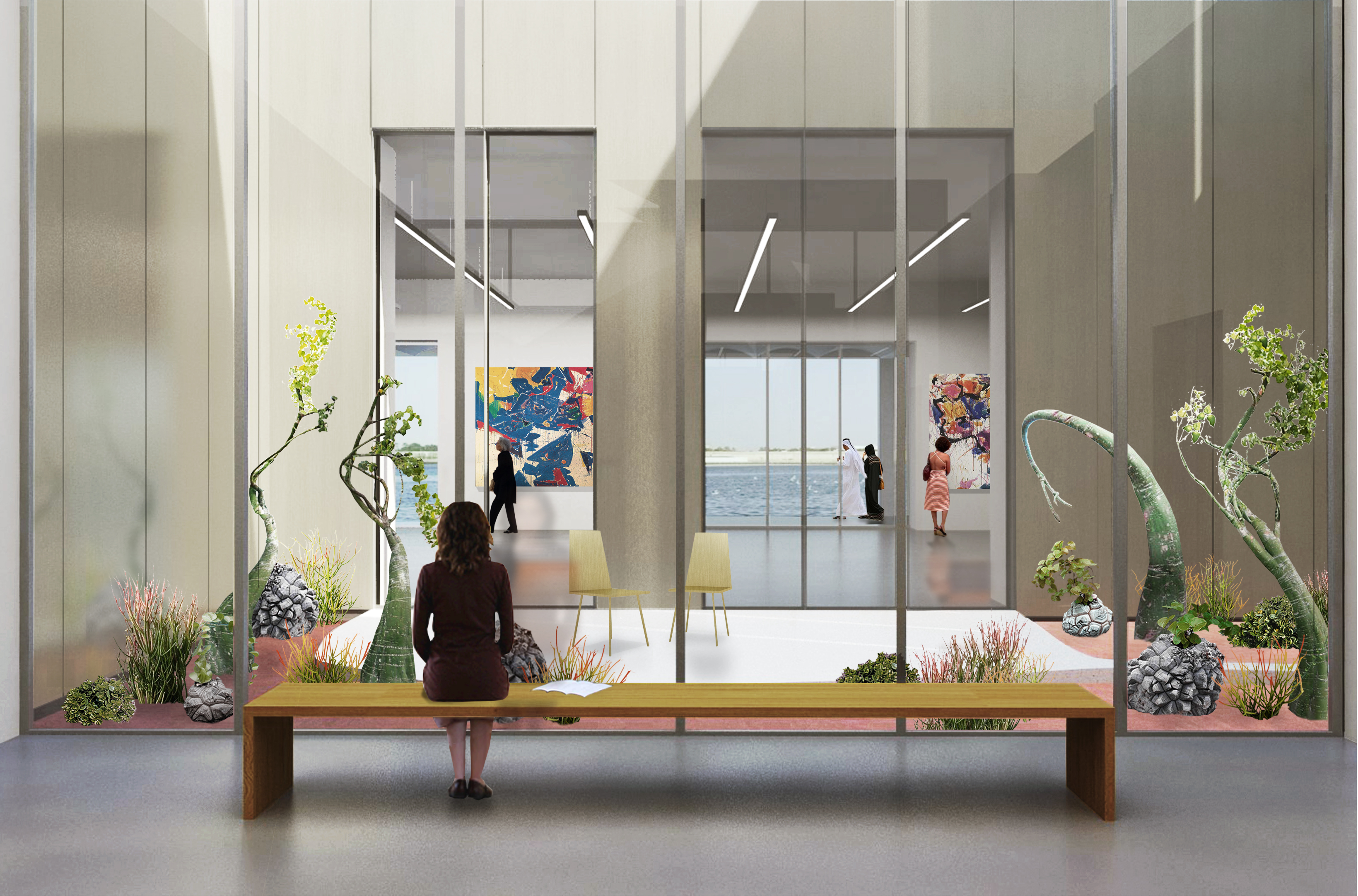
Jameel Arts Centre Dubai (rendering).
Courtesy of Serie.
Collaboration, everyone agrees, is key to survival at a moment
when cash is quickly disappearing. “We cannot just wait for the
government to step in,” said Pocock. Amidst invigorated
digital platforms for art sales, UAE gallerists have also spoken of
shared spaces and teaming up to host exhibitions.
“I don’t know if we will all be able to sustain and go forward
if we can’t work together,” Rahbar said. “Whatever you are
going to buy this year, buy it locally. We aren’t trying to compete
at this point, we are just trying to survive.”
The post The UAE Is Emerging From Lockdown, But Some Say Its
International, Cosmopolitan Art Scene Will Never Be the Same
appeared first on artnet News.
Read more https://news.artnet.com/market/uae-art-scene-post-coronavirus-1875732
Further reading


Leave a comment