
‘These Are Rare, Very Recent Developments:’ How Museums and the Market Are Finally Catching Up With Native American Art
“What I wanted 20 years ago is happening today,” says the art
dealer LaTiesha Fazakas.
Having just landed in New York from Vancouver when she spoke
with Artnet News yesterday, Fazakas was gearing up for her debut at
the annual Independent art fair, one of nine major fairs,
dotting New York City this week. Fazakas will be showing work by
the late Beau Dick, a Kwakwaka’wakw Northwest Coast artist and
chief from Alert Bay, British Columbia (his name translates to
“big, great whale,”) who has drawn acclaim for his masks that
pertain to ceremonial dances.
She will also show work by Dick’s longtime assistant Cole Speck,
an artist who grew up on the Namgis reserve on Alert Bay, and wall
pieces and sculptures by Maureen Gruben, an Inuvialuit artist who
has been part of recent shows at the National Gallery of Canada and
the Vancouver Art Gallery.
After decades of being pushed to the sidelines or lumped
together in group shows with narrowly defined labels and
parameters, work by contemporary Native American, First Nation, and
other indigenous artists is finally drawing more serious and
widespread institutional interest, critical acclaim, and rising
prices.
“Museums and critics seem to be
discovering these artists hiding in plain sight,” said David
Penney, associate director
for museum scholarship at the National Museum of the American
Indian, which is part of the Smithsonian. “They are largely
overlooked by the art critic community, American museums, and
contemporary art centers. They show at museums that focus on
American Indian content and their gallery representation are those
who specialize with indigenous or ‘minority’ artists.”
Some of the more established First Nation and Native American
artists he names include Jaune Quick-to-See Smith, Kay
WalkingStick, Robert Houle, Shelley Niro, James Lavadour, Jeffrey
Gibson, Marie Watt, Kent Monkman, Virgil Ortiz, and a collective
called Post Commodity.
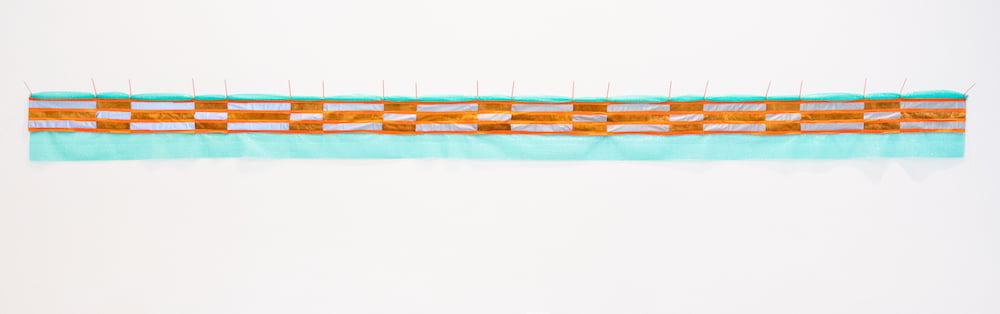
Marueen Gruben, Untitled (Delta
Trim) (2018). Photo by Kyra Kordoski. Image courtesy of the
artist and Fazakas Gallery, Vancouver.
Of course that is slowly starting to change now, some observers
say. A few years ago, Dick’s arresting mixed-media ceremonial masks
at the NADA art fair caught the eye of New York Times
critic Roberta Smith, who subsequently tweeted that they were the
best find at the fair. (He was also featured in documenta in 2017.)
“These are rich voices to
be heard and so much interesting work to be engaged with and to
explore. It’s finally getting out there and getting a wider voice,”
says Fazakas.
A comparison of auction records and primary prices also reveals
a big disconnect. For Dick, the Artnet Price Database shows 16
results, including a high of just over $14,000 for a mask sold in
late 2018, at the Canadian auction house Waddington. On the primary
market, prices for his work start around $10,000 to $15,000 and
reach upwards of $150,000, according to Fazakas. “It’s kind of like
two different animals with Northwest Coast art,” says Fazakas. “If
you’re looking to buy Beau Dick’s work you’re not looking at
auctions.”
Best #NADA Find: Chief Beau Dick, amazing
re-animator of Kwakwaka’wakw masks at Fazakas Gallery Vanc. BC.
pic.twitter.com/fldi7hQpFP— Roberta Smith (@robertasmithnyt) March 3, 2017
There are no auction records available for Gruben, whose primary
market prices range from $10,000 to $40,000, Fazakas says.
“One of the things we’ve been
trying to do since 2010 is rethink the context of what we see at
art fairs, including what was excluded, marginalized, or left out,”
said Matthew Higgs, founding curatorial advisor of Independent.
“We’ve tried to introduce what I call ‘maverick’ voices. By that I
mean art dealers whose programs and voices don’t necessarily follow
consensus and who help shift attention.”
Higgs described the
inclusion of Dick’s work in documenta as an
encouraging sign. “Eventually these ideas start to settle and form
within the mainstream. You have to be patient, we can’t accelerate
that, but we can help it on its way.” This year, Franklin
Parrasch will present work by Anne Appleby at Independent. Appleby
is a Montana-based artist who is part Ojibwe and spent 15 years in
an apprenticeship with an Ojibwe elder, learning to patiently
observe nature. Her subtle paintings reflect her perceptions of
natural elements over time.
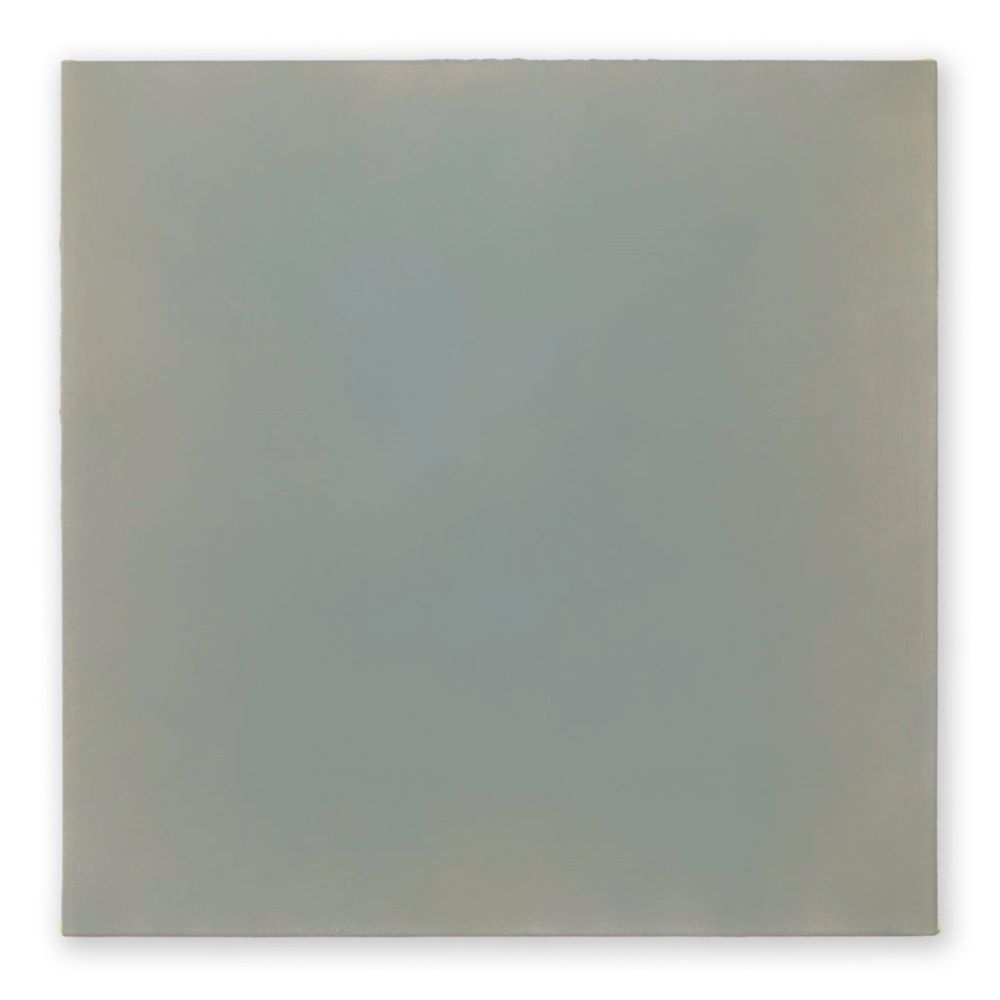
Anne Appleby, Last Light
August (2019). Image courtesy of the artist and Franklin
Parrasch gallery, New York and Los Angeles.
Parrasch told Artnet News that Appleby doesn’t particularly
identify as First Nation despite her experience. “Her work
has always been contextualized
among minimalists,” he says.
Appleby’s auction record stands at $7,500 for a work sold at
Bonhams Los Angeles. Parrasch said paintings at his gallery show
last fall were priced at $20,000. Prices for the
more recent figurative works—her “Mountain Paintings”
series—that will be included in the presentation at Independent are
priced between $45,000 and $55,000.
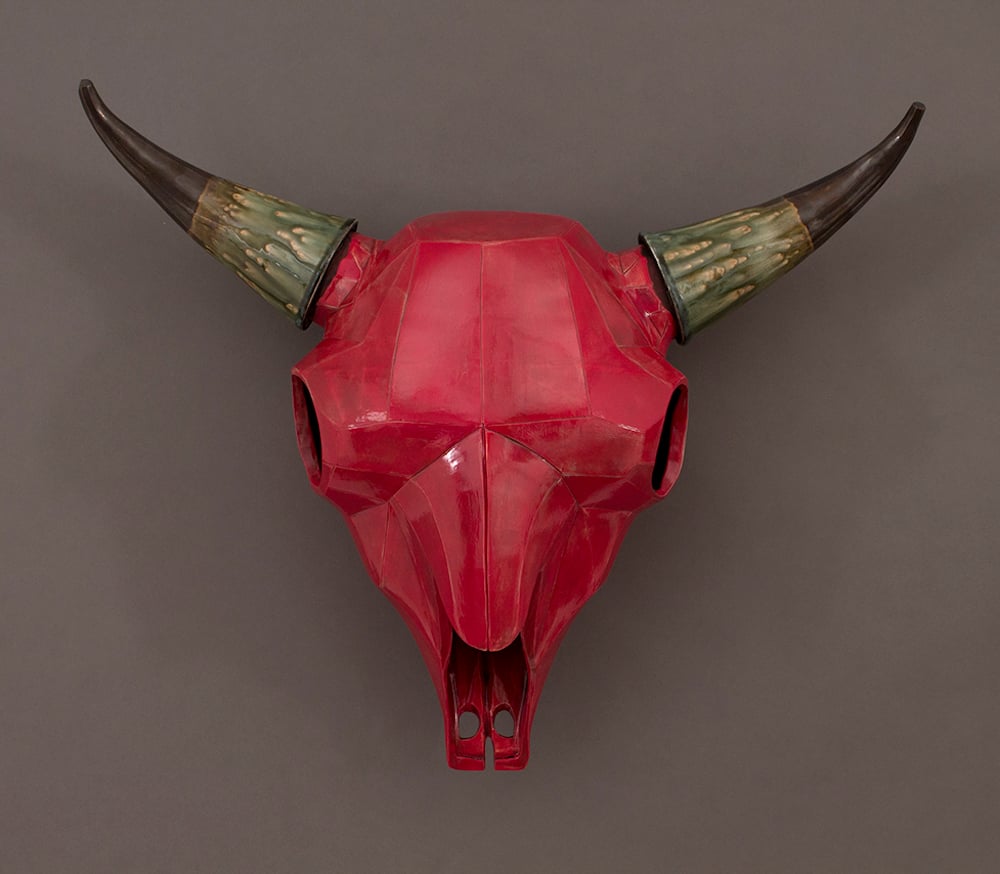
Cannupa Hanska, Life is Breathtaking,
Time Devours Things (2017). Image courtesy of the artist and
Garth Greenan Gallery.
Meanwhile, Garth Greenan Gallery will present ceramics and
installations by Cannupa Hanska Luger, who is of Mandan, Hidatsa,
Arikara, Lakota, Austrian, and Norwegian descent. He has had
exhibitions at the Crystal Bridges Museum of American Art, the
Museum of Arts and Design in New York, and the Princeton University
Art Museum. Luger mashes up Native American imagery with Hollywood
cliches of Native culture.
“It’s obviously a really exciting thing,” said Barbara
Brotherton, a curator of Native American art at the Seattle Art
Museum, of the recent exposure. The museum has a long track record
of showing Native American art ranging from historical to
contemporary periods. “We’re just in this modern moment where it’s
gaining cachet from venues like art fairs, contemporary galleries,
and biennials.”
“What is contemporary Native American art, and where does it
belong?” she asks. “In some ways we’re still having those
discussions.”
She also notes the somewhat scattershot historical pattern of
shows that depend on not-always-useful categories like geography.
“There’s such great diversity
among native communities and artists,” she says,
“it’s really hard to
determine if there is a collective voice,” she
says.
“The biggest change is the
tacit acknowledgment among scholars and curators of American art
that Native artists are part of that larger story, just as African
American artists started to become more visible during the
multi-cultural 1980s,” says Penney. The Whitney recently brought
out its painting by Ojibwe artist George Morrison—which it bought
and put away in the 1950s—and it mounted a small installation of
work by Mohawk artist Alan Michaelson. A retrospective exhibition
for Jaune Quick-to-See-Smith is in the works at the museum.
Meanwhile, Kent Monkman, an artist of Cree descent, recently
completed a major commission for the Metropolitan Museum of Art.
The Whitney is developing a retrospective exhibition for Jaune
Quick-to-See-Smith.
Nonetheless, Penney says, “these
are rare, very recent developments.”
The post ‘These Are Rare, Very Recent Developments:’ How
Museums and the Market Are Finally Catching Up With Native American
Art appeared first on artnet News.
Read more https://news.artnet.com/market/museums-market-catching-up-contemporary-native-american-art-1792197
Further reading


Leave a comment