
To Mark the Metropolitan Museum of Art’s 150th Birthday, Here Are 15 Artworks Symbolizing the Ups and Downs of Each Decade of Its Storied Existence
This Monday marked the 150th birthday of the Metropolitan Museum of Art. It should have
been a lavish celebration. Instead, of course, the museum lies
lonesome.
Missed birthdays are a minor thing given the scope of world
events right now. Still, it seems worthwhile to honor the occasion:
the Met is the flagship of art history in the United States, and
its own history says a lot about how the story of art has unfolded
here.
So, I’ve combed through the compete list of
exhibitions that the museum has hosted since its 1870 founding,
picking out one work from each decade, either something unexpected
and interesting, or something to illustrate how the museum has
changed over time.
1873: The Met Honors Its
Own
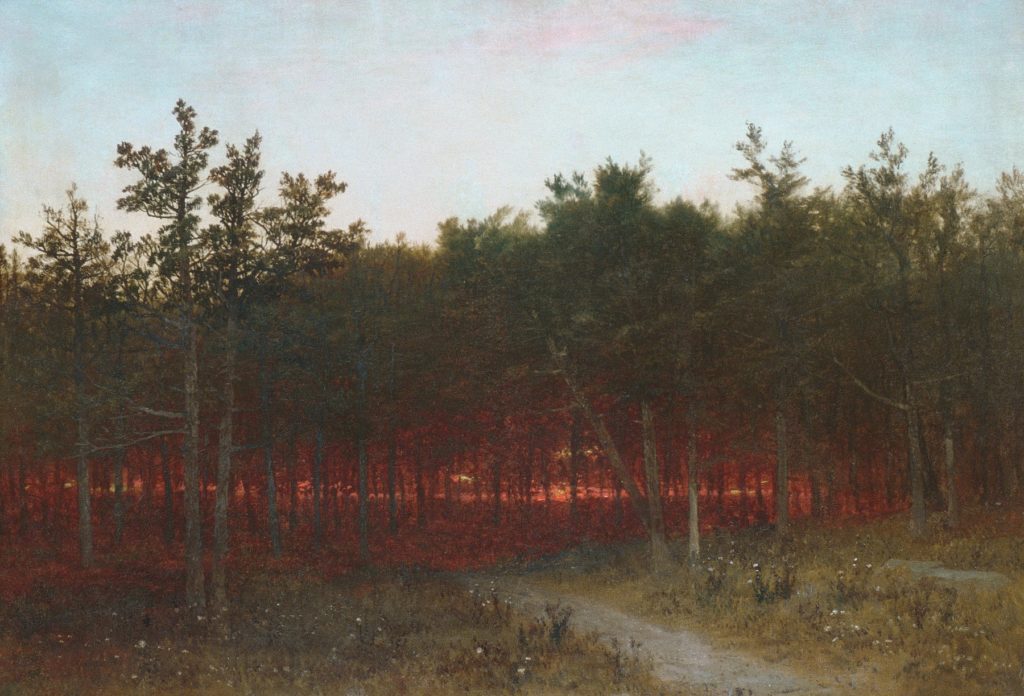
John Frederick Kensett, Twilight in
the Cedars at Darien, Connecticut (1872). Image courtesy the
Metropolitan Museum of Art.
As far as I can tell, the very first solo show dedicated to an
artist in the museum’s history was “The Last Summer’s Work of the
late John F. Kensett,” held in March 1874. Which is emblematic,
since Kensett was one of the founders and a trustee of the newly
minted institution. Known as a “luminist” for his attention to the
intricacies of atmosphere and light, Kensett was of the second
generation of the Hudson River School. When he died in 1872 of
pneumonia, the institution organized a tribute featuring the output
of his final year of work, including this piece depicting a sparse
grove of trees simmering in the sunset, above.
1881: Robber Barons’
Booty
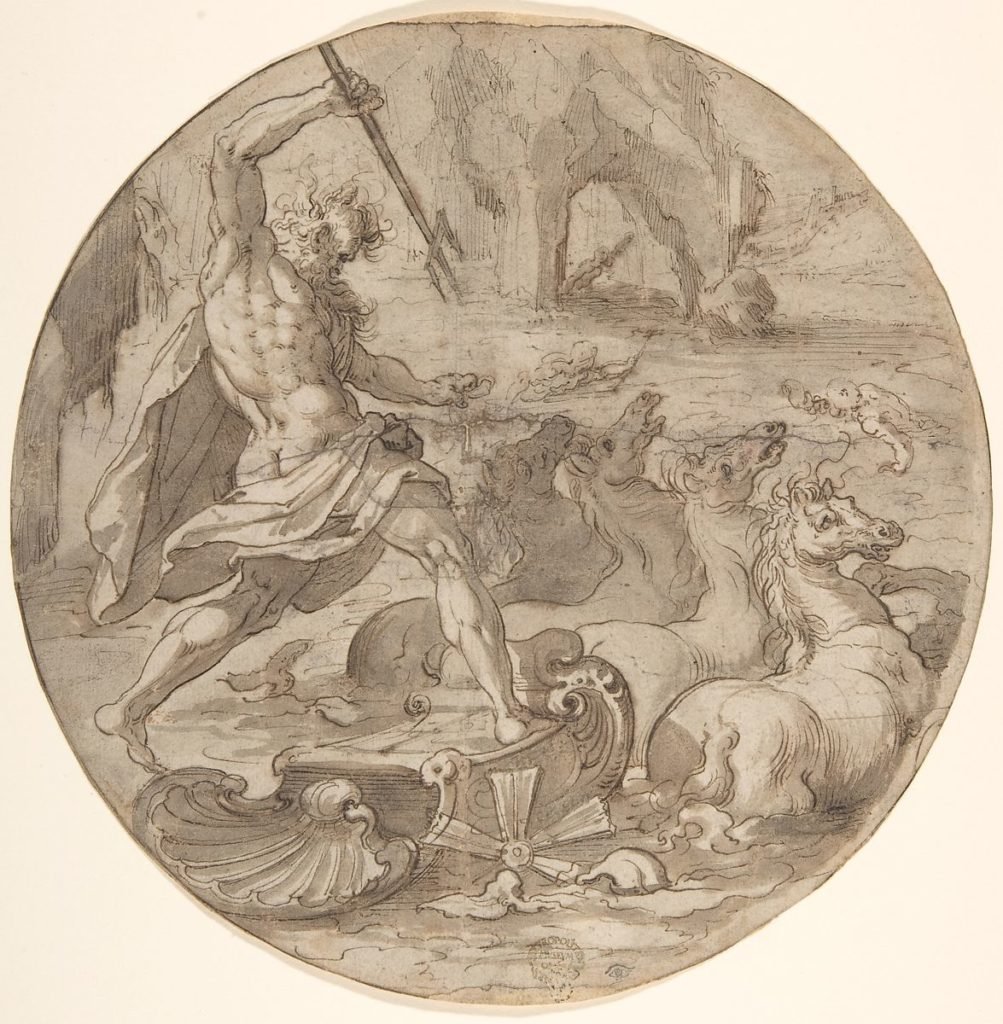
Attributed to Pieter de Jode I,
Neptune in his Chariot (late 16th–mid 17th century). Image
courtesy Metropolitan Museum of Art.
The Met’s programming in the 1880s was almost exclusively given
over to exhibitions with thrilling titles like “Collection of Dutch
and Flemish Paintings by Old Masters, Owned by Mr. Charles
Sedelmeyer” and “The Catharine Lorillard Wolfe Collection in the
New Western Galleries.” It was, in short, a place for the era’s
super-rich to show off their worthy passions to one another. This
trifle, depicting a ferocious Neptune wielding his trident on his
beasts of burden, was showcased in “The Vanderbilt Collection of
Drawings in the East Galleries,” an ode to the cultivation of one
of the most rapacious families of the Gilded Age, just a few short
years after the Vanderbilt railroad empire was at the heart of one
of the most brutal labor showdowns in US history, the Great Railway Strike of
1877.
1900: Take Me to
Church
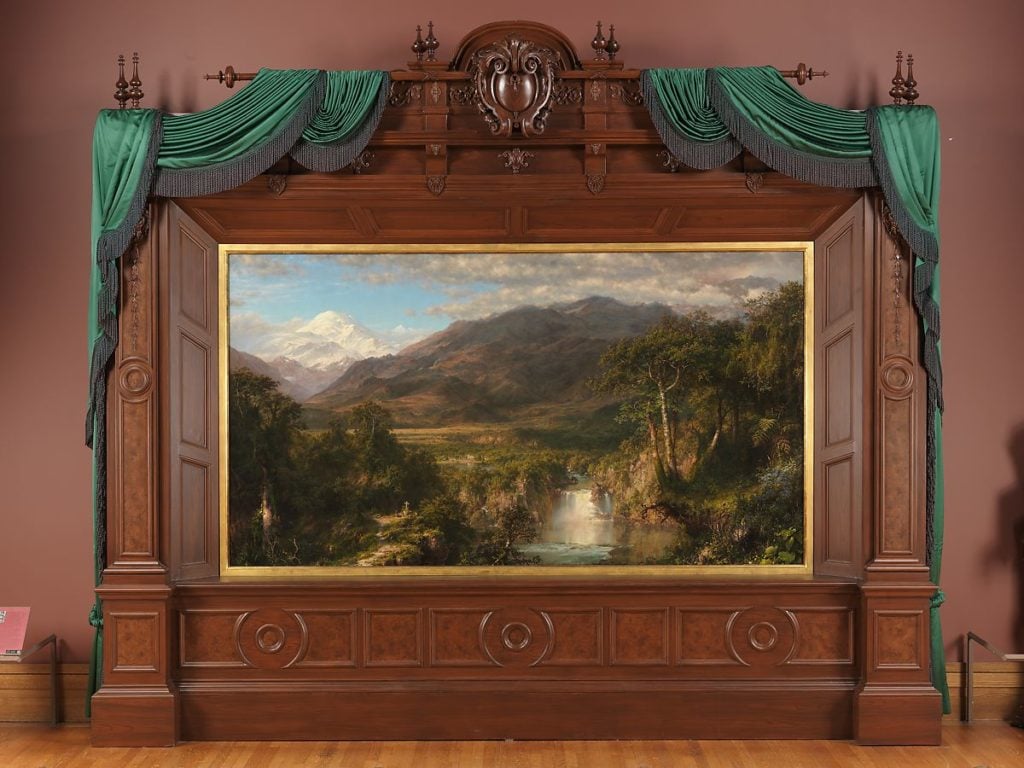
Frederic Edwin Church, Heart of the
Andes (1859). Image courtesy Metropolitan Museum of Art.
Frederic Edwin Church’s Heart of the Andes was the
equivalent of IMAX entertainment of its day, going on tour and
drawing lines when it debuted in 1859, with curious visitors
scrutinizing its immense detail with opera glasses and paying 25
cents a pop to get a gander. Church died in 1900, and the Met
played its role in lionizing American artistic heroism with the
posthumous tribute “Paintings by Frederic E. Church,” including his
famous showstopper.
1909: Civic
Propaganda
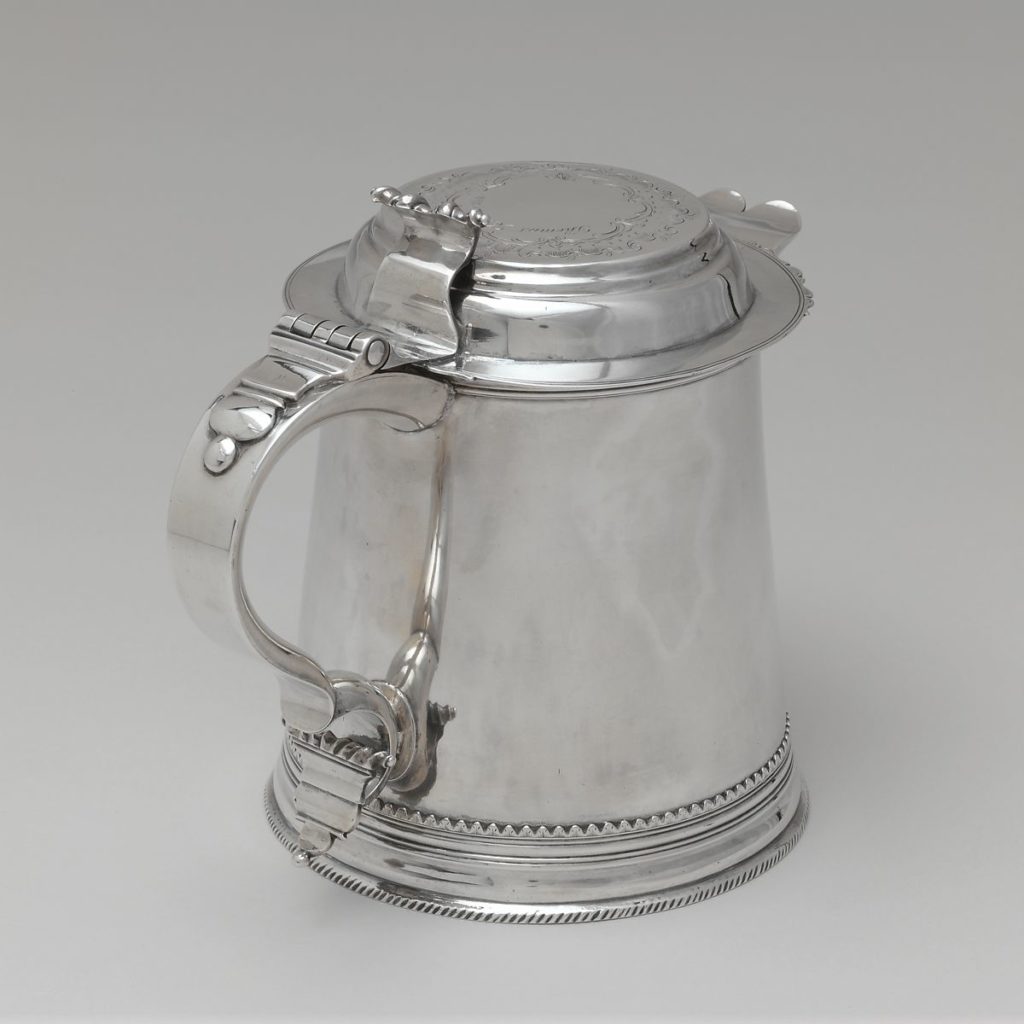
Andrew Underhill, Tankard (ca. 1780–90).
Image courtesy Metropolitan Museum of Art.
The “Hudson-Fulton
Celebration” is not much remembered today. It was a big deal
back in the 20th century’s Oughts, as the metropolitan elite
beat the drums for the New York’s surging commercial importance
with a citywide commemoration of both explorer Henry Hudson and
steamboat inventor Robert Fulton. A massive Carnival Parade took
the streets, the city was lit up with electric light, and the Met
pulled out the stops. It both celebrated the city’s wealth by
showing off Old World cultural treasures—”Paintings by Old Dutch
Masters (In Connection With the Hudson-Fulton Celebration)”—and
offered a patriotic
exhibition making the case for the rising power’s own
colonial-era arts, including a hefty selection of silver treasures
from New York collections, like this doughty tankard.
1912: A Yen for
Japan
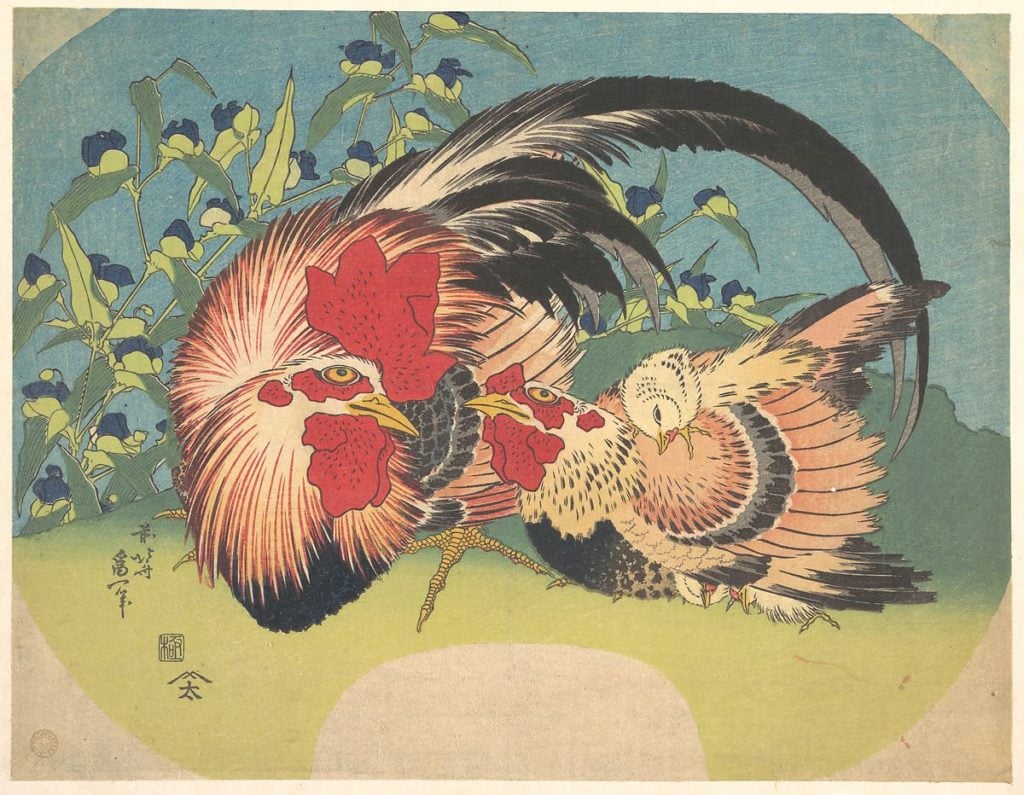
Katsushika Hokusai, Rooster, Hen and
Chicken with Spiderwort (ca. 1830–33). Image courtesy
Metropolitan Museum of Art.
The Met did not, at this point, quite fit the profile of the
omnipotent “encyclopedic” institution it is today. Aside from the
treasures of the Old World, the other distinct cultural passion of
its earliest era was the art of the world’s other rising industrial
power: Japan, whose decorative arts and arms received much
enthusiasm. Artist Francis Lathrop, a student of James Abbott
McNeill Whistler and William Morris, was an ardent collector of
Japanese prints, and left his trove (including
this glorious Hokusai print) to the
institution when he died in 1911. It was the subject of a showcase
the following year.
1925: Sponsored Content,
Avant la Lettre
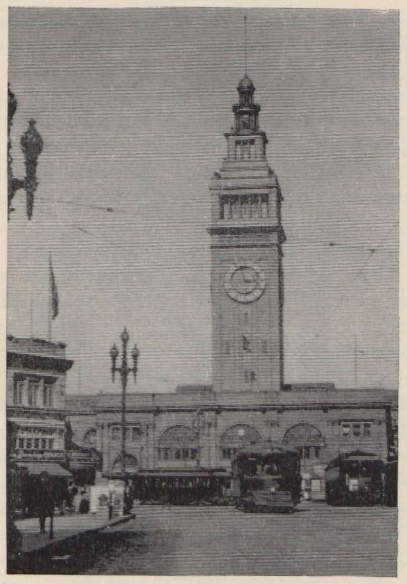
An image of the San Francisco Ferry
Building, the first picture sent over a telephone line from San
Francisco to New York, using the variable width line process. Image
courtesy Metropolitan Museum of Art.
The Roaring Twenties brought “Exhibition of Tele-Photographs by
Courtesy of the American Telephone and Telegraph Company” to the
Met, an ode to the photo-electric cell, vacuum-tube amplifier,
and electric filters that had made possible the magical
transmission of images over long distances (aka “wirephoto”). “The
fields in which electrically transmitted pictures may be of
greatest service are those in which it is desired to transmit
information which can be conveyed—or conveyed effectively—only by
an appeal to vision,” speculated a
pamphlet AT&T put out for the museum show, complete
with diagrams of how the cutting-edge technology worked. “Examples
of such cases are portraits, as, for instance, of criminals, or
missing individuals, drawings such as details of mechanical parts,
weather charts and military maps, and so on.” Other applications in
advertising and news were mentioned.
1934: A Show of
Relief

Norman Lewis, The Wanderer
(Johnny) (1933). Image via Wikiart.
The Met’s program during the hardship years of the Great
Depression seems mainly to have been business as usual—except for
“Work of the Pupils in the New York City Free Adult Art Schools” in
1934, an exhibition sponsored by, among others, the government’s
Relief Administration, with First Lady Eleanor Roosevelt as patron.
The African-American painter Norman Lewis, who would go on to great
renown as an abstract artist, was then studying with Augusta
Savage, the great Harlem sculptor and
educator. Representing the Savage School at the Met’s show, his
social realist The Wanderer (Johnny) won “special
mention,” which helped make Lewis’s reputation. He also got $10,
about $190 in today’s dollars.
1942: A Cultural
Offensive
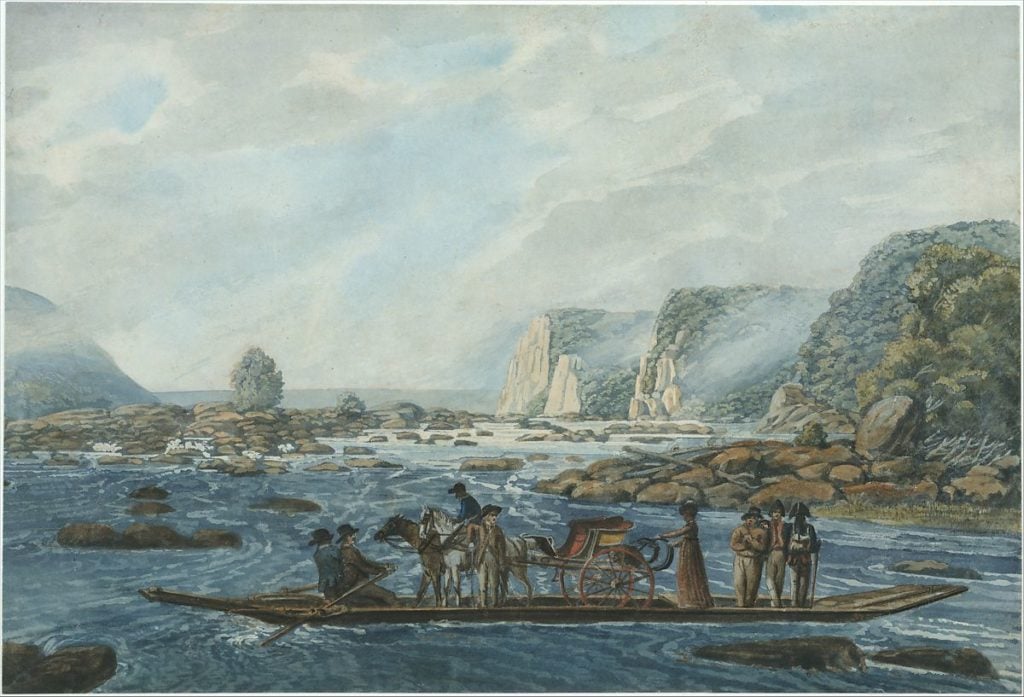
Pavel Petrovich Svinin, A Ferry
Scene on the Susquehanna at Wright’s Ferry, near Havre de
Grace (1811–ca. 1813). Image courtesy Metropolitan Museum of
Art.
During World War II, the Met’s programming steered towards
patriotic fare like “Artists for Victory,” “American Industry at
War,” “Work by Soldier-Artists,” “The War Against Japan,”
and, in fall 1944, the immortal “Portrait of America, Organized by
Artists for Victory, Inc. and Sponsored by the Pepsi-Cola Company.”
Slightly more subtle in its propaganda thrust was the institution’s
fresh focus on Russian culture: with Roosevelt’s 1941 alliance with
Stalin, the US had to suddenly mentally change gears away from its
prior anti-USSR fever. In 1942, the Met found a natural synthesis
between the era’s patriotic Americana and its expedient Russophilia
with “As Russia Saw Us 1811,” a show of images by Russian artist and
adventurer Pavel Petrovich Svinin (1787-1839), depicting his
travels in the newborn United States of America.
1956: American
Empire
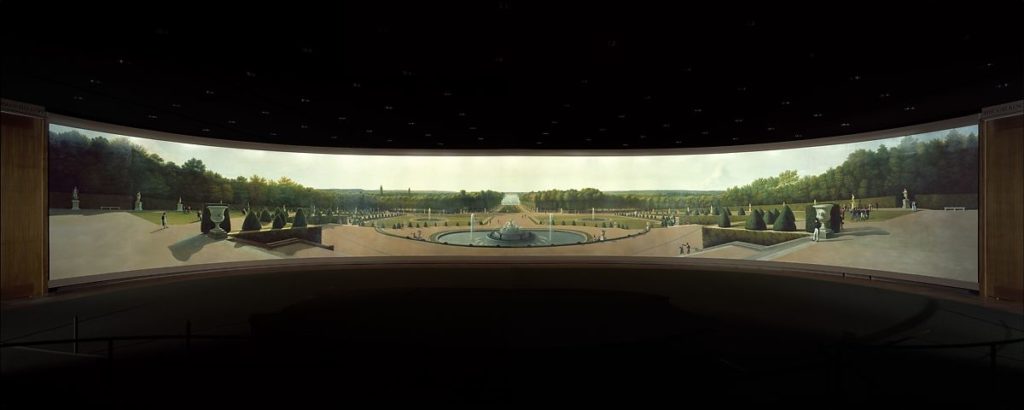
John Vanderlyn, Panoramic View of
the Palace and Gardens of Versailles (1818–19). Image courtesy
Metropolitan Museum of Art.
The New York Times called this placid
spectacle of imperial glory “one of the most extraordinary
American works of art ever painted and, possibly, one of the
largest.” And indeed it makes a fine symbol of the United States’s
postwar conception of itself as the new center of the world. The
156-foot walk-in painted view of the Gardens of Versailles by
American classical painter John Vanderlyn (1779-1852) was installed
permanently in the mid-’50s in a specially built circular room at
the Met, where it remains an attraction
today.
1963: Mona Lisa’s Body
Double
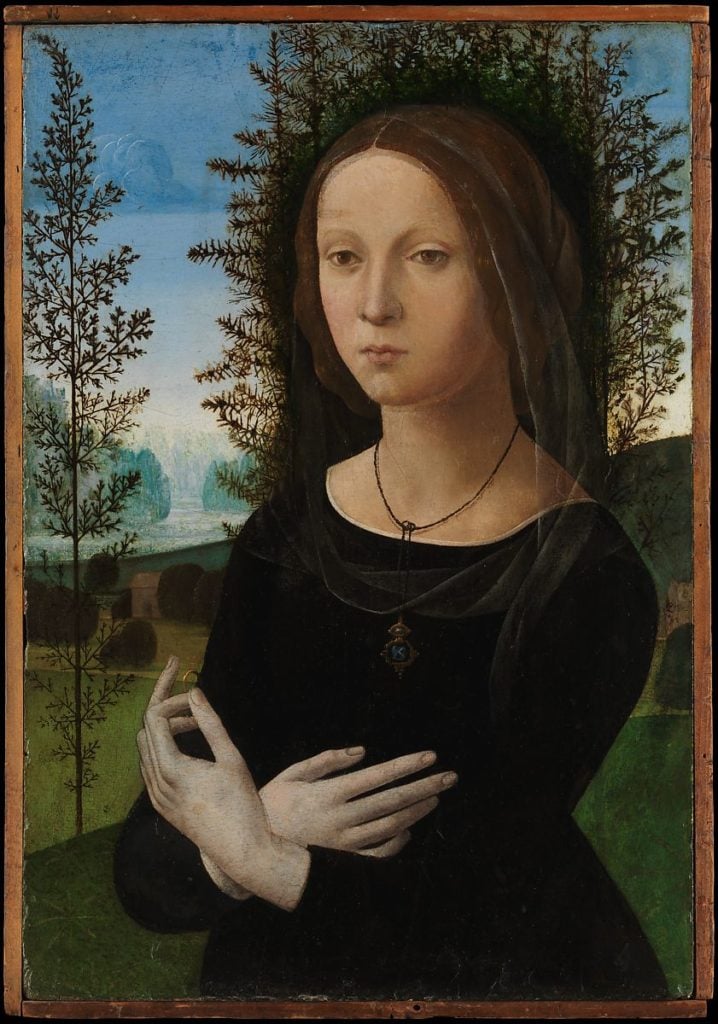
Lorenzo di Credi, Portrait of a
Young Woman (ca. 1490–1500). Image courtesy Metropolitan
Museum of Art.
One of the signal events in the
history of cultural diplomacy was the 1962-’63 US tour of Leonardo
da Vinci’s Mona Lisa, hatched by First Lady Jackie Kennedy
and French cultural minister André Malraux. It drew
Beatles-level crowds in New York, with over one million people
coming to get a glimpse of her enigmatic smile over the course of
just three and a half weeks. “La Gioconda” was displayed in the
Met’s Medieval Sculpture Hall. To make preparations for the intense
interest in the show, the Met used its own, substantially less
iconic Renaissance painting, Lorenzo di Credi’s “damaged but
evocative” Portrait of a Young
Woman—inspired by Leonardo’s Portrait of Ginevra de’
Benci—as a stand-in while they figured out how the crowd
logistics would work.
1978: Temple of
Egyptomania

Coloring a section of the Temple of
Dendur to show one vignette on the south wall of the temple colored
by light to suggest how it might have looked when painted in the
Roman Period. Image courtesy Metropolitan Museum of Art.
The Met’s ’70s programming is flecked with socially minded
experiments alongside the usual feasts of treasures, including “…
Because of an Emergency,” a show curated by Ann Marie Rousseau
featuring photos by woman from New York women’s shelters, and
something called the “Anti-Graffiti Art Poster Contest,” neither of
which I can find any information about. But the main story was that
the age of blockbuster programming arrived in earnest with
“Treasures of Tutankhamun” in 1978-79, still the Met’s all-time
most-attended show, which even spawned a hit Steve Martin novelty single. The show’s
arrival at the Met coincided with the opening of its Temple of
Dendur. Its a Roman-period artifact from 10 BCE and thus separated
from King Tut’s time by about 13 centuries—about as far apart as we
are today from the fall of the Roman Empire. Still, it was the
perfect prop to capitalize on the big museum’s enduring association
with mass-culture “Egyptomania.”
1984: The Gogh-Gogh
’80s
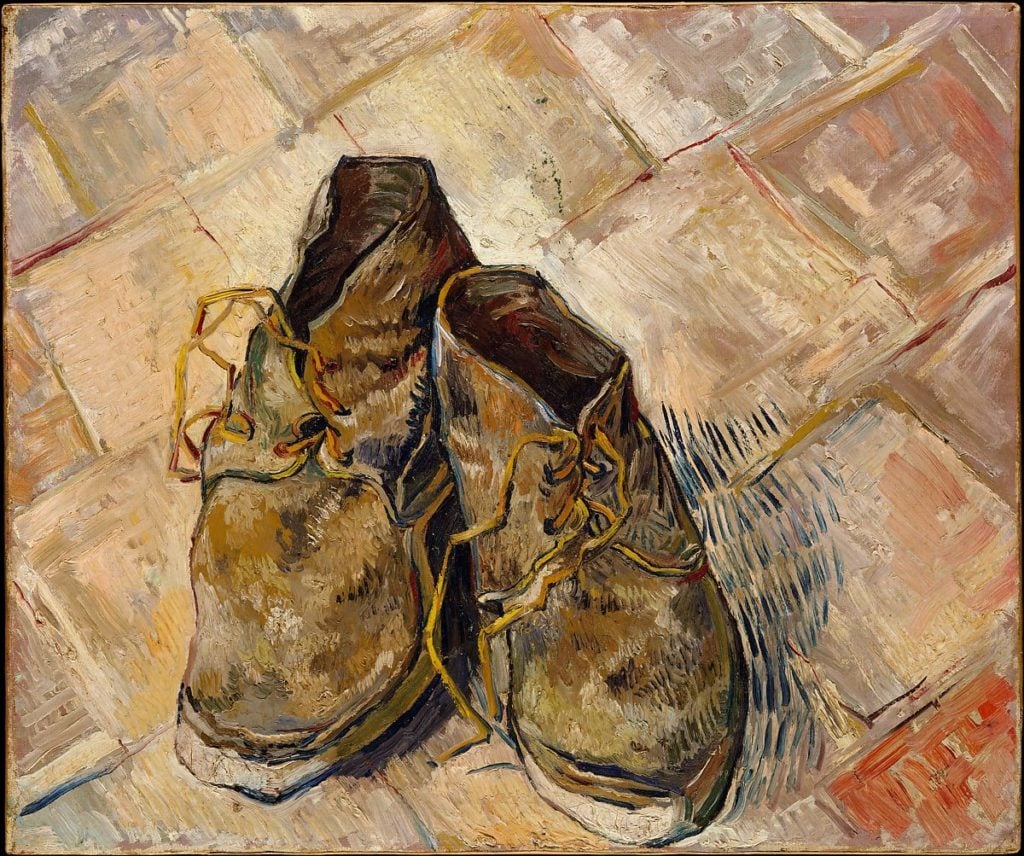
Vincent van Gogh, Shoes (1888).
Image courtesy Metropolitan Museum of Art.
Vincent van Gogh was the art star of the
Reagan Era. His romantic mythos was both a palette cleanser amid
all that Wall Street yuppie excess, while also backstopping the
era’s turn to florid Expressionism in art, and becoming one of the
most massive symbols of art excess himself, as prices for his
paintings scaled the heights of cautionary hubris at auction. The
Met was a player in the global furore, offering back-to-back Van
Gogh exhibitions, “Van Gogh in Arles” in 1984, which featured these
rugged peasant shoes,
and “Van Gogh in Saint-Rémy and Auvers” in 1986-87.
1993: Photography Gets
Exposure
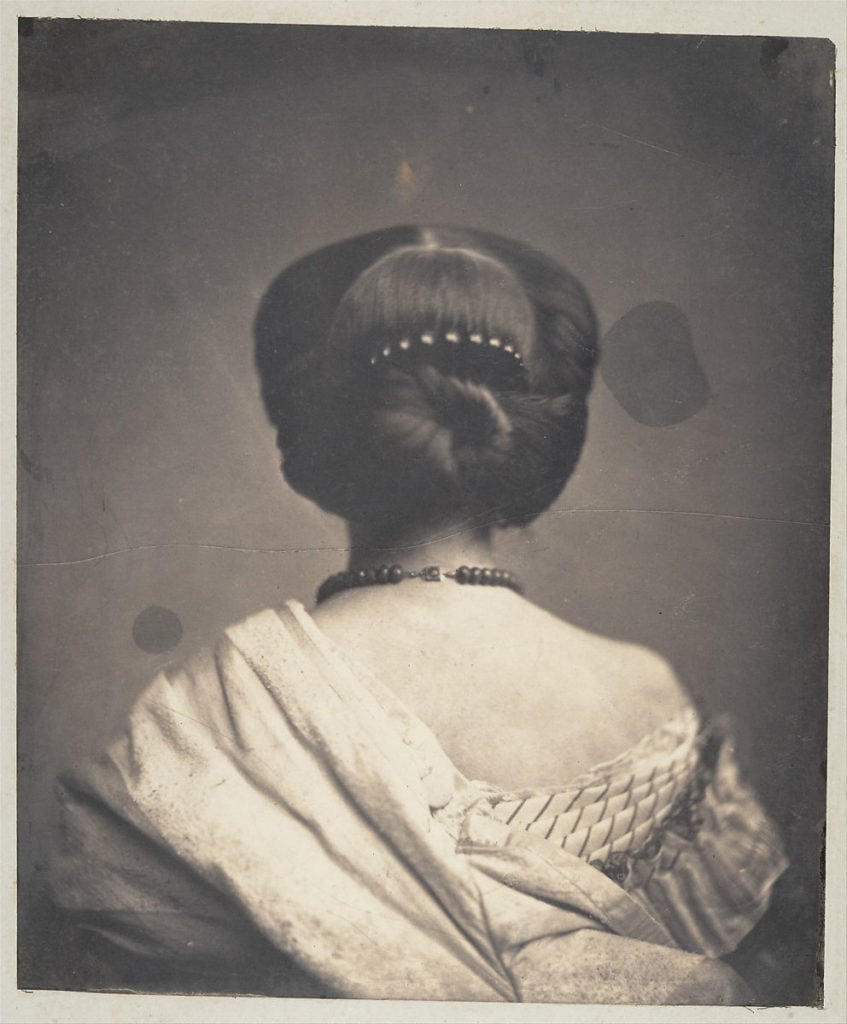
Onésipe Aguado de las
Marismas, Woman Seen from the Back (ca. 1862). Image
courtesy Metropolitan Museum of Art.
The Met has collected photos since 1928, but it was late to
break out a standalone photography
department or to dedicate special photography
galleries: both happened in ’92. Its early photography
collection was greatly enhanced by selections from the storied
holdings of the Gilman Paper Company, first shown in “The Waking Dream:
Photography’s First Century” in 1992, which included this
wonderfully enigmatic
print by a French viscount and photo enthusiast Onésipe
Aguado de las Marismas. (The Met acquired the whole Gilman Paper
Company Collection in 2005.)
2006: Going Global and
Getting Contemporary
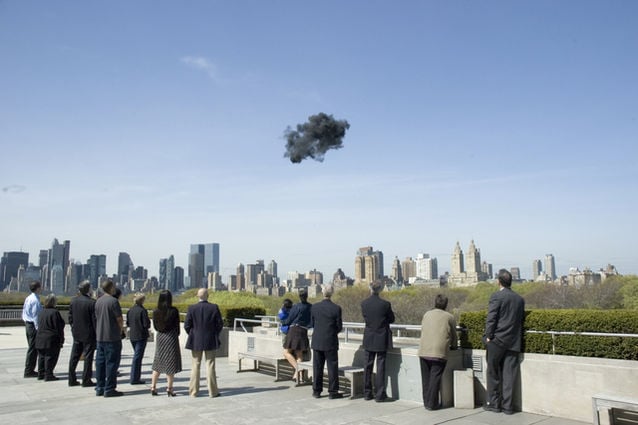
Cai Guo-Qiang, Clear Sky Black
Cloud (2006) on the roof of the Metropolitan Museum of
Art.
The Met’s rooftop commissions have been one place where it
tested out embracing new art. If there was a big symbolic
inflection point in this program, it would probably be Cai
Guo-Qiang’s 2006 commission, which featured a previously
alien-to-the-Met level of zany theatricality, including giant
crocodiles, fake dead birds, and the detonation of a cloud of black
smoke in the skies above the museum. Roberta Smith deemed the
latter “explosion-performance” a damp squib, but still
thought that “the very transience of this work is a radically new
sculptural concept for the Met.” In anointing a Chinese artist
(albeit one with an HQ in NYC), it also marked the Met’s turn away
from playing to a specifically American taste (previous commissions
tended to come from well-established US heroes like Roy
Lichtenstein and Sol LeWitt) and toward the “global contemporary
art” tastes of the New Gilded Age.
2011: Passion for
Fashion
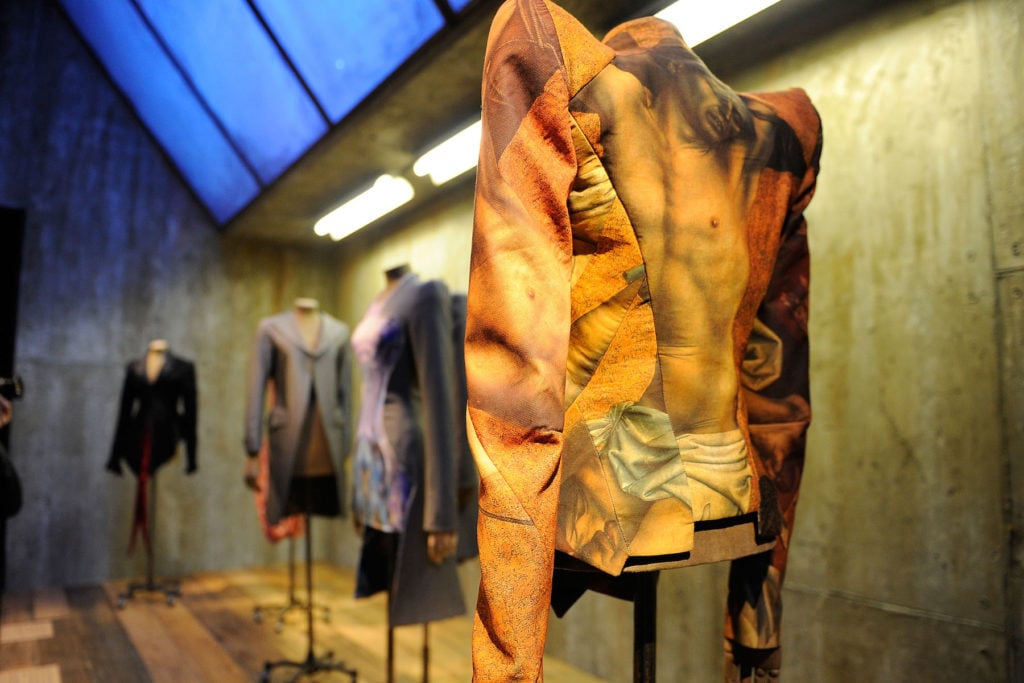
Alexander McQueen, Jacket: It’s a Jungle
Out There (autumn/winter 1997–98) in “Alexander McQueen: Savage
Beauty” at the Metropolitan Museum’s Costume Institute. Photo by
Andrew H. Walker/Getty Images.
The Costume Institute has been part of the Met in the ’40s and
won buzz in the ’70s for shows like “The World of Balenciaga.” But
in the 2010s, the tail of fashion really began to wag the dog of
the art museum. Images of the Met as a stuffy temple of
connoisseurship were definitively displaced in the media hive mind
by paparazzi shots of the red carpet of the Met Gala (and
celebrities smoking in the Met
bathroom). The big harbinger of all this was the mega-success
of 2011’s “Alexander McQueen: Savage
Beauty,” the Andrew Bolton and Harold Koda-curated ode to the
rockstar designer that attracted legions and became a pop-culture
phenomenon. With the Costume Institute as the
key lure, the Met kept setting attendance records in the 2010s,
led by Costume Institute shows including “China: Through the
Looking Glass,” “Manus x Machina,” and “Heavenly Bodies: Fashion
and the Catholic Imagination.” Only a full-on Michelangelo survey in
2018 could break fashion’s streak as the main eyeball-getter
for the 21st-century Met.
The post To Mark the Metropolitan Museum of Art’s 150th
Birthday, Here Are 15 Artworks Symbolizing the Ups and Downs of
Each Decade of Its Storied Existence appeared first on artnet
News.
Read more https://news.artnet.com/art-world/metropolitan-museum-150-years-1834326
Further reading


Leave a comment