
With the Launch of Two More Online Sales Initiatives, Mega-Gallerist David Zwirner Says He Is Already Envisioning Less Need for Art Fairs
For years, David Zwirner Gallery has been a regular at more than
20 art fairs around the globe—that is, until the current global
health situation put these events, and nearly everything else in
the art world, on lockdown. Now, the gallery is developing a new
program to promote artworks that it might otherwise show at fairs
on its own website.
As part of its ongoing efforts to beef up its digital offerings,
the gallery is rolling out two initiatives in the middle of April.
The first, called “Studio,” will showcase a rotating presentation
of one to three brand-new works by artists the gallery represents,
beginning with a series of photographs that Wolfgang Tillmans
created specifically for the project.
The second initiative, “Exceptional Works,” focuses on the
secondary market. Designed to present one major work at a time, it
will kick off with a Josef Albers “Homage to the Square” painting
from 1959, consigned from the collection of Theodore and Barbara
Dreier, the founders of the legendary Black Mountain College, where
Albers taught. The work will be priced in the $1 million range.
“I see this as a moment to change people’s thinking about the
online space,” Zwirner told Artnet News.
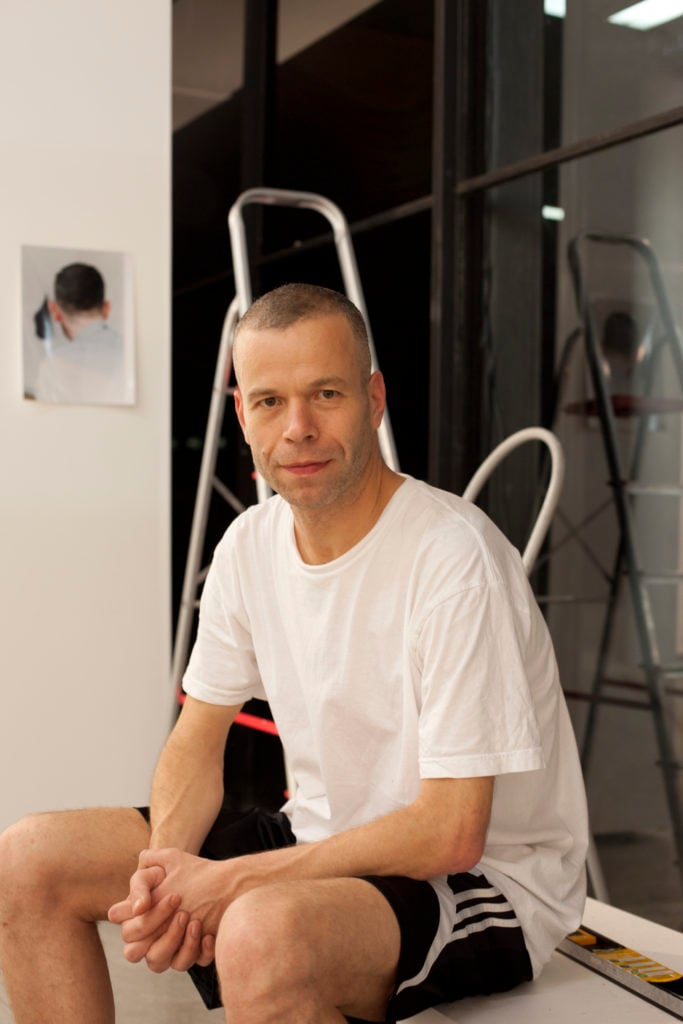
Wolfgang Tillmans. Photo by Carmen
Brunner. © Wolfgang Tillmans.
Unlike “Studio,” which will be accessible to anyone who agrees
to submit their email address, “Exceptional Works” will exclusively
be available to existing gallery clients on an invitation-only
basis. Prices will also only be relayed upon request, although
Zwirner suggests that the sweet spot for blue-chip art sales online
is in the $1 million and $2 million range.
Both initiatives in large part aim to make up for the fact that
the lockdown era has interrupted a critical part of the art-market
supply chain. Under normal circumstances, one-off or small groups
of works that do not comprise a full exhibition would be showcased
at an art fair. And even though the art industry’s traveling circus
has been put on pause, artists are still creating work—in fact,
some more than ever, as they are cloistered at home and in their
studios—and consignors are still looking for places to sell
high-priced works (particularly since most of the major auction
houses have delayed their marquee
spring sales to June).
At a moment when money is not exactly rolling in, as Zwirner
acknowledged (his exact words were that the market was being “very
selective”), it might seem counterintuitive to create a digital
destination and ask clients to come to you, rather than reaching
out to them individually and conducting business the old-fashioned
way. But Zwirner said the new digital offerings aim precisely to
address the fact that not everyone is in a buying mood right
now.
“Personalized outreach is
hard—some aren’t in an art-buying mode, some don’t want to talk to
you,” he said. On the other hand, for those who are interested, an
online venue like this one can create the same sense of urgency
that an art fair does. “They know they aren’t the only one
looking,” Zwirner explained. “They feel a sense of
competition.”
Zwirner isn’t the only gallery trying out new approaches to the
online space in this uncertain moment—although it is one of the few
that can afford to unroll this many glossy new initiatives at once.
This week, Gagosian—which initially piloted the one-work-only
viewing-room concept with an Albert Oehlen
painting last year—announced a new weekly series called “Artist
Spotlight,” which will highlight work by an artist alongside
interviews, film recommendations, and other supplemental content.
The effort will begin with a new assemblage by Sarah Sze, who was
due to be the subject of an exhibition at Gagosian’s Paris gallery
last month.
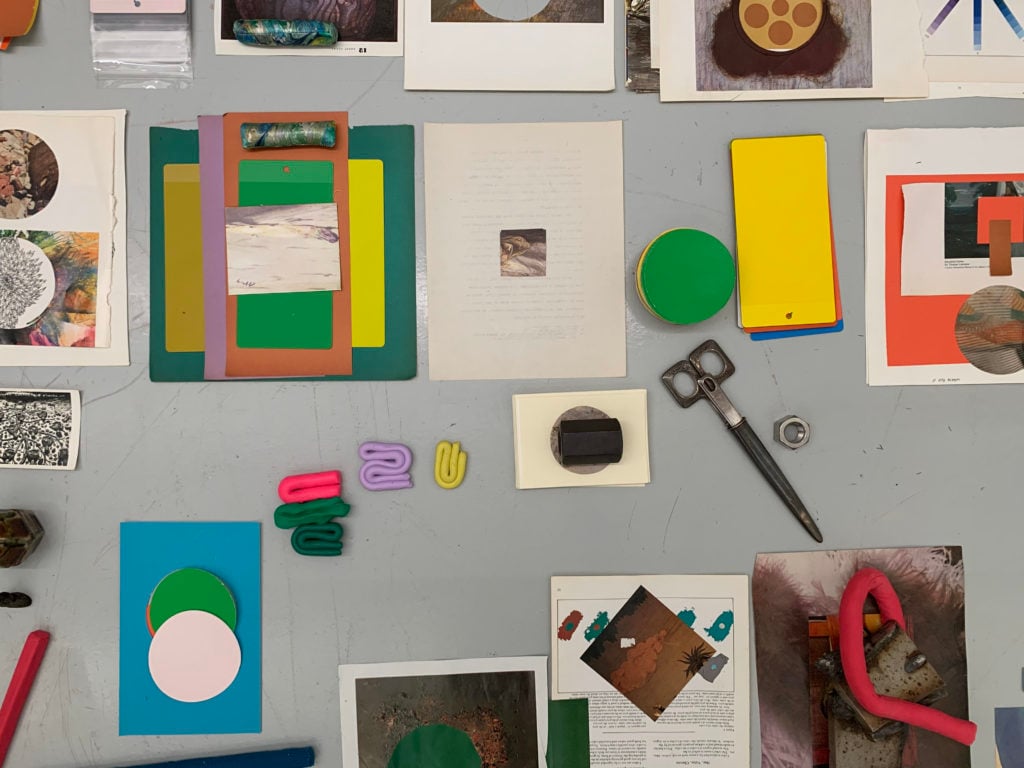
Photos from Carol Bove’s studio, 2020 ©
Carol Bove. Courtesy the artist and David Zwirner
If these efforts are successful, they may have an enduring
impact on the art-market landscape. While Zwirner said he does not
anticipate ever pulling away from brick-and-mortar gallery spaces,
he does expect that he and his peers might lessen their art-fair
participation in the future.
“It’s hard for me to imagine that the attraction that an art
fair has for me right now is going to be the same when I have an
online business that does a really good job bringing new clients to
the gallery,” he said. Now that he is meeting more new
clients though the website than through art fairs, and now that
collectors seem to be willing to pay a higher price point online,
“I think the art fair world will probably slim down.” He noted that
the marquee fairs—the Friezes and the Basels—will likely proceed
unharmed, but “I’d be a little nervous on the periphery,” he
said.
The gallery currently has a total of 12 people in its online
sales and tech departments, four of whom have been hired this
year. In recent weeks, Zwirner added, he has issued an “open
call in-house” for those employees whose work has been limited by
the closure of its physical spaces “to help with online
projects.”
Future editions of “Studio” will feature new work by Carol
Bove, R. Crumb, and Liu Ye, while “Exceptional Works” will showcase
a looped-wire hanging sculpture by Ruth Asawa and a Giorgio Morandi
still life.
The post With the Launch of Two More Online Sales
Initiatives, Mega-Gallerist David Zwirner Says He Is Already
Envisioning Less Need for Art Fairs appeared first on artnet
News.
Read more https://news.artnet.com/market/david-zwirner-online-1826523
Further reading


Leave a comment