
What Happens to My Health Insurance If My Gallery Furloughs Me? + Other Questions About Employment in the COVID Era, Answered by Lawyers
Due to the devastating economic
impact of COVID-19, more than 10,000 workers have reportedly been
temporarily or permanently laid off in the US museum community in
the past month alone, with thousands more let go from auction houses and
galleries across the
country. Here are some of the most frequently asked questions
we have received from our clients and others regarding employment
furloughs and firings.
My auction house furloughed several dozen of us and fired
hundreds more. What’s the legal difference between the
two?
With a furlough, your employer
is temporarily stopping your employment (typically, without pay),
but as a legal matter, you are still considered an employee.
Although the auction house is free—absent an employment agreement
to the contrary—to terminate you while you are on furlough, the
expectation is that you will restart work at a later date. By
contrast, being fired is forever and you are no longer an
employee.
How long could my furlough last?
Good question. We have found no
legal limitation on the duration of furloughs, so in theory you
could be furloughed forever. As a practical matter, you will be
“unfurloughed” if and when your employer wants to bring you
back.
I was furloughed from my part-time gig as a museum educator,
and I read that independent contractors like me are not eligible
for unemployment benefits. Is that true?
That was the case until very
recently. However, the newly enacted Coronavirus Aid, Relief, and
Economic Security (CARES) Act offers emergency assistance to those affected by the
coronavirus and,
significantly, expands benefits to independent contractors, the
self-employed, and others who can’t work because of the
pandemic.
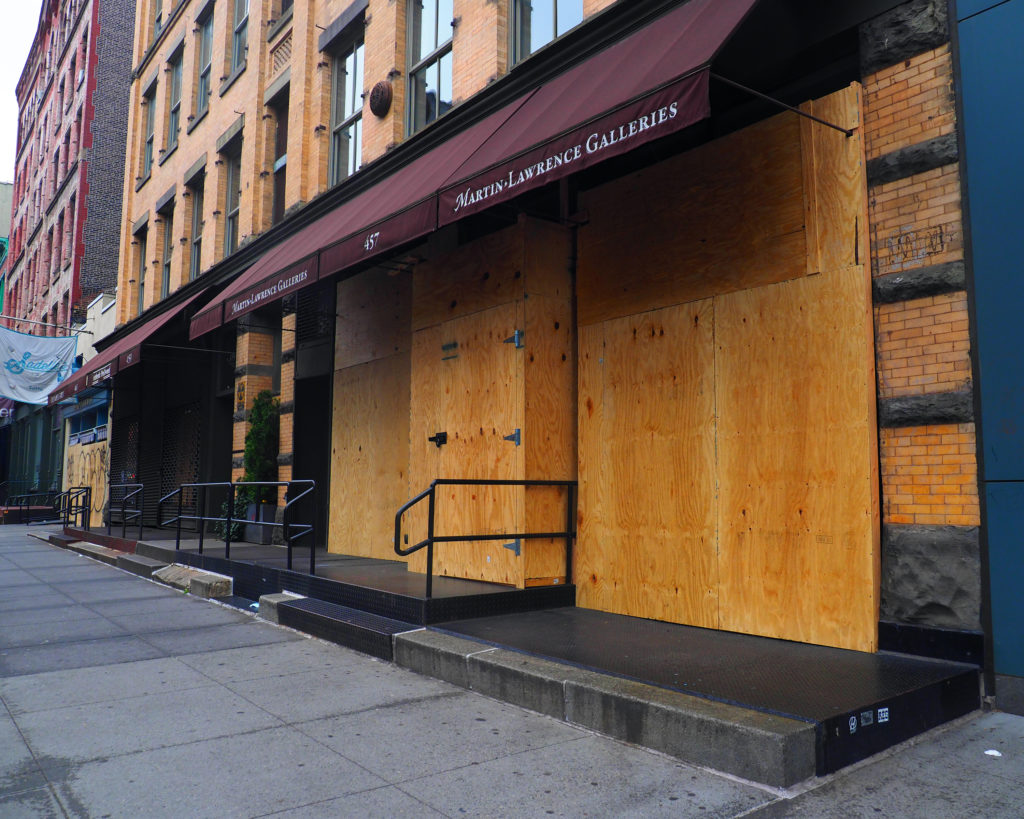
Martin Lawrence Gallery in Soho is
boarded up during the coronavirus pandemic on April 17, 2020 in New
York City. (Photo by Debra L Rothenberg/Getty Images)
Is the LA gallery that furloughed me required to pay for my
accrued vacation?
Maybe. The good news is that
California requires that all final wages, including accrued
vacation, be paid at the time of “termination,” and the
California Division of Labor Standards Enforcement
(DLSE) has ruled that a temporary layoff constitutes a
termination, except where the layoff does not exceed 10 days and
the employee has a definite return date within the normal pay
period. The bad news is that DLSE opinions are not binding on
courts, so this issue may have to be litigated down the
line.
I was covered by a group health plan by my New York gallery
when I was furloughed. Will I still be covered during my furlough
period?
It depends on the gallery’s
benefit plan, but in our experience, a furloughed employee
generally remains eligible for health insurance coverage (in
contrast to a laid-off employee, whose benefits end on the date of
termination). Even when furloughed or laid-off employees lose group
health coverage, they may be able to keep the same coverage for a
limited period under the federal statute known as “COBRA” or, in
the case of businesses with fewer than 20 employees, a similar
state law passed in New York. The rules governing COBRA are
complicated, and people are often surprised at how expensive this
coverage can be, since the cost usually includes the total premiums
paid not just by the employee but also by the employer—plus a 2
percent administrative charge.
Could I take on work from a competing auction house “C” while
on furlough from auction house “S”?
You may look for another job
and, as a legal matter, are free to take on work from other
employers while on furlough. But you should be careful not to
violate a conflict of interest or loyalty policy with your current
employer, or the specific provisions of any applicable employment
agreement you may have signed. The terms of furloughs differ
from employer to employer.
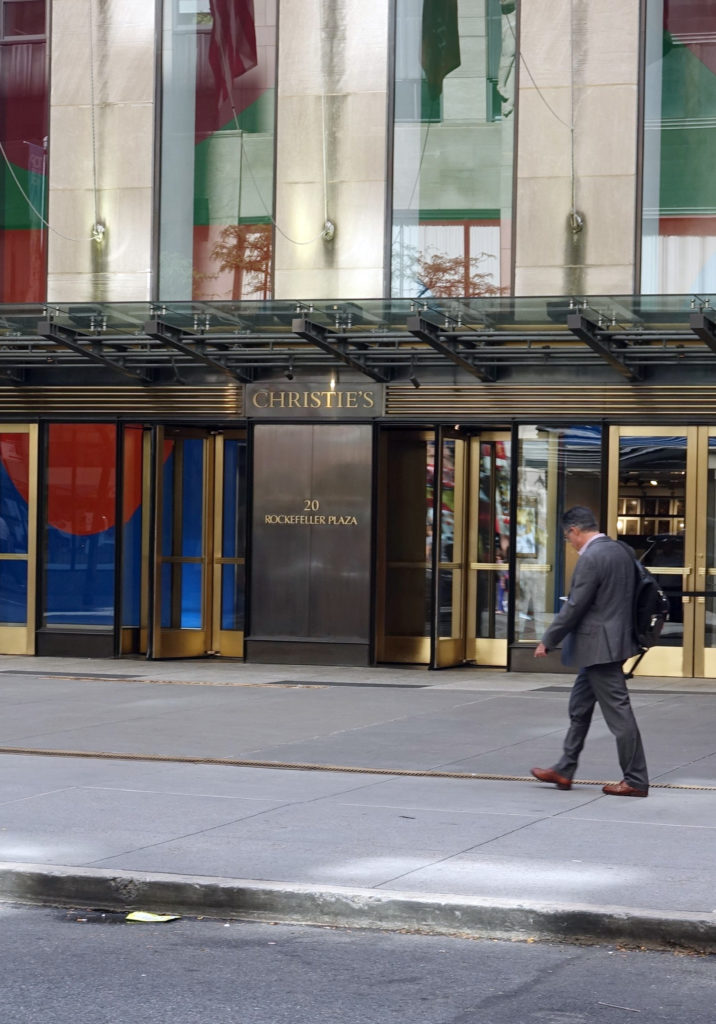
With its Rockefeller Center headquarters
in Midtown Manhattan closed, Christie’s has moved its sales online.
Photo: Alexandra Schuler/Picture alliance via Getty Images.
I run a well-known art publication and had to furlough some
employees. I can still require them to check emails and respond to
their voicemails, right?
Wrong. Your proposed actions
could lead to violations of the Fair Labor Standards
Act and state laws that require you to pay employees for their
work. Tell your employees in writing that they are not to do any
work for you while furloughed and, to be safe, temporarily disable
their company email accounts and phone extensions.
I own a foundry for casting sculptures. Is it okay to
furlough a disgruntled pregnant employee who has made numerous
complaints about workplace conditions? She has long been a thorn in
my side and it would be great to put her on ice.
Technically, you can furlough
her—but in doing so, you might open yourself up to discrimination
claims, since you could be perceived as improperly selecting a
worker for furlough who is a member of a legally protected class.
You can’t single out an employee for furlough based on race, sex,
age, or certain other factors including—significantly, in your
case—whether a worker has objected to workplace safety and/or who
is pregnant. Employers should base furlough decisions on sound
business reasons, and they must be consistently applied to all
employees. As with all such employment matters, we also advise
employers to carefully document their decision-making
process.
I worked as an administrator for a big New Jersey museum
where more than one-third of my colleagues and I were furloughed
overnight. Isn’t there some federal law requiring the museum to
give us advance written notice?
There is a federal law, but it
may not apply here. Under the Federal Worker Adjustment and
Retraining Notification (“WARN”) Act, most employers who have 100
or more full-time workers and who plan on furloughing at least 50
of them must provide at least 60 days’ advance notice of a “mass
layoff.”
However, the WARN Act
includes exceptions for layoffs or furloughs caused by
“unforeseeable business circumstances” (arguably the case with
COVID-19), in which case the employer is only required to provide
“as much notice as is practicable.” Importantly, your employer must
also comply with any state “mini-WARN Acts” (where the restrictions
tend to be tighter than the federal WARN Act). But in your case,
New Jersey currently recognizes COVID-19 as an exception to the
notice requirements in its mini-WARN Act. Regardless of the
applicable WARN laws, we advise our employer clients to give
employees as much advance notice as possible so they can adequately
prepare.
Enough legal talk. What’s an easy way to remember the
difference between firing and furlough?
The bottom line is that if you
are fired, the employer-employee relationship is totally over, but
if you are furloughed you and your employer are more like friends
without (most) benefits.
Thomas C. Danziger, Esq. and Charles Danziger, Esq. are
partners in the New York firm Danziger, Danziger & Muro, LLP,
specializing in art law. Go to danziger.com for
more information. The authors thank Soo Min Lim for her
research assistance. Some facts have been altered for reasons of
client confidentiality or have been made up out of whole cloth.
Nothing in this article is intended to provide specific legal
advice.
The post What Happens to My Health Insurance If My Gallery
Furloughs Me? + Other Questions About Employment in the COVID Era,
Answered by Lawyers appeared first on artnet News.
Read more https://news.artnet.com/art-world/questions-about-employment-in-the-lockdown-era-lawyers-1872204
Further reading


Leave a comment